Fudge Success Predictor
Check if the weather is right for making fudge. High humidity prevents proper setting.
Current Status: The air contains a moderate amount of moisture.
- You may need to cook slightly longer.
- Ensure your kitchen is well-ventilated.
- Test with a small batch first if possible.
Why does this matter?
Fudge relies on precise sugar crystallization. High humidity slows down evaporation during cooking and allows the cooling fudge to reabsorb moisture from the air, preventing it from hardening properly. Ideal humidity is below 50%.
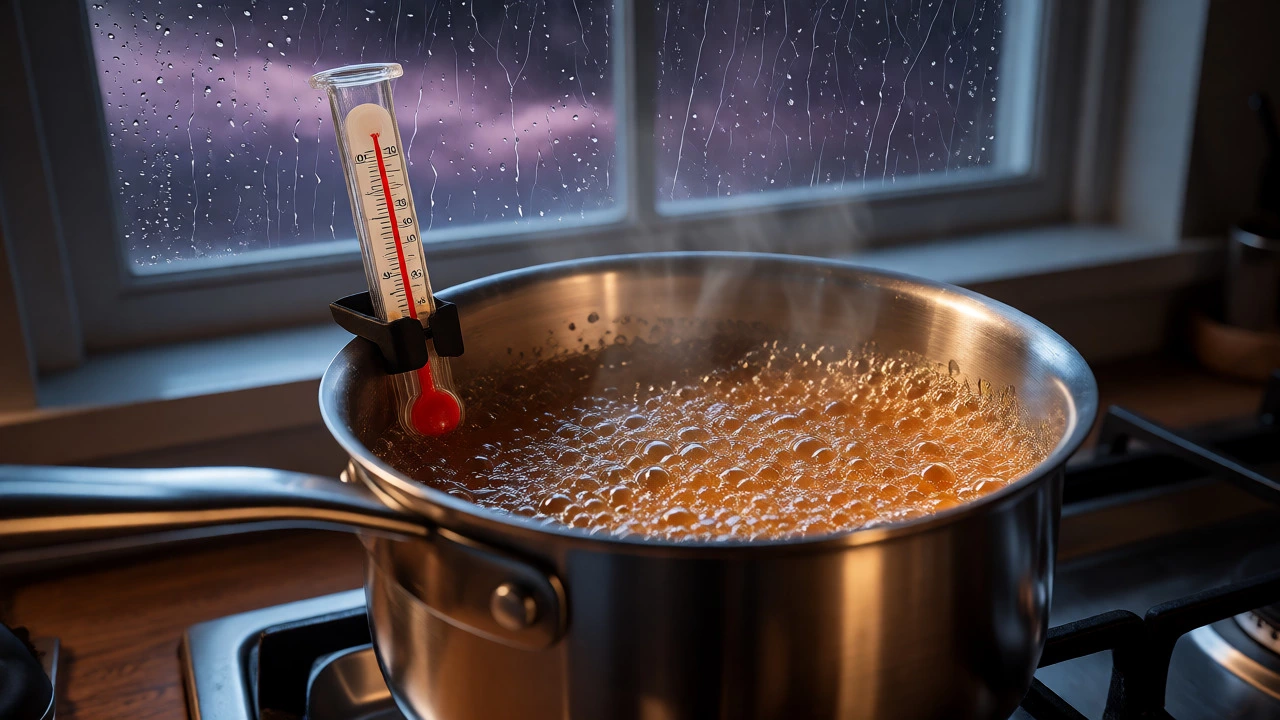
You’re standing in your kitchen, thermometer in hand, watching the sugar mixture bubble away. Outside, the sky has turned a bruised purple, and rain begins to lash against the window. Your grandmother’s voice echoes in your head: "Don't start that batch if it's raining." You sigh, wondering if this is just another old wives' tale or actual science. Spoiler alert: it’s real science. Fudge is incredibly sensitive to moisture, and rain brings more than just wet socks; it brings high atmospheric humidity that prevents sugar from setting correctly.
The Science of Sugar and Water
To understand why rain ruins fudge, you first need to understand what fudge actually is. At its core, Sugar Syrup is a solution of sugar dissolved in water, heated to specific temperatures to control crystal size. When you make fudge, you are essentially manipulating how sugar molecules arrange themselves as they cool. Ideally, you want tiny, uniform crystals that create that smooth, creamy texture we all love. If the crystals get too big, you get grainy fudge. If they don’t form at all, you get a sticky mess.
Here is where the weather crashes the party. Rain means the air outside-and consequently inside your home-is saturated with water vapor. Humidity is the amount of water vapor present in the air. When you cook your fudge, you are trying to evaporate water out of the syrup to concentrate the sugar. But if the air around your pot is already thick with moisture, evaporation slows down dramatically. Worse, the cooling fudge can actually absorb moisture from the humid air before it sets, preventing the sugar structure from hardening properly.
Why Traditional Advice Still Holds Up
Is your grandmother right? Mostly, yes. Before modern dehumidifiers and air conditioning were common household staples, humidity control was nearly impossible. In places like Bristol, where damp weather is frequent, traditional confectioners learned through trial and error (and many failed batches) that dry days were essential for success. Today, we have tools to fight back, but the fundamental chemistry hasn't changed. High humidity raises the boiling point of water slightly and interferes with the critical "soft-ball stage" detection using a candy thermometer.
Think of it like trying to dry your laundry on a line during a monsoon. No matter how hot the sun is, if the air is full of water, the clothes stay wet. Similarly, no matter how long you boil your fudge, if the ambient humidity is above 70-80%, the final product will likely remain soft, sticky, or fail to set entirely. This isn't about superstition; it's about partial pressure of water vapor.
Can You Fix It? Modern Solutions for Rainy Days
Does this mean you must banish fudge-making from your calendar every time the forecast calls for showers? Not necessarily. Technology and technique can help you beat the weather. If you live in a humid climate or find yourself stuck indoors on a rainy Tuesday, here is how you can still achieve perfect squares of chocolatey goodness.
- Use a Dehumidifier: Run a powerful dehumidifier in your kitchen an hour before you start cooking. Lowering the indoor relative humidity to below 50% creates a microclimate conducive to candy making.
- Adjust Your Temperature: Some experienced confectioners add 1-2 degrees Fahrenheit to their target temperature when humidity is high. This compensates for the extra moisture absorbed during cooling. However, be careful-too high and you risk scorching the milk solids or getting hard, brittle fudge.
- Seal Your Ingredients: Ensure your sugar and other dry ingredients are stored in airtight containers. Hygroscopic sugars can absorb moisture from the air even before you open the bag.
- Choose the Right Recipe: Recipes with higher fat content (like those using condensed milk rather than heavy cream) tend to be more forgiving. Fat coats the sugar crystals, reducing their tendency to absorb external moisture.
Troubleshooting Sticky Fudge
So, you ignored the warning, made the fudge during a downpour, and now you have a pan of goo that won't firm up. Don't panic. Here is a quick diagnostic guide to save your dessert.
| Symptom | Likely Cause | Quick Fix |
|---|---|---|
| Sticky and soft after 2 hours | High humidity prevented setting | Refrigerate immediately; cut into smaller pieces |
| Grainy texture | Crystals formed too large due to agitation or slow cooling | Melt down and re-cook carefully, avoiding stirring |
| Hard and crumbly | Cooked too long or temperature too high | Add a splash of warm cream and knead gently |
| Greasy separation | Butter broke due to rapid cooling | Knead vigorously to re-emulsify fats |
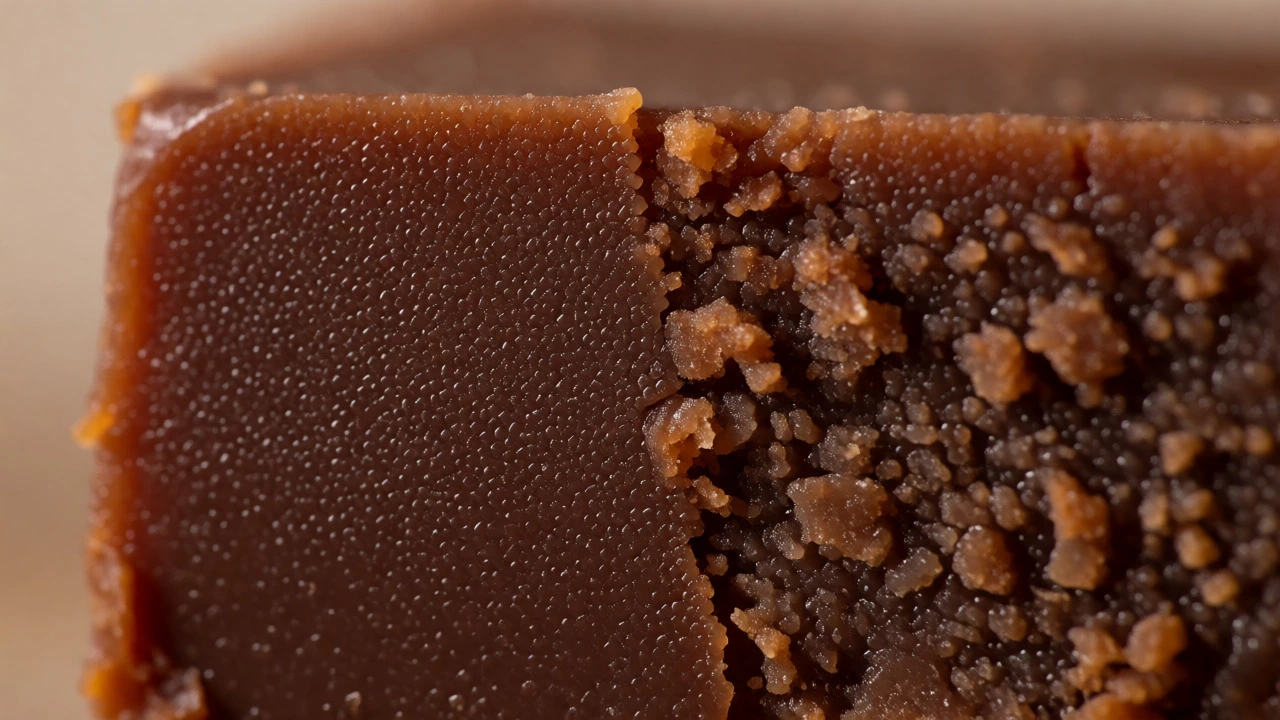
If your fudge is simply too soft because of the rain, refrigeration is your best friend. Cold air holds less moisture than warm air, so chilling the fudge helps it solidify. Once it is firm, wrap each piece tightly in plastic wrap to prevent it from absorbing any remaining ambient moisture. Store them in an airtight container in the fridge. They might not have that classic room-temperature snap, but they will taste delicious.

Beyond Fudge: Other Candies Affected by Weather
While fudge is particularly notorious, it isn't the only sweet treat that hates rain. Any confection relying on precise sugar crystallization is vulnerable. Pralines and Rock Candy also require low-humidity environments to form proper crystals. Conversely, candies that rely on amorphous structures, like Caramel, which is a supersaturated solution without defined crystals, are somewhat more resilient but can still become sticky if exposed to extreme dampness.
Chocolate tempering is another area where humidity matters. While chocolate doesn't crystallize via sugar in the same way, moisture causes "sugar bloom," where sugar dissolves on the surface and recrystallizes as white spots. So, if you're planning a Valentine's Day chocolate gift while it's pouring outside, keep your work environment dry.
Final Thoughts on Kitchen Climate Control
Making fudge is part art, part chemistry. Understanding the role of Atmospheric Pressure and humidity transforms you from a recipe follower into a skilled confectioner. Yes, rain makes it harder. Yes, your grandmother was onto something. But with a bit of planning, a dehumidifier, and maybe a slight temperature tweak, you don't have to wait for sunshine to enjoy homemade sweets. Just remember: if all else fails, turn that sticky failure into a rich sauce for ice cream. There are no true losses in the kitchen, only learning opportunities.
Does humidity really affect fudge?
Yes, absolutely. High humidity prevents the water in the sugar syrup from evaporating efficiently during cooking and allows the cooling fudge to reabsorb moisture from the air. This results in fudge that remains soft, sticky, and fails to set properly.
What is the ideal humidity level for making fudge?
The ideal relative humidity for making fudge is below 50%. Levels between 50% and 60% may require minor adjustments to cooking time or temperature. Above 70%, traditional methods often fail unless significant environmental controls are used.
Can I fix fudge that didn't set because of rain?
You can try placing it in the refrigerator to force it to harden. Once firm, wrap it tightly in plastic wrap to protect it from further moisture exposure. Alternatively, you can melt it down again, adding a small amount of additional sugar or chocolate, and re-cook it with better humidity control.
Does altitude affect fudge making like humidity does?
Yes, altitude affects the boiling point of water. For every 500 feet above sea level, you should reduce the cooking temperature by 1 degree Fahrenheit. This is separate from humidity issues but equally important for achieving the correct consistency.
Which types of candy are most sensitive to humidity?
Candies that rely on controlled sugar crystallization, such as fudge, pralines, rock candy, and fondant, are the most sensitive. Hard candies and lollipops are also affected, becoming sticky or cloudy if made in humid conditions.