Fudge Temperature & Texture Checker
Enter the current temperature of your boiling fudge mixture to see what texture you can expect and get immediate advice on whether to keep cooking or pull it off the heat.
Current Mixture Temp
You know that feeling when you open the fridge after a long day, expecting a smooth, creamy square of chocolate heaven, and instead pull out a block of sweet, crumbly sadness? I have been there. More times than I care to admit in my kitchen here in Bristol. Fudge is deceptive. It looks like a simple mixture of sugar, butter, and condensed milk, but it behaves like a temperamental diva. One wrong move, one skipped step, and your batch turns into rock-hard taffy or gritty sand.
The problem isn't usually that you lack talent. It's that you are doing something specific that sabotages the crystallization process. You might be stirring too much, or not enough. You might be using the wrong pan. Or maybe you are just impatient. Let’s cut through the noise. If you want perfect fudge every time, you need to know exactly what not to do. Here is the breakdown of the biggest errors people make, and how to steer clear of them so your next batch is flawless.
Stop Stirring While It Boils
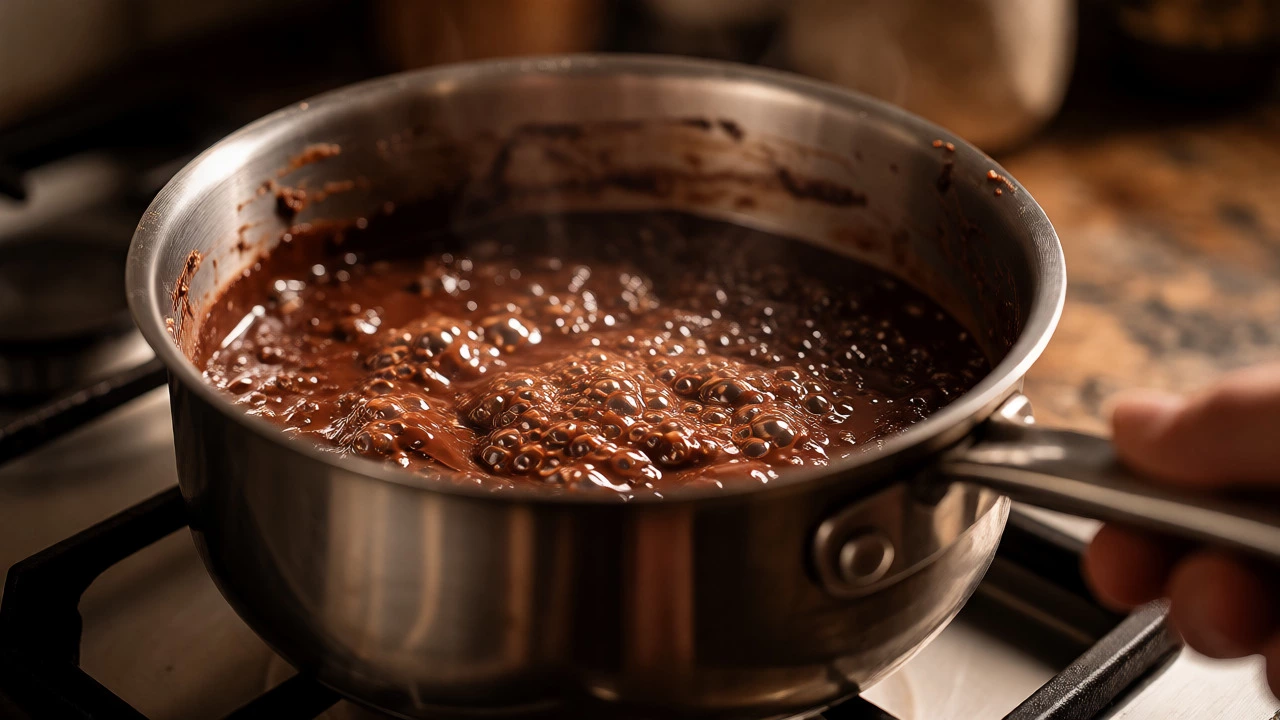
This is the number one rule that trips up beginners. You dump your sugar, condensed milk, and butter into the pot, turn on the heat, and start whisking away because you are worried it will stick. Stop. Put the spoon down.
When you stir boiling sugar syrup, you encourage premature crystallization. You are essentially knocking crystals loose from the sides of the pan and dropping them back into the mix. These stray crystals act as seeds for more crystals to form around. The result? Grainy, sandy fudge that feels like eating wet sugar.
- The Fix: Once the mixture starts to boil, stop stirring completely. If you are worried about burning, gently swirl the pan by holding the handle. Do not agitate the surface with a spoon.
- The Exception: Some traditional recipes require constant stirring, but these usually involve different ratios or cooking methods (like the 'ball-and-drop' method without a thermometer). For standard condensed milk fudge, hands off during the boil is key.
Do Not Skip the Candy Thermometer
I get it. Candy thermometers seem like overkill for a dessert that uses canned milk. "I'll just eyeball it," you say. "It looks thick enough." But guessing is why your fudge either won't set or tastes like chewy caramel.
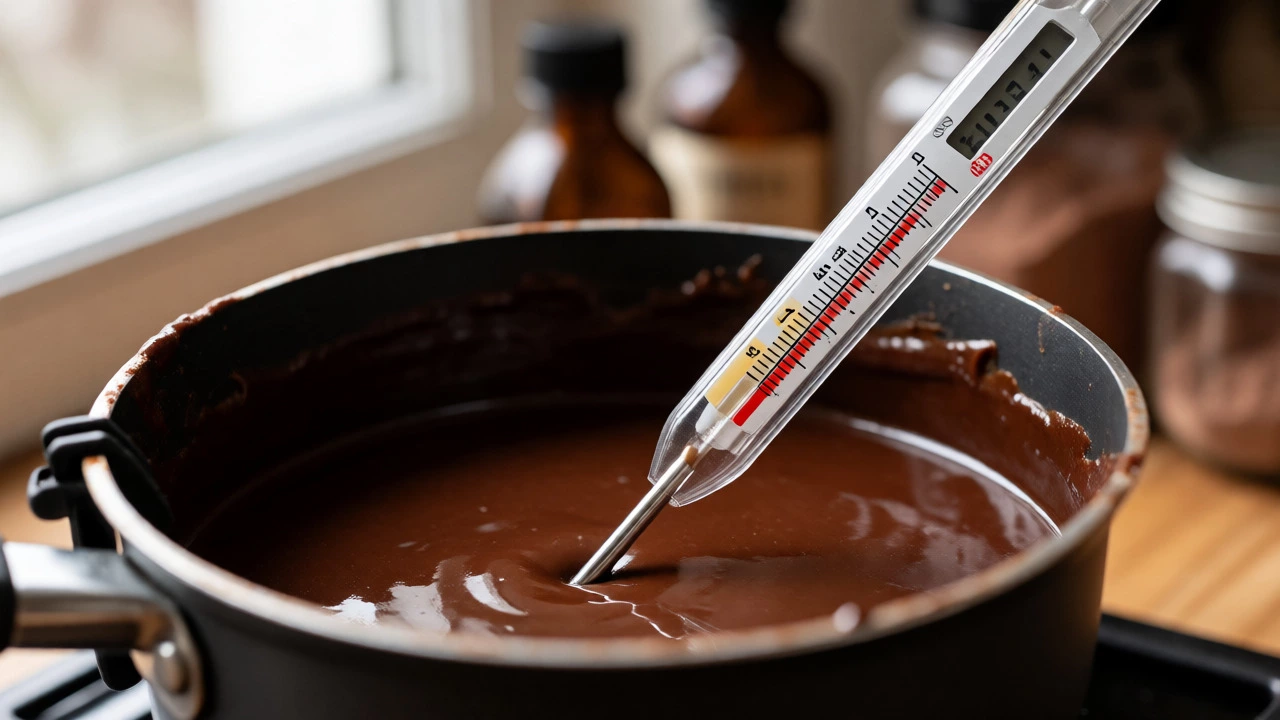
Candy Thermometer measures the temperature of the sugar solution, which directly correlates to its water content and final texture. Fudge needs to reach a specific stage-usually between 234°F and 240°F (112°C-116°C), known as the soft-ball stage. Below this range, your fudge remains sticky and never firms up. Above it, the sugars harden too much, turning your treat into brittle shards.
Without accurate data, you are gambling. And unlike a cake, where you can add extra frosting to hide dryness, you cannot fix overcooked fudge easily.
| Temperature (°F) | Temperature (°C) | Resulting Texture | Verdict |
|---|---|---|---|
| Under 230°F | Under 110°C | Too Soft/Sticky | Won't hold shape; becomes a sauce. |
| 234°F - 238°F | 112°C - 114°C | Perfect Creaminess | Sets firmly but stays tender. |
| Over 240°F | Over 116°C | Hard/Crystalline | Chewy, tough, or brittle. |
Avoid High Heat to Save Time
We all want our snacks fast. Turning the burner to high seems logical, right? Wrong. High heat causes the sugar at the bottom of the pan to caramelize and burn before the rest of the mixture reaches the correct temperature. You end up with burnt bits mixed into sweet cream, creating an acrid taste that no amount of vanilla extract can mask.
Furthermore, rapid boiling makes it nearly impossible to monitor the temperature accurately. The bubbles obscure the thermometer probe, and the violent agitation encourages those pesky crystals we talked about earlier.
- The Rule: Use medium-low heat. Yes, it takes longer. Usually 15-20 minutes instead of 10. But patience yields a smoother product.
- Pan Choice Matters: Heavy-bottomed pans distribute heat evenly. Thin stainless steel pots develop hot spots instantly. If you only have thin pots, use a diffuser pad between the flame and the pan.
Do Not Beat the Mixture Too Early
Once your fudge hits the right temperature, you take it off the heat. Now comes the critical phase: cooling. Many people immediately start beating the mixture vigorously with a wooden spoon, thinking they need to incorporate air to make it fluffy. This is a mistake.
Beating hot fudge breaks down the large sugar crystals that are trying to form, but if you beat it while it is still too hot (above 110°F/43°C), you prevent the formation of the fine, uniform micro-crystals that give fudge its signature smooth mouthfeel. Instead, you get a coarse, sugary texture.
You must let the fudge cool undisturbed until it drops to around 110°F (43°C). How do you know when? The mixture will lose its glossy shine and look slightly matte. Then, and only then, do you beat it. This process, called seeding, encourages millions of tiny crystals to form simultaneously, resulting in that velvety consistency.
Never Ignore the Pan Preparation
You spent 20 minutes cooking, another 15 cooling and beating, and now you pour it into the pan. Two hours later, you try to lift it out, and it sticks like glue. You scrape half of it off the parchment paper, ruining the presentation.
Fudge adheres aggressively to surfaces if not properly lined. Buttering the pan alone is often insufficient, especially for chocolate-heavy recipes. The cocoa solids create a sticky barrier.
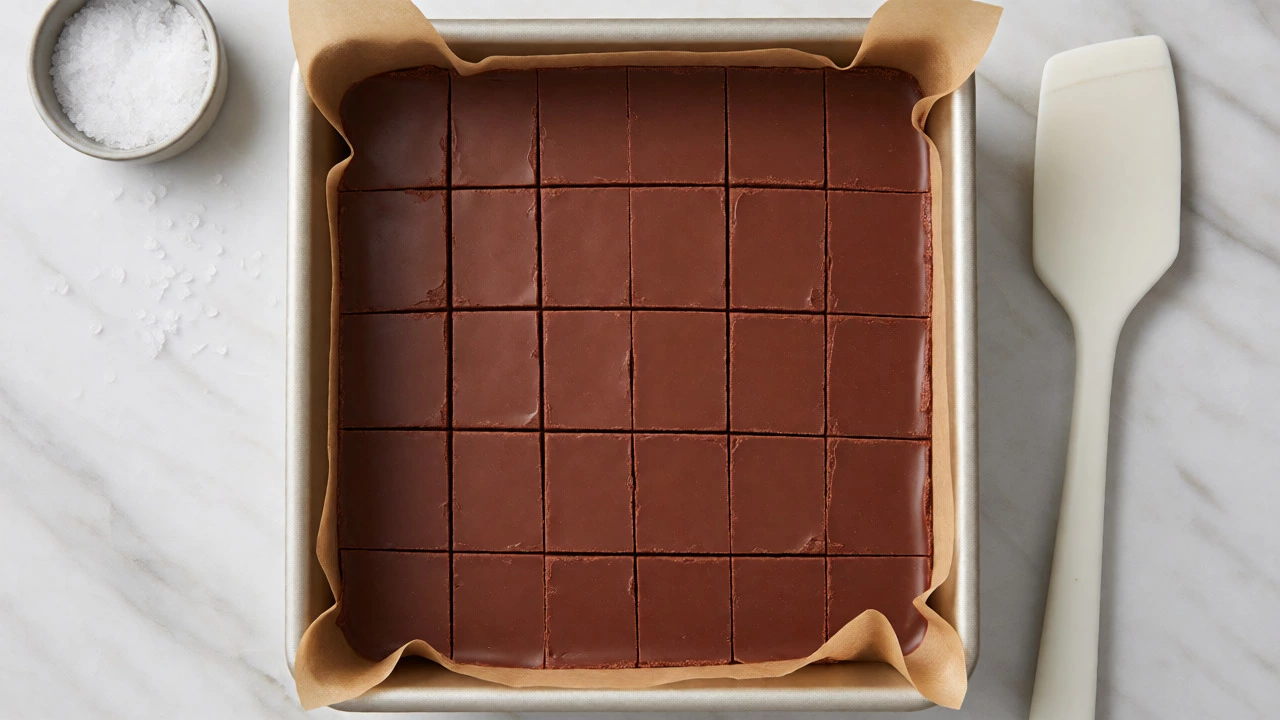
- The Best Method: Line your square pan with parchment paper, leaving an overhang on two opposite sides. Lightly grease the parchment itself with non-stick spray or melted butter. This creates a "sling" effect, allowing you to lift the entire block out cleanly once set.
- The Alternative: Use a silicone mold. They release fudge effortlessly, though they don't provide the sharp edges some prefer for cutting.
Do Not Store It Improperly
So you made perfect fudge. You cut it into neat squares. You put it in a Tupperware container and shove it in the pantry. A week later, it has dried out and turned into bricks. Or worse, it has absorbed moisture from the air and become sticky again.
Fudge is hygroscopic-it loves water. Exposure to air dries it out; exposure to humidity makes it soggy. The ideal storage environment is airtight and cool.
Why did my fudge turn out grainy?
Graininess is almost always caused by stirring the mixture while it was boiling. Agitation introduces crystal seeds that grow too large. To fix this in future batches, stop stirring once the boil begins and rely on gentle swirling if necessary.
Can I save fudge that didn't set?
Yes, but it requires effort. If it is too soft, you can reheat it gently with a splash of milk and bring it back to the soft-ball stage. However, the texture may not be as smooth as the first attempt. Prevention via a candy thermometer is far superior.
How long does homemade fudge last?
Stored in an airtight container at room temperature, fudge lasts about 1-2 weeks. In the refrigerator, it can last up to 3 weeks. For longer storage, freeze it wrapped tightly in plastic wrap and foil for up to 3 months.
Is a digital thermometer better than analog?
Digital thermometers generally offer faster response times and higher precision, which is crucial for catching the narrow window of the soft-ball stage. Analog dial thermometers can lag, leading to overshooting the target temperature.
Why is my fudge too hard?
Hard fudge usually means it was cooked past 240°F (116°C). The sugar concentration became too high, forcing excessive crystallization upon cooling. Next time, remove the pot from the heat as soon as it hits 238°F, as residual heat will continue to raise the temperature slightly.
Final Thoughts on Technique
Making fudge isn't about magic; it's about physics. Sugar solutions behave predictably if you respect their rules. By avoiding high heat, resisting the urge to stir during the boil, trusting your thermometer, and waiting patiently to beat the mixture, you eliminate the variables that cause failure.
Your kitchen doesn't need to be a professional bakery lab. You just need to stop fighting the chemistry. Keep your tools ready, watch the clock, and keep the lid off. Do that, and you won't just hope for good fudge-you'll guarantee it.