Vegan Dessert Scanner
Select an ingredient from the list below to see if it is typically vegan, often contains animal products, or requires careful label checking.
Quick Reference
Common Non-Vegans:
Gelatin, Honey, Carmine, Whey, Casein, Egg Whites, Shellac.
Vegan Alternatives:
Agar-agar, Maple Syrup, Beet Juice, Aquafaba, Coconut Oil.
Enter an ingredient above to start scanning.
Common Hidden Animal Ingredients
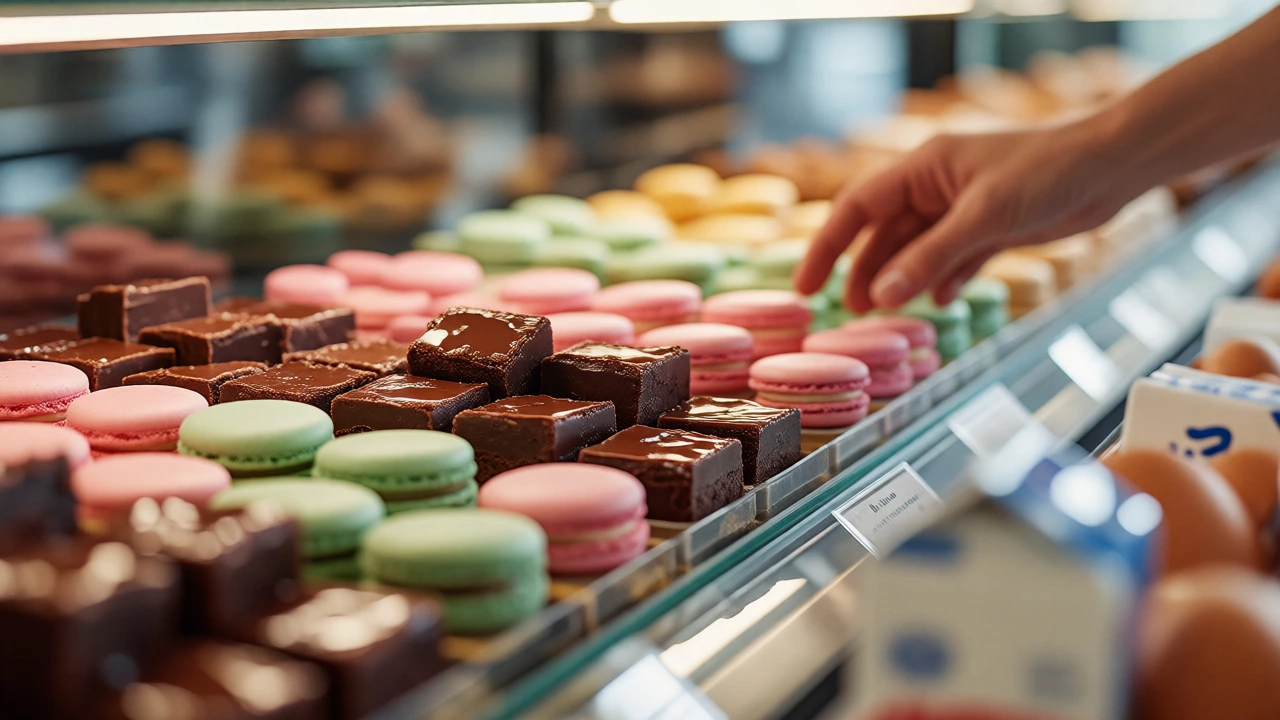
You’re standing in the bakery aisle, eyeing a stack of fluffy macarons or a glossy chocolate fudge square. It looks innocent enough. No obvious milk jug, no carton of eggs sitting on top. But here’s the trap: most traditional desserts are secretly loaded with animal products. So, are all desserts vegan? The short answer is absolutely not. In fact, if you grab a standard slice of cake from a supermarket shelf without checking the label, there’s a 90% chance it contains something that didn’t come from a plant.
The confusion usually stems from what we see versus what we don’t. We spot butter and cream easily. But ingredients like gelatin, whey, and certain colorings are invisible to the naked eye. This guide breaks down exactly which common desserts are safe, which ones hide animal derivatives, and how to navigate the sweet section without accidentally eating a cow (or a bug).
The Obvious Offenders: Dairy and Eggs
Let’s start with the heavy hitters. Traditional baking relies heavily on two pillars: dairy and eggs. If a recipe calls for butter, milk, heavy cream, or cheese, it’s not vegan unless explicitly stated otherwise. Think about your classic birthday cake. The sponge usually uses eggs for structure and milk for moisture. The frosting? Often buttercream, which is just whipped butter and sugar. Even if the cake itself is made with oil, the filling might be custard or cheesecake-style cream cheese.
Eggs are trickier because they do so many jobs at once. They bind ingredients together, provide leavening (that rise), and add richness. A standard brownie recipe typically requires two to three eggs. Without them, the texture changes completely. While some bakeries offer "dairy-free" options, they often still use eggs. So, "dairy-free" does not equal "vegan." Always check for both.
The Invisible Culprits: Gelatin and Honey
This is where things get weird for many people. You’d think a gummy bear or a jelly dessert is just sugar and flavoring. Nope. Most commercial jellies, gummies, and marshmallows contain gelatin. Gelatin is a protein derived from boiling animal skin, tendons, ligaments, and bones-usually from pigs or cows. It gives those treats their wobbly, bouncy texture.
| Ingredient | Source | Found In | Vegan Alternative |
|---|---|---|---|
| Gelatin | Animal bones/skin | Gummies, Jello, Marshmallows | Agar-agar, Pectin |
| Honey | Bees | Sweetened sauces, granolas | Maple syrup, Agave nectar |
| Carmine | Cochineal insects | Pink/red frostings, candies | Beet juice, Red radish extract |
| L-Cysteine | Duck feathers/Hair | Commercial breads, donuts | Synthetic or plant-based |
Then there’s honey. Many vegans avoid honey because it involves exploiting bees. While it’s natural, it’s an animal product. If a cookie claims to be "natural," check if the sweetener is honey. High-fructose corn syrup or cane sugar are usually vegan-friendly, but bone char is sometimes used to bleach white sugar. In the UK and EU, this is less common than in the US, but it’s worth noting if you’re strictly avoiding any animal processing aids.
Colorants: The Bug Juice Surprise
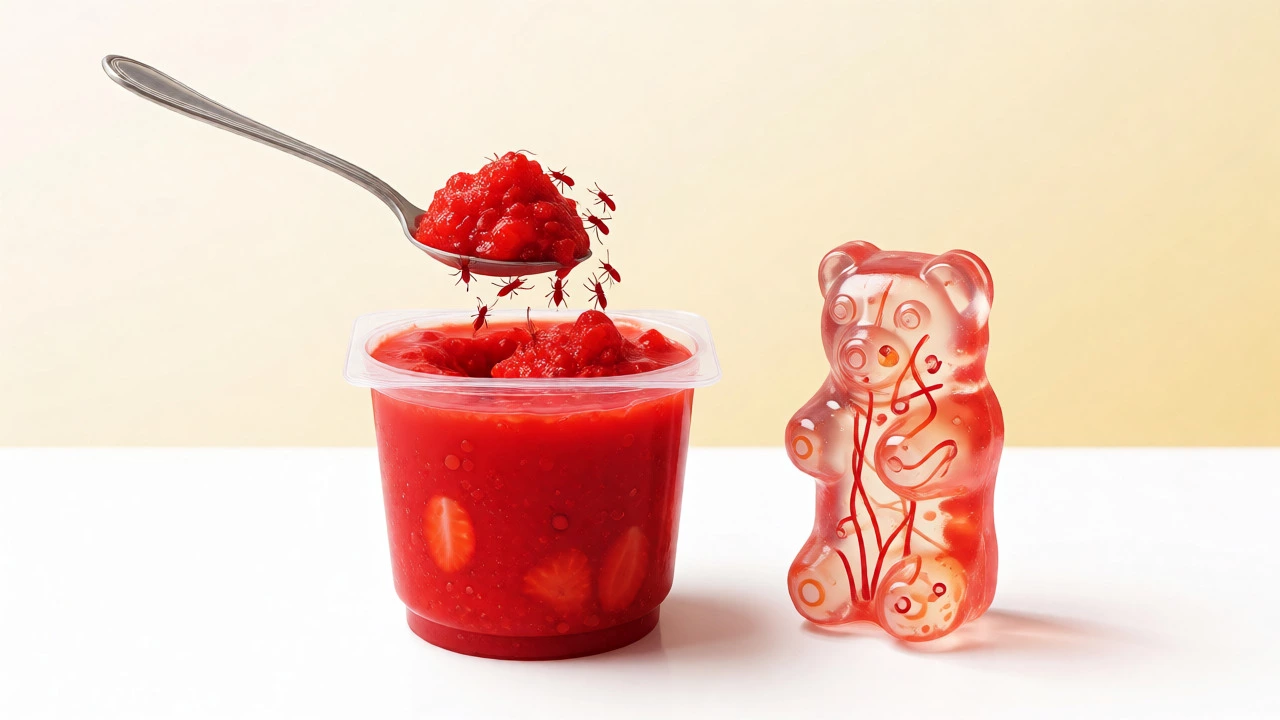
Have you ever wondered why strawberry yogurt or pink icing has such a vibrant red hue? It might be carmine, also known as cochineal or E120. This dye comes from crushing tiny scale insects called cochineals. It’s a stable, natural-looking red that doesn’t fade easily. Unfortunately, it’s definitely not vegan.
If you’re buying a decorated cheesecake or a colorful candy, look for "carmine," "cochineal," or "E120" on the label. Vegan alternatives include beetroot powder, paprika extract, or synthetic red dyes (though some vegans avoid synthetics due to animal testing policies). This is particularly relevant for pastel-colored macarons or birthday cakes with elaborate piping.
Which Desserts Are Naturally Vegan?
Not everything is bad news. Plenty of desserts are naturally free from animal products, provided you stick to the basics. Fruit-based desserts are your safest bet. Sorbet, unlike ice cream, is typically made from fruit puree, water, and sugar. Just double-check that they haven’t added milk solids for creaminess.
Fruit crumbles and cobblers are also great options. If the topping is made with oats, flour, sugar, and vegetable oil or coconut oil instead of butter, it’s vegan. Dark chocolate is another friend. Most high-quality dark chocolate (70% cocoa or higher) contains only cocoa beans, sugar, and cocoa butter. Milk chocolate, obviously, is out. White chocolate is almost always non-vegan because it lacks cocoa solids and relies heavily on milk powder.
- Fruit Sorbets: Check labels for hidden milk fats.
- Dark Chocolate: Look for "dairy-free" certification.
- Fruit Crumbles: Ensure the crumble uses plant oils.
- Rice Pudding: Only if made with coconut or almond milk.
- Meringue: Usually contains egg whites, so avoid unless made with aquafaba.
How to Spot Vegan Desserts on Labels
Reading ingredient lists can feel like decoding ancient hieroglyphics. Here’s a quick cheat sheet for spotting non-vegan markers in baked goods:
- Look for "Milk": Includes casein, whey, lactose, and milk solids.
- Check for "Egg": Albumen, globulin, lysozyme, and ovalbumin are all egg-derived.
- Scan for "Butter": Or "margarine" (some margarine contains whey).
- Watch for "Glycerin": Can be animal or plant-based; usually plant-based in food, but not guaranteed.
- Identify "Shellac": Found on shiny apples or chocolates; it’s resin secreted by bugs.
In the UK, allergen labeling helps. Milk and eggs must be bolded or highlighted in ingredient lists. This makes spotting them easier. However, additives like E120 (carmine) aren’t always bolded because they aren’t major allergens. You have to read the fine print.
DIY Swaps: Making Your Own Vegan Treats
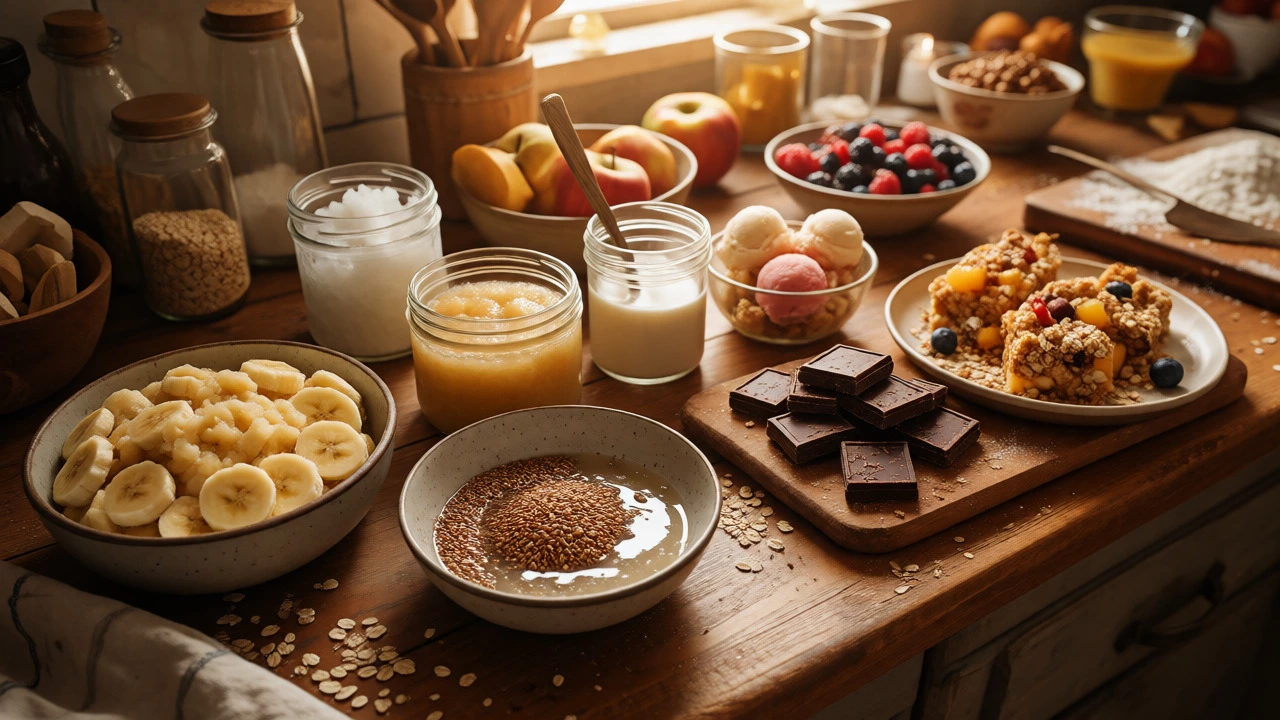
If store-bought options are limited, baking your own gives you total control. Substituting ingredients is easier than you think. For eggs, you can use mashed banana, applesauce, or flaxseed meal mixed with water. One tablespoon of ground flaxseed mixed with three tablespoons of water creates a "flax egg" that binds well in brownies and cookies.
For dairy, swap cow’s milk with oat, almond, or soy milk. Coconut milk adds richness to curries and puddings. Instead of butter, use coconut oil or vegan block margarine. Brands like Stork or Flora Plant Butter work well in pastry because they have a similar fat content to dairy butter.
Remember, texture matters. Vegan cakes can be denser if you don’t adjust the liquid-to-flour ratio. Start with trusted recipes rather than trying to convert every family favorite overnight. Once you master a basic vegan vanilla sponge, you can experiment with different frostings using cashew cream or whipped coconut cream.
Is dark chocolate always vegan?
No, not always. While many dark chocolates are vegan, some brands add milk fat or milk solids for texture. Always check the label for "may contain milk" warnings or explicit milk ingredients. Certified vegan bars are the safest choice.
Can I eat marshmallows on a vegan diet?
Traditional marshmallows contain gelatin, which is animal-derived. However, vegan marshmallows made with agar-agar or carrageenan are widely available now. Check for a vegan logo on the packaging.
Are all sorbets vegan?
Most sorbets are vegan, but some manufacturers add small amounts of milk fat or cream to improve mouthfeel. Always read the ingredient list to ensure no dairy products are included.
Why is honey not considered vegan?
Vegans avoid honey because it is an animal product produced by bees. The ethical stance involves avoiding exploitation of animals, including insects. Alternatives like maple syrup or agave nectar provide similar sweetness without animal involvement.
Do all gluten-free desserts contain eggs?
Many gluten-free recipes rely on eggs for structure since wheat gluten is absent. However, plenty of gluten-free desserts are also vegan, using starches like tapioca or potato starch along with plant-based binders. Always check both dietary requirements separately.