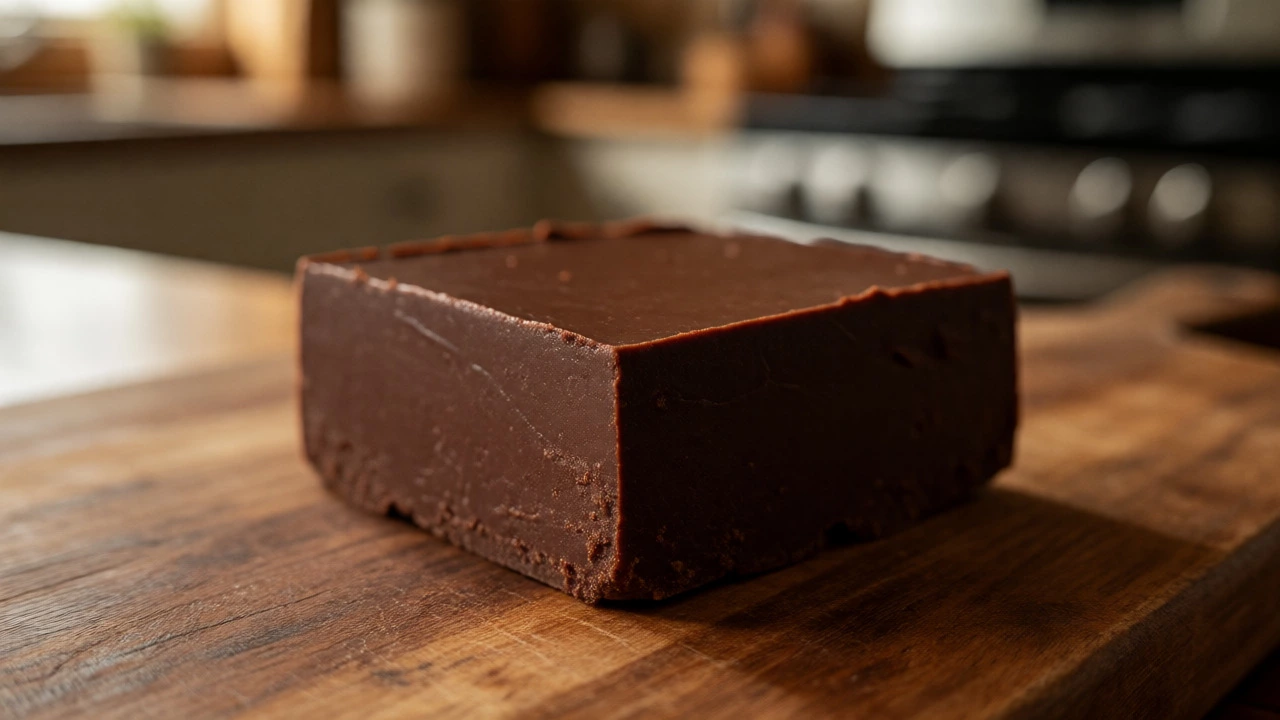
Homemade Fudge Freshness Checker
Enter your fudge details below to see how long it should last and if it is still safe to eat.
You’ve just pulled a tray of homemade fudge out of the fridge. It’s perfect-smooth, dense, and packed with flavor. But then you look at your calendar. You made it three days ago, and you’re wondering if it’s still safe to eat or if it’s going to turn into a rock by next week. This is the most common question I get from people who make this sweet treat for gifts or family gatherings.
The short answer? If you store it right, your fudge will stay fresh for about two weeks in the fridge and up to three months in the freezer. But "fresh" means different things depending on what’s inside your pan. A simple chocolate fudge behaves differently than one loaded with fresh strawberries or nuts. Let’s break down exactly how long your batches last, why they spoil, and how to keep them tasting like they were just cut.
The Real Shelf Life of Different Fudge Types
Not all fudge is created equal when it comes to longevity. The main enemy here is moisture loss (which makes it crumbly) and microbial growth (which makes it unsafe). Most traditional recipes rely on high sugar content, which acts as a natural preservative by binding water molecules. However, the ingredients you add can shorten that timeline significantly.
| Fudge Type | Pantry (Room Temp) | Refrigerator | Freezer |
|---|---|---|---|
| Classic Chocolate/Vanilla | 1-2 weeks | 2-3 weeks | 3-4 months |
| Nut-Based (Pecan/Walnut) | 1 week | 2 weeks | 2-3 months |
| Fresh Fruit (Strawberry/Lemon) | 3-5 days | 1 week | 1 month |
| Dairy-Heavy (Cream Cheese) | Not recommended | 1 week | 2 months |
Why do nut-based fudges expire faster? Nuts contain oils that go rancid over time, especially when exposed to heat or light. That stale, cardboard-like taste you sometimes get with older pecan fudge isn’t mold-it’s oxidized fat. Fresh fruit fudges have even higher water activity, meaning bacteria and mold have an easier time growing there compared to a dry, sugary chocolate block.
Where Should You Store Your Fudge?
This depends entirely on how soon you plan to eat it. If you’re giving the fudge away as a gift within a few days, or if you know you’ll polish off the whole tray within a week, the pantry is actually fine. In Bristol, where our kitchen temperatures hover around 18°C (64°F), a sealed container on the counter works well for standard chocolate fudge. Just keep it away from direct sunlight and the stove.
But if you want to extend that window, the refrigerator is your best friend. Cold air slows down the chemical reactions that degrade flavor and texture. Here’s the catch: fridges are dry environments. If you toss a naked piece of fudge onto a plate, it will dry out and form a hard crust within 24 hours. You must create a barrier against the air.
For longer-term storage, the freezer is surprisingly effective. Yes, you can freeze fudge. It doesn’t change the texture much if done correctly, and it buys you months of flexibility. This is ideal if you’re baking ahead for Christmas or a birthday party.
The Step-by-Step Storage Method
Proper wrapping is 90% of the battle. Here is the exact method I use to ensure my fudge stays soft and creamy:
- Cool Completely: Never wrap warm fudge. Trapped steam creates condensation, which leads to sugar crystals forming on the surface (sugar bloom) or soggy edges.
- Cut Before Wrapping: Cut your squares first. Trying to cut frozen or tightly wrapped fudge later results in jagged edges and crumbling.
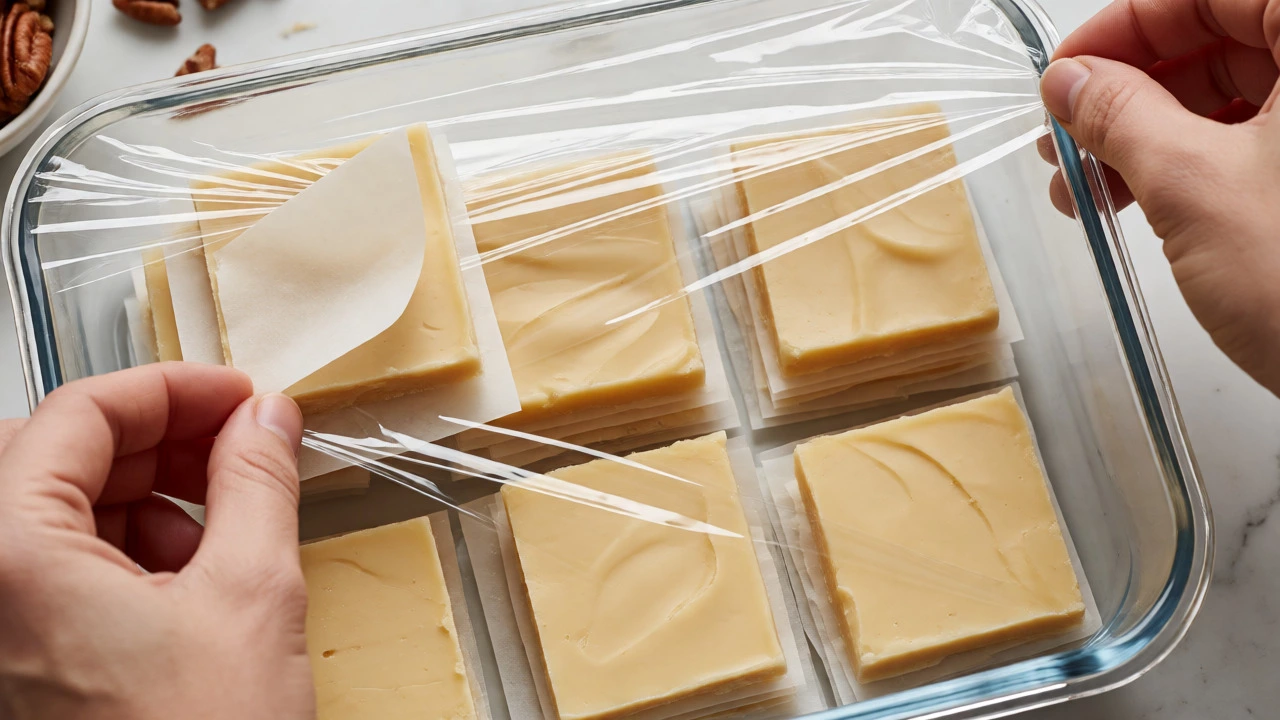
- Layer with Parchment Paper: Place a sheet of wax paper or parchment between each layer of fudge pieces. This prevents them from sticking together into one giant brick.
- Airtight Seal: Wrap the stack tightly in plastic cling film, squeezing out as much air as possible. Then place it in an airtight Tupperware container or a heavy-duty ziplock bag.
- Label It: Write the date and type on the outside. Trust me, after three months, you won’t remember if that white block was vanilla or coconut.
If you’re storing in the fridge, let the fudge come to room temperature before serving. Eating cold fudge dulls the flavor because your taste buds aren’t fully active, and the texture feels harder than it should be. Give it 15-20 minutes on the counter, and it returns to that melt-in-your-mouth consistency.
Signs Your Fudge Has Gone Bad
Sometimes you forget about the back of the fridge drawer. How do you know if it’s still edible? Use your senses.
First, look for mold. On chocolate fudge, this might look like fuzzy white or green spots. On lighter fudge, it’s more obvious. If you see fuzz, throw it out. Don’t try to scrape it off; the roots go deep.
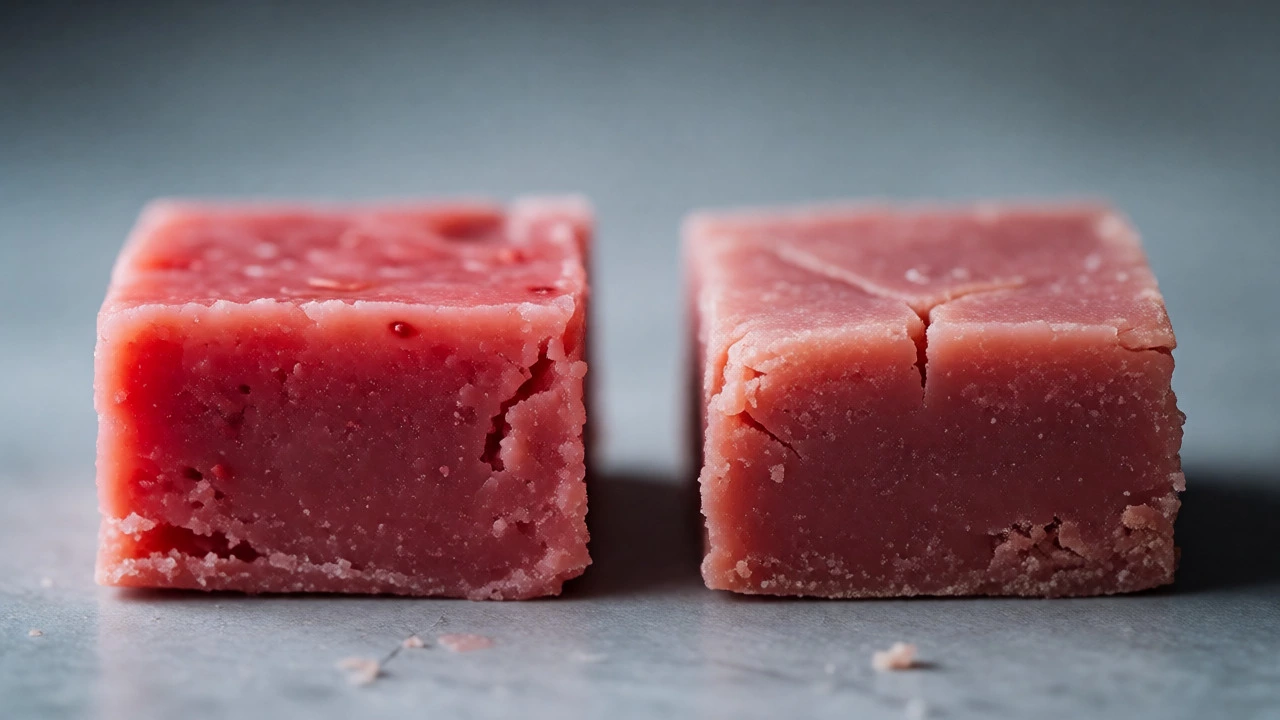
Second, check for sugar crystallization. If the surface feels gritty or sandy rather than smooth, the sugar has recrystallized due to temperature fluctuations or poor initial cooking. It’s not dangerous, but the texture is ruined. Some people enjoy the crunch, but most find it unpleasant.
Third, smell it. Rancid nuts have a distinct, sharp, paint-like odor. Sour dairy smells sour. If it smells off, don’t risk a stomach ache. Finally, look for drying out. If the fudge has shrunk slightly and looks cracked, it’s lost moisture. It’s still safe to eat, but it might be too hard to chew comfortably.
Can You Refreeze Thawed Fudge?
Ideally, no. Each time you freeze and thaw fudge, ice crystals form and damage the structure. The second thaw usually results in a grainier texture and potential weeping (where syrup separates from the solids). To avoid this, portion your fudge into small bags before freezing. Only take out what you need for the day. If you accidentally defrost the whole batch, eat it within 48 hours and don’t put it back in the freezer.
Tips for Maximizing Freshness
If you want your fudge to last as long as possible, consider these tweaks during the cooking process:
- Use Corn Syrup: Adding a tablespoon of corn syrup or glucose to your recipe interferes with sugar crystal formation, keeping the fudge smoother for longer.
- Roast Your Nuts: Roasting nuts before adding them to the mix drives out some moisture and stabilizes the oils, extending shelf life slightly compared to raw nuts.
- Keep It Dark: Light breaks down fats and pigments. Storing your container in a dark cupboard or the back of the fridge helps maintain color and flavor.
Homemade fudge is a labor of love, but it doesn’t require complex preservation techniques. With a bit of parchment paper and a good seal, you can enjoy those creamy squares weeks after you made them. Just remember: when in doubt, trust your nose and your eyes. If it looks and smells like delicious chocolate, it probably is.
Does homemade fudge need to be refrigerated?
No, it does not strictly need refrigeration if eaten within a week. Standard chocolate or vanilla fudge is stable at room temperature (up to 70°F/21°C) for about 7-10 days due to its high sugar content. However, refrigeration extends this period to 2-3 weeks. Fudge containing perishable items like cream cheese or fresh fruit must always be refrigerated.
Why did my fudge become grainy?
Graininess occurs when sugar crystals grow too large. This usually happens if the mixture was stirred while cooling too early, or if it cooled too slowly. Improper storage, such as leaving it uncovered in a humid environment, can also cause sugar to dissolve and re-crystallize on the surface, creating a gritty texture.
How do you tell if fudge has gone bad?
Look for visible mold, a sour or rancid smell (especially in nut varieties), or significant drying and cracking. While fudge rarely becomes unsafe quickly, the quality degrades noticeably. If it tastes stale, bitter, or overly hard, it’s past its prime, though not necessarily hazardous unless mold is present.
Can you freeze fudge with nuts in it?
Yes, you can freeze fudge with nuts, but consume it within 2-3 months. Nuts contain oils that can go rancid even in the freezer over long periods. Freezing helps preserve the texture of the fudge itself, but the nuts may lose their crunch and develop an off-flavor if stored too long.
Is it safe to eat expired fudge?
"Expired" usually refers to quality, not safety, for low-moisture foods like fudge. If there is no mold and it doesn't smell rancid, it is likely safe to eat, though the texture and taste may be inferior. Always discard fudge if you see any signs of mold or if it contains dairy and has been left out for more than two hours.