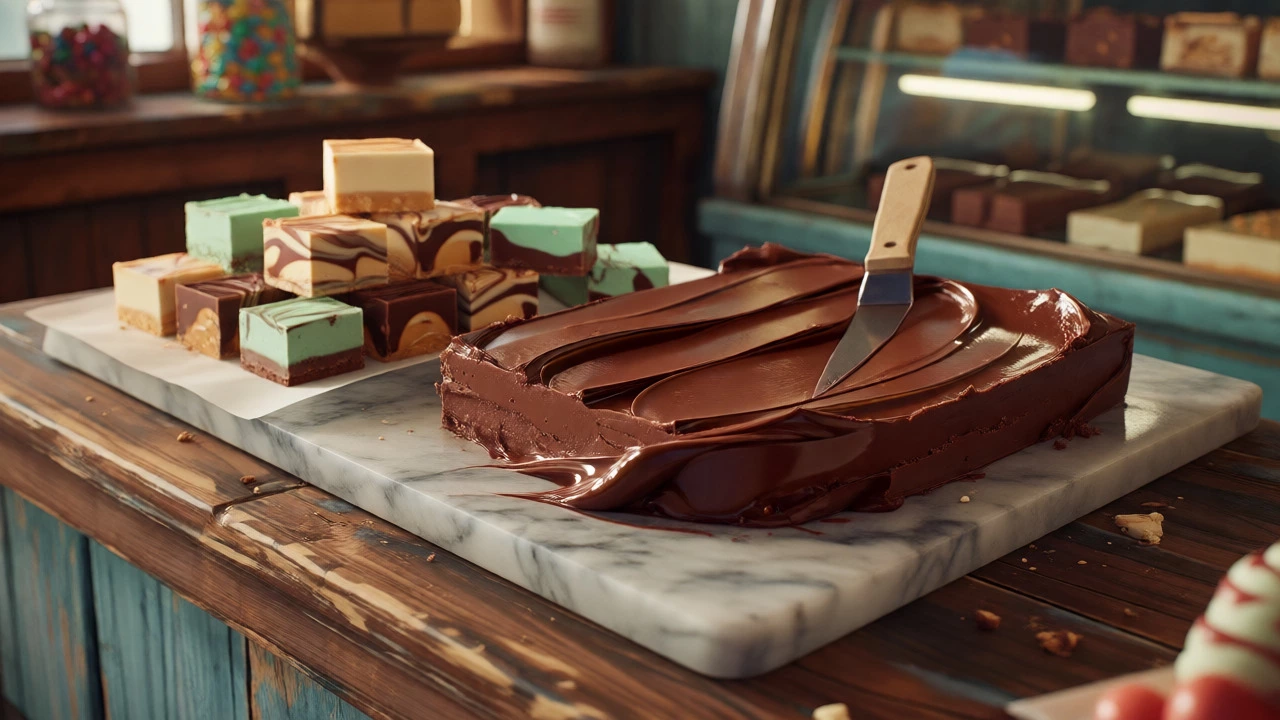
The Fudge Identifier & Quiz
Describe what you are seeing or eating to find out if it's actually fudge.
Loading question...
Quiz Complete!
You scored 0/3
Review the article above to learn more about regional candy terms.
You might think fudge is just a universal name for that dense, sugary chocolate block you buy at a seaside boardwalk or a college town gift shop. But if you ask ten people across the United States what they call it, you’ll likely get one answer: "fudge." It’s remarkably consistent. Unlike other candies where regional dialects split words-think "soda" versus "pop," or "sub" versus "hoagie"-the term fudge has held its ground nationwide since the late 19th century. So why does this question even exist? Because while the word itself doesn’t change, the way Americans talk about, categorize, and consume fudge reveals a fascinating patchwork of local traditions, brand influences, and historical quirks.
The confusion often stems from how we label similar-looking treats. Is it fudge if it has nuts? What if it’s white? What if it’s made with marshmallow fluff instead of pure sugar syrup? In some parts of the country, specific variations have nicknames or are sold under different commercial labels that blur the lines between fudge, caramel, and taffy. This article breaks down exactly what Americans mean when they say "fudge," explores the rare regional exceptions, and clarifies the terminology surrounding this beloved confection so you never mislabel your dessert again.
The Universal Term: Why "Fudge" Stuck Everywhere
Let’s start with the hard truth: there is no widespread American synonym for fudge. If you walk into a candy store in Maine, Texas, or California, the sign will read "Fudge." The term originated in the late 1800s, likely in Vassar College dorm rooms or among women’s clubs in the Northeast, and spread rapidly through social gatherings. By the time mass production hit in the early 20th century, "fudge" was already the standard English term in the US.
This linguistic stability is unusual for food. Compare it to carbonated beverages, where the map of the US looks like a quilt of "coke," "pop," and "soda." Or sandwich terminology, which varies wildly by city. Fudge escaped these regional shifts because it became a staple of specific cultural moments-boardwalk vacations, university fundraisers, and holiday gifts-that transcended local dialects. The consistency helps marketers; a box labeled "Fudge" needs no translation from Seattle to Savannah.
However, consistency in naming doesn’t mean uniformity in definition. Americans use "fudge" as an umbrella term that covers everything from traditional dark chocolate squares to peanut butter swirls and even savory-sweet hybrids. When someone asks, "Do you want some fudge?", they might be offering a piece of creamy vanilla bean fudge or a rocky road chunk. The name remains constant, but the experience varies.
Regional Nuances: Where Terminology Gets Tricky
While "fudge" is the dominant term, certain regions have specific habits that can confuse outsiders. In the South, particularly around historic tourist hubs like Mackinac Island (technically Michigan, but culturally connected to broader Midwestern tourism) or the Outer Banks, fudge is treated less as a casual snack and more as a ceremonial souvenir. Here, you might hear references to "Island Fudge" or "Boardwalk Fudge," not as new names, but as geographic qualifiers that signal authenticity.
| Term | Region/Context | Description & Distinction |
|---|---|---|
| Fudge | Nationwide | The standard term for crystallized sugar-based confection, usually chocolate or vanilla. |
| Caramel | Nationwide | Often confused with brown sugar fudge. True caramel is cooked to higher temperatures, resulting in a chewier texture. |
| Taffy | Coastal areas (e.g., Atlantic City) | Pulled sugar candy. Often sold alongside fudge, leading to bundle deals like "Fudge & Taffy," but distinct in texture. |
| Sweetmeats | Appalachian/Southern rural | An older, broader term for any candy, including fudge, though rarely used exclusively for fudge today. |
| Praline | New Orleans/South | A nut-based confection. Pecan pralines are soft and creamy, resembling fudge in mouthfeel but differing in base ingredients. |
In New Orleans, you’ll encounter Pralines. While not called fudge, many tourists mistake them for it because both are soft, sweet, and often sold in similar boxes. Pralines are made with pecans and brown sugar, creating a grainier, softer texture than classic chocolate fudge. Locals know the difference, but out-of-towners frequently ask for "that fudge-like thing with nuts," prompting vendors to clarify.
Another area of confusion involves "Marshmallow Fluff" based products. In New England, brands like Marshmallow Fluff have inspired recipes that mimic fudge but lack the traditional sugar-crystallization process. Some locals might refer to these as "Fluff Fudge" or simply "Fluff bars," distinguishing them from the harder, crumblier traditional versions found elsewhere.
Brand Names That Became Generic Terms
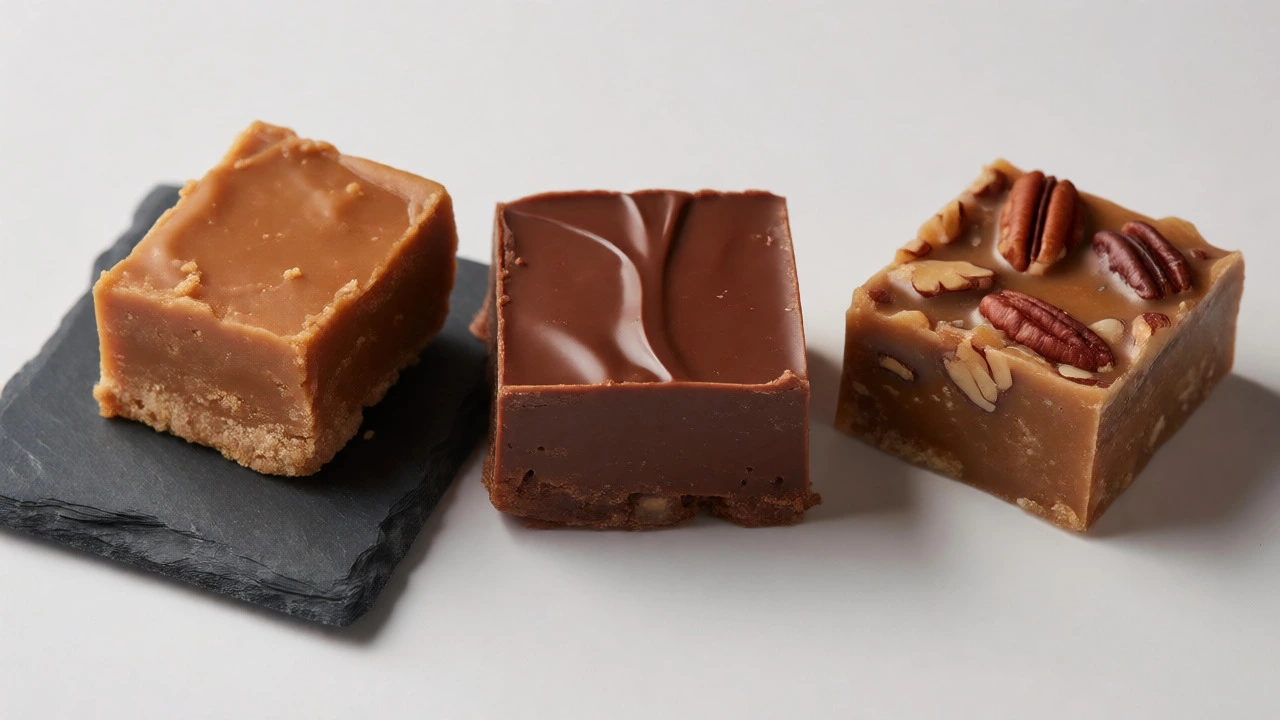
Just as "Kleenex" replaces "tissue" in common speech, certain fudge brands have influenced how Americans describe specific types. Mackinac Island Fudge, for instance, isn’t just a location-based descriptor; it’s become synonymous with hand-cut, large-square fudge served on wooden trays. When someone says, "I want Mackinac style," they’re asking for a specific presentation and density, not just the generic candy.
Similarly, Godiva and other luxury chocolatiers have popularized "ganache fudge," a smoother, creamier variant that blurs the line between truffles and fudge. In upscale urban markets, you might hear people asking for "ganache-style fudge" to differentiate it from the rustic, crumbly homemade kinds sold at farmers' markets.
It’s worth noting that no major brand has successfully replaced the word "fudge" entirely. You don’t hear people saying, "Pass me a Hershey’s," when they mean fudge. The category is too broad, and the homemade culture is too strong. Americans take pride in their kitchen-made fudge, keeping the generic term alive and well.
What Americans *Don’t* Call Fudge
To understand what Americans call fudge, it helps to look at what they explicitly reject. Many Europeans, especially Brits, use "toffee" for hard, brittle candies that Americans would call "hard candy" or "brittle." Americans almost never call fudge "toffee." If you offer a Brit some American fudge and call it toffee, they’ll be confused. To them, toffee is crunchy; fudge is soft.
Also, avoid calling it "candy bar" unless it’s wrapped and commercially produced. A slab of fudge cut from a pan is rarely referred to as a candy bar. "Candy" is the hypernym-the general category-but Americans specify "fudge" rather than just "candy" because the texture and preparation method are distinct enough to warrant their own label.
Finally, don’t confuse fudge with "fondant." In baking, fondant is a pliable icing used to cover cakes. While the base ingredient (sugar syrup) is similar, the end product is totally different. An American baker wouldn’t call a piece of chocolate fudge "fondant," even if it’s soft and smooth.
How to Order Fudge Like a Local
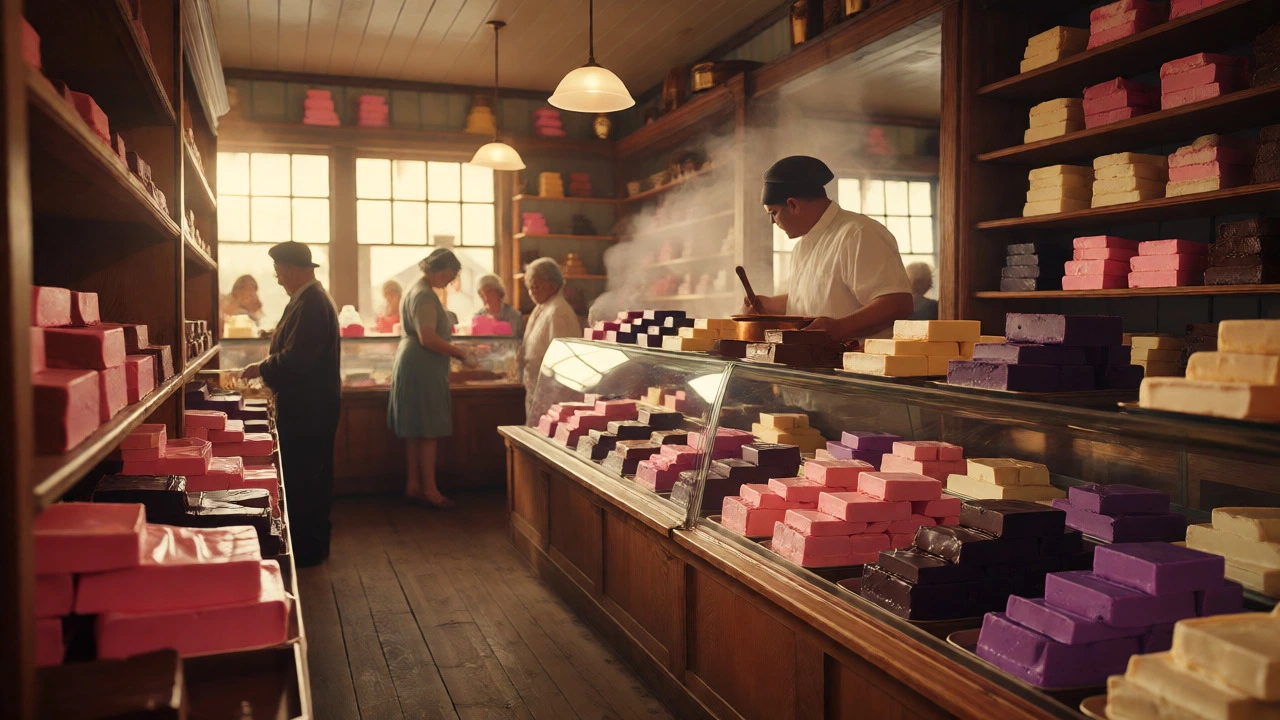
If you’re visiting a US candy shop and want to sound knowledgeable, here’s how to navigate the counter:
- Ask for "cuts": Most shops sell fudge by weight, cutting it into squares or rectangles. Saying "I’d like two cuts of chocolate walnut" is standard phrasing.
- Specify "soft" vs. "crumbly": Traditional fudge is crumbly due to sugar crystals. Modern "creamy" or "smooth" fudge uses more fat (butter/cream) and less crystallization. Asking for "classic crumbly" signals you appreciate tradition.
- Use flavor modifiers: Instead of just "chocolate," try "dark chocolate sea salt" or "peanut butter swirl." These are recognized categories nationwide.
- Check for "homemade": In tourist towns, "homemade" is a marketing keyword implying smaller batches and higher quality. It’s not a legal term, but it’s widely understood.
Remember, context matters. At a grocery store, you’ll find pre-packaged slices labeled simply "Fudge." At a specialty shop, you’ll see elaborate displays with names like "Midnight Mint" or "Salted Caramel Swirl." Both are correct. The core term remains unchanged.
Why This Matters for Your Baking
If you’re following an American recipe titled "Easy Fudge," you expect a quick-set, refrigerated treat, often using condensed milk and chocolate chips. This is sometimes called "quick fudge" or "3-ingredient fudge." It differs from "old-fashioned fudge," which requires precise temperature control (using a candy thermometer) to reach the soft-ball stage (234-240°F). Knowing the distinction helps you troubleshoot. If your "easy fudge" turns out grainy, it’s normal. If your "old-fashioned fudge" turns out rock-hard, you overcooked it.
Terminology guides expectations. When Americans share fudge, they’re sharing a piece of culinary heritage that values simplicity and sweetness. Whether you call it fudge, island fudge, or ganache fudge, the goal is the same: a moment of indulgent comfort.
Is there any region in the US that calls fudge something else?
No, there is no significant region in the United States that uses a completely different word for fudge. The term "fudge" is universally understood and used across all states. However, regional descriptors like "Mackinac Island Fudge" or "Boardwalk Fudge" are common to denote style or origin.
Do Americans call fudge "toffee"?
Generally, no. Americans distinguish clearly between fudge (soft, crystallized sugar) and toffee (hard, brittle, high-heat sugar/butter mixture). Calling fudge "toffee" would cause confusion in most US contexts.
What is the difference between fudge and caramel in the US?
Fudge is typically made with sugar, butter, and milk/chocolate, cooked to a lower temperature to create a soft, grainy texture. Caramel is cooked to a higher temperature, resulting in a chewier, smoother texture with a distinct burnt-sugar flavor. Brown sugar fudge can taste similar to caramel, but the structural integrity differs.
Why is Mackinac Island fudge famous?
Mackinac Island, Michigan, became famous for fudge in the late 1800s when tourists discovered the local confectioners’ skill. Today, it’s a cultural icon, with dozens of shops making fresh fudge daily. The term "Mackinac Island Fudge" implies a specific hand-cut, large-square style, though the basic recipe is similar to standard fudge.
Can I call white chocolate fudge just "white fudge"?
Yes, "white fudge" is a common shorthand for vanilla or white chocolate fudge in the US. It’s understood immediately in candy stores and recipes.