
Brownie Symbolism Decoder
Select the characteristics that best describe your brownie or the situation to reveal its symbolic meaning.
Symbolic Interpretation:
Why do we reach for a square of chocolate when we need comfort? It’s not just the sugar rush. There is something deeply symbolic about brownies, a dense, fudgy treat that has become a global shorthand for warmth, nostalgia, and simple pleasure. When you ask what brownies symbolize, you are touching on layers of history, folklore, and modern psychology that go far beyond the baking sheet.
We often think of food as fuel or flavor, but in reality, every bite carries meaning. Brownies represent a bridge between the rustic past and our modern desire for quick, intense satisfaction. They are humble yet rich, messy yet structured. To understand their true weight, we have to look at where they came from, how folklore shaped their name, and why they remain a staple in our emotional diet today.
The Origins: A Symbol of Resourcefulness
To understand the symbolism of brownies, you first have to understand their birth. Unlike cakes, which were once symbols of wealth and celebration, brownies emerged from necessity. The story goes that in 1893, during the World’s Columbian Exposition in Chicago, Bertha Palmer requested a portable cake for guests who would be eating while walking around the fairgrounds. Her chef created a small, hand-sized bar made with leftover ingredients-chocolate, flour, eggs, and butter.
This origin story makes brownies a symbol of resourcefulness. They represent making something delicious out of scraps, turning the ordinary into the extraordinary. In an era before instant gratification, this was a triumph of culinary ingenuity. The brownie wasn’t meant to be fancy; it was meant to be practical. This practicality is still part of its identity. You don’t serve brownies on a silver platter at a state dinner; you serve them in paper bags at a bake sale or on a paper plate after a long day.
The lack of leavening agents like baking powder distinguishes brownies from cakes. This density is key. While a cake rises and becomes airy, a brownie stays grounded. Symbolically, this grounds us. It represents substance over style, depth over surface-level sweetness. When you eat a brownie, you are consuming something substantial, something that feels real and unpretentious.
Folklore and the Name: Hidden Meanings
Before they were chocolate treats, "brownies" were mythical creatures. In British and Scottish folklore, a brownie is a household spirit that performs chores overnight in exchange for food and kindness. These spirits were small, wore brown clothing, and worked silently in the night. If treated well, they kept the house clean and safe. If offended, they caused mischief.
This connection adds a layer of magical symbolism to the dessert. Eating a brownie can be seen as a nod to these helpful spirits-a way of inviting good luck and domestic harmony into your home. The act of sharing brownies mirrors the folkloric tradition of leaving out milk or cream for the spirits. It is a gesture of hospitality and gratitude.
Interestingly, the color brown itself carries significant weight. In nature, brown is the color of earth, wood, and roots. It symbolizes stability, reliability, and grounding. When combined with the dark richness of chocolate, the brownie becomes a symbol of deep, earthy comfort. It is not the bright, flashy pink of a birthday cake; it is the steady, dependable brown of the forest floor. This makes it a perfect companion for times when you need stability rather than excitement.

Nostalgia and Emotional Comfort
In modern culture, brownies are perhaps most strongly associated with nostalgia. For many people, the smell of baking brownies triggers immediate memories of childhood, family gatherings, or school events. They symbolize home and belonging. Because they are easy to make and require few special tools, almost everyone has encountered them in a domestic setting.
Psychologically, brownies serve as a form of edible security blanket. They are predictable. You know exactly what you’re going to get: sweet, chocolatey, and satisfying. In a world that is constantly changing and often chaotic, that predictability is comforting. They represent a return to basics, a moment where life slows down enough to enjoy a simple pleasure.
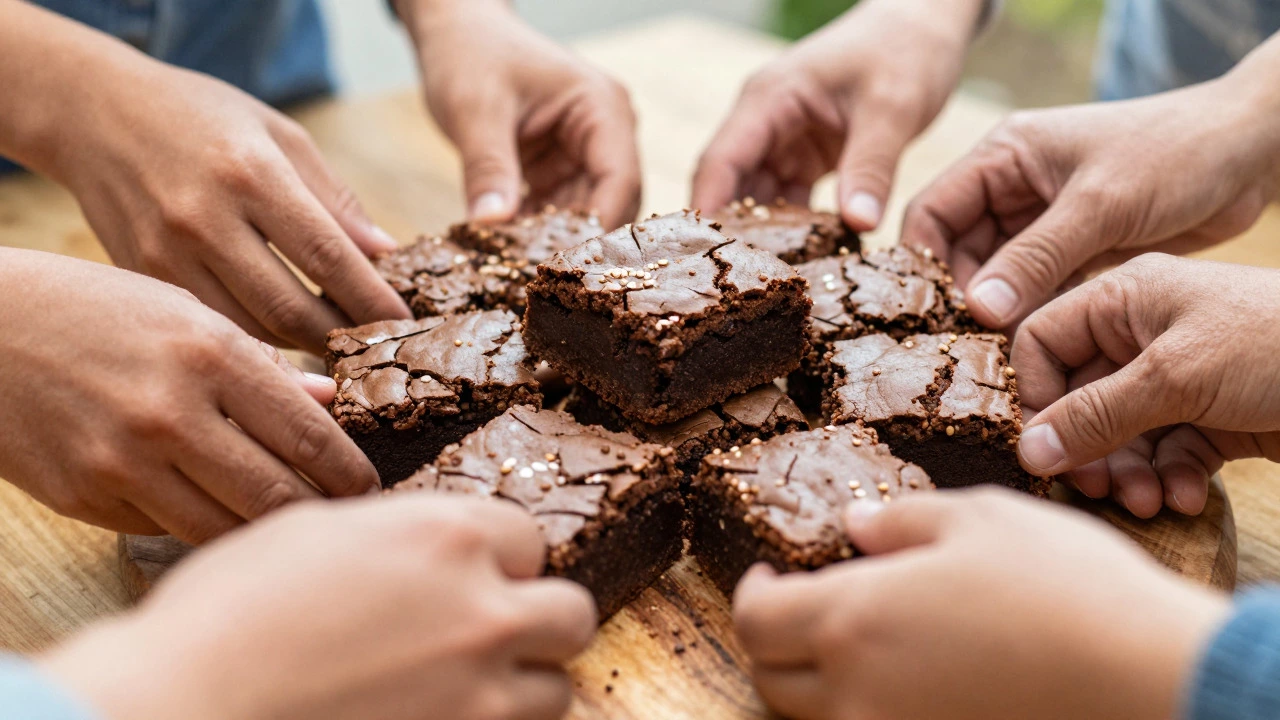
This emotional connection is why brownies are so popular in charitable contexts. Bake sales, charity drives, and community fundraisers rely heavily on brownies because they evoke a sense of community support. Sharing a brownie is an act of giving. It says, “I want you to feel good.” This transforms the brownie from a mere snack into a symbol of generosity and social bonding.
Cultural Variations: What Brownies Mean Around the World
While the American brownie is iconic, its interpretation varies globally, adding different layers of meaning:
- In the UK: Brownies are often lighter and cakier, reflecting a preference for less dense sweets. Here, they might symbolize a more restrained, polite indulgence.
- In Japan: The introduction of brownies led to creative variations like matcha or red bean flavors. This reflects a cultural appreciation for innovation and seasonal aesthetics. Brownies here symbolize fusion and artistic expression.
- In Latin America: Often confused with or adapted into local desserts like tres leches bars or flan-like textures, the concept of a moist, sweet bar resonates with traditions of communal feasting.
These variations show that while the core idea remains the same, the symbolism adapts to local values. Whether it’s restraint, innovation, or community, the brownie acts as a canvas for cultural expression.
Modern Symbolism: Guilt and Indulgence
In today’s health-conscious society, brownies also carry a complex relationship with guilt. Because they are high in sugar and fat, they represent forbidden fruit. Eating a brownie can feel like a rebellion against strict dietary rules. This makes them a symbol of indulgence and temporary escape.
However, the rise of vegan, gluten-free, and keto-friendly brownies has shifted this narrative. Now, brownies can symbolize inclusivity and adaptation. They show that even those with dietary restrictions can participate in the joy of shared treats. This evolution highlights a broader societal shift towards acceptance and flexibility.
| Attribute | Symbolic Meaning | Context |
|---|---|---|
| Density | Substance, Grounding | Contrast to airy cakes |
| Color (Brown) | Stability, Earthiness | Natural, unpretentious |
| Portability | Practicality, Convenience | Origin in fairgrounds |
| Sharing | Community, Generosity | Bake sales, gifts |
| Simplicity | Nostalgia, Home | Childhood memories |
Conclusion: More Than Just Dessert
So, what do brownies really symbolize? They are a multifaceted icon representing resourcefulness, comfort, community, and indulgence. From their humble beginnings as a fairground snack to their current status as a global comfort food, brownies have earned their place in our hearts and kitchens. They remind us that sometimes, the simplest things carry the deepest meanings. Next time you bake a batch, remember that you’re not just mixing ingredients-you’re creating a piece of history, a gesture of kindness, and a moment of pure joy.
Why are brownies called brownies?
The name likely comes from the color of the baked good, which is brown due to the chocolate and caramelized sugars. However, some historians suggest a link to the folklore of "brownies," the helpful household spirits, implying that the treat brings good luck and comfort to the home.
What is the difference between a brownie and a cake?
Brownies are denser and fudgier because they contain more fat and sugar relative to flour, and they typically use little to no leavening agents like baking powder. Cakes are lighter, airier, and rely on leavening to rise. This density gives brownies their characteristic chewy or fudgy texture.
Are brownies considered a healthy treat?
Traditional brownies are high in sugar and calories, making them an indulgent treat rather than a health food. However, modern variations using whole grains, nuts, fruits, or alternative sweeteners can offer some nutritional benefits, such as fiber and antioxidants from dark chocolate.
What does it mean if someone gives you brownies?
Giving brownies is generally seen as a friendly, generous gesture. It symbolizes care, comfort, and a desire to share happiness. It’s a low-pressure way to show appreciation or welcome someone into your space, rooted in the tradition of community baking and sharing.
How did brownies originate?
Brownies are believed to have originated in the United States in the late 19th century. The most famous story involves Bertha Palmer at the 1893 World’s Columbian Exposition in Chicago, who requested a portable cake for her guests. Chefs created a small, hand-sized chocolate bar using available ingredients.