Pavlova Tips: Perfect Meringue Secrets and Common Mistakes to Avoid
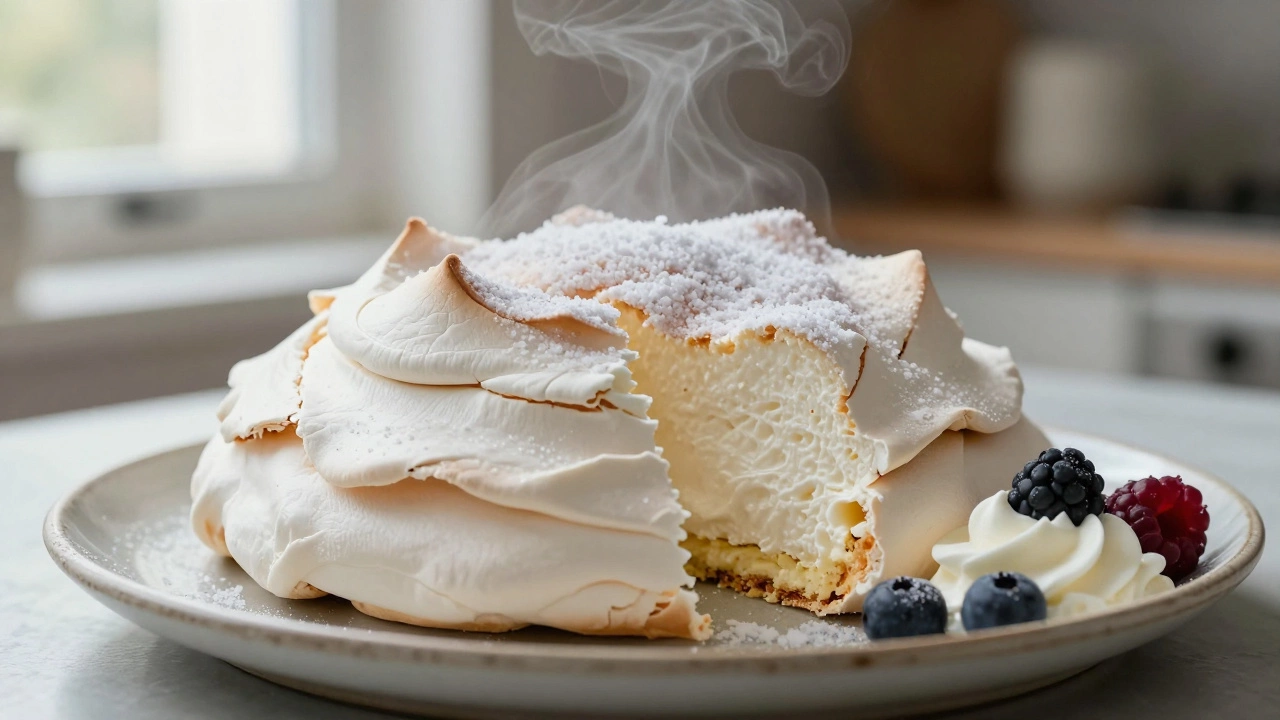
When you bake a pavlova, a crisp meringue-based dessert with a soft, marshmallowy center, often topped with whipped cream and fruit. It's known as meringue nest, and it’s one of those desserts that looks fancy but can be tricky to get right. The difference between a perfect pavlova and a collapsed, sticky mess isn’t luck—it’s technique. Most people fail because they skip the small details that control moisture, temperature, and airflow during baking.
You need meringue, a mixture of whipped egg whites and sugar that forms the base of pavlova to hold its shape. That means your bowl and beaters must be completely grease-free—even a drop of oil can keep the whites from whipping up. Use room temperature egg whites; they whip faster and hold more air. And don’t rush the sugar. Add it slowly, one tablespoon at a time, while the mixer runs. If you dump it in all at once, the sugar won’t dissolve fully, and your pavlova will weep after baking.
Another big mistake? Opening the oven too early. Pavlova needs slow, steady heat to dry out without cracking. Bake it low and slow—around 120°C (250°F)—for at least an hour. Then, turn off the oven and leave it inside with the door closed for another hour. This lets the meringue cool gradually so the inside stays soft while the outside stays crisp. Skipping this step is why so many pavlovas turn chewy or collapse.
Don’t forget the vinegar or cornstarch. A teaspoon of white vinegar or a tablespoon of cornstarch mixed into the sugar helps stabilize the meringue and keeps it from getting too sugary or sticky. It’s a small trick, but it makes a real difference in texture. And when you top it, wait until it’s completely cool. Put on the cream and fruit right before serving. If you leave it too long, the moisture from the fruit will make the shell soggy.
People often think pavlova is just for special occasions, but it’s actually one of the easiest desserts to make when you know the rules. No flour, no butter, no complicated steps—just egg whites, sugar, and patience. It’s also naturally gluten-free and can be made dairy-free if you skip the cream. That’s why it shows up in so many baking blogs, from beginner guides to advanced pastry tips.
What you’ll find below are real, tested advice from people who’ve burned, cracked, and collapsed their way to perfect pavlova. No fluff. No myths. Just what works: how to fix runny meringue, how to tell when it’s done, why your oven temperature matters more than you think, and what to do if your pavlova sticks to the paper. These aren’t theory—they’re the fixes that actually saved someone’s dessert.
Learn the truth about overcooking pavlova-why it cracks, how to tell if it's ruined, and the exact baking method that guarantees a crisp shell with a marshmallow center every time.