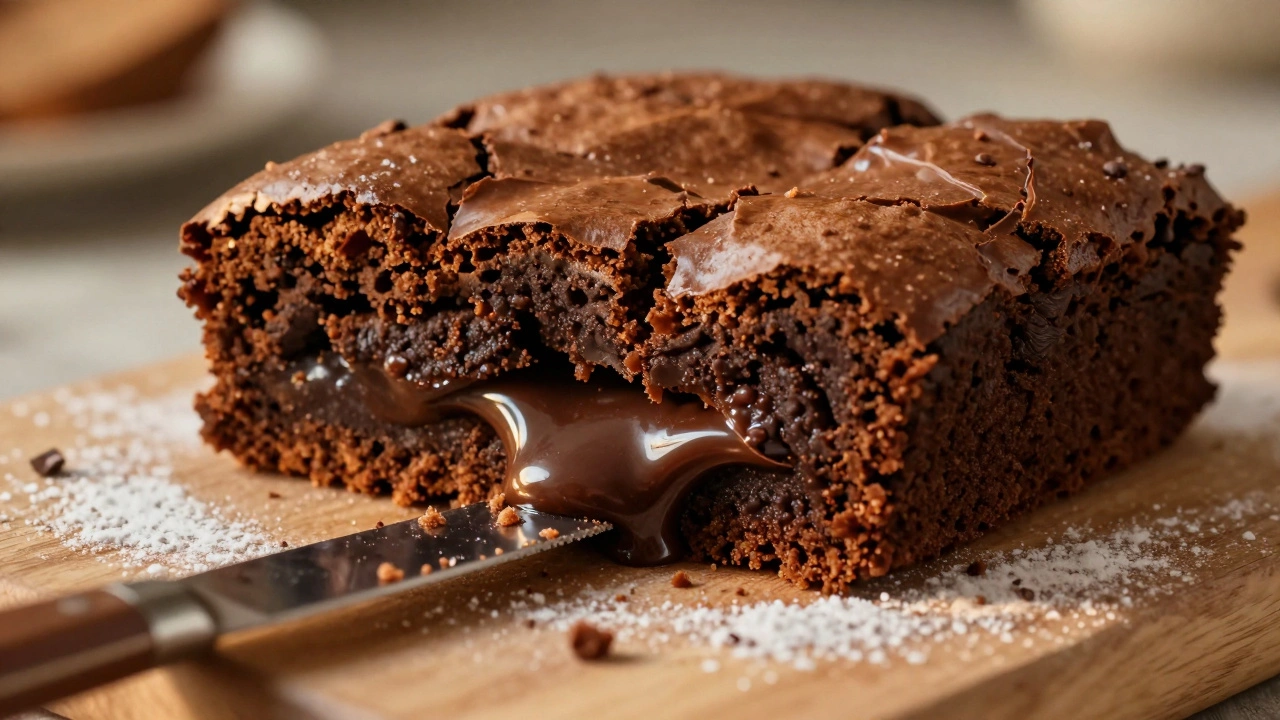
Brownie Texture Calculator
Determine if your brownie will be fudgy or cakey based on the science in the article. Input your ingredient ratios and baking parameters to see your expected texture.
Your Brownie Analysis
When you bite into a warm brownie, what are you really tasting? It’s not just chocolate and sugar. A brownie produces something deeper - a sensory experience built from chemistry, temperature, and technique. The crumb, the shine, the crackly top, the fudgy center - none of these happen by accident. They’re the result of specific ingredients interacting in precise ways. So, what does a brownie produce? It produces texture, flavor, and emotion - all from a short list of simple ingredients.
The Core Ingredients and What They Do
A classic brownie has five key players: sugar, butter, eggs, flour, and chocolate. Each one has a job. Sugar isn’t just sweetener. It pulls moisture from the air, keeps the brownie soft, and helps form that signature crackly top by crystallizing on the surface. Butter adds richness and carries flavor, but it also controls spread. Too much, and your brownie turns flat. Too little, and it’s dry.
Eggs are the unsung heroes. The yolks bring fat and emulsifiers that bind everything together. The whites? They trap air and create structure. When you beat eggs with sugar, you’re not just mixing - you’re building a network that holds the batter together as it bakes. That’s why overmixing ruins brownies. You’re not making cake batter. You’re gently folding in air, not whipping it out.
Flour is the least glamorous, but it’s critical. It provides structure, but too much turns a brownie into a brick. Most fudgy recipes use just 1/2 to 3/4 cup per 16-ounce chocolate batch. That’s less than half what you’d use in a cake. And the type? All-purpose works fine, but cake flour makes for a softer crumb. Cornstarch? Some bakers swap 1-2 tablespoons in for extra fudginess.
Chocolate is where the magic happens. Dark chocolate with 60-70% cocoa solids gives depth. Milk chocolate? It melts faster and makes a sweeter, softer brownie. But here’s the twist: melting chocolate with butter before adding it to the batter creates a smoother emulsion. That’s why melted chocolate brownies taste richer than ones made with chips. Chips hold their shape. Melted chocolate flows into every pocket.
How Heat Changes Everything
Baking temperature isn’t just about cooking - it’s about control. Most recipes say 350°F (175°C). But if you lower it to 325°F (165°C), you get slower, more even baking. The center stays molten longer, and the edges don’t crisp too fast. That’s why professional bakers often bake at lower temps for longer. You’re not trying to cook through - you’re trying to set the structure without drying it out.
The pan matters too. Dark metal pans absorb more heat and bake faster. Glass? Slower, more even. A springform pan? It lets the sides cool faster, which can cause cracking. The best bet? Light-colored aluminum, lined with parchment paper. That way, heat rises evenly, and you can lift the whole brownie out without breaking it.
And don’t forget cooling. Brownies continue to bake after you take them out. If you cut them while hot, they’ll crumble. Wait at least two hours. The starches in the flour and the proteins in the eggs need time to set. That’s when the fudgy center becomes stable - not gooey, not dry. Just right.
The Fudgy vs. Cakey Divide
Why do some brownies feel like fudge, and others taste like cake? It’s all about ratios. Fudgy brownies have more fat and sugar relative to flour. Think: 1 cup butter, 2 cups sugar, 1/2 cup flour. Cakey ones? More flour, more eggs, sometimes baking powder. A teaspoon of baking powder lifts the batter like a muffin. It creates air pockets. That’s why cakey brownies rise more and have a lighter crumb.
But here’s the secret most recipes hide: the egg-to-flour ratio. One egg per 1/2 cup flour? Fudgy. Two eggs? Cakey. Three? You’re making a brownie cake. Most people don’t realize they’re not just choosing a recipe - they’re choosing a texture philosophy.
Some bakers add sour cream or yogurt. That adds moisture and acidity, which softens gluten formation. The result? A tender, dense bite that doesn’t dry out. Others use coffee. Not enough to taste like coffee - just enough to deepen the chocolate. A tablespoon of instant espresso powder boosts flavor without changing texture.
What Happens When You Mess With the Recipe?
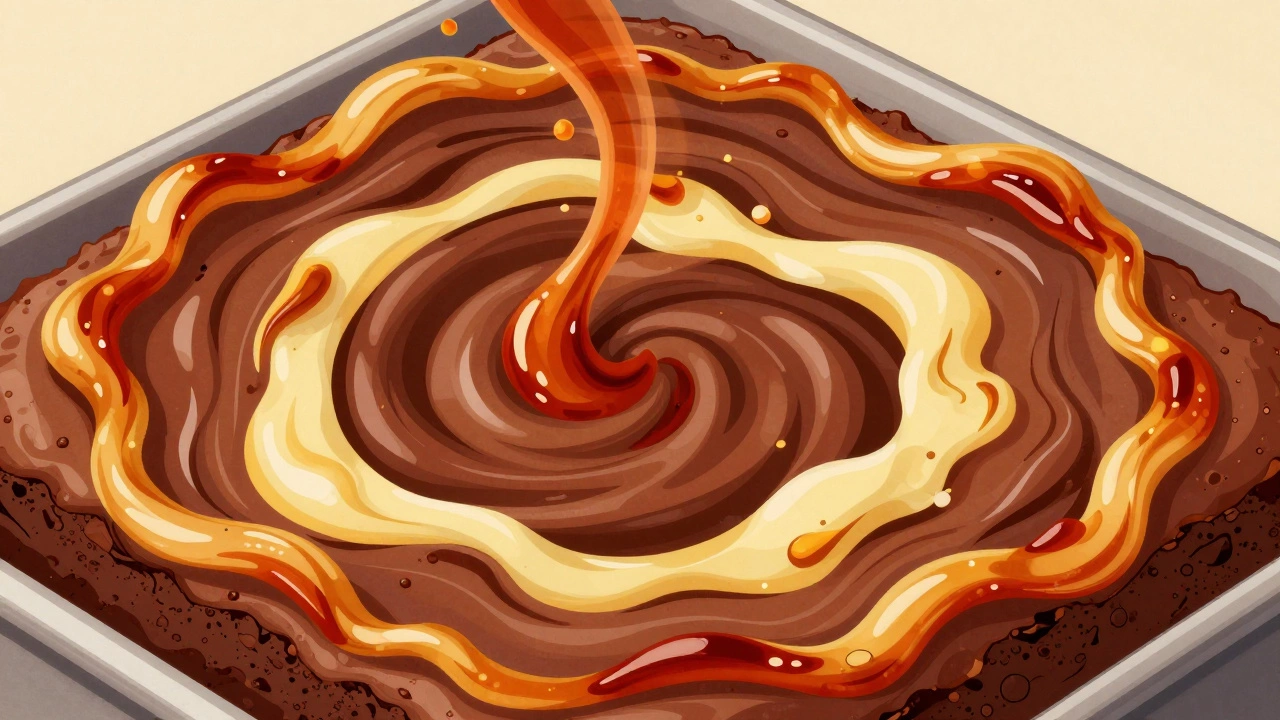
Ever tried substituting oil for butter? You get a greasier brownie with no crackly top. Butter has water in it. That water turns to steam as it bakes, helping the surface crisp. Oil? It just coats everything. No lift. No shine.
What about applesauce? It replaces fat, but it also adds water. Your brownie will be dense, moist, and maybe a little gummy. It’s not bad - just different. Vegan brownies? They use flax eggs and plant-based butter. The texture changes. The flavor stays. But they need more time to bake because plant fats melt at lower temps.
And cocoa powder? It’s not the same as chocolate. Unsweetened cocoa gives intense chocolate flavor, but no fat. So you need to add extra butter or oil. Otherwise, the brownie turns dry and chalky. That’s why recipes using cocoa powder always include extra fat.
The Hidden Science: Maillard and Caramelization
That deep, almost smoky flavor in a perfect brownie? That’s the Maillard reaction. It happens when sugars and proteins react under heat - above 285°F (140°C). It’s why toasted nuts, seared meat, and crusty bread taste so good. Brownies do it too. The edges get darker because they’re hotter. That’s where the flavor concentrates.
Caramelization? That’s just sugar breaking down. When sugar heats past 320°F (160°C), it turns amber. That’s why some brownies have a glossy, almost candy-like top. It’s not overbaked. It’s caramelized sugar. You can see it when you run a knife across the surface - it glows slightly.
These reactions need time. That’s why letting your batter rest for 30 minutes before baking helps. The sugar dissolves more fully. The flour hydrates. The flavors meld. It’s not magic. It’s chemistry.
How to Know When It’s Done
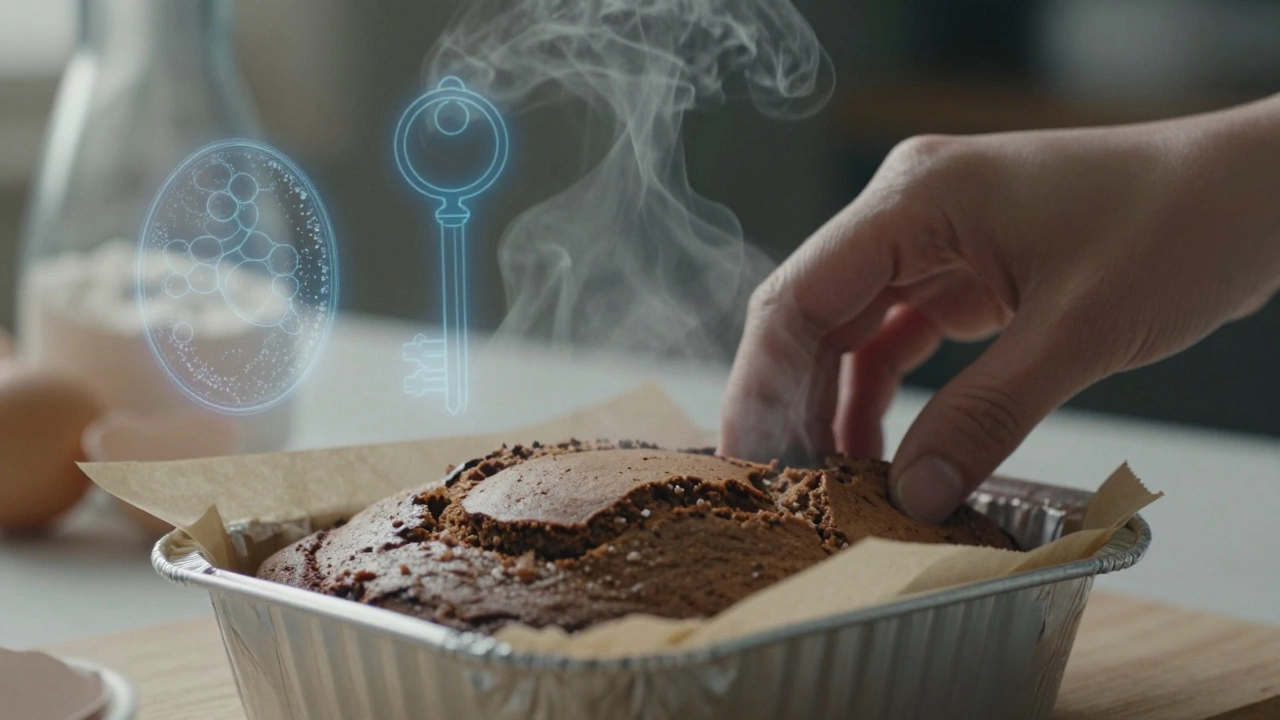
There’s no single rule. The toothpick test? Useless. If it comes out clean, you’ve overbaked it. A fudgy brownie should have a few moist crumbs clinging to the toothpick. That’s what you want.
Look at the edges. They should be pulling away from the pan slightly. The center should still jiggle like gelatin - not slosh, but move as one unit. That’s the moment to take it out. The residual heat will finish the job.
And don’t trust the timer. Ovens lie. Always bake by sight and feel. A 9x13 pan at 350°F usually takes 30-35 minutes. But if your oven runs hot? 25 minutes might be enough. That’s why experienced bakers watch the color, not the clock.
What a Brownie Really Produces
A brownie doesn’t just produce dessert. It produces comfort. It produces nostalgia. It produces a moment where the kitchen smells like childhood, and the texture makes you pause. That’s because every ingredient - sugar, butter, egg, chocolate - plays a role in more than flavor. They create structure, moisture, and warmth. They transform simple elements into something that lingers on the tongue and in the memory.
So when someone asks, "What does a brownie produce?" - the answer isn’t just "a treat." It’s a balance of science and soul. The right ratio makes it fudgy. The right heat makes it shiny. The right wait makes it perfect. And that’s why, after all these years, we still bake them.
Why do my brownies come out dry?
Dry brownies usually come from overbaking or too much flour. Most fudgy recipes use only 1/2 to 3/4 cup of flour for a standard batch. If you’re using a full cup or more, you’re making a cake, not a brownie. Also, check your oven temperature - many ovens run hotter than they say. Use an oven thermometer. And never bake past the point where the center still jiggles slightly. It keeps cooking on the pan.
Can I make brownies without eggs?
Yes, but the texture changes. Egg substitutes like flaxseed meal mixed with water (1 tablespoon ground flax + 3 tablespoons water = 1 egg) work, but they make the brownie denser and slightly grainy. For better results, use aquafaba (the liquid from a can of chickpeas) - 3 tablespoons per egg. It whips up like egg whites and gives a lighter crumb. Vegan brownies also need extra fat - like coconut oil or vegan butter - to replace the richness eggs provide.
Why do some brownies have a crackly top and others don’t?
The crackly top comes from sugar crystallizing on the surface. To get it, you need to beat the sugar and eggs together until they’re pale and slightly thickened - about 2-3 minutes with a hand mixer. This dissolves the sugar and traps air. When the batter hits the oven, the air expands, and the sugar rises to the top, forming a thin, crisp crust. If you just stir the sugar in, you won’t get that effect. It’s not about the recipe - it’s about the technique.
Is it better to use chocolate bars or chocolate chips?
Chocolate bars melt more evenly and create a smoother, richer texture. Chips are designed to hold their shape, so they stay as little pockets of chocolate. If you want a uniform fudgy bite, use chopped chocolate bars. Chips work fine if you like texture contrast, but they don’t blend into the batter the same way. For the best flavor, use high-quality chocolate with 60-70% cocoa solids - whether it’s a bar or chips.
How long should I wait before cutting brownies?
Wait at least two hours. Brownies continue to set as they cool. Cutting them too soon causes crumbling and messy edges. The starches and proteins need time to firm up. If you’re in a rush, chill them in the fridge for 30 minutes - that speeds up the setting process. But for the cleanest cuts and best texture, patience pays off. A sharp knife, wiped clean between cuts, helps too.