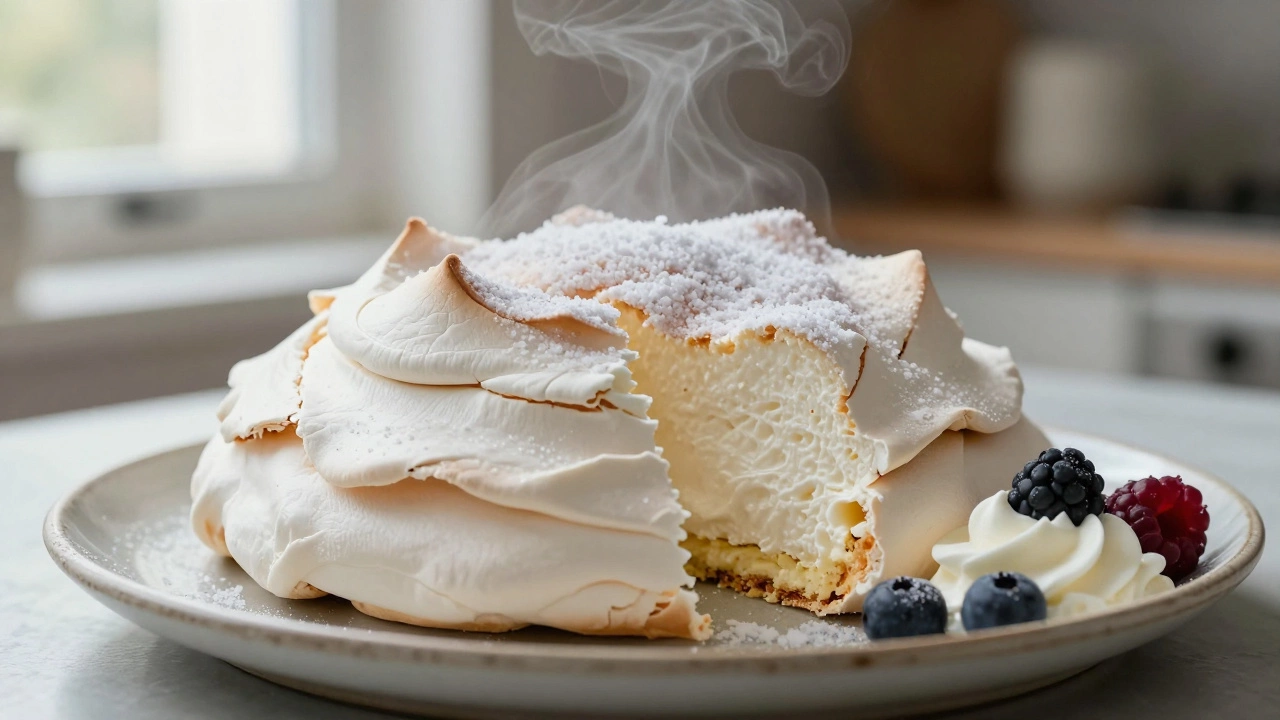
Pavlova Doneness Checker
Is your pavlova too dry, too sticky, or just right? Answer these questions to determine if your pavlova is overcooked, undercooked, or perfectly baked.
Everyone’s had that moment. You pull your pavlova out of the oven, proud of those crisp white peaks, only to find it’s cracked, sticky inside, or worse-collapsed into a sugary puddle. You ask yourself: can pavlova be overcooked? The answer isn’t yes or no. It’s more complicated than that. And if you’ve ever ruined a batch because you followed a recipe to the minute, you’re not alone.
What Happens When Pavlova Goes Too Far
Pavlova is a delicate balance. It’s not a cake. It’s not a meringue. It’s a hybrid that lives on the edge of crispness and chew. The outside should snap like a winter leaf. The inside should give way like a cloud-soft, marshmallowy, just barely holding together. But if you bake it too long, you lose that magic. Overcooking pulls all the moisture out. The egg whites dry up. The sugar crystals start to break down and caramelize unevenly. What was once a pillowy center turns grainy. The surface cracks more than it should. And instead of a light, airy shell, you get something dense, brittle, and oddly sweet. It still tastes like sugar and egg, but it doesn’t feel like pavlova anymore. I’ve made dozens of pavlovas over the years, mostly for birthday parties in Bristol. I’ve had them crack in the oven. I’ve had them weep. I’ve had them sit too long after baking and turn soggy. But the worst? When I left mine in for 15 extra minutes because I thought, “It’s not golden enough.” That one tasted like burnt sugar and regret.How to Tell If It’s Overcooked (Not Just Undercooked)
Most people worry about undercooking. They think if it’s soft inside, it’s raw. But undercooked pavlova is wet, sticky, and won’t hold its shape. Overcooked pavlova? It’s dry, crunchy all the way through, and lacks that signature chew. Here’s how to tell the difference:- Undercooked: The surface feels tacky. When you press gently, your finger sinks in and leaves a dent. The inside is wet, like raw meringue. It might even stick to the parchment.
- Overcooked: The surface is hard, almost brittle. When you tap it, it sounds hollow. The inside is dry and grainy, not soft. It cracks easily when you cut into it, even without pressure.
- Just right: The shell is crisp. The center gives slightly under gentle pressure. It doesn’t stick to your finger. It smells like toasted sugar, not burnt.
The Right Baking Time and Temperature
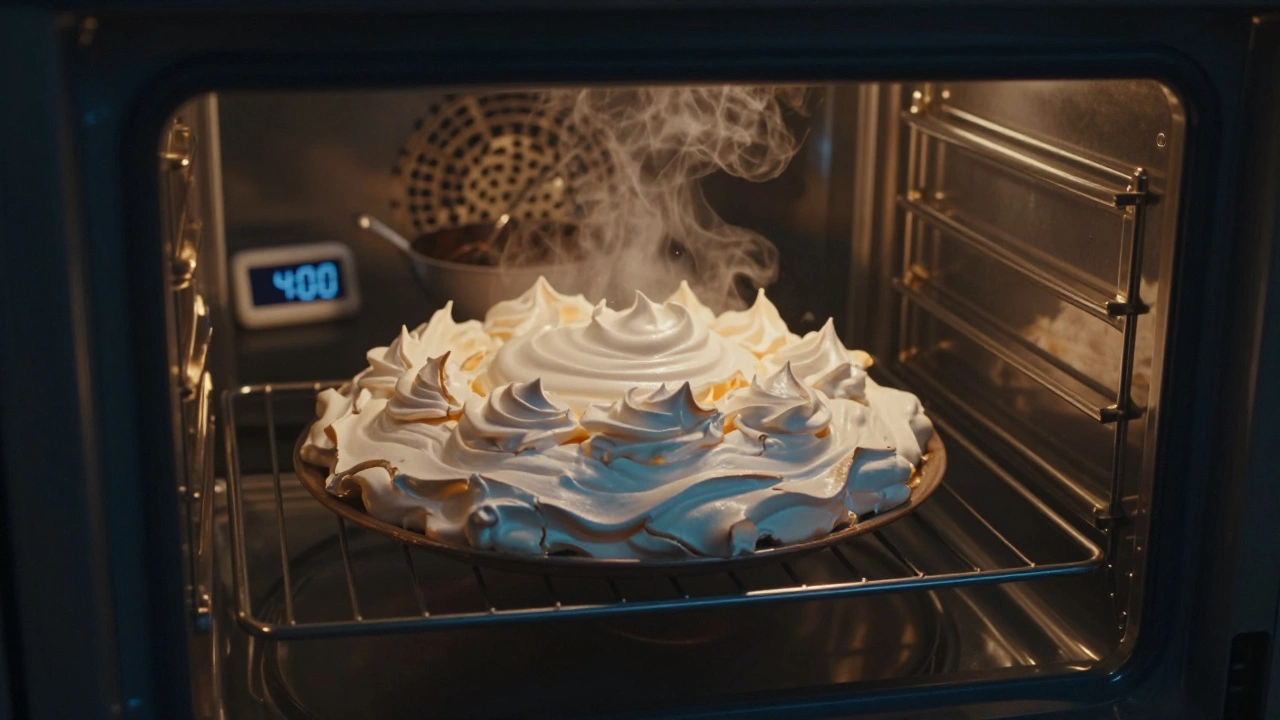
A standard pavlova (about 20cm wide) needs to bake at 120°C (250°F) for 1.5 to 2 hours. That’s slow. That’s low. That’s non-negotiable. Why so low? Egg whites start to dry out at 60°C. Sugar melts around 160°C. If you crank the heat, the outside cooks too fast. The inside stays raw. The sugar doesn’t have time to crystallize properly. You get a hard shell with a gooey center-common mistake. If you’re baking a larger pavlova, say 25cm or more, add 30 minutes. But never go above 130°C. I’ve seen recipes that say “bake at 150°C for 45 minutes.” That’s not pavlova. That’s a sugar brick. And here’s the trick most people miss: turn off the oven and leave it inside to cool completely. This isn’t optional. It’s the secret. The residual heat finishes the cooking gently. The steam escapes slowly. The structure sets without cracking. If you yank it out after 2 hours, you’re asking for collapse. I’ve tested this. I baked two identical pavlovas. One I pulled out right at 2 hours. The other stayed in the turned-off oven for 4 more hours. The first one cracked down the middle. The second one? Perfect. No cracks. No stickiness. Just that airy, delicate center.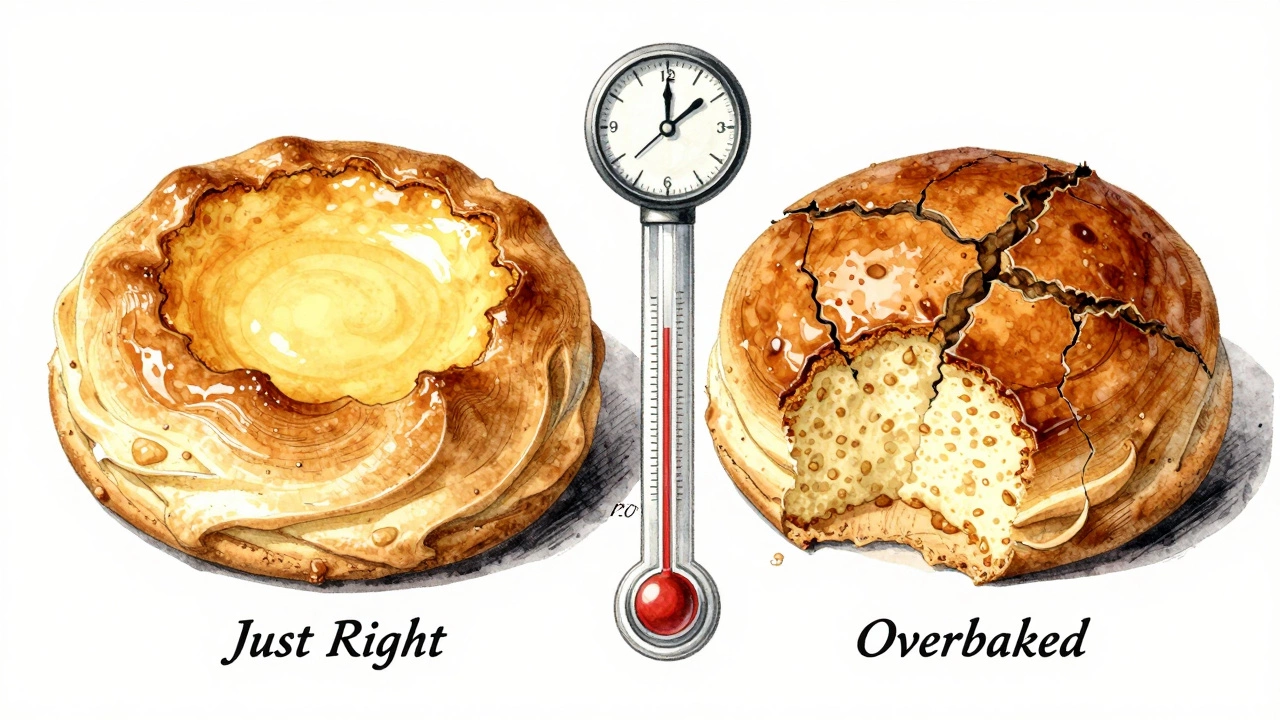
Why Cracks Happen (And Why They’re Not Always Bad)
Cracks are normal. They’re not a sign of failure. They’re a sign of expansion. As the egg whites heat up, they expand. The sugar crust hardens. The center keeps rising. It pushes against the shell. It splits. That’s physics. But if your pavlova looks like it exploded-deep, jagged cracks all over-it’s probably because you overbaked it. Or you opened the oven door too early. Or you didn’t let it cool slowly. The best pavlovas have one or two small cracks. That’s fine. You’ll cover them with cream and fruit anyway. But if it’s crumbling when you lift it off the tray? That’s overcooking.How to Save a Slightly Overcooked Pavlova
You baked it too long. The center is dry. The shell is too hard. Don’t throw it out. Here’s what you can do:- Break it into pieces. Layer it in a trifle with custard, berries, and whipped cream. The dry bits soak up the liquid and become tender again.
- Use it as a crust for a no-bake cheesecake. Crush it, mix with a little melted butter, press into a tin. It’ll hold together fine.
- Turn it into a dessert parfait. Layer pieces with yogurt, honey, and chopped nuts. The crunch works.
What to Do Instead of Overbaking
Here’s a foolproof method:- Preheat your oven to 120°C. Use an oven thermometer-many ovens are off by 10-15 degrees.
- Line a baking tray with parchment. Draw a 20cm circle as a guide.
- Whip egg whites (room temperature) to stiff peaks. Add sugar, one tablespoon at a time, until glossy.
- Add a teaspoon of white vinegar or cornstarch. It helps stabilize the meringue.
- Pile the mixture onto the circle. Shape the edges up slightly to hold the cream later.
- Bake for 1 hour 45 minutes. Then turn off the oven. Leave the pavlova inside for 4 hours or overnight.
- Only take it out when it’s completely cool. If it’s warm, it’ll soften.
Common Myths About Pavlova
- Myth: You need to bake it until it’s golden. Truth: Golden means caramelized sugar. That’s overdone.
- Myth: Opening the oven door briefly won’t hurt. Truth: It’s like popping a balloon. The sudden drop in heat causes collapse.
- Myth: More sugar = crispier shell. Truth: Too much sugar makes it sticky and hard to dry out.
- Myth: It’s ready when it looks dry. Truth: It needs the cooling time to set properly.
Final Tip: Texture Is Everything
Pavlova isn’t about how it looks. It’s about how it feels. The perfect bite? Crisp on the outside. Soft, cool, and light on the inside. It should melt, not crunch. It should taste like sweet air. If yours is dry and hard, you overcooked it. If it’s sticky and wet, you undercooked it. If it’s just right? You’ll know the moment you take your first bite.Can you eat pavlova if it’s sticky inside?
Yes, if it’s only slightly sticky, it’s undercooked-not spoiled. Just put it back in the turned-off oven for another hour. If it’s very wet or oozes when cut, it likely didn’t bake long enough or the sugar didn’t dissolve fully. Re-baking won’t fix that. It’s better to start over.
Why does my pavlova weep or leak liquid?
Weeping happens when sugar hasn’t fully dissolved in the egg whites, or the pavlova is exposed to humidity. Make sure you add sugar slowly while whipping. Store it in an airtight container. If it’s humid outside, don’t make pavlova-wait for a dry day.
Can you freeze pavlova?
Yes, but only the shell. Freeze it unwrapped on a tray first, then wrap in plastic. Don’t freeze it with cream or fruit-that turns mushy. Thaw at room temperature and top just before serving.
Does humidity affect pavlova?
Absolutely. On rainy days or in humid kitchens, pavlova absorbs moisture from the air. It becomes sticky and soft. Avoid making it on high-humidity days. If you must, bake it longer and let it cool in the oven for 6-8 hours.
What’s the best way to store pavlova?
Keep it in an airtight container at room temperature. Don’t refrigerate-it makes the shell soggy. If you’ve topped it with cream and fruit, eat it the same day. Unfilled, it can last 2-3 days if kept dry.