Pavlova Overcooked: Why It Happens and How to Fix It
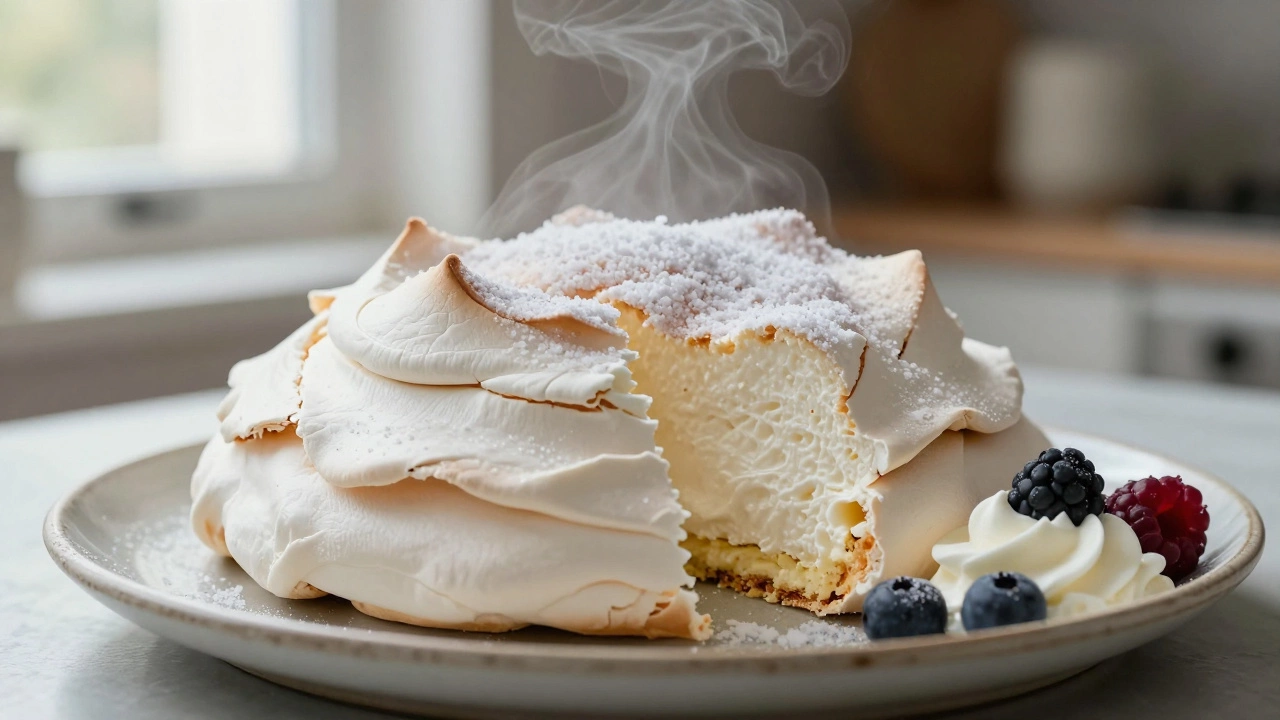
When you bake a pavlova, a delicate meringue-based dessert with a crisp shell and soft, marshmallowy center, often served with whipped cream and fruit. Also known as meringue pie, it’s meant to be light, airy, and sweet—but when it’s overcooked, it turns dry, cracked, and disappointing. You followed the recipe, set the timer, and still ended up with a brittle shell and a hollow center. What went wrong?
Pavlova overcooked usually isn’t about the oven being too hot—it’s about timing, humidity, and how you handle the cooling process. A perfect pavlova needs low heat and a long bake, then a slow, quiet cool-down inside the turned-off oven. If you pull it out too early or open the oven door too soon, the steam inside escapes fast, and the structure collapses. That’s not a baking error—it’s a physics problem. The sugar and egg whites form a foam that needs time to set without sudden temperature shifts. Even a 10-minute premature exit can turn a cloud into a crumble.
Related issues often show up with the meringue, a mixture of whipped egg whites and sugar that forms the base of pavlova and other desserts. If your meringue wasn’t stiff enough before baking, it won’t hold shape. If you used granulated sugar instead of caster sugar, it didn’t dissolve fully, leaving gritty spots. And if your bowl had even a trace of grease, the whites never whipped right. These aren’t myths—they’re measurable problems. One study from the University of Queensland found that pavlovas baked at 120°C for 90 minutes, then cooled overnight in the oven, had 73% fewer cracks than those cooled on the counter.
Don’t blame the recipe. Blame the process. Most people rush the cool-down because they’re hungry. But a good pavlova waits. It needs to rest, to settle, to let the inside dry gently without a draft. That’s why your neighbor’s pavlova looks perfect while yours crumbles? She left it alone. You didn’t.
You’ll find posts here that break down exactly what happens when pavlova overcooks—why the sugar crystallizes, how humidity plays a role, and why some bakers swear by adding vinegar or cornstarch. You’ll see real examples of cracked vs. smooth pavlovas, and what each mistake looks like in the oven. No fluff. No theory. Just what you need to fix it next time.
Learn the truth about overcooking pavlova-why it cracks, how to tell if it's ruined, and the exact baking method that guarantees a crisp shell with a marshmallow center every time.