
Mackinac Island Fudge Matchmaker
Not sure where to start your sweet journey? Answer these questions to find your perfect fudge match.
Your Recommendation:
- Founded:
- Signature Item:
- Best For:
You might think the title of "fudge capital of the world" belongs to a place with a massive factory churning out millions of pounds of candy every year. But if you ask anyone who has ever tasted real, hand-poured fudge, they will point you straight to a tiny island in Michigan. It is not London, it is not New York, and it certainly isn't a supermarket aisle. The answer is Mackinac Island, and once you understand why, you will never look at a block of chocolatey squares the same way again.
Mackinac Island is a small island in Lake Huron, known for its ban on motor vehicles and its historic fudge industry. This designation isn't just marketing fluff; it is backed by over a century of continuous production and a tourism economy built almost entirely around this one confection. Located between Michigan's Upper and Lower Peninsulas, the island is accessible only by ferry or private boat. No cars allowed means no exhaust fumes, just the smell of boiling sugar and vanilla drifting through the streets.
Why Mackinac Island Earned the Title
The story starts long before the first tourist arrived. In the late 1800s, Mackinac Island was already a popular summer resort for wealthy families from Detroit and Chicago. Visitors wanted souvenirs that wouldn't melt in their pockets or spoil on the journey home. Enter fudge. Unlike delicate chocolates that required cool storage, fudge was sturdy, sweet, and shelf-stable. By 1900, dozens of shops were selling it. Today, there are still over ten dedicated fudge shops on an island less than eight miles in circumference. That density alone secures the claim.
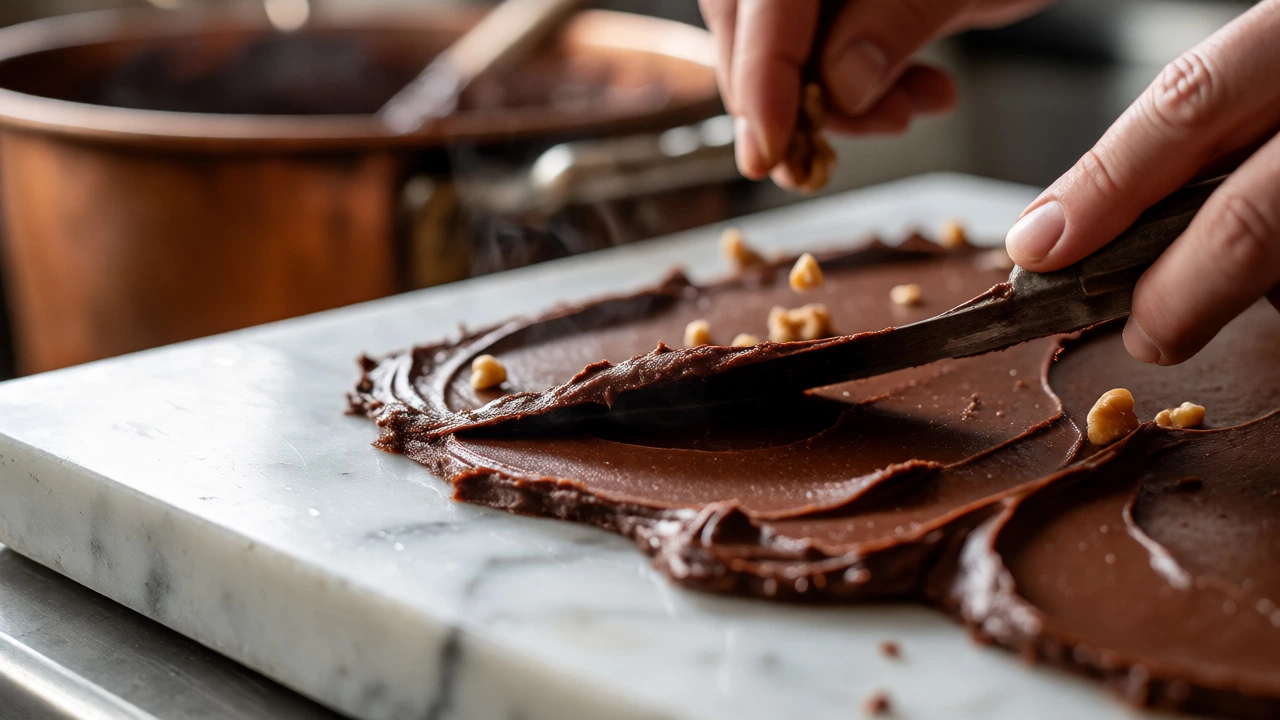
But quantity isn't the only factor. Quality matters. Most shops on the island still make their fudge on marble slabs using traditional copper kettles. You can watch the process through the windows. This transparency builds trust. When you buy a box of maple walnut fudge at Murdick's Fudge or Kilwin's, you know exactly what went into it because you watched it being made. This artisanal approach contrasts sharply with mass-produced candies found elsewhere, giving Mackinac Island a reputation for authenticity that larger cities struggle to replicate.
The History Behind the Sweetness
Fudge likely originated in the United States in the late 19th century, possibly as a student mistake at Vassar College. But it was Mackinac Island that refined it into a cultural icon. During Prohibition, when alcohol sales were banned, many local businesses pivoted to selling sweets. Fudge became the new social lubricant. It was affordable enough for working-class tourists yet luxurious enough for the elite. This dual appeal cemented its status.
The island's isolation also played a role. Because goods had to be shipped in, local producers learned to maximize value from simple ingredients: sugar, butter, milk, and flavorings. They didn't have access to exotic imports year-round, so they mastered the basics. Over decades, this constraint bred excellence. Recipes were passed down through families, tweaked slightly each generation but always respecting the core technique. The result is a product that tastes consistent yet personal, like a family secret shared with strangers.
Top Shops You Cannot Miss
If you plan a visit, you need a game plan. Walking around Main Street without a strategy leads to sugar overload and regret. Here are the heavy hitters you should prioritize:
- Murdick's Fudge: Established in 1905, this is the oldest continuously operating fudge shop on the island. Their original recipe remains unchanged. Try their plain vanilla or dark chocolate varieties to taste the baseline quality.
- Kilwin's: Famous for their signature "Black Forest Cherry" fudge. Kilwin's operates more like a modern franchise but maintains high standards. Their stores often feature live cooking demonstrations, making them great for families.
- JoAnn's Fudge: A smaller, independent shop known for creative flavors like salted caramel and peanut butter cup. If you prefer innovation over tradition, start here.
- Della's: While primarily a restaurant, Della's serves excellent fudge sundaes. Pairing warm fudge with cold ice cream highlights the texture contrast that defines good fudge.
| Shop Name | Founded | Signature Flavor | Best For |
|---|---|---|---|
| Murdick's | 1905 | Original Vanilla | History buffs & purists |
| Kilwin's | 1947 | Black Forest Cherry | Families & gift buying |
| JoAnn's | 1980s | Salted Caramel | Flavor experimenters |
| Della's | 1960s | Fudge Sundae | Diners & dessert lovers |
What Makes Mackinac Fudge Different?
You might wonder, "Can't I just buy fudge anywhere?" Technically, yes. But most commercial fudge is cut too thin, contains corn syrup instead of pure sugar, or uses artificial vanillin. Mackinac Island fudge adheres to stricter standards. The ideal piece is about an inch thick, dense but creamy, and breaks cleanly rather than crumbling. This texture comes from precise temperature control during cooking. Cook it too hot, and you get grainy candy. Too cool, and it won't set. The artisans on the island have perfected this balance through repetition.
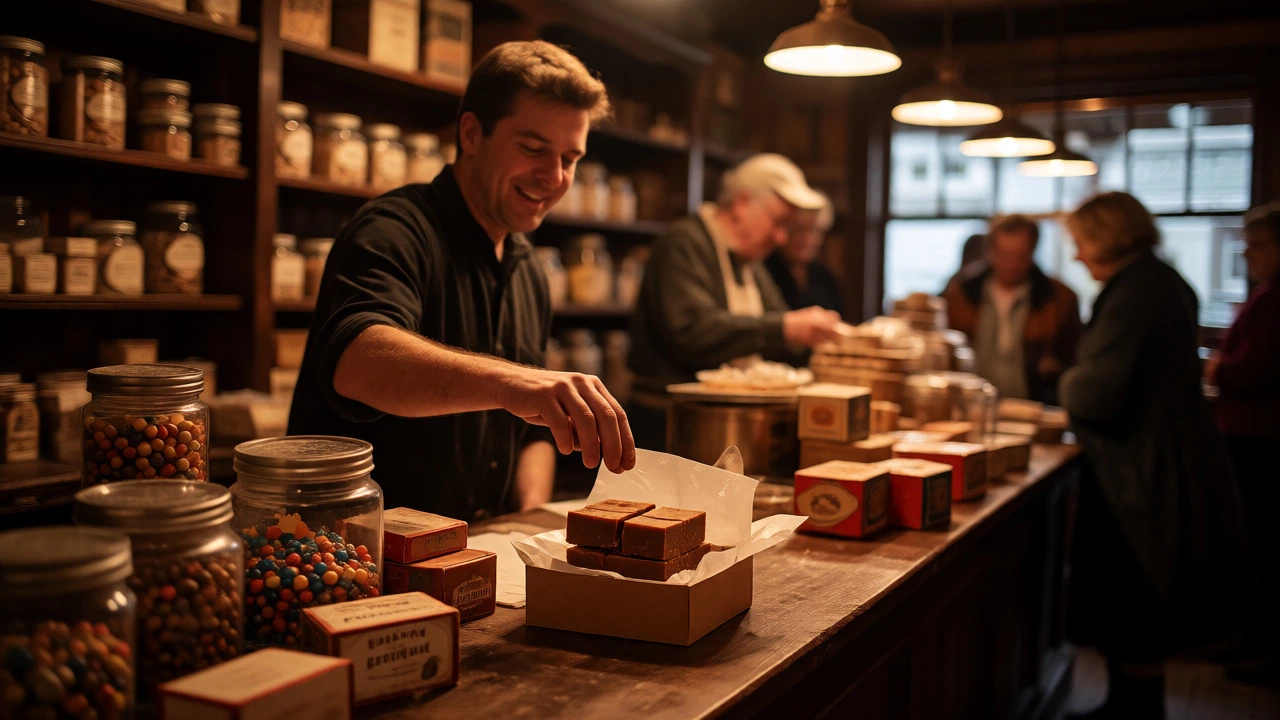
Another key differentiator is freshness. Because the island relies on tourism, inventory turnover is rapid. Boxes sold today were likely made yesterday. Contrast this with mainland shops where fudge might sit under heat lamps for days, drying out and losing its smooth mouthfeel. On Mackinac, you are eating something alive-soft, yielding, and intensely flavored.
Visiting Tips for First-Timers
Planning a trip requires some logistical thinking. The ferry season typically runs from May to October, though some services operate earlier or later depending on weather. Book accommodations early, especially in July and August when the island reaches peak capacity. Once there, remember that bicycles are the primary mode of transport. Renting one lets you cover more ground and visit shops away from the crowded main strip.
Also, consider your budget. A single pound of premium fudge can cost $15-$20. Buying boxes for gifts adds up quickly. Many shops offer samples, so take advantage of them before committing to a full purchase. And don't forget to explore beyond fudge. The island has historic forts, limestone caves, and stunning lake views. Balancing sugar intake with physical activity keeps the experience enjoyable rather than overwhelming.
Beyond the Island: Other Contenders
While Mackinac Island holds the crown, other places claim strong ties to fudge culture. Lancaster County, Pennsylvania, is famous for Amish-made fudge, often sold alongside fresh pies and cheeses. Savannah, Georgia, offers pecan praline fudge, blending Southern traditions with classic techniques. However, neither matches Mackinac's concentration of dedicated fudge specialists or its historical narrative. These regions excel in regional variations, but Mackinac remains the spiritual home of the candy itself.
If you cannot travel to Michigan, you can still capture the essence at home. Look for recipes that specify "small batch" or "handmade." Avoid products listing hydrogenated oils or excessive preservatives. Better yet, try making it yourself. With basic ingredients and a candy thermometer, you can recreate the island's magic in your own kitchen. Just remember: patience is key. Rushing the cooling stage ruins the texture.
Is Mackinac Island really the only fudge capital?
While other regions produce excellent fudge, Mackinac Island is widely recognized as the "Fudge Capital of the World" due to its high density of fudge shops, historical significance, and tourism focus centered around the candy. No other location combines these factors to the same degree.
Can you buy Mackinac Island fudge online?
Yes, most major shops like Murdick's and Kilwin's ship nationwide. However, shipping costs can be high, and the texture may change slightly after transit. For the best experience, visiting in person allows you to eat it fresh off the slab.
When is the best time to visit for fudge?
Late spring (May-June) and early fall (September-October) offer milder crowds and pleasant weather. Summer months are busier but provide the fullest range of open shops and events. Winter visits are possible but limited due to reduced ferry schedules.
Are there vegan or gluten-free options available?
Many shops now offer vegan and gluten-free varieties, often using coconut milk or almond-based alternatives. Check labels carefully, as cross-contamination can occur in shared kitchens. Some specialty shops cater exclusively to dietary restrictions.
How long does Mackinac Island fudge last?
Properly stored in an airtight container, fresh fudge lasts 1-2 weeks at room temperature or up to two months in the refrigerator. Freezing extends life to six months, though thawing slowly prevents condensation from affecting texture.