Macaron Texture Diagnostic Tool
Select your specific macaron issue below to receive a tailored diagnosis and solution based on professional baking principles.
Identify Your Issue
Results will appear here after you select an issue.
The Anatomy of a Perfect Macaron
You bite into a French macaron, expecting a delicate crunch that gives way to a soft, chewy center. Instead, you get dry crumbs or a hollow shell that tastes like cardboard. It’s frustrating, right? You followed the recipe, weighed your ingredients, and waited for the shells to dry. So what went wrong with the texture of the macaron? The answer lies in understanding exactly what this confection is supposed to feel like before it ever hits your oven.
Most people confuse macarons with macaroons. A macaroon is a coconut mound-dense, sweet, and rustic. A macaron is a meringue-based cookie sandwiched with ganache or buttercream. Its texture is its signature feature. If you can nail the mouthfeel, you’ve nailed the bake. Let’s break down the anatomy of perfect macaron texture so you stop guessing and start baking with confidence.
The Three Layers of Macaron Texture
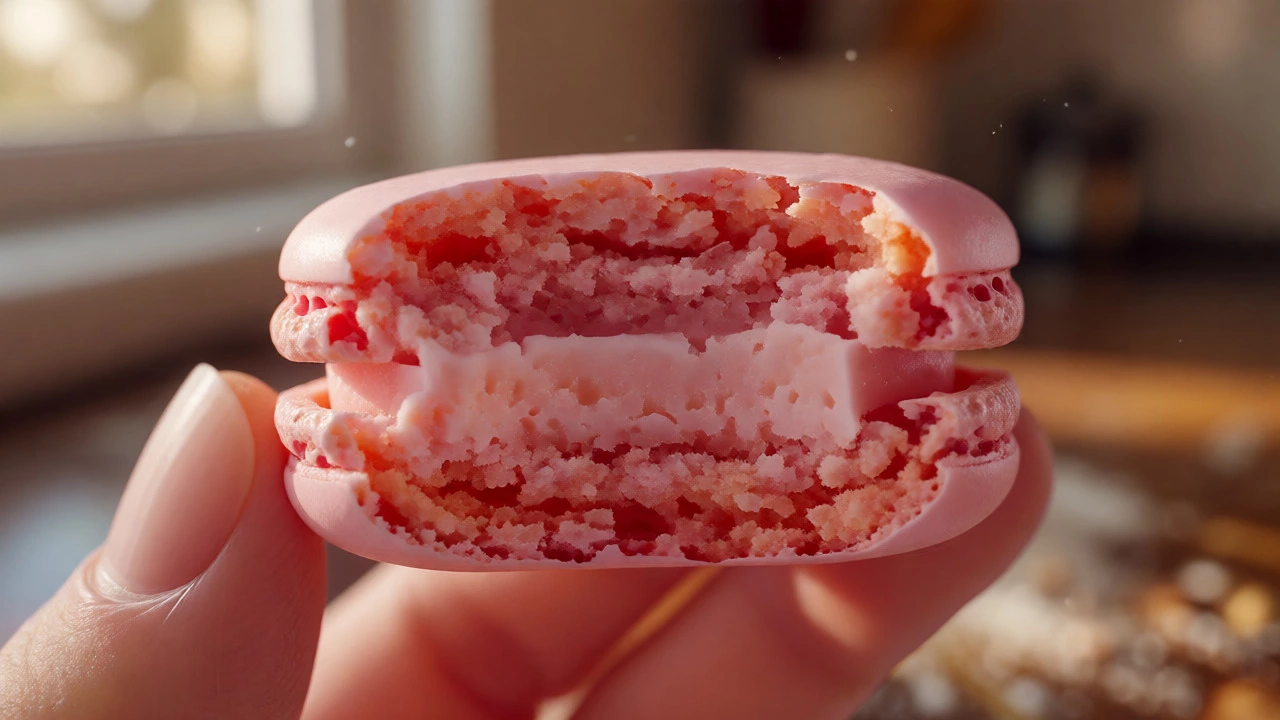
A proper macaron isn’t just one thing; it’s three distinct experiences happening at once. When you take that first bite, you should encounter a specific sequence. Miss one layer, and the whole experience falls apart.
- The Shell: This is the outermost layer. It must be crisp, thin, and slightly brittle. Think of the snap of a fresh sugar glass or a very thin chocolate shard. It should crackle audibly when bitten.
- The Chew: Directly beneath the shell lies the interior crumb. This part is not cake-like or fluffy. It is dense, moist, and chewy, similar to a high-quality fudge or a marshmallow that has set firm. This is where the almond flour and egg whites do their magic.
- The Filling: The ganache, jam, or buttercream in the middle acts as a bridge. It should be smooth and creamy, providing moisture that permeates the inner sides of the shells over time (a process called "maturing").
If your macarons are all crunch and no chew, they’re underbaked or too dry. If they’re all chew and no crunch, they’re likely under-dried before baking or baked at too low a temperature. The balance is key.
Why Do My Macarons Turn Out Hollow?
Hollow centers are the most common complaint among home bakers. You cut open a pretty shell, only to find an empty void inside. This isn’t just aesthetic; it ruins the texture because there’s no substance to chew on.
Hollowness usually stems from air bubbles trapped in the batter that expand rapidly during baking and then collapse as the structure sets. Here’s how to fix it:
- Mixing Stage: Over-mixing deflates the meringue too much, leaving no structure to hold the shape. Under-mixing leaves too many large air pockets. Aim for the "lava" consistency-the batter should flow off the spatula in a continuous ribbon that disappears after 10 seconds.
- Tapping the Tray: After piping, tap the baking sheet firmly against the counter several times. This releases trapped air bubbles. If you see large bubbles rise to the surface, pop them with a toothpick.
- Baking Temperature: Too high heat causes rapid expansion before the structure sets, leading to collapse. Use an oven thermometer to ensure accuracy. Most recipes call for 300°F (150°C), but every oven varies.
Remember, a small hollow is normal in homemade macarons. A giant cavern means something went wrong in the mixing or resting phase.
The Importance of Resting Time
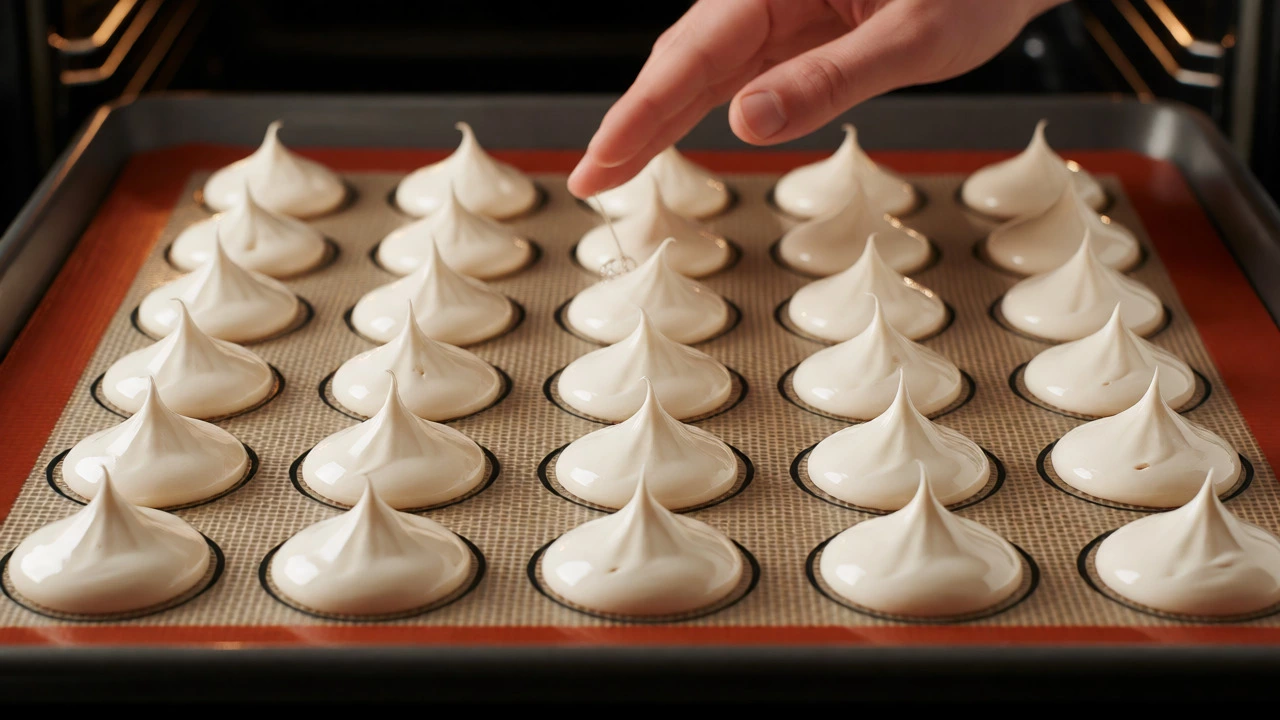
This step is non-negotiable. Before your macarons go into the oven, the piped shells must sit uncovered until they form a skin. This skin prevents the steam from escaping upward during baking, forcing it to push out the sides instead, creating those iconic "feet" (the ruffled edges).
How long does it take? There is no fixed time. It depends entirely on your kitchen’s humidity. In Bristol, where I live, damp weather can double the resting time. You know they’re ready when the surface feels dry to the touch and doesn’t stick to your finger. If you skip this, the steam escapes through the top, resulting in cracked shells and a lack of feet. No feet often correlates with a tougher, less tender interior texture.
Maturing: The Secret to Perfect Texture
Freshly baked macarons are good, but matured macarons are great. This is the difference between a bakery-style product and a rushed home attempt. Maturing involves letting the filled macarons rest in the refrigerator for 24 to 48 hours.
During this time, moisture from the filling migrates into the shells. This process softens the interior crumb, making it perfectly chewy, while keeping the exterior shell relatively crisp if stored correctly. Without maturing, the shells remain too hard and dry, and the flavors haven’t had time to meld. Patience here pays off more than any technical tweak.
Troubleshooting Common Texture Issues
Let’s diagnose your batch based on what you felt when you bit into it. Use this table to identify the problem and the solution.
| Texture Symptom | Likely Cause | Solution |
|---|---|---|
| Dry, Crumbly Interior | Over-baking or old almond flour | Reduce baking time by 2 minutes; use fresh almond flour |
| Sticky, Wet Bottoms | Under-baking | Bake longer; check if bottoms release easily from parchment |
| Tough, Rubber-y Chew | Over-mixing or too much liquid in filling | Stop mixing earlier; thicken fillings with cocoa butter or cream cheese |
| No Crunch, All Soft | High humidity or skipped resting time | Use a dehumidifier or fan; ensure skin forms before baking |
Ingredients That Impact Texture
You can’t talk about texture without talking about ingredients. Not all almond flours are created equal. Superfine almond flour is essential. Coarse particles create a gritty texture that disrupts the smooth chew. Sift your almond flour and powdered sugar together twice to remove lumps and aerate the mix.
Egg whites matter too. Aged egg whites (separated and left in the fridge for 24 hours) lose some water content, making them easier to whip into stiff peaks. This results in a more stable meringue and a better internal structure. If you use fresh whites, add a pinch of cream of tartar to stabilize the protein network.
Sugar plays a dual role. Powdered sugar provides bulk and tenderness, while granulated sugar (in the meringue) creates structure. Don’t swap them randomly. Using brown sugar will introduce molasses, changing both color and moisture content, potentially making the shells too soft.
How to Test for Doneness
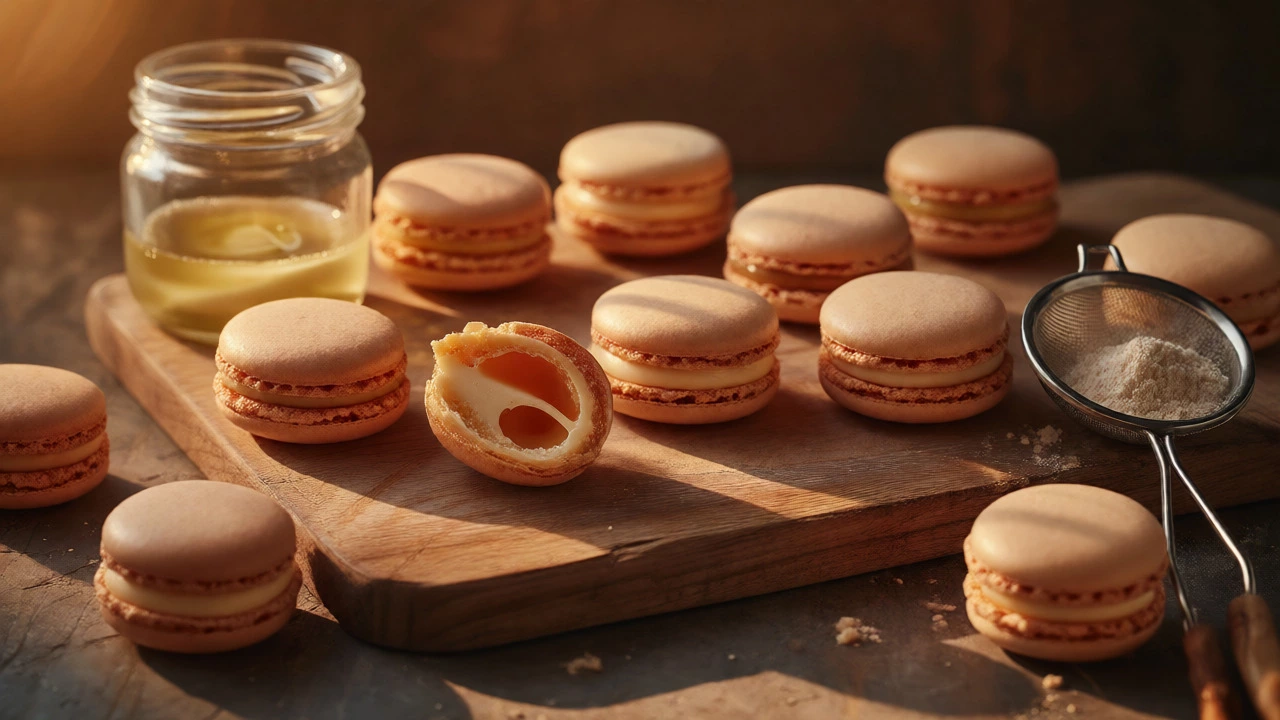
Visual cues aren’t enough. You need tactile feedback. At the end of the baking time, gently nudge a macaron foot. If it wobbles loosely in the shell, it needs more time. If it stays firm and doesn’t move independently of the base, it’s done.
Another trick: lift a macaron off the tray. If it sticks stubbornly, it’s underbaked. Properly baked macarons release cleanly from silicone mats or parchment paper. If you have to peel them off forcefully, you risk tearing the bottom, which exposes the interior to air and dries it out faster.
Storage Tips to Maintain Texture
Once you’ve achieved that perfect balance of crunch and chew, keep it. Store macarons in an airtight container in the single layer, separated by parchment paper. They last up to five days in the fridge and three months in the freezer.
When serving, let them come to room temperature for 15-20 minutes. Cold macarons taste harder and less aromatic. The fats in the filling solidify when cold, masking the subtle flavors. Bringing them to temp restores the creamy mouthfeel and allows the crispness of the shell to shine again.
Frequently Asked Questions
What should the inside of a macaron look like?
The inside should be uniform and dense, not airy like a cupcake. It should look slightly glossy and moist, resembling a dense fudge or nougat. There should be no large air pockets, though tiny micro-bubbles are acceptable.
Why are my macarons crunchy on the outside but raw in the middle?
This indicates under-baking. The exterior dried out quickly due to high heat or long resting time, but the interior didn’t set. Try lowering the oven temperature slightly and extending the baking time by 2-3 minutes. Ensure your oven is preheated thoroughly.
Can I make macarons without almond flour?
You can substitute pumpkin seed flour or sunflower seed flour for nut allergies, but the texture will differ slightly. These alternatives may yield a denser or grittier chew. Coconut flour absorbs too much moisture and generally fails to produce the classic macaron structure.
How long do macarons stay crispy?
Freshly baked shells are crispiest immediately. Once filled and matured, the interior softens, but the exterior remains crisp for 24-48 hours if kept in an airtight container away from humidity. After that, ambient moisture gradually softens the entire shell.
Does the filling affect the texture?
Yes, significantly. High-moisture fillings like fruit curds soften the shells faster than fat-heavy fillings like ganache or buttercream. For a longer-lasting crunch, use drier fillings or apply a barrier of melted chocolate on the shell edge.