
Macaron Size & Yield Calculator
Enter your parameters to see recommended sizes and yields.
You pull a tray of French macarons out of the oven, and they look great-until you bite into one. It’s either too big to eat in two comfortable bites or so tiny it vanishes before you taste the filling. This isn’t just about aesthetics; it’s about physics and flavor balance. The ideal size ensures the ratio of shell to ganache is perfect, preventing that dry, hollow sensation or the overwhelming sweetness of too much cream.
The Gold Standard Dimensions
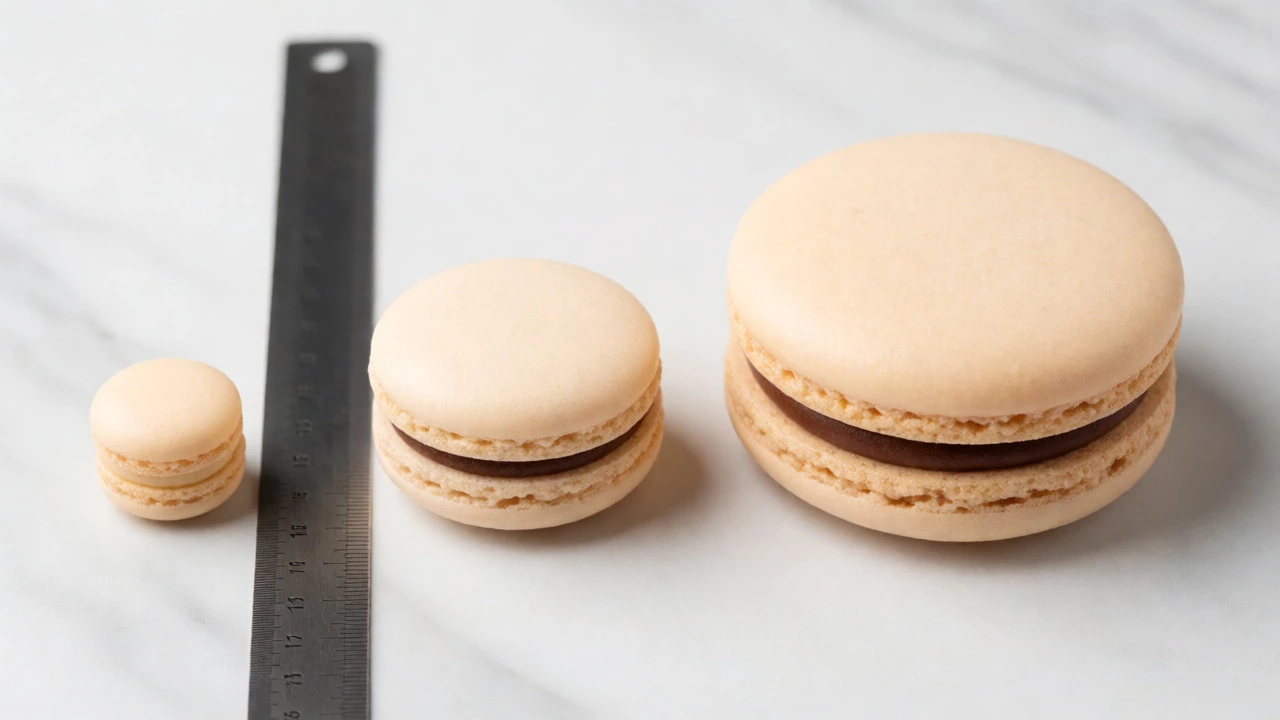
Most professional pastry chefs agree on a specific range. A standard French macaron should have a diameter between 1.5 inches (3.8 cm) and 1.75 inches (4.5 cm). Anything smaller risks being brittle and difficult to handle without breaking. Anything larger tends to crack during baking because the center doesn’t set properly before the edges harden.
Height matters just as much as width. You’re aiming for a total height of roughly 0.6 to 0.8 inches (1.5 to 2 cm), including the filling. If your shells are flatter than this, your meringue likely overmixed or rested too long. If they’re taller, you might be piping too thickly or underbaking them slightly.
| Macaron Type | Diameter | Total Height | Filling Volume |
|---|---|---|---|
| Classic Round | 1.5 - 1.75 in (3.8 - 4.5 cm) | 0.6 - 0.8 in (1.5 - 2 cm) | 1 tsp (approx. 5g) |
| Mini Macaron | 0.75 - 1 in (2 - 2.5 cm) | 0.4 - 0.5 in (1 - 1.3 cm) | 1/2 tsp (approx. 2-3g) |
| Jumbo Macaron | 2+ in (5+ cm) | 1+ in (2.5+ cm) | 2+ tsp (approx. 10g+) |
Why Size Impacts Structure
Think of a macaron shell as a structural engineering problem. The outer crust needs to form quickly to trap steam inside, which creates the iconic "feet" (the ruffled edge at the base). If the circle is too large, the surface area cools faster than the interior can expand. Result? Cracks radiating from the center like a spiderweb.
Conversely, if the shell is too small, it loses moisture rapidly. Small macarons go stale within hours rather than days because there’s less mass to retain humidity. For home bakers, sticking to the 1.5-inch mark gives you the best margin for error. It’s forgiving enough to hide minor mixing mistakes but substantial enough to hold up against heavy fillings like salted caramel or lemon curd.
Piping Consistency Is Key
You can’t achieve consistent sizes if your hand shakes or your batter consistency varies. Here’s how to nail uniformity every time:
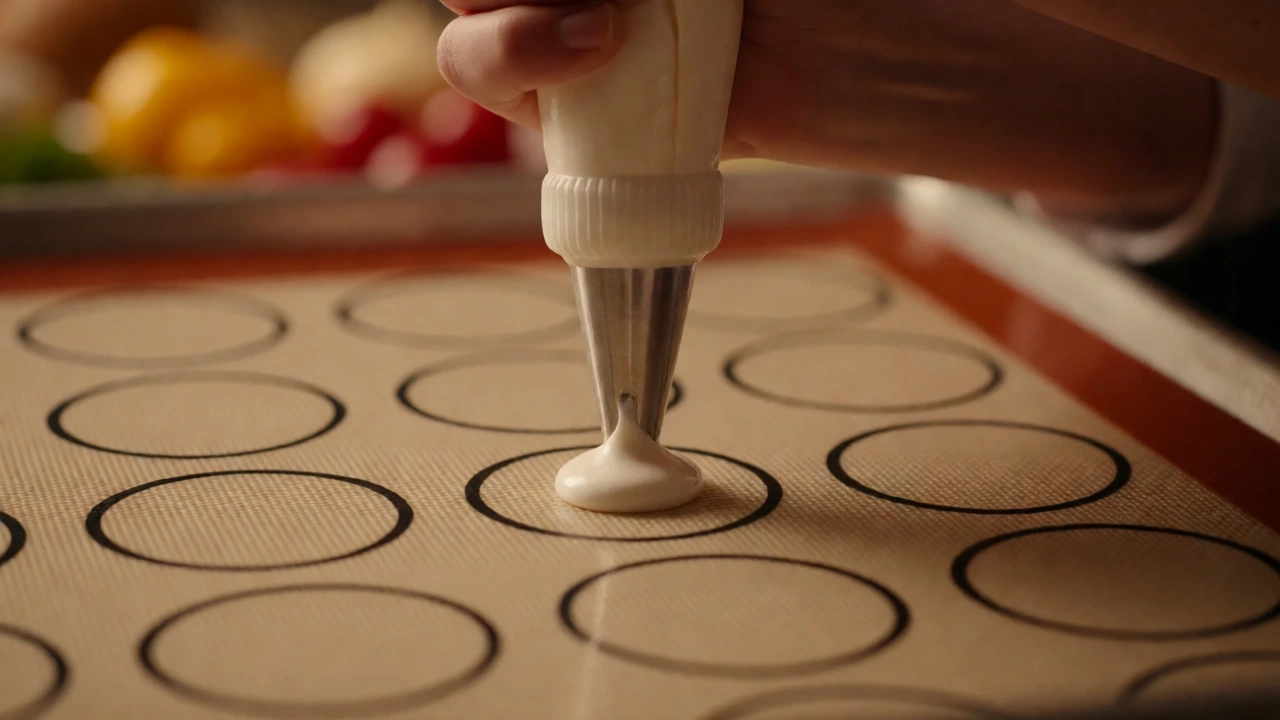
- Use a Template: Print a silicone mat with pre-drawn circles. These mats exist specifically to guide your piping bag. Without them, you’ll end up with ovals and blobs.
- Hold the Bag Perpendicular: Keep your piping tip exactly 90 degrees to the baking sheet. Lifting it early causes tails; dropping it late causes spreads.
- The Figure-Eight Test: When lifting the bag, do a quick figure-eight motion to break the tail cleanly. This prevents sharp points that burn easily.
If you’re new to this, start with a round tip labeled #8 or #10. These create dots roughly 1 inch wide when piped directly down. As the batter spreads during resting, they grow to that perfect 1.5-inch target. Don’t guess-measure once with a ruler after baking to calibrate your technique.
Adjusting for Fillings
Your choice of filling dictates the final experience. A light buttercream requires less space than a dense fruit compote. If you plan to use runny jams, pipe slightly thicker shells (closer to 0.8 inches high) to prevent leakage. For stiff ganaches, you can go thinner.
Remember the "sandwich rule": The filling should never exceed the diameter of the shell. If you pipe a mound of ganache wider than the cookie, it spills out the sides when you press the top shell down. This looks messy and wastes product. Aim for a dollop centered precisely in the middle, covering about 70% of the surface area.
Common Sizing Mistakes
Even experienced bakers slip up here. Watch out for these pitfalls:
- Inconsistent Spacing: If circles touch during baking, they fuse into giant irregular shapes. Leave at least 1 inch of space between each dot.
- Over-Piping: Trying to make "extra tall" macarons often leads to collapsed centers. Trust the rise; don’t force it with volume.
- Ignoring Oven Hotspots: One side of your tray might bake faster, causing uneven expansion. Rotate the pan halfway through baking to ensure symmetrical growth.
When to Break the Rules
Are mini macarons worth the hassle? Absolutely, if you’re serving them as party favors or cocktail hour bites. They require precise timing-bake for 10-12 minutes instead of 14-16-but offer a delightful pop-in-the-mouth experience. Just know they’re fragile. Handle them with tweezers if possible.
Jumbo macarons, popularized by brands like Ladurée’s oversized creations, demand patience. Bake them longer at a lower temperature (around 275°F/135°C) to allow the center to cook without burning the exterior. Expect a chewier texture and a higher risk of hollow interiors if you rush the process.
How many macarons does this recipe yield per tray?
On a standard half-sheet pan (18x13 inches), you can fit approximately 24-30 classic-sized macarons (1.5 inches in diameter) if spaced correctly. Mini macarons will yield 60-80 per tray, while jumbo versions may only fit 12-15.
Does macaron size affect shelf life?
Yes. Smaller macarons dry out faster due to their higher surface-area-to-volume ratio. Classic 1.5-inch macarons stay fresh for 3-5 days in an airtight container in the fridge. Minis may become crisp and brittle within 24-48 hours.
Can I resize my macarons after baking?
Not really. Once baked, the structure is set. You can trim edges with scissors if they spread too much, but you cannot shrink them back down. Prevention through proper piping technique is the only way to control size accurately.
What piping tip size works best for standard macarons?
A Wilton #804 or a generic round tip with a 1cm opening is ideal. This creates a controlled flow that allows the batter to spread naturally to the desired 1.5-inch diameter without excessive manual manipulation.
Why are my macarons different sizes even though I used a template?
This usually happens if your batter is too runny (overmixed) or too stiff (undermixed). Runny batter spreads beyond the template lines; stiff batter stays small and domed. Check your macaronage stage-the batter should flow off the spatula like molten lava, forming a ribbon that disappears in 10 seconds.