Fluffy Cookie Troubleshooter
Are your cookies turning out flat and crispy instead of thick and fluffy? Answer the questions below to identify the likely culprit and get instant fixes.
Diagnosis
Moderate IssueRecommended Fixes:
You pull a tray out of the oven, expecting thick, cakey mounds. Instead, you get sad, crispy discs that have spread across the entire sheet pan. It’s frustrating, especially when you followed the recipe exactly. But here is the truth: flat cookies are rarely about bad luck. They are almost always about chemistry and temperature. If you want fluffy cookies, you need to stop treating your dough like it’s all the same.
The difference between a flat crisp and a fluffy mound comes down to how much steam gets trapped inside the dough before the structure sets. Steam lifts. Structure holds. If your dough spreads too fast or sets too slow, the steam escapes, and gravity wins. Let’s break down exactly why this happens and how to fix it in your Bristol kitchen (or anywhere else).
The Butter Temperature Trap
Most people think "softened butter" means leaving it on the counter until it’s greasy and melting. That is the number one enemy of fluffiness. When butter is too warm, it melts in the oven before the flour proteins can set up a structure. The cookie collapses into a puddle.
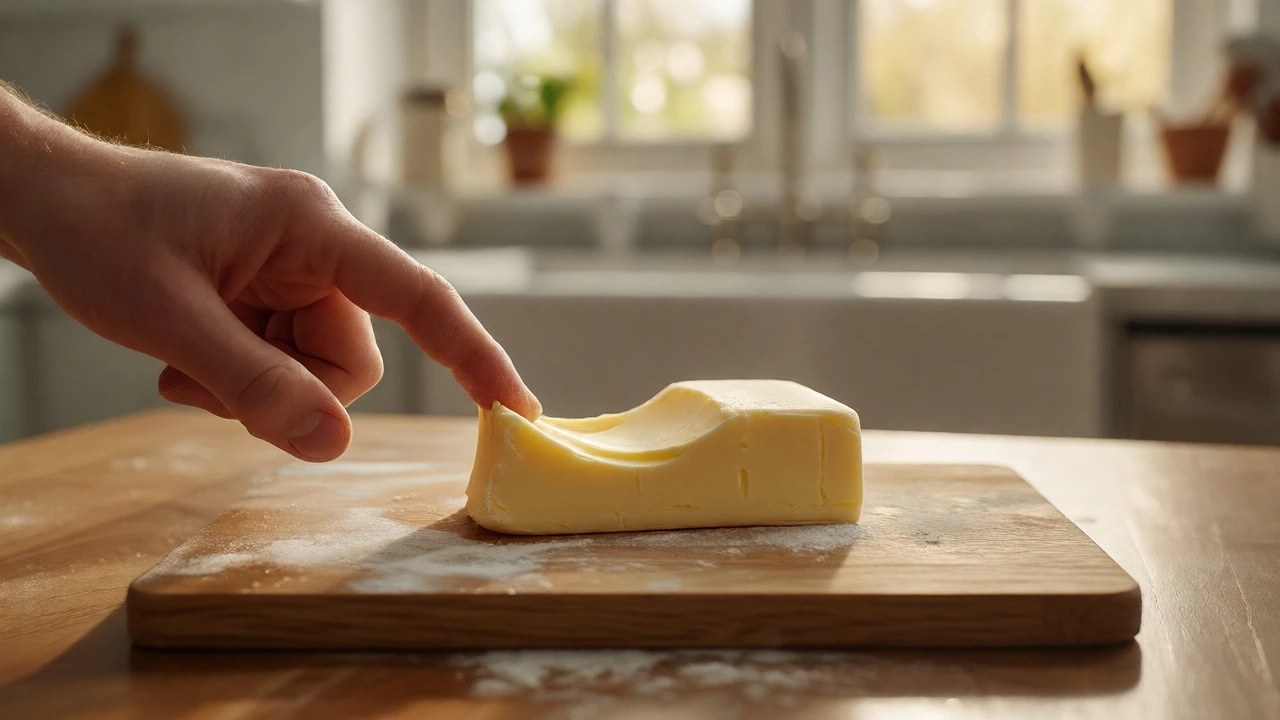
Butter is an emulsion of water and fat. In baking, it serves two jobs: flavor and texture. For fluffy cookies, you want the water content to turn into steam at the right moment. If the fat is already liquid when it hits the heat, the dough spreads instantly. Aim for butter that yields slightly to pressure but still holds its shape. If your finger leaves a deep dent that doesn’t spring back, it’s too warm. Put it in the fridge for ten minutes.
There is also the technique of creaming. You might skip this step if you’re using melted butter recipes, but for standard sugar cookies or chocolate chip cookies, beating solid butter with sugar creates tiny air pockets. These pockets expand in the oven. If you beat cold, hard butter, it won’t incorporate air. If you beat melted butter, there are no solids to trap air. Find the sweet spot: cool, pliable, and beaten just until pale and fluffy, usually 3-5 minutes with a mixer.
Flour Choice and Measurement Errors
Not all flour is created equal. If you use bread flour, your cookies will be chewier and potentially denser because of the high protein content. Cake flour has less protein, which creates a tender crumb, but it can sometimes make cookies too fragile. All-purpose flour sits in the middle, but even within AP flour, brands vary in protein levels.
All-Purpose Flour typically contains 10-12% protein. This protein forms gluten when mixed with water. Too much gluten development makes cookies tough; too little makes them fall apart. For fluffy cookies, you want minimal gluten development. Mix your dry ingredients into the wet ones only until they are just combined. Overmixing activates gluten strands, pulling the dough tight and causing it to shrink and flatten rather than rise.
How you measure flour matters more than you think. If you scoop the measuring cup directly into the bag, you compress the flour. A "cup" of scooped flour can weigh 140 grams instead of the intended 120 grams. More flour means less moisture balance, often leading to dry, dense cookies that don’t rise properly. Use the spoon-and-level method: spoon flour into the cup and level it off with a knife. Or better yet, use a kitchen scale. Precision prevents the structural imbalance that leads to spreading.
The Sugar Ratio Shift
Sugar isn’t just for sweetness. It competes with flour for water. Brown sugar contains molasses, which is acidic and hygroscopic (it holds onto water). White sugar encourages browning and crispiness. If your cookies are flat and crisp, you likely have too much white sugar relative to brown.
Try increasing the ratio of brown sugar to white sugar. Brown sugar lowers the pH of the dough, which slows down the setting of the egg proteins and allows the leavening agents to work longer. It also adds moisture. A good rule of thumb for fluffy cookies is a 2:1 ratio of brown to white sugar. This keeps the center soft while the edges crisp up slightly.
| Sugar Type | Moisture Content | Effect on Spread | Texture Result |
|---|---|---|---|
| White Granulated | Low | High (spreads fast) | Crispy, Thin |
| Brown Light | Medium | Moderate | Chewy, Soft |
| Brown Dark | High | Low (holds shape) | Fudgy, Dense |
| Corn Syrup | Very High | Very Low | Soft, Pliable |
Leavening Agents: Baking Soda vs. Powder
This is where many home bakers get confused. Baking Soda (sodium bicarbonate) requires an acid to activate. It reacts quickly, producing carbon dioxide bubbles immediately upon mixing and again in the oven. Because it works fast, it promotes spread. If you use only baking soda in a recipe without enough acid (like brown sugar or yogurt), you’ll get flat cookies with a metallic taste.
Baking Powder contains both an acid and a base. It is double-acting, meaning it releases some gas when wet and more gas when heated. This delayed reaction helps cookies rise vertically after they’ve started to set. For maximum fluffiness, swap half of your baking soda for baking powder. This gives you the immediate lift from the soda and the sustained rise from the powder.
Check your expiration dates. Old leaveners lose potency. If your baking powder doesn’t fizz vigorously when dropped into hot water, throw it away. There is no substitute for active chemical lift.
Chilling the Dough
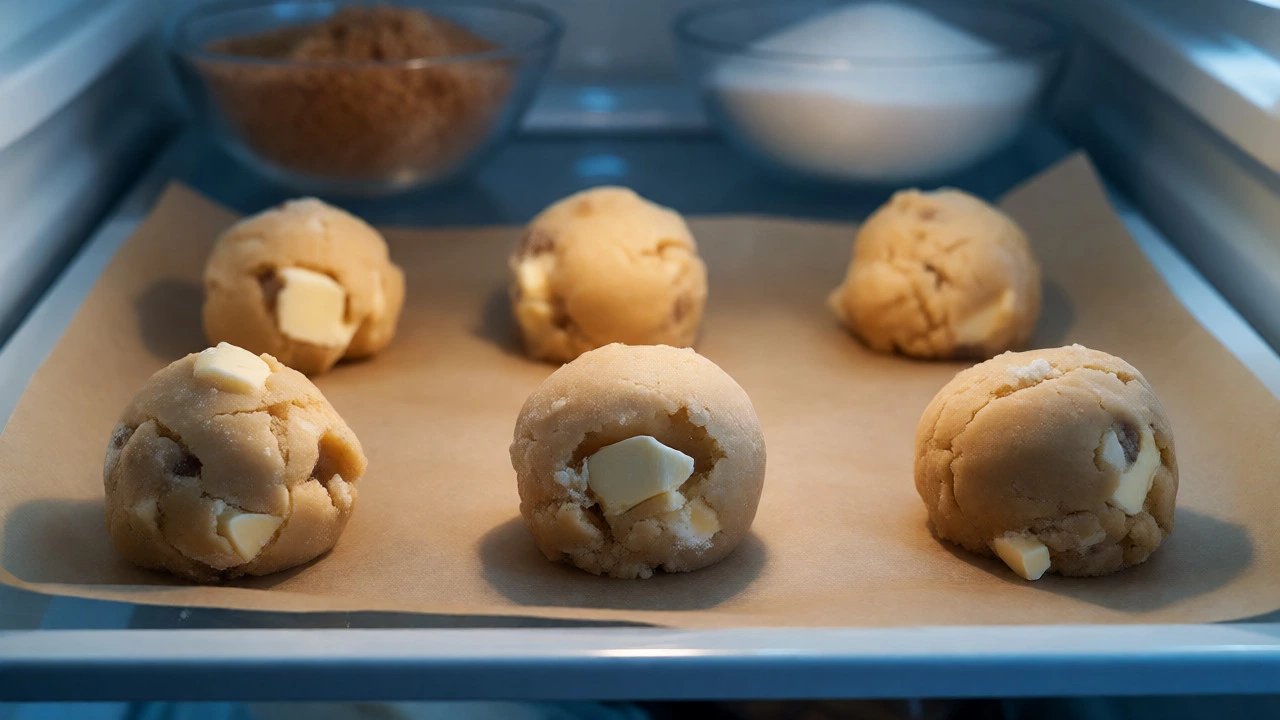
If you are in a rush, chilling seems like wasted time. But it is the single most effective trick for preventing spread. Cold butter takes longer to melt in the oven. While the butter stays solid, the outside of the cookie begins to bake and set. This creates a wall that stops the dough from spreading outward. Meanwhile, the inside continues to cook and rise.
Chill your dough for at least 24 hours if possible. This does three things:
- It solidifies the fat, reducing spread.
- It hydrates the flour, allowing starches to absorb water evenly, which prevents raw-looking centers.
- It breaks down proteins slightly, resulting in a more tender, complex flavor.
Oven Temperature and Sheet Pan Prep
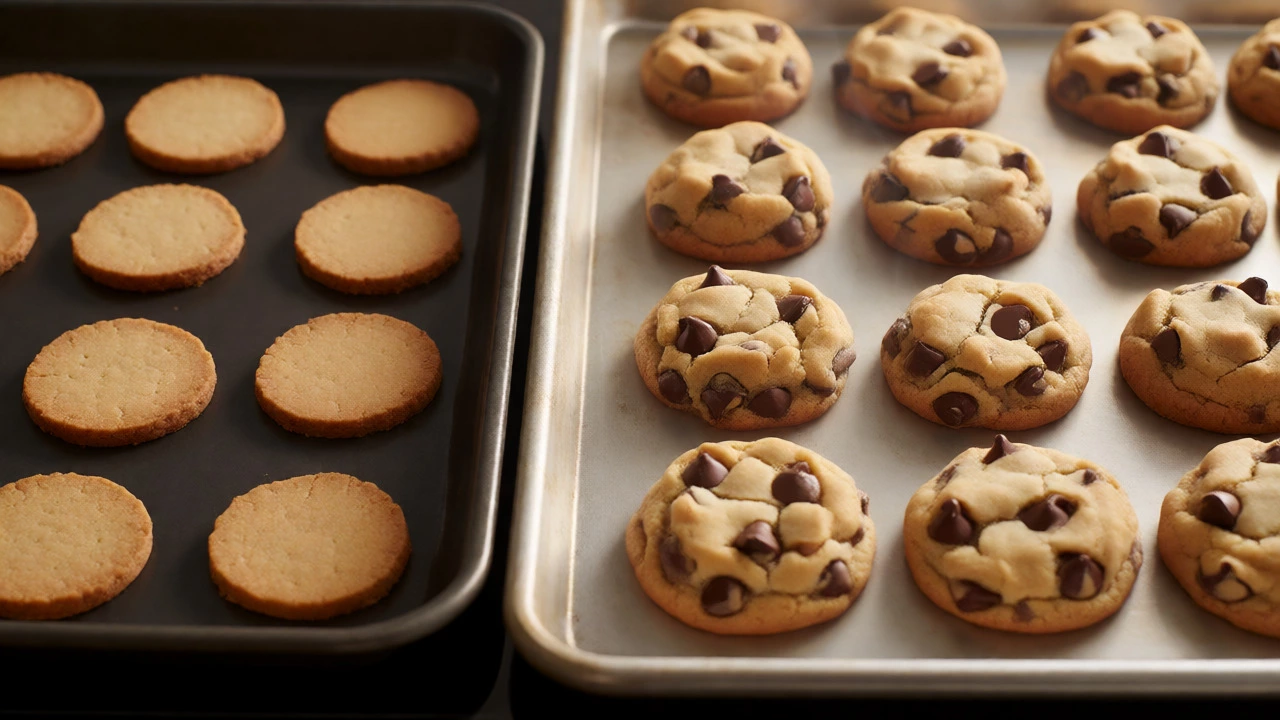
A common mistake is using a dark, non-stick baking sheet. Dark metal absorbs more heat, causing the bottoms of the cookies to bake faster than the tops. This forces the dough to spread sideways to find equilibrium, resulting in flat cookies. Use light-colored aluminum pans. They reflect heat, allowing the top to bake as quickly as the bottom.
Also, check your oven calibration. Many ovens run hot or cold. If your oven runs 25 degrees low, your cookies will spread before the structure sets. An oven thermometer costs less than £10 and pays for itself in perfect batches. Bake at 375°F (190°C) for fluffy results. Higher temperatures cause rapid steam generation, lifting the cookie before the sides collapse.
Finally, do not crowd the pan. Leave at least two inches between dough balls. If they are too close, their steam merges, creating a humid micro-environment that inhibits crisping and encourages spreading. Bake one batch at a time on the middle rack for even airflow.
Troubleshooting Your Specific Batch
If you’ve tried these steps and still have issues, look at your eggs. Large eggs add moisture. If you use extra-large eggs, you might be adding too much liquid. Stick to large eggs, or reduce the amount by a tablespoon if your dough feels overly sticky. Also, consider the humidity in your kitchen. On rainy days in the UK, flour absorbs ambient moisture. You may need to add an extra tablespoon of flour to compensate.
Remember, baking is science. You don’t need to guess. Control the variables: keep the butter cool, measure accurately, balance your sugars, and chill the dough. Do this consistently, and your cookies will never be flat again.
Why are my cookies flat even though I chilled the dough?
If chilling didn't help, your issue is likely too much sugar or too little flour. Sugar liquefies at a lower temperature than water boils. If your dough has a high sugar-to-flour ratio, it will spread regardless of temperature. Try reducing the sugar by 25% or adding an extra 2 tablespoons of flour to strengthen the structure.
Can I use margarine instead of butter for fluffier cookies?
Margarine has a higher water content and lower fat content than butter. This often leads to thinner, crispier cookies because the extra water turns to steam and evaporates, leaving less structure behind. For fluffier results, stick to real butter. If you must use margarine, choose a brand with at least 80% fat content to mimic butter's performance.
Does using cornstarch make cookies softer?
Yes. Replacing 1-2 tablespoons of flour with cornstarch interferes with gluten formation. Less gluten means a more tender, cake-like crumb. It also helps retain moisture, keeping the cookies soft for longer. This is a popular hack for bakery-style soft cookies.
Should I bake cookies on parchment paper or a silicone mat?
Parchment paper is generally better for fluffy cookies. Silicone mats insulate the bottom of the pan, which can prevent the bottom from browning and setting quickly. This insulation can cause the dough to spread more before it firms up. Parchment provides a neutral surface that allows for proper heat transfer and easier removal.
How long should I bake cookies to keep them soft?
Underbake them slightly. Pull the cookies out when the edges are just barely golden but the centers still look slightly underdone and puffy. They will continue to cook on the hot baking sheet for another 2-3 minutes due to residual heat. Removing them too late ensures the interior dries out and becomes hard.