Brownie Texture Finder
Not sure which brownie to bake or buy? Answer a few questions about your mood and preferences to find your ideal match.
You walk into a bakery or scroll through Instagram, and suddenly you are hit with a wall of choices. Fudgy, cakey, chewy, blondies, brookies-what is actually happening here? If you have ever stood in front of a display case wondering which square will satisfy your craving, you are not alone. The confusion usually stems from the fact that most people think "brownie" is one thing. It isn't. It is a spectrum.
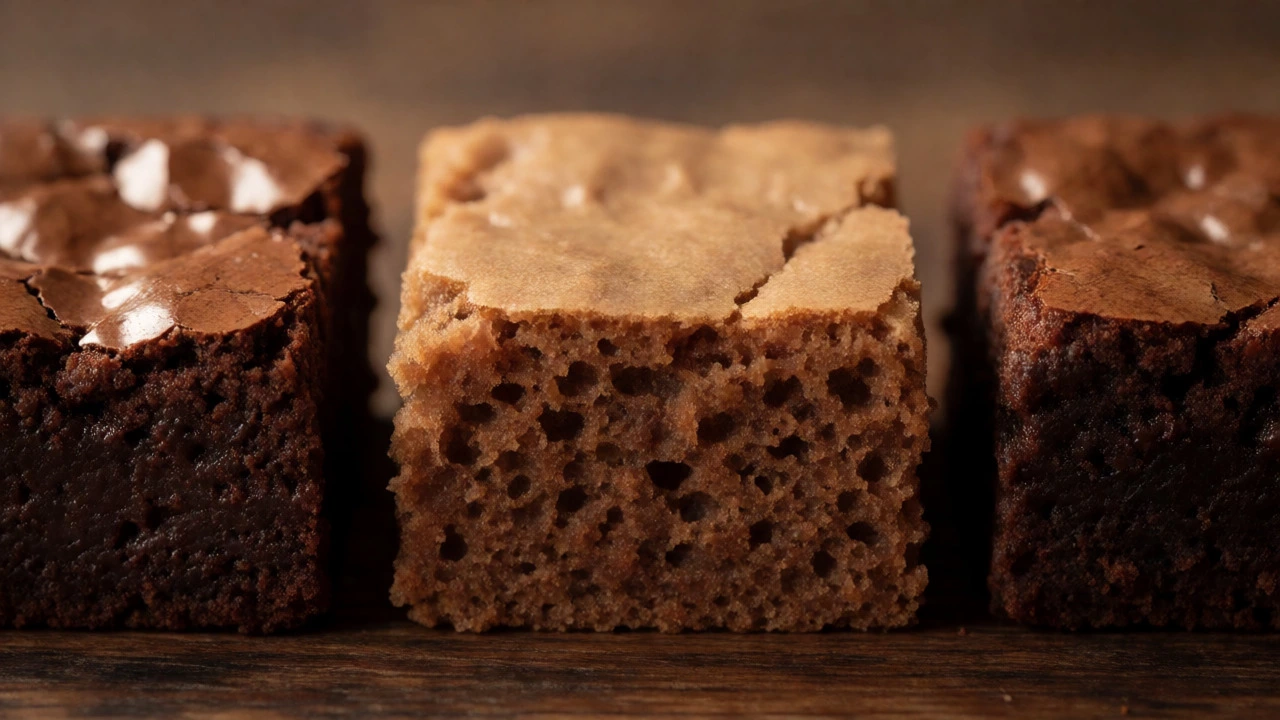
The truth is, there isn't just one definitive list of brownie types because baking is an art, not just a science. However, if we strip away the marketing fluff and look at the chemistry and texture, we can categorize them into three main families: Fudgy dense, moist, and rich in fat, Cakey light, airy, and leavened, and Chewy elastic, gooey, and often made with corn syrup or brown sugar. Once you understand these core pillars, everything else-blondies, white chocolate, vegan-is just a variation on a theme.
The Holy Trinity: Fudgy, Cakey, and Chewy
Let's get the basics down. Every brownie you eat falls somewhere on this triangle. Your preference dictates what you should bake or buy.
Fudgy brownies are the heavyweights. They rely on a high ratio of fat (butter) and chocolate to flour. Think of them as edible truffles. When you bite into a good fudge-style brownie, it should feel dense and melt in your mouth. The key here is minimal air incorporation during mixing. You want little to no lift. This type is perfect for people who find cake too dry or too light. In my experience, using melted chocolate instead of cocoa powder gives you that intense, glossy interior that defines a true fudgy brownie.
Cakey brownies are the opposite. They taste like chocolate cake but in a square shape. How do you get there? Leavening agents. Baking powder or baking soda creates bubbles, making the crumb open and fluffy. These brownies use more flour relative to fat. If you prefer something you can eat three of without feeling sick, this is your lane. They pair well with milk or coffee because they absorb liquid better than their denser cousins.
Chewy brownies are the middle child that finally got some respect. They are distinct from both fudgy and cakey textures. The secret weapon here is moisture retention. Using brown sugar (which contains molasses) or adding corn syrup keeps the crumb elastic rather than crumbly or dense. A chewy brownie has a bit of resistance when you bite it, followed by a soft give. It is the best of both worlds for many bakers because it avoids the dryness of cakey versions and the heaviness of fudgy ones.
Beyond Chocolate: Blondies and Alternatives
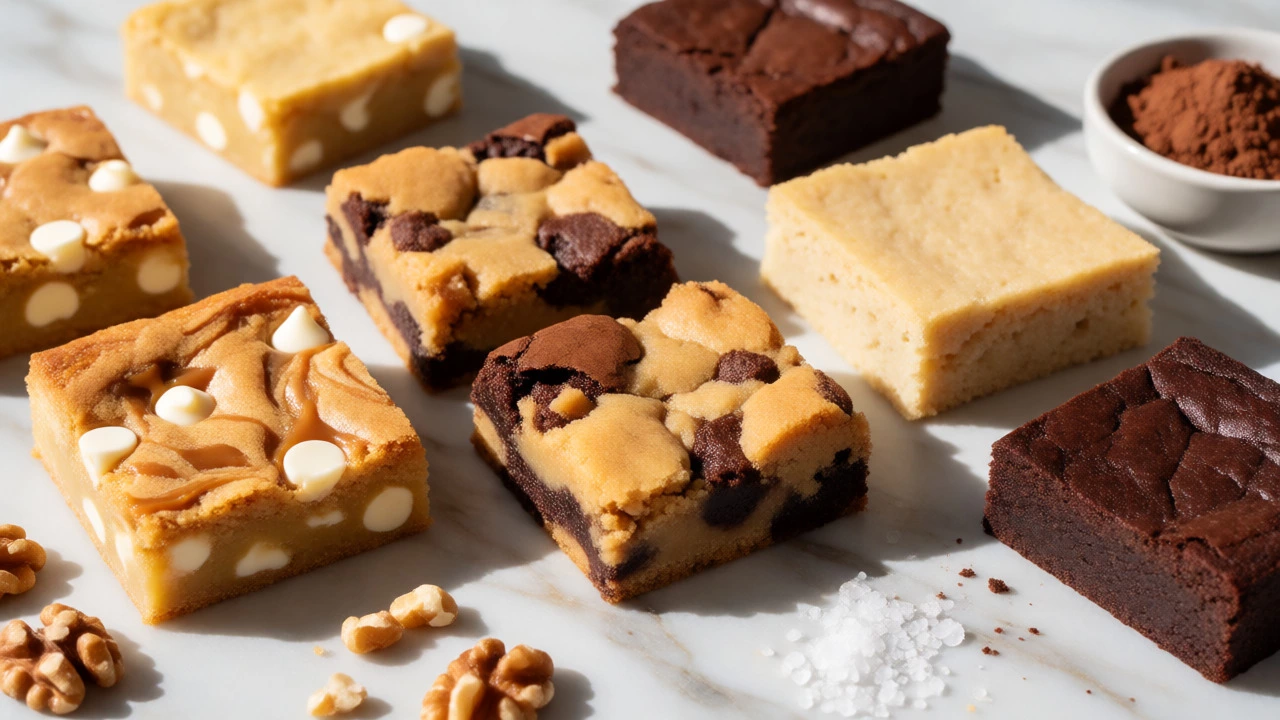
Here is where things get interesting. What happens when you take the structure of a brownie but remove the cocoa? You get Blondies a vanilla-based bar cookie typically flavored with brown sugar and butter.
Blondies are often mistaken for "white chocolate brownies," but they aren't always. Traditional blondies skip chocolate entirely, relying on brown sugar for flavor and color. They share the same structural DNA as brownies-bars baked in a pan-but the taste profile is completely different. Caramel notes dominate. If you add white chocolate chips, you bridge the gap between a classic blondie and a sweet tooth overload.
Then there are Brookies a hybrid dessert combining a layer of brownie batter and a layer of cookie dough. This is less of a specific recipe and more of a technique. You take half your favorite brownie batter and half your favorite chocolate chip cookie dough, swirl them together, and bake. The result is chaotic but delicious. You get the crunch of cookie edges and the goo of brownie centers. It is messy, indulgent, and great for parties where you can't decide between cookies and bars.
Dietary Variations That Actually Work
Gone are the days when gluten-free or vegan meant cardboard. Modern baking techniques have created legitimate alternatives that stand on their own.
Vegan brownies typically replace eggs with flax eggs (ground flaxseed mixed with water) or applesauce. Eggs provide structure and moisture; without them, you need substitutes that bind ingredients. Flax seeds work surprisingly well for fudgy styles because they add density. Applesauce works better for cakey styles because it adds moisture without weight. The taste difference is subtle if you use high-quality dark chocolate.
Gluten-free brownies rely on almond flour, coconut flour, or pre-mixed GF blends. Almond flour adds richness and fat, making the brownie naturally fudgier. Coconut flour is thirsty-it absorbs massive amounts of liquid-so recipes using it require more eggs or wet ingredients. If you try a standard recipe with almond flour, reduce the flour amount by about 25% to avoid a dry brick.
Keto brownies swap sugar for erythritol or monk fruit and flour for almond or coconut. The challenge here is browning. Sugar alcohols don't caramelize the same way sucrose does, so keto brownies often stay pale even when fully cooked. Don't wait for the golden-brown edge you see in traditional recipes; trust the internal temperature or a toothpick test instead.
How Texture Changes with Ingredients
If you want to control the type of brownie you make, you need to understand the variables. It is not magic; it is ratios.
| Ingredient Change | Effect on Texture | Best For |
|---|---|---|
| Increase Butter/Oil | More fudgy, richer mouthfeel | Fudgy lovers |
| Add Baking Powder | More cakey, lighter crumb | Cakey lovers |
| Use Brown Sugar Only | More chewy, moist, caramel flavor | Chewy lovers |
| Melt Chocolate vs. Cocoa Powder | Melted = Fudgy; Cocoa = Cakey/Dryer | Control base style |
| Add Corn Syrup | Increases chewiness and shine | Professional chewy texture |
Notice how simple swaps change the outcome. Want a chewier brownie? Swap half your white sugar for brown sugar. Want a fudgier one? Melt real chocolate into the batter instead of using cocoa powder. It is that direct.
Toppings and Mix-Ins: The Customization Layer
Once you pick your base type (fudgy, cakey, or chewy), toppings define the final identity. This is where creativity shines, but also where mistakes happen.
Nuts like walnuts or pecans add crunch. Toast them first! Raw nuts can taste bitter and soft. Toasting releases oils and deepens the flavor, creating a contrast against the soft brownie base.
Salted Caramel swirled into the top turns any brownie into a gourmet treat. Use thick caramel sauce, not runny syrup, or it will sink to the bottom and burn.
Sea Salt is non-negotiable for me. A pinch of flaky sea salt on top cuts through the sweetness and enhances the chocolate flavor. It makes the difference between "good" and "can't stop eating."
Espresso Powder is a hidden gem. Adding a teaspoon of instant espresso to your batter doesn't make it taste like coffee; it intensifies the chocolate. Try it in your next fudgy batch-you might never go back.
Common Mistakes That Ruin Texture
Why do some homemade brownies turn out tough or dry? Usually, it is overmixing or overbaking.
When you mix batter after adding flour, you develop gluten. Too much gluten equals toughness. Mix until *just* combined. If you see streaks of flour, stop. Let the residual heat finish the job.
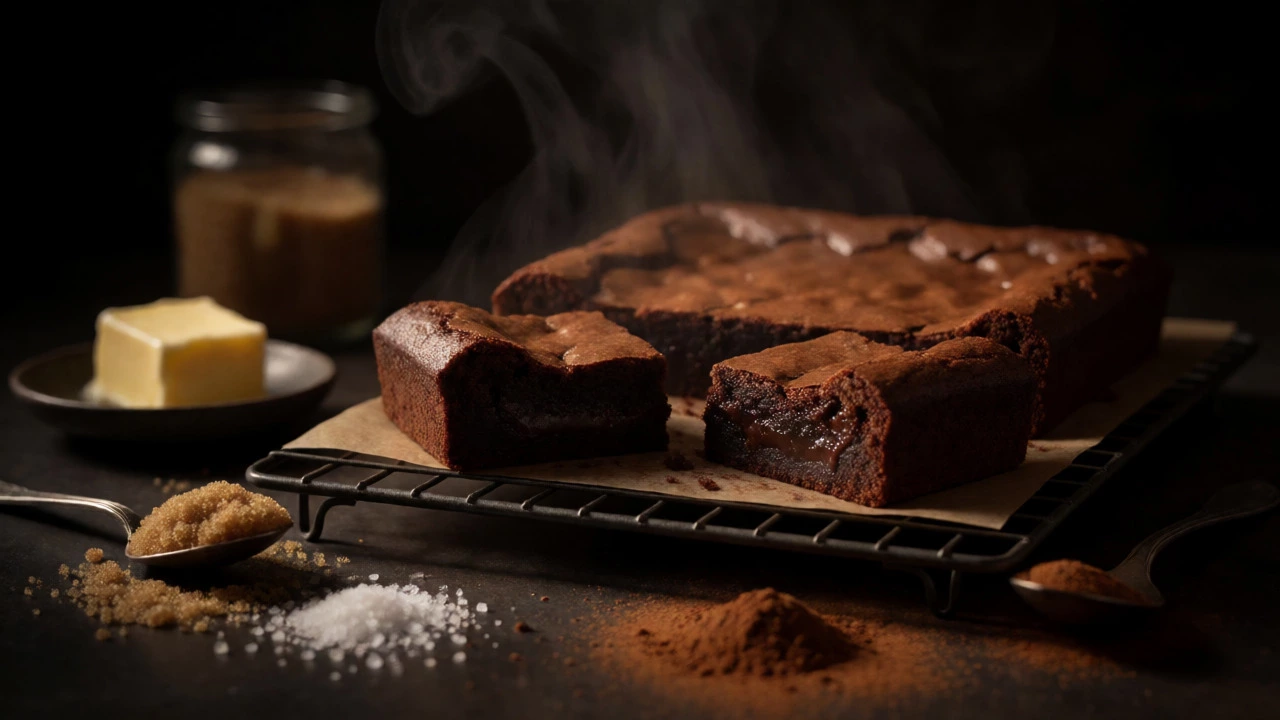
Overbaking is the silent killer. Brownies continue cooking in the hot pan after you pull them from the oven. Pull them out when the center still looks slightly underdone and jiggly. If it looks set in the oven, it will be dry on the plate. Carryover cooking is real physics-respect it.
Using the wrong pan size matters too. A 9x13 inch pan yields thinner, crispier edges (more surface area). An 8x8 inch pan yields thicker, fudgier centers. Adjust your baking time based on depth, not just the clock.
Which Type Should You Choose?
Still unsure? Here is a quick decision tree:
- Do you hate dry desserts? Go Fudgy.
- Do you like light snacks? Go Cakey.
- Do you love gooey textures? Go Chewy.
- Do you dislike chocolate? Make Blondies.
- Are you hosting kids? Make Brookies (cookie dough is always a hit).
- Are you watching calories/gluten? Try Almond Flour Vegan Brownies.
Remember, there is no objective "best" brownie. There is only the brownie that matches your mood. Sometimes you want a heavy, decadent slab after a long day. Other times, you want a light, cake-like slice with your afternoon tea. Knowing the types lets you engineer the exact experience you need.
What is the difference between fudgy and cakey brownies?
Fudgy brownies have a higher fat-to-flour ratio and usually no leavening agents, resulting in a dense, moist texture. Cakey brownies have more flour and include baking powder or soda, creating air pockets that make the crumb light and fluffy.
Are blondies considered a type of brownie?
Technically, no. Blondies are bar cookies made without cocoa powder. However, they share the same preparation method and serving style as brownies, so they are often grouped together in bakeries and recipe collections.
How do I make my brownies chewier?
To increase chewiness, use brown sugar instead of white sugar, add a tablespoon of corn syrup, or substitute some of the butter with oil. Avoid overbaking, as dryness reduces chewiness.
Can I freeze different types of brownies?
Yes, all types freeze well. Fudgy brownies often improve in texture after freezing and thawing because the fats redistribute. Wrap individual squares tightly in plastic wrap and store in an airtight container for up to three months.
Why are my brownies dry?
Dry brownies are usually caused by overbaking or too much flour. Measure flour by spooning it into the cup and leveling off, rather than scooping directly from the bag, which packs it down. Also, remove brownies from the oven while the center is still slightly soft.