
Macaron Tower Estimator
Plan your perfect dessert display by estimating the total macaron count required for your event.
Note: Estimates assume standard professional stacking density. Add extra if guests are heavy consumers or if you plan elaborate decorations that obscure layers.
You’re staring at a sketch of a three-tiered macaron tower, or maybe you’ve just been asked by a client how many treats they need for their wedding. It’s the classic panic question: "Wait, is that 50 or 500 cookies?" The answer isn’t a single number; it depends entirely on the height of your structure, the size of the shells, and how tightly you pack them. But don’t worry-once you understand the math behind the layers, you’ll never guess again.
The Short Answer: Quick Reference Guide
If you need numbers fast, here are the standard estimates based on professional catering norms. These counts assume standard-sized macarons (approximately 1.5 to 1.75 inches in diameter) stacked on a conical or cylindrical stand.
| Tower Height | Approximate Count (Standard Size) | Approximate Count (Mini Size) | Best For |
|---|---|---|---|
| 1 Tier (12-14 inches) | 60 - 80 | 120 - 150 | Small gatherings, bridal showers |
| 2 Tiers (18-20 inches) | 150 - 200 | 300 - 400 | Medium weddings, corporate events |
| 3 Tiers (24-28 inches) | 300 - 400 | 600 - 800 | Large weddings, gala dinners |
| 4+ Tiers (30+ inches) | 500+ | 1,000+ | Grand entrances, photo ops |
Why Geometry Matters More Than You Think
A macaron tower isn’t a solid block of cake. It’s a pyramid of air pockets and almond flour. When you stack these delicate shells, you aren’t filling space perfectly. There are gaps between the rounds. If you treat your tower like a cylinder, you’ll under-order. If you treat it like a solid sphere, you’ll over-order by hundreds. The most common mistake home bakers make is calculating volume instead of surface area. You’re building a shell, not a brick wall. Each layer sits on top of the one below it, creating a stepped effect. This means the bottom layer needs significantly more support than the top. For every inch you go up the cone, the circumference shrinks. A base with a 12-inch diameter holds roughly four times as many macarons as a top tier with a 6-inch diameter.
Calculating Your Specific Needs
To get an accurate count, you need to break down the tower into individual rings. Here is a simple method used by pastry chefs in Bristol when planning large orders:
- Determine the Base Diameter: Measure the widest part of your stand or the bottom ring of your tower. Let’s say it’s 12 inches.
- Estimate Circumference: Multiply the diameter by π (3.14). So, 12 x 3.14 = ~37.7 inches.
- Calculate Perimeter Capacity: Divide the circumference by the width of one macaron. If your macarons are 1.5 inches wide, 37.7 / 1.5 = ~25 macarons around the edge.
- Add Interior Fillers: You won’t just have a single row. You’ll likely have 2-3 rows deep depending on the stand type. Multiply the perimeter count by the depth factor (usually 1.5 for a dense look).
- Repeat for Each Layer: Do this for every tier, subtracting the gap between tiers (usually 1-2 inches of shrinkage per level).
This manual calculation gives you a baseline. However, remember that human error plays a role. Some guests will take two. Some will drop one. Always add a 10-15% buffer to your final count.
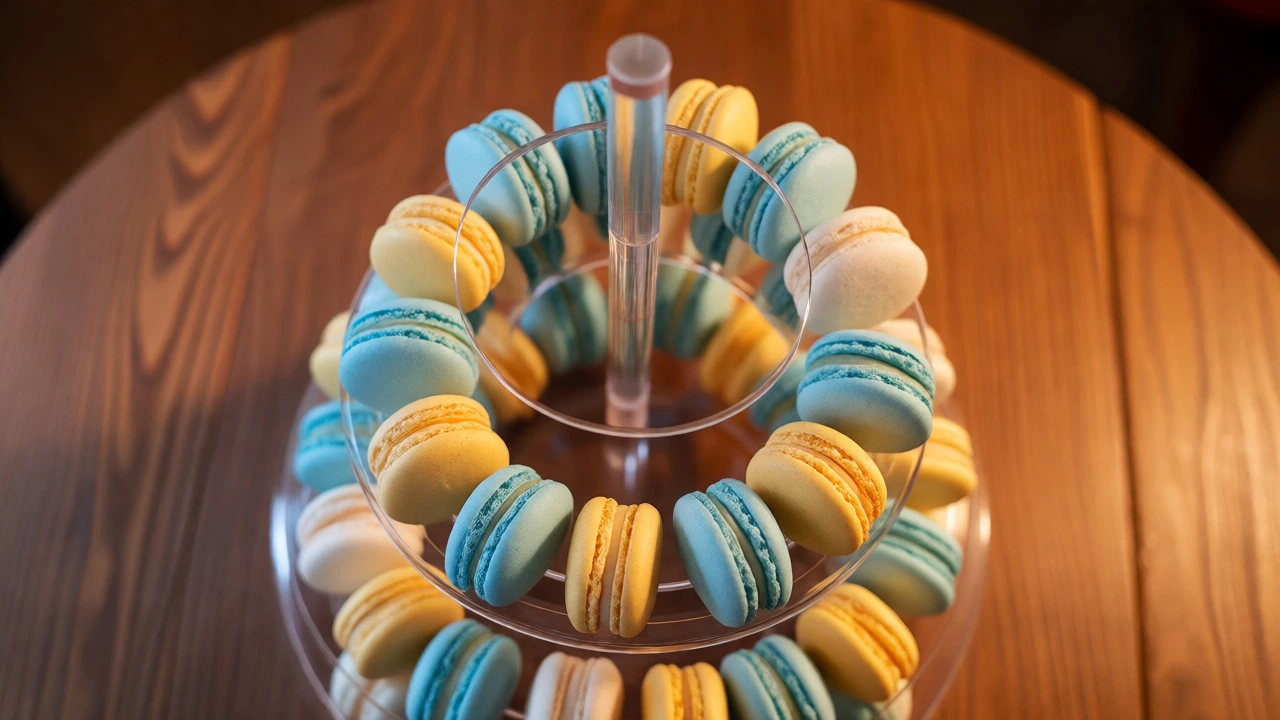
Size Variations: Mini vs. Standard vs. Jumbo
Not all macarons are created equal. The industry standard for towers is the "mini" or "petit" size, which is smaller than what you’d buy in a box from a bakery shop. Why? Because big macarons are heavy. Stack ten jumbo macarons on top of each other, and the bottom ones crack under the weight. They also look clunky on a tall, elegant stand.
- Mini Macarons (1 inch): Ideal for high-density towers. They allow for intricate color patterns and hold up well structurally. You need twice as many, but they look far more luxurious.
- Standard Macarons (1.5-1.75 inches): The sweet spot for most events. Easy to eat, easy to handle, and sturdy enough for 2-3 tier towers.
- Jumbo Macarons (2+ inches): Rarely used in full towers. Usually reserved for the very top crown piece or placed individually on plates. Using these in a tower requires a wider base and fewer total units.
Structural Integrity: How to Keep Them Standing
Counting the macarons is half the battle. Keeping them upright is the other half. Gravity is unforgiving to meringue-based cookies. If you’re building a tower higher than 18 inches, you need internal support. You can’t just glue them together with royal icing and hope for the best.
Most professional setups use a central dowel rod made of wood or acrylic. The macarons are skewered onto this rod. This prevents the tower from leaning or collapsing if someone bumps the table. Without a central spine, a 3-tier tower is essentially a house of cards waiting for a draft.
Another critical factor is the adhesive. Royal icing acts as the mortar. It needs to be stiff enough to hold the weight but fluid enough to spread thinly. If the icing is too runny, the macarons slide. Too stiff, and they won’t bond. Test your icing consistency before you start assembling. A good rule of thumb: it should hold a peak without drooping immediately.
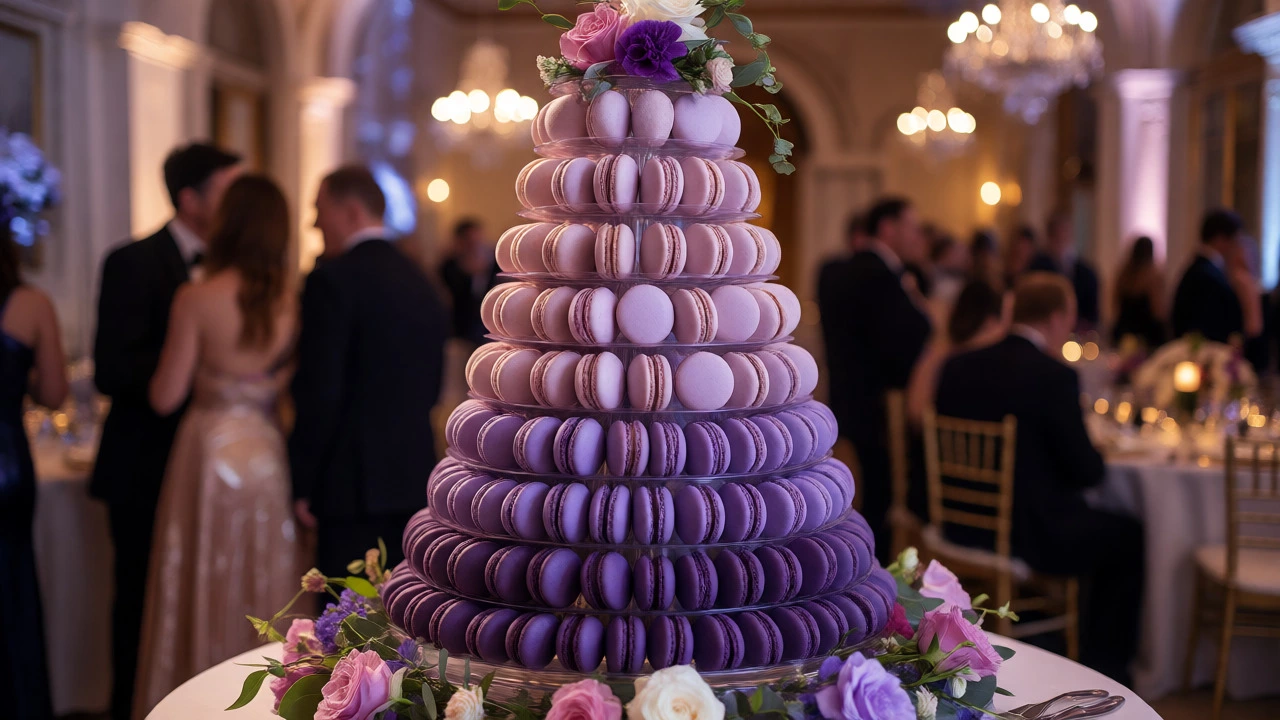
Budgeting and Prep Time
Let’s talk logistics. Making 300 macarons isn’t just about baking 300 shells. It’s about piping, drying, baking, filling, and assembling. One batch of batter usually yields 40-50 perfect shells. So, for a 300-macaron tower, you’re looking at 6-7 batches minimum, assuming zero waste. In reality, expect 10-15% breakage during transport and assembly.
Time-wise, plan for 4 hours of active work per 100 macarons if you’re doing it yourself. This includes making the ganache or buttercream filling. If you’re hiring a vendor, ask specifically about "filling stability." Cream cheese fillings melt faster than Swiss meringue buttercream. On a hot day, a cream cheese-filled tower might sag by hour two. Buttercream holds its shape better.
Common Pitfalls to Avoid
I’ve seen beautiful towers ruined by preventable mistakes. Here are the big ones:
- Ignoring Humidity: Macarons hate moisture. If your venue is humid, the shells will soften and lose their crisp feet. Use desiccant packs near the display if possible.
- Uneven Bases: If your first layer isn’t perfectly flat, the whole tower leans. Use a turntable to ensure symmetry as you build upward.
- Over-decorating: Fresh flowers look great, but stems release water. Wrap stems in floral tape or plastic wrap so moisture doesn’t seep into the macarons and make them soggy.
- Last-Minute Assembly: Assemble the tower at least 24 hours in advance if possible. This allows the icing to fully harden. If you assemble it an hour before doors open, one bump could send 200 cookies flying.
Final Thoughts on Presentation
Ultimately, the number of macarons matters less than the visual impact. A sparse tower looks unfinished; a packed one looks abundant and generous. Guests perceive value through density. If you’re on a tight budget, opt for mini macarons. They create the illusion of abundance without breaking the bank. If you want elegance, stick to standard sizes but keep the design clean.
Remember, the goal is joy, not perfection. A slightly wobbly tower still tastes delicious. Focus on flavor profiles that complement your menu, and let the geometry take care of itself once you’ve got your base count right.
Can I reuse macarons from a tower?
Yes, but with caution. Once assembled, the structural integrity relies on the icing bonds. Breaking them apart often cracks the shells. It’s best to serve them directly from the tower using tongs or forks rather than trying to disassemble and re-box them.
How far in advance can I make a macaron tower?
You can bake the shells up to 3 days in advance and store them in an airtight container in the fridge. Fill them the day before assembly. Assembled towers are best kept refrigerated until 1-2 hours before serving to maintain freshness and structure.
What is the best filling for a macaron tower?
Swiss meringue buttercream or dark chocolate ganache are the most stable options. They withstand room temperature better than fruit curds or cream cheese, which can soften and cause the tower to shift.
Do I need a central pole for my macaron tower?
For any tower over 12 inches tall, yes. A wooden or acrylic dowel provides essential stability. For small, single-tier displays, strong royal icing may suffice, but a pole adds insurance against accidents.
How many macarons per guest should I plan for?
Plan for 1.5 to 2 macarons per guest if it’s the only dessert. If there are other sweets available, 1 macaron per guest is sufficient. Remember that some guests will take extras for later.