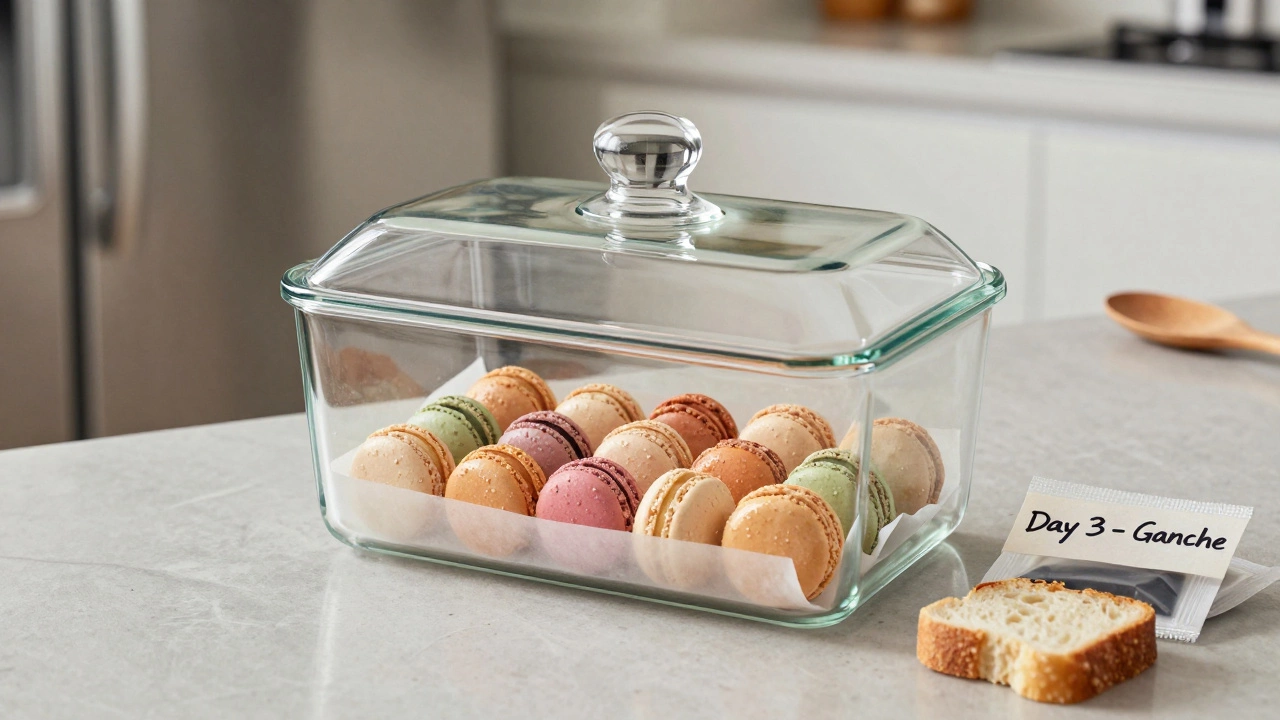
Macarons are delicate, colorful, and full of flavor-but they’re also fragile. One wrong move in storage, and your perfect shells become soggy, your filling melts, or worse-they dry out and lose that signature crunch. If you’ve ever made a batch only to find them ruined by the next day, you’re not alone. The truth is, macarons don’t last long if stored wrong, but with the right method, they can stay fresh for days-even weeks.
Why Macarons Go Bad So Fast
Macarons have two main parts: the outer shell and the inner filling. The shell is made from almond flour, sugar, and egg whites-it’s meant to be crisp on the outside and chewy inside. The filling? Usually buttercream, ganache, or jam. Both parts are sensitive to moisture and temperature.
Leave them out at room temperature in a humid kitchen, and the shells absorb water from the air. They turn soft, sticky, and lose their snap. Put them in the fridge without protection, and the filling can seep into the shell, making it soggy from the inside. Even the flavor changes-buttercream can turn greasy, and fruit fillings can ferment slightly.
It’s not magic. It’s chemistry. And the fix is simple if you know how to control moisture and air exposure.
How to Store Macarons for Short-Term Freshness (1-3 Days)
If you plan to eat your macarons within a few days, the fridge is your best friend-but only if you do it right.
- Let them rest at room temperature for 24 hours after filling. This lets the flavors meld and the shells soften slightly to the perfect chewy texture.
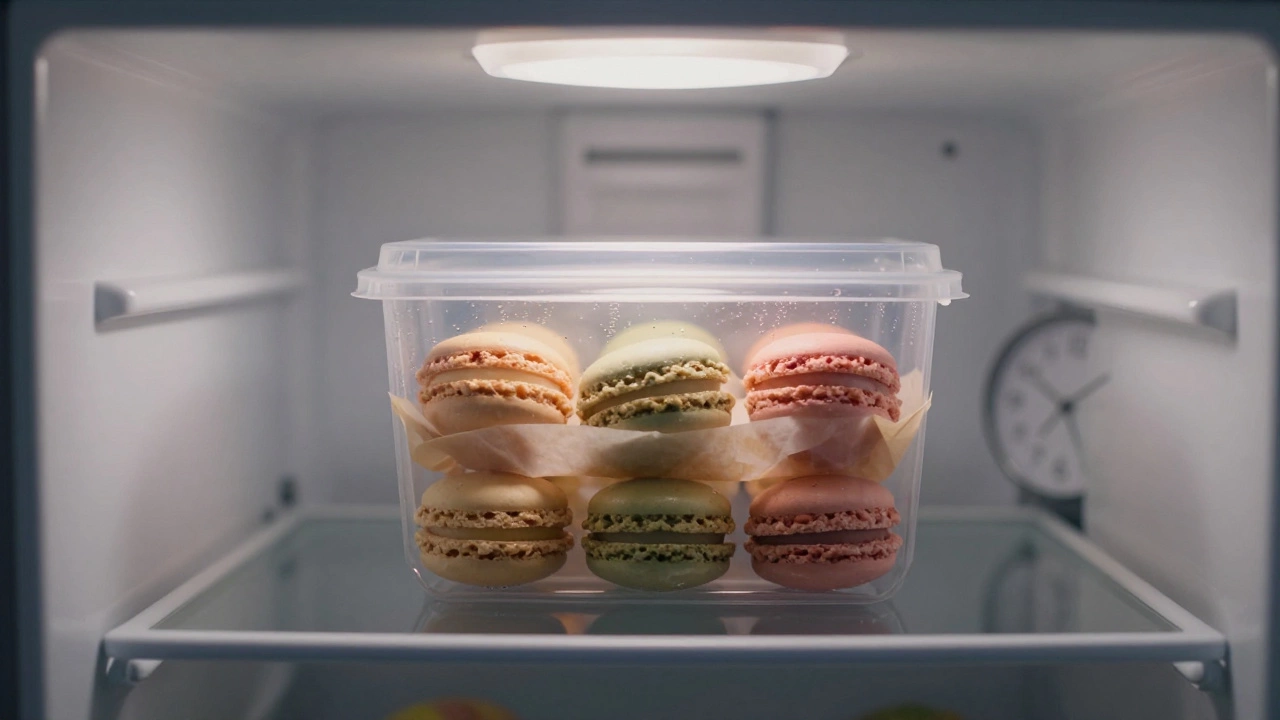
- Place them in an airtight container. Use glass or BPA-free plastic with a tight seal. Avoid cardboard or paper boxes-they don’t block moisture.
- Line the container with parchment paper. Don’t stack them directly on top of each other. Place a sheet between layers to prevent sticking and crushing.
- Seal the container and put it in the fridge. Keep it on a shelf, not the door. Temperature fluctuations from opening and closing the door can ruin the texture.
- Take them out 30 minutes before serving. Cold macarons taste flat. Letting them warm up brings back the flavor and texture.
This method works for most fillings: chocolate ganache, vanilla buttercream, lemon curd, or raspberry jam. Avoid storing macarons with fresh fruit fillings (like strawberry or mango) for more than 48 hours-they ferment faster.
Long-Term Storage: Freezing Macarons
Want to make a big batch for a party next month? Freezing is your secret weapon.
Freezing macarons actually improves their texture. Many professional bakers freeze them right after filling, then thaw them before serving. The moisture locks in, and the shells stay crisp.
- Place unfrozen macarons in a single layer on a baking sheet lined with parchment. Freeze them for 2 hours until solid. This prevents them from sticking together later.
- Transfer them to an airtight container. Use a container just big enough to hold them without crushing. Add parchment between layers.
- Label the container with the date and filling type. Macarons freeze well for up to 3 months.
- When ready to serve, move the container to the fridge for 12 hours. Then let them sit at room temperature for 30 minutes before eating.
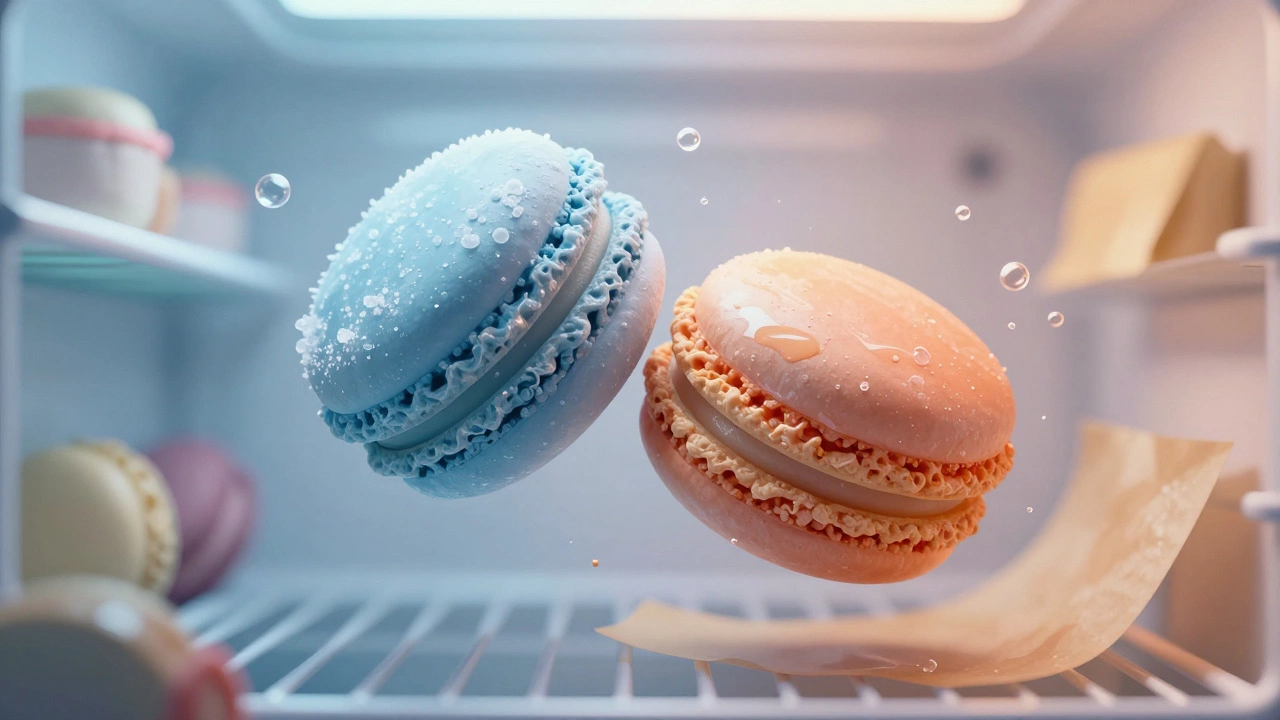
Never thaw macarons at room temperature straight from the freezer. Condensation forms on the shells, turning them soggy before they even warm up. Patience is key.
What NOT to Do
There are common mistakes that ruin macarons faster than you think.
- Don’t store them in the fridge uncovered. Even a few hours without a lid will dry them out or let them absorb fridge odors-especially garlic, onions, or coffee.
- Don’t use Ziploc bags. They’re not airtight enough. The plastic breathes, letting moisture in and out. You need rigid containers with tight seals.
- Don’t refrigerate them right after baking. If you fill them and stick them in the fridge immediately, the filling won’t set properly, and the shells won’t absorb the moisture they need to soften.
- Don’t microwave them to warm them up. The filling will melt unevenly, and the shells turn rubbery. Always let them come to room temperature naturally.
How to Tell If Macarons Have Gone Bad
Macarons don’t always mold, but they still spoil. Here’s how to spot them:
- Soggy shells: If they feel wet or sticky and don’t snap when you bite them, they’ve absorbed too much moisture.
- Off smell: Buttercream can turn rancid. Ganache can separate and smell sour. Fresh fruit fillings might smell fermented.
- Discoloration: If the shells have dark spots or the filling looks separated or oily, toss them.
- Texture change: If the filling is grainy or the shell is hard as a rock, they’ve dried out too much.
If in doubt, throw them out. Macarons are expensive to make and not worth the risk.
Special Cases: Different Fillings, Different Rules
Not all macarons are the same. The filling changes how long they last.
- Buttercream fillings: Last 5-7 days in the fridge. Freeze well. Use high-quality butter with low water content for better shelf life.
- Chocolate ganache: Lasts up to 10 days in the fridge. The cocoa butter helps preserve them. Freeze for up to 3 months.
- Curds and jams: Best eaten within 3 days. Fruit acids break down the shell faster. Freeze only if you must-texture suffers slightly.
- Cream cheese or whipped cream: Not ideal for storage. Eat within 24 hours. These fillings are too delicate and don’t freeze well.
Always match your storage method to your filling. It’s not one-size-fits-all.
Pro Tips from Professional Bakers
Many top patisseries in Paris and London use these tricks:
- Store macarons in the fridge with a small piece of bread. The bread absorbs excess moisture, keeping the shells crisp without drying them out. Replace the bread every 2 days.
- Use silica gel packs (food-safe ones) in the container. They’re used in high-end chocolate storage and work just as well for macarons.
- Always label containers with the date and filling. You’ll forget what’s inside after a week.
- Buy macarons from a bakery? Ask how long they’ve been stored. Reputable ones will tell you they’re made the same day or frozen.
These aren’t fancy tricks-they’re practical, low-cost fixes used by professionals who make macarons every day.
Final Thought: Freshness Is a Choice
Macarons are meant to be enjoyed fresh, but they don’t have to be eaten the same day. With the right storage, you can enjoy perfect macarons for days-even weeks. The key is controlling moisture, blocking air, and giving them time to rest.
Don’t rush. Don’t guess. Follow the steps, and your macarons will stay as beautiful and delicious as the day you made them.
Can I store macarons at room temperature?
Yes-but only for up to 24 hours, and only in a cool, dry place away from sunlight and humidity. If your kitchen is warm or damp, they’ll soften and spoil faster. For anything longer than a day, refrigerate or freeze them.
Do I need to refrigerate store-bought macarons?
Most store-bought macarons are made fresh and should be eaten within 2-3 days. Check the packaging-if they’re labeled "refrigerate after opening," follow that. If not, refrigerate anyway to extend their life. They’ll taste better and last longer.
Why do my macarons get sticky after refrigerating?
That’s usually because they weren’t stored in an airtight container. Moisture from the fridge gets in, and the sugar in the shells absorbs it. Always use a sealed container with parchment between layers. If they’re already sticky, leave them out at room temperature for 1-2 hours-they might crisp up slightly.
Can I freeze macarons with cream filling?
Not recommended. Whipped cream, mascarpone, or cream cheese fillings break down when frozen and thawed. They become watery and lose their structure. Eat these within 24 hours. Stick to buttercream, ganache, or jam for freezing.
How long do macarons last in the freezer?
Properly stored macarons last up to 3 months in the freezer. After that, they don’t go bad, but the texture starts to degrade. The shells may become less crisp, and flavors fade slightly. For best results, eat them within 6-8 weeks.