Cannabis Dosage Calculator
How It Works
Select your consumption method and dose to see how it affects your experience. Based on scientific research about THC absorption.
Your Results
Safety Warning
Let’s cut through the noise. You’ve heard the jokes, seen the memes, maybe even tried it yourself: brownie vs. joint. Which one hits harder? On the surface, it sounds like a stoner debate between dessert and smoke. But if you’ve ever eaten a cannabis brownie and then sat there wondering why your couch suddenly became a spaceship, you know this isn’t just about taste. It’s about chemistry, timing, and how your body processes what you put into it.
How a Joint Works - Fast and Direct
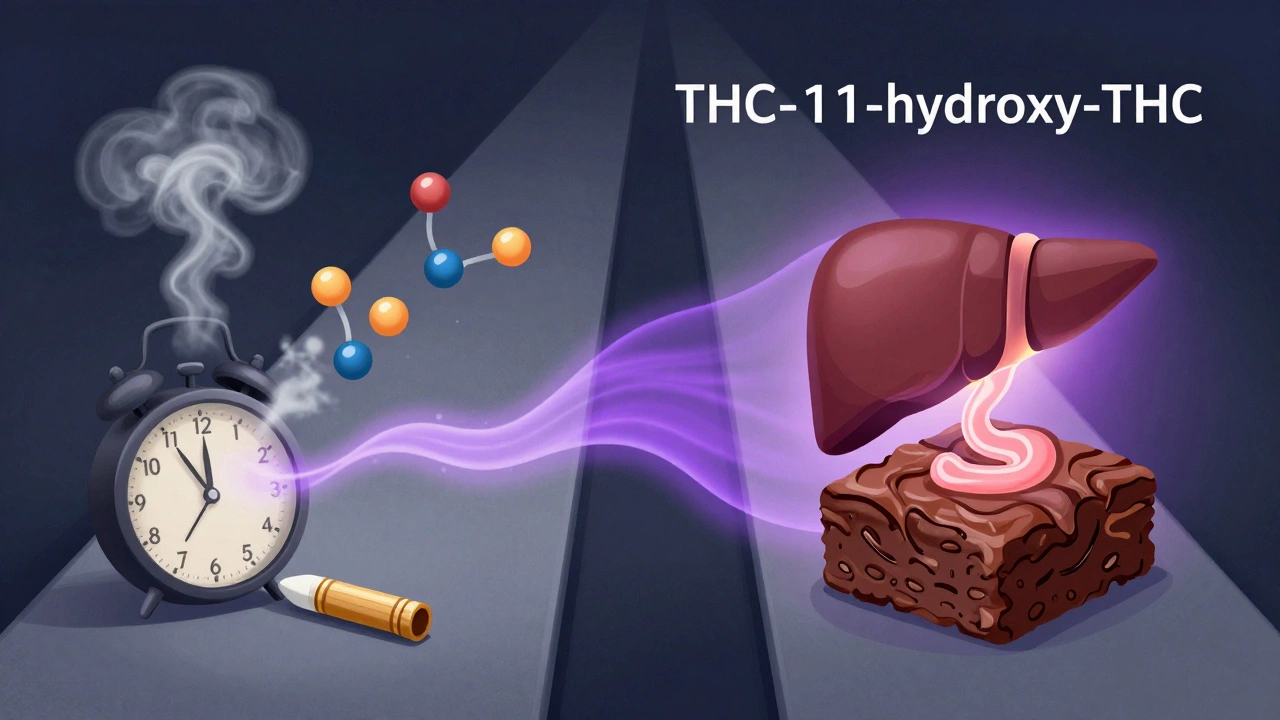
Smoking a joint is like flipping a switch. THC, the main psychoactive compound in cannabis, gets absorbed through your lungs and into your bloodstream within seconds. From there, it races straight to your brain. You feel the first wave in under a minute. Peak effects? Usually between 10 and 30 minutes. The high is sharp, clear, and fades pretty fast - usually within two to three hours. You know exactly when it starts, when it peaks, and when it’s over. That’s why people smoke: control. You can take one hit, wait, and decide if you want another.
But here’s the catch: smoking burns off some THC. Studies from the Journal of Psychoactive Drugs show that only about 30% to 50% of the THC in a joint actually reaches your system. The rest is lost to smoke, heat, or incomplete inhalation. So even if your joint looks big, you’re not getting all of it.
How a Cannabis Brownie Works - Slow and Deep
Eating a brownie infused with cannabis is a completely different beast. When you swallow it, THC doesn’t go straight to your brain. It goes to your stomach, then your liver. There, it gets converted into 11-hydroxy-THC - a metabolite that crosses the blood-brain barrier more easily than regular THC. This version is stronger, longer-lasting, and often more intense. People who’ve tried both say the edible high feels heavier, more physical, like your whole body is sinking into a warm blanket. Some describe it as dreamlike. Others say it’s overwhelming.
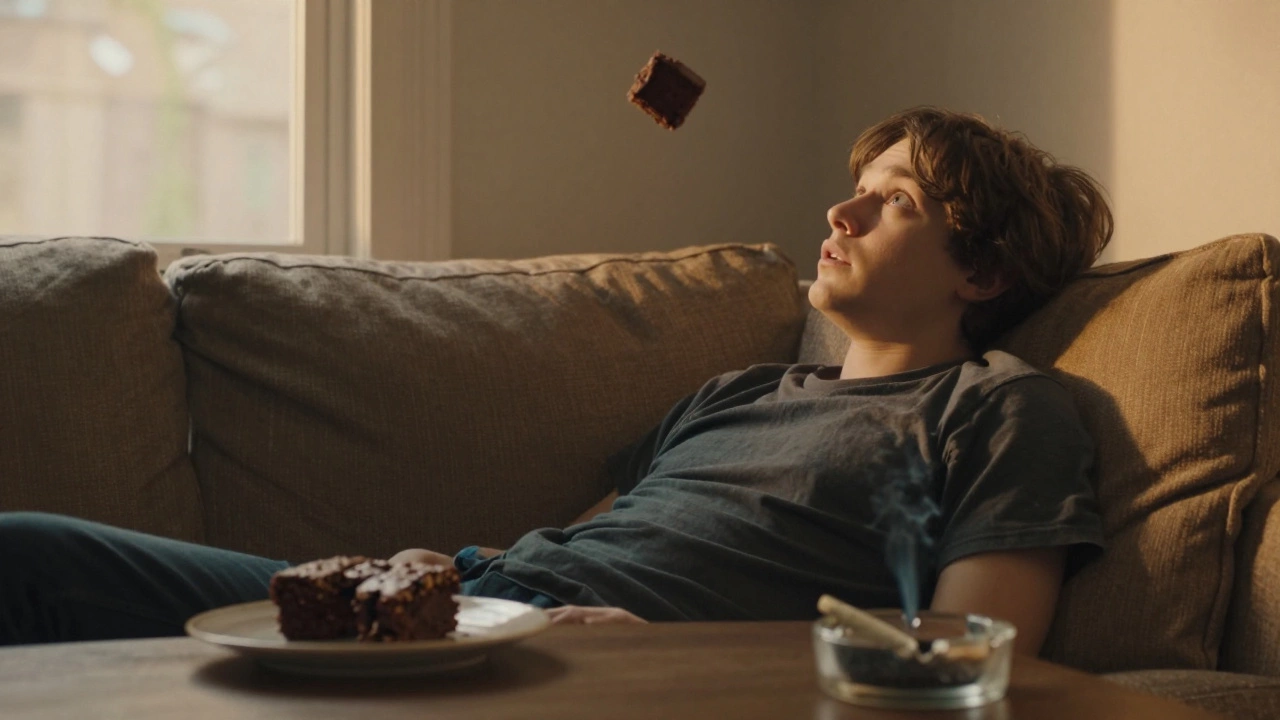
And the timing? Don’t expect instant results. It takes 30 minutes to two hours for the effects to kick in. That’s why people make the classic mistake: they eat half a brownie, wait 45 minutes, think nothing’s happening, and eat the other half. Two hours later, they’re wondering how they ended up staring at the ceiling wondering if their cat is a hologram.
Research from the Journal of Clinical Psychopharmacology shows that 11-hydroxy-THC can be up to five times more potent than the THC you inhale. That’s not a guess. That’s lab data. One study found that subjects who ate 10mg of THC in a brownie reported stronger psychoactive effects than those who smoked the same dose.
Dosage Isn’t the Same - And That’s the Trap
Most people think: “If a joint has 10mg of THC, then a brownie with 10mg should feel the same.” That’s where things go sideways.
When you smoke, you control the dose. You can take one puff, wait, and adjust. With edibles, you get one dose - and it’s all or nothing. A standard brownie from a dispensary might contain 10mg, 20mg, or even 50mg of THC. Homemade ones? No one knows. A 2019 survey in Cannabis and Cannabinoid Research found that 68% of homemade edibles had THC levels that varied by more than 30% from what the maker thought they were. One batch could be mild. The next could be hospital-worthy.
And here’s the kicker: your body’s metabolism changes how you react. If you’re hungry, the brownie hits faster. If you’ve eaten a big meal, it could take three hours to kick in. Your liver enzymes, your weight, even your gut bacteria affect how strong the high feels. Two people eating the same brownie can have completely different experiences.
What Really Hits Harder? The Answer Isn’t Simple
Let’s cut to the chase: the brownie hits harder - but not always in the way you expect.
If you’re looking for a quick buzz, a quick laugh, or a little relief from stress, the joint wins. It’s precise. You can turn it off. The brownie? It’s a marathon, not a sprint. Once you eat it, you’re on the ride. And if you took too much? You might be stuck on it for six, eight, even ten hours.
But if you’re chasing depth - a full-body calm, a slow unraveling of tension, a dreamy introspection - the brownie delivers. It’s not just stronger. It’s different. It doesn’t just make you high. It makes you feel.
One 2021 study from the University of California tracked 1,200 users who tried both methods. Of those who used both, 63% said the edible high felt “more meaningful” or “more therapeutic.” Only 22% said the joint was more valuable for relaxation. The rest were split.
Why the Confusion? Because We Don’t Talk About This Enough
We live in a world where smoking cannabis is normalized. You see it in movies, on TV, in ads. But edibles? They’re the wild west. No regulation. No standardization. No warning labels that actually mean anything.
Here’s what no one tells you: a single brownie can contain the same amount of THC as three or four joints. And if you’re new to edibles, you’re not just risking a bad trip - you’re risking a panic attack, dizziness, nausea, or even hallucinations. Emergency room visits for edible-related issues have risen 400% since 2015 in the U.S., according to the Journal of Medical Toxicology. Most of those cases? People thought they were eating a regular brownie.

What to Do If You Want to Try It
If you’re curious - and you’re in a place where it’s legal - here’s how to do it without regret:
- Start with 2.5mg to 5mg of THC. That’s half a square of a standard 10mg brownie.
- Wait at least two hours before eating more. Seriously. Set a timer.
- Eat it on an empty stomach only if you know how you react. Otherwise, have a light snack first.
- Don’t mix with alcohol. It makes the high unpredictable and can spike nausea.
- Keep a glass of water nearby. Dry mouth? That’s normal. Panic? That’s not.
And if you’re baking your own? Weigh your cannabis. Use a lab-tested concentrate. Don’t guess. One gram of 20% THC flower equals 200mg of THC. Spread that over 12 brownies? That’s 16.6mg per piece. Too much for a beginner. Too little for a regular user. Know your math.
Final Verdict: It Depends on What You Want
So, which hits harder - a brownie or a joint? The joint hits faster. The brownie hits deeper. The joint is like a sprint. The brownie is like a slow dive into the ocean.
Neither is better. But one is far more dangerous if you don’t respect it. If you’re looking for control, precision, and quick relief - go with the joint. If you want to melt into your surroundings, let go of the day, and sink into calm - try the brownie. Just don’t eat the whole thing. And don’t do it alone.
Can you overdose on a cannabis brownie?
You can’t technically overdose in the fatal sense - no one has ever died from THC alone. But you can have a terrifying, overwhelming experience that feels like an overdose. Symptoms include extreme anxiety, paranoia, rapid heartbeat, vomiting, and hallucinations. These can last for hours. If you feel this way, stay calm, drink water, and find a quiet, safe space. The effects will pass.
How long does a brownie high last?
On average, the effects last 6 to 8 hours. Peak intensity hits between 2 and 4 hours after eating. Some people report lingering effects - like mild drowsiness or altered perception - for up to 12 hours, especially with higher doses. This is why people say, “I thought it was over, but I still felt weird the next day.”
Why does a brownie feel stronger than smoking the same amount of THC?
When you eat THC, your liver turns it into 11-hydroxy-THC, a metabolite that crosses the blood-brain barrier more easily than the THC you smoke. This version is more potent and produces a deeper, more physical high. Studies show it can be up to five times stronger than smoked THC at the same dose.
Are store-bought brownies safer than homemade ones?
In legal markets, yes. Regulated products must list THC content per serving and undergo lab testing. Homemade brownies? No standardization. One batch might have 5mg per piece. Another might have 50mg. You can’t tell by taste, smell, or appearance. Always assume homemade is stronger than you think.
Can you build tolerance to cannabis brownies?
Yes. Regular use of edibles can lead to tolerance faster than smoking, because the liver processes THC more efficiently over time. You might need more to feel the same effect. Taking a break for a week or two resets your sensitivity. Many users report feeling stronger effects after just a few days off.