Vegan Chocolate Checker
Check if your chocolate contains non-vegan ingredients. Paste ingredients list or product name to see if it's vegan-friendly.
Enter ingredients to check vegan status
Not all chocolate is vegan. That’s the first thing you need to know if you’re switching to a plant-based diet or just trying to avoid animal products. A lot of people assume chocolate is naturally vegan because it comes from cocoa beans-but that’s where things get tricky. Most mainstream chocolate bars contain milk powder, butterfat, or even honey. Even dark chocolate, which seems like a safe bet, often has hidden dairy ingredients. So what chocolate is actually vegan? It’s not always obvious, and reading labels isn’t always enough.
What Makes Chocolate Non-Vegan?
The biggest culprit is milk. Milk chocolate is obvious-it’s made with cow’s milk. But even some dark chocolates, especially those labeled as "semi-sweet" or "bittersweet," contain milk derivatives like whey, casein, or lactose. These are added to smooth out the texture or mellow the bitterness. You won’t always see "milk" on the ingredient list. Instead, you’ll find "milk fat," "milk solids," or "natural flavors"-which can include dairy.
Another surprise? Some chocolate uses bone char in sugar refining. While the sugar itself doesn’t contain bone particles, the refining process in some countries filters raw sugar through animal bone char to whiten it. This isn’t an ingredient, but it’s still an animal product used in production. Many vegan consumers avoid sugar processed this way, especially if it’s not labeled as organic or unrefined.
Honey is another non-vegan ingredient you might find in chocolate-covered nuts or flavored bars. Even if the chocolate itself is plant-based, honey-based glazes or fillings can make the whole product unsuitable for vegans.
How to Spot Vegan Chocolate
Here’s how to check if a chocolate bar is vegan without needing a chemistry degree:
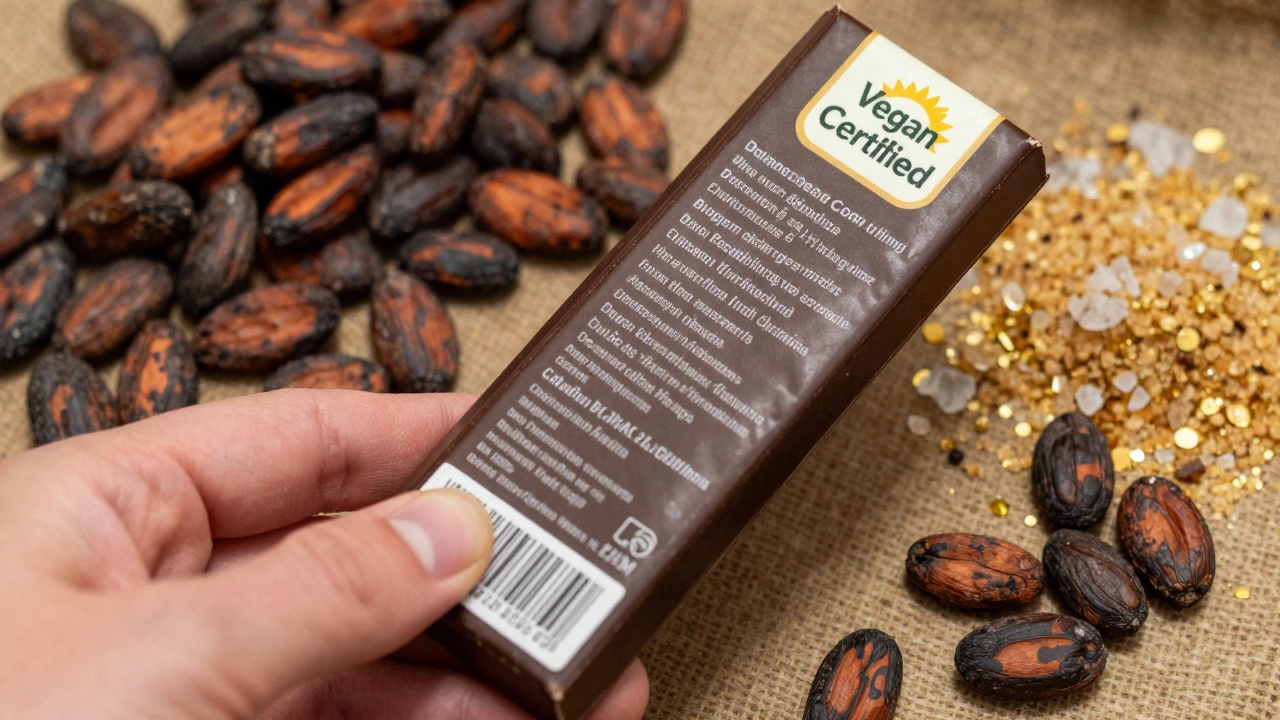
- Look for a vegan certification logo. The most trusted ones are the Vegan Society trademark (a sunflower symbol) or Certified Vegan by Vegan Action. These mean the product has been audited and contains no animal ingredients or cross-contamination.
- Read the ingredients list. If it says "cocoa mass, sugar, cocoa butter, vanilla," you’re probably good. If you see milk, whey, lactose, or gelatin-skip it.
- Check for "may contain milk" warnings. These are for allergens, not ingredients. Some vegan chocolate is made in factories that also process dairy. If you’re highly sensitive or strict, look for brands that make their chocolate in dedicated vegan facilities.
- Go for dark chocolate with 70% cocoa or higher. Higher cocoa percentages usually mean fewer additives. But don’t assume-always check the label.
One trick I’ve learned from years of shopping in Bristol’s health food stores: if the chocolate looks too clean-just a few ingredients-it’s more likely to be vegan. If the list is longer than your grocery list, it’s probably not.
Top Vegan Chocolate Brands You Can Trust
Not all vegan chocolate tastes like cardboard. In fact, some of the best chocolate on the market is completely dairy-free. Here are the brands that consistently deliver:
- Lindt Excellence 70%, 85%, and 90% Dark Bars - These are widely available in UK supermarkets and contain no milk ingredients. Lindt says they’re vegan, but they do carry a "may contain milk" warning due to shared equipment. Many vegans accept this as unavoidable.
- Green & Black’s Organic Dark Chocolate - Their 70% and 85% bars are certified vegan and made with organic cane sugar. The texture is rich and smooth, with no chalky aftertaste.
- Hotel Chocolat 100% Vegan Dark Chocolate - A premium option with bold, fruity notes. They’re transparent about sourcing and avoid refined sugar processed with bone char.
- Montezuma’s Absolutely Vegan - A UK-based brand with inventive flavors like sea salt & caramel (made with coconut sugar) and chili & orange. All products are made in a dedicated vegan factory.
- Ah!Lemon & Co. Vegan Chocolate - A small Bristol-based company that makes hand-poured bars with local ingredients. Their almond butter crunch bar is a local favorite.
- Endangered Species Chocolate - While not all their bars are vegan, their 72% and 88% dark options are certified vegan and donate 10% of profits to wildlife conservation.
These brands are all available in UK supermarkets like Tesco, Sainsbury’s, and Waitrose, or online through Vegan Kind and The Vegan Shop. You don’t need to hunt down specialty stores anymore.

What About Chocolate Chips and Baking Chocolate?
If you’re baking vegan desserts, you’ll need chocolate that melts well and holds its shape. Most chocolate chips are loaded with dairy. But there are vegan options:
- Enjoy Life Semi-Sweet Mini Chips - Free from top allergens, including dairy. Perfect for cookies and brownies.
- Pascha Organic 100% Cacao Baking Chips - Made with just cacao and cane sugar. They’re intense but great for melting into ganache.
- Guittard Chocolate Chips (Dark, 63% and 72%) - Not certified vegan, but ingredients list only shows chocolate liquor, sugar, cocoa butter, and vanilla. Many vegans use these without issue.
When in doubt, chop up a vegan chocolate bar instead of using chips. It gives you better control over texture and flavor.
DIY Vegan Chocolate at Home
Want to make your own? It’s easier than you think. All you need is:
- Raw cacao powder or unsweetened cocoa powder
- Cocoa butter (available online or in health stores)
- Maple syrup, coconut sugar, or date paste for sweetness
- Vanilla extract and a pinch of sea salt
Melt the cocoa butter gently in a double boiler, stir in the cocoa powder and sweetener, then add vanilla. Pour into silicone molds, add crushed nuts or dried fruit, and chill for an hour. You get a bar with zero additives and full control over sweetness and texture.
This is how I make my holiday gifts. People assume they’re expensive store-bought treats-until they find out I made them in 15 minutes.

Common Myths About Vegan Chocolate
Let’s clear up a few misconceptions:
- Myth: Dark chocolate is always vegan. False. Many dark chocolates still contain milk fat or emulsifiers derived from animals.
- Myth: Organic chocolate is automatically vegan. No. Organic just means no synthetic pesticides. It says nothing about dairy or sugar processing.
- Myth: Vegan chocolate tastes bitter or chalky. Not anymore. Modern vegan chocolate uses coconut sugar, inulin, and plant-based emulsifiers to mimic the creaminess of dairy.
- Myth: Vegan chocolate is expensive. Some premium brands are, but basic vegan dark chocolate bars now cost the same as regular ones in most UK supermarkets.
What to Do If You Can’t Find Vegan Chocolate
If you’re in a small town or abroad and can’t find certified vegan chocolate, here’s what to do:
- Look for chocolate labeled "dairy-free" and cross-check the ingredients.
- Choose bars with cocoa content above 75%-they’re less likely to have additives.
- Buy cacao nibs. They’re pure crushed cocoa beans, no sugar or milk added. Eat them as a snack or crush them into oatmeal.
- Make a hot cocoa mix with unsweetened cocoa powder, coconut sugar, and plant-based milk. It’s simple, cheap, and always vegan.
The key is to keep experimenting. Your taste buds will adjust. What once tasted too bitter will soon feel rich and satisfying.
Why This Matters Beyond Diet
Choosing vegan chocolate isn’t just about avoiding dairy. It’s about supporting ethical production. Most conventional chocolate comes from regions with child labor and deforestation. Vegan brands that are also Fair Trade or Rainforest Alliance certified often pay farmers fairly and protect ecosystems. Brands like Tony’s Chocolonely and Divine Chocolate are leading the way here.
When you pick a vegan chocolate bar, you’re voting with your wallet-for animals, for farmers, and for the planet. That’s more than a dessert choice. It’s a statement.
Is all dark chocolate vegan?
No. While dark chocolate has less sugar and no milk added by default, many brands still include milk fat, whey, or lactose as emulsifiers or flavor modifiers. Always check the ingredients list-even if it says "70% dark chocolate," it might still contain dairy.
Can vegans eat chocolate with soy lecithin?
Yes. Soy lecithin is a plant-based emulsifier made from soybeans. It’s commonly used in chocolate to improve texture and is completely vegan. Don’t confuse it with dairy-based lecithin-soy lecithin is safe.
Is vegan chocolate healthier than regular chocolate?
Not necessarily. Vegan chocolate can still be high in sugar and fat. The health benefit comes from choosing dark chocolate with high cocoa content and low added sugar-not from it being vegan. Look for bars with less than 10g of sugar per serving for the best nutritional profile.
Does vegan chocolate melt differently?
Yes. Without dairy fat, vegan chocolate can melt faster and sometimes seize up if exposed to moisture. Use a double boiler and avoid steam. For baking, add a splash of plant-based milk or coconut oil to help it flow smoothly.
Where can I buy vegan chocolate in the UK?
Most major supermarkets now stock vegan chocolate. Tesco, Sainsbury’s, Waitrose, and Asda all carry brands like Green & Black’s, Lindt, and Montezuma’s. Health food stores and online retailers like Vegan Kind and The Vegan Shop offer a wider selection, including small-batch and ethical brands.