What Makes Fudge Good? The Science and Secrets Behind Perfect Fudge
Good fudge isn't about fancy ingredients-it's about temperature, timing, and technique. Learn the three key factors that make fudge smooth, rich, and perfectly set every time.
When you fudge, a rich, dense chocolate confection made by boiling sugar, butter, and milk to a specific temperature. Also known as chocolate fudge, it’s not just candy—it’s a science of temperature, timing, and texture. Get it right, and you get that melt-in-your-mouth softness. Get it wrong, and you end up with grainy, crumbly mess that tastes like sugar crystals. Most people think fudge is hard because they’re using the wrong ingredients or skipping the one step that changes everything: stirring at the right moment.
The secret isn’t fancy equipment. It’s understanding what makes fudge work. cream of tartar, an acid that stops sugar from crystallizing is a quiet hero in fudge recipes. A tiny pinch keeps the texture smooth, even if you don’t have a candy thermometer. Then there’s condensed milk, the go-to base for no-cook fudge, but not the only option. If you’re avoiding sugar or dairy, you can swap it with coconut condensed milk or even cashew cream—just know that each change affects how the fudge sets. People who try these swaps often wonder why their fudge won’t harden. It’s not the recipe—it’s the moisture content. Too much liquid, and it stays sticky. Too little, and it’s chalky.
What you’ll find below isn’t just a list of recipes. It’s a collection of real fixes from people who’ve burned, cracked, or ruined batches—and figured out how to make it right. You’ll see how fudge can be made without condensed milk, why cream of tartar is more important than you think, and how dairy-free versions can taste just as rich. No fluff. No guesswork. Just what works.
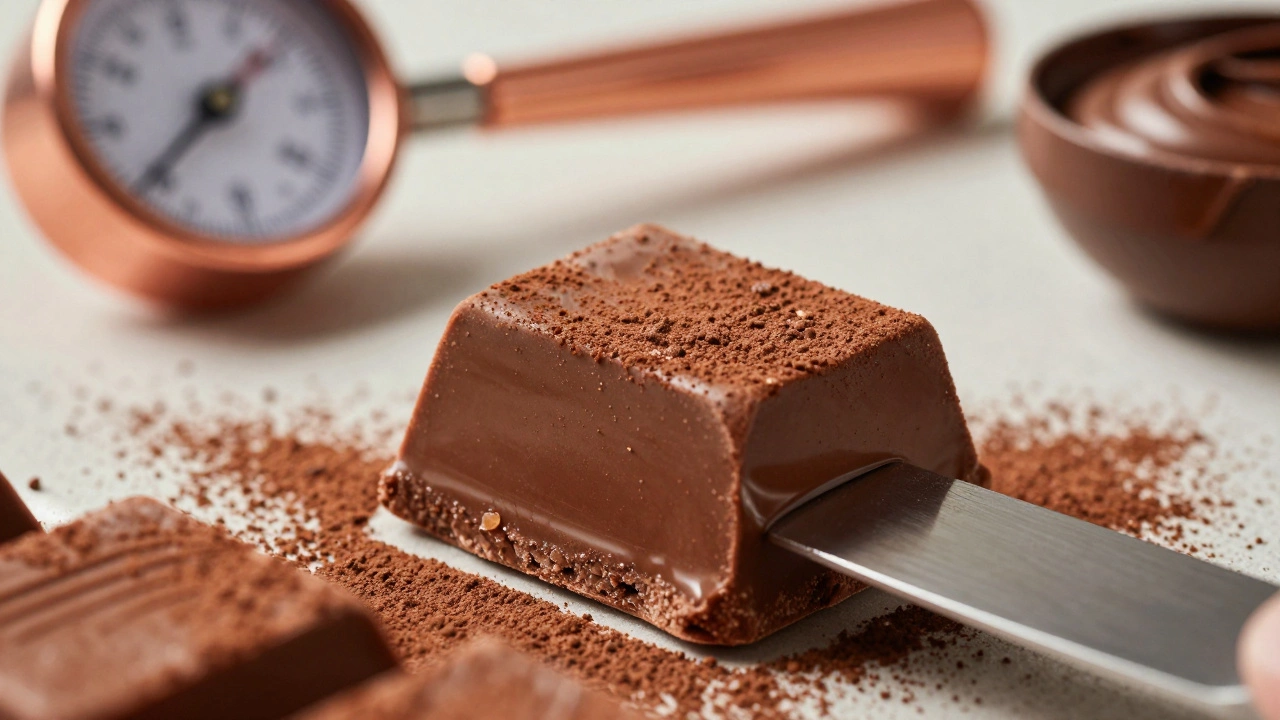
Good fudge isn't about fancy ingredients-it's about temperature, timing, and technique. Learn the three key factors that make fudge smooth, rich, and perfectly set every time.