When Should You Not Eat Cheesecake? Common Reasons to Skip This Dessert
Cheesecake is delicious, but not always safe or smart to eat. Learn when to skip it - whether you're lactose intolerant, pregnant, recovering from surgery, or just not hungry.
When you think of cheesecake, a rich, creamy dessert made primarily from cream cheese, sugar, eggs, and a crust. Also known as New York-style cheesecake, it’s one of those treats that feels like a reward—but it also carries real health trade-offs. Unlike cakes that rely on flour and air, cheesecake gets its density from fat and sugar. That’s why it tastes so indulgent. But that same formula is why it can cause problems if you eat it often.
The biggest concern? cream cheese, a high-fat dairy product that’s the base of most cheesecakes. A single slice can pack over 20 grams of saturated fat—nearly the entire daily limit for some people. That’s not just about weight gain. Too much saturated fat over time can raise LDL cholesterol, which increases heart disease risk. And if you’re lactose intolerant or have dairy sensitivity, cheesecake isn’t just uncomfortable—it can trigger bloating, gas, or even diarrhea. Then there’s the sugar. Most recipes use a cup or more of granulated sugar, sometimes with added sweeteners like condensed milk or sour cream. That’s a lot of empty calories that spike blood sugar fast, then crash hard.
Some people think gluten-free crusts make cheesecake healthier. They don’t. The real issue isn’t the crust—it’s the filling. Even if you swap out the graham cracker base for almond flour, you’re still loading up on fat and sugar. And if you’re watching your calories, remember: one slice of cheesecake can have more calories than two cheeseburgers. That’s not a myth—it’s a fact backed by USDA data on standard recipes. There’s also the issue of portion control. Cheesecake is rarely eaten in small amounts. Once you start, it’s easy to go back for more because it’s so rich and satisfying. That’s not weakness—it’s how food science works. Fat and sugar trigger dopamine, the brain’s reward chemical. Your body is wired to crave it.
So what’s the answer? You don’t have to give up cheesecake. But you do need to understand what you’re eating. If you have diabetes, high blood pressure, or digestive issues, even occasional slices can add up. And if you’re trying to cut back on processed foods, store-bought cheesecakes often contain additives like stabilizers and artificial flavors. Homemade versions give you control—but they still need balance. A lighter cheesecake using Greek yogurt, less sugar, and a nut-based crust can be a smarter choice. It won’t taste exactly the same, but it’ll be kinder to your body.
Below, you’ll find real posts from bakers and health-focused cooks who’ve tested these trade-offs firsthand. Some share how they cut sugar without losing creaminess. Others show how dairy sensitivity changed their dessert habits. You’ll see what works, what doesn’t, and why cheesecake isn’t just a dessert—it’s a decision.
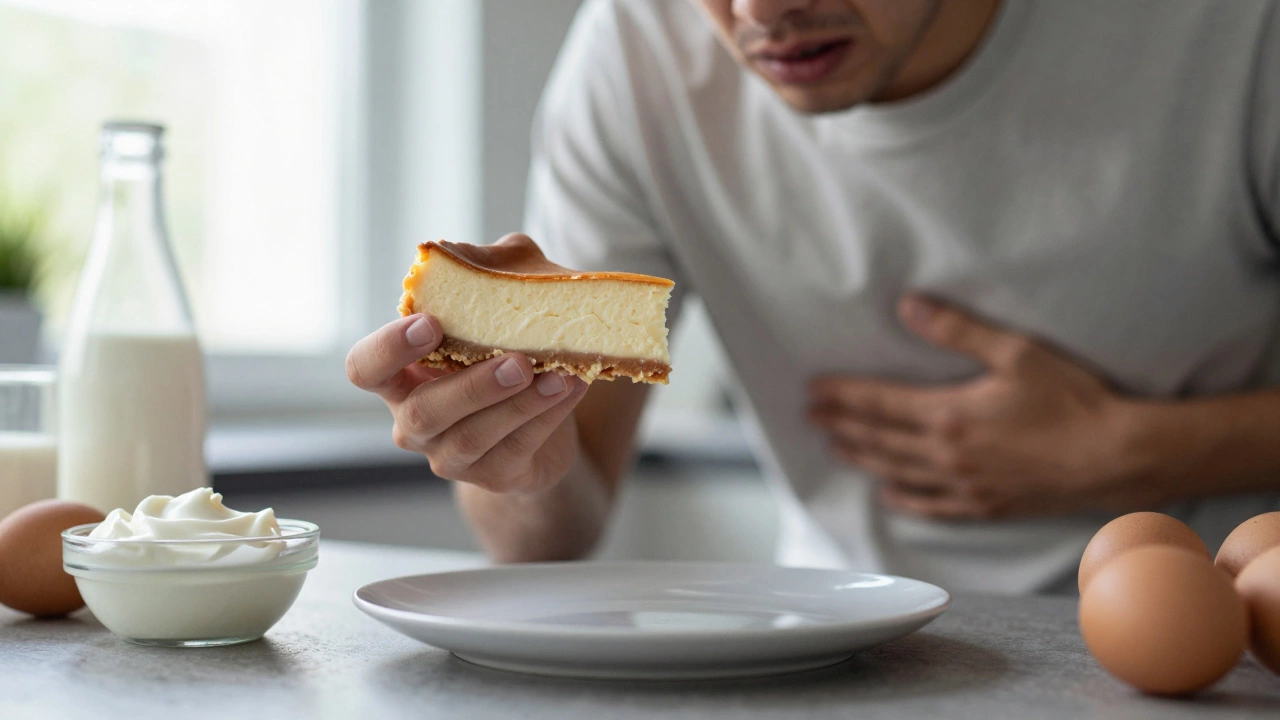
Cheesecake is delicious, but not always safe or smart to eat. Learn when to skip it - whether you're lactose intolerant, pregnant, recovering from surgery, or just not hungry.