Cheesecake Safety Checker
Check Your Situation
Answer these questions to determine if cheesecake is safe for you to eat right now:
Everyone loves cheesecake. Creamy, rich, and sweet, it’s the kind of dessert that turns birthdays, holidays, and even random Tuesday nights into something special. But here’s the thing - there are times when eating cheesecake isn’t just a bad idea, it could make you feel worse, not better. It’s not about being on a diet. It’s about your body, your health, and what’s actually happening inside you.
Your stomach is upset
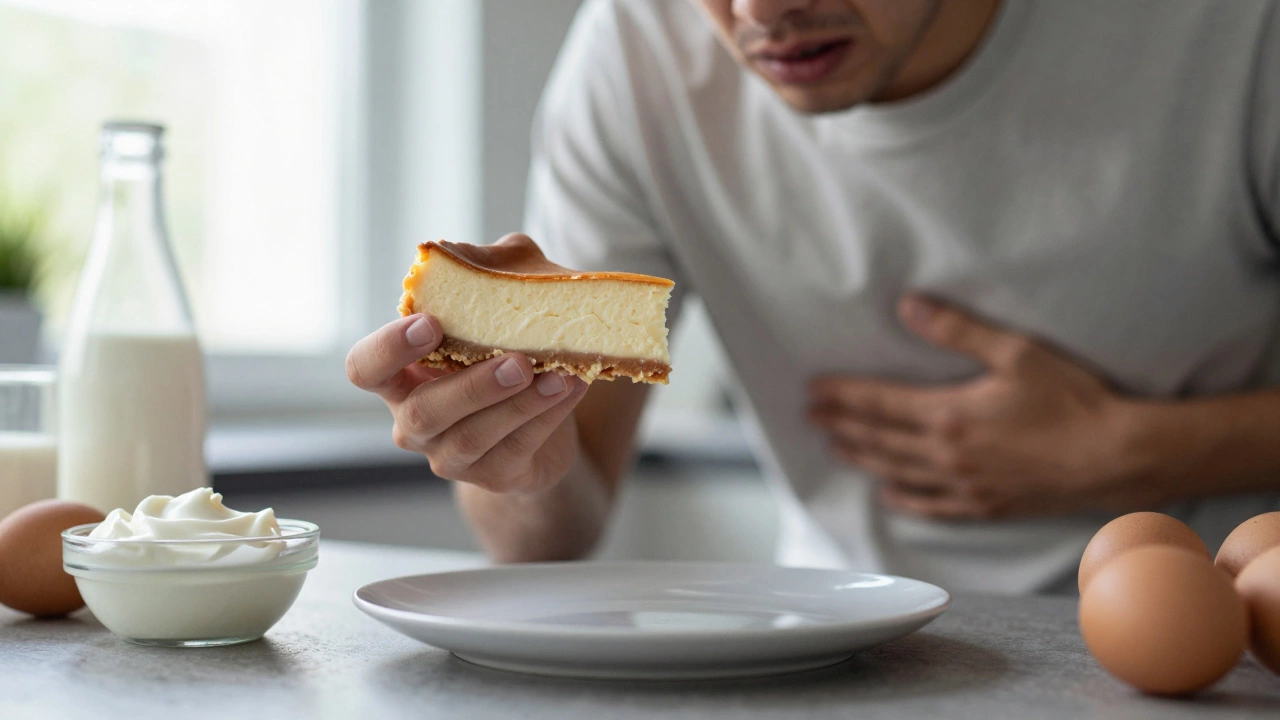
If you’ve been feeling bloated, gassy, or have had diarrhea lately, skip the cheesecake. Most cheesecakes are packed with dairy - cream cheese, sour cream, heavy cream - and that’s a problem if your gut is already irritated. Dairy can slow digestion, increase mucus production, and make inflammation worse. I’ve seen people eat a slice after a bad stomach bug and end up back in bed. Your gut doesn’t need the extra burden. Wait until you’re fully recovered. Plain toast and broth will thank you more than a slice of New York-style cheesecake ever could.
You’re lactose intolerant
Lactose intolerance isn’t rare. In fact, around 65% of the global population has trouble digesting lactose, the sugar in milk. Cheesecake is one of the worst offenders. A single slice can contain over 12 grams of lactose - that’s more than a glass of milk. If you get bloated, cramps, or gas after dairy, cheesecake isn’t a snack, it’s a warning sign. Some people think they can handle small amounts, but cheesecake isn’t small. It’s dense. It’s loaded. And it’s not worth the three hours of discomfort afterward. There are dairy-free versions now - made with cashew cream or coconut yogurt - but even those can trigger reactions if you’re highly sensitive. If you’ve ever blamed yourself for "eating too much," maybe it wasn’t the portion. It was the ingredients.
You’re on a low-fat or low-cholesterol diet
Traditional cheesecake is not a light dessert. A typical 100g slice has around 300 calories, 20g of fat, and 80mg of cholesterol - mostly from cream cheese and eggs. That’s more than half your daily cholesterol limit in one bite. If your doctor told you to cut back on saturated fats because of high LDL or heart concerns, cheesecake isn’t a treat - it’s a setback. You don’t need to give up dessert forever. Try a fruit-based dessert with a crumb topping. Or, if you’re determined to have cheesecake, make a version with low-fat cream cheese and Greek yogurt. But even then, it’s not a health food. It’s a compromise.
You’re pregnant and didn’t check the ingredients
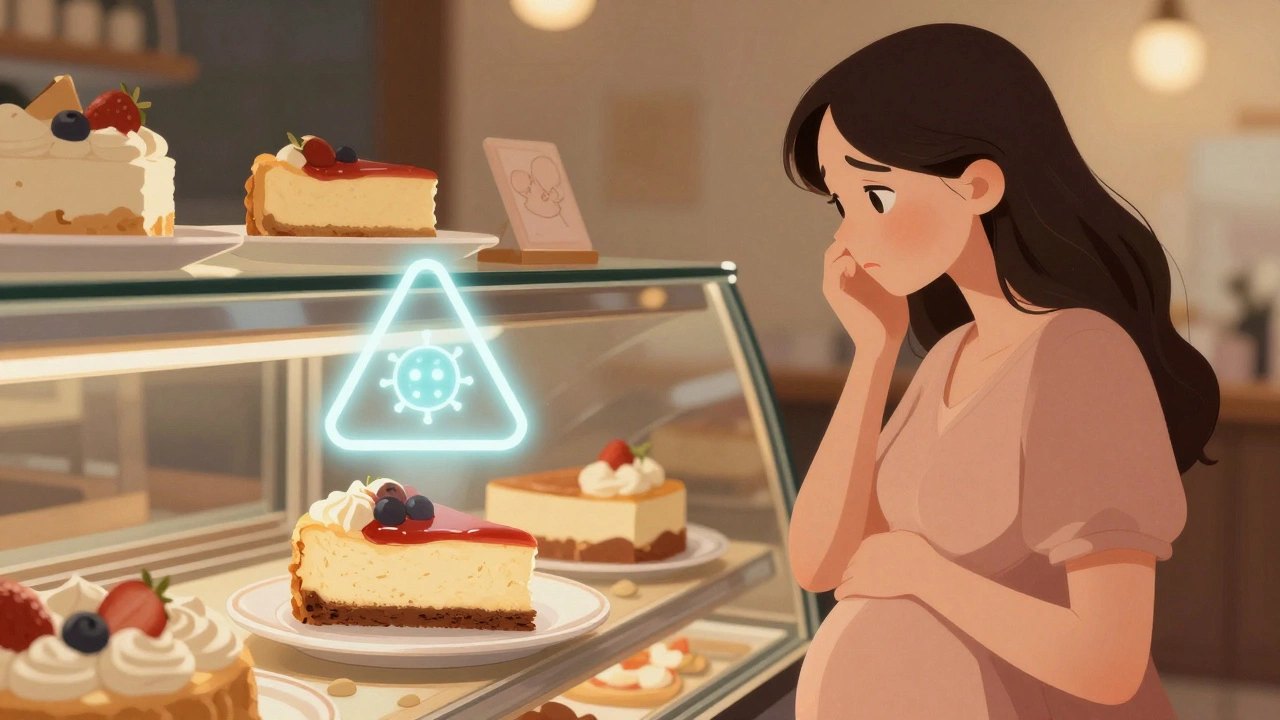
Pregnant women are often told to avoid certain cheeses. That’s because of listeria, a bacteria that can grow in soft, unpasteurized cheeses. Many homemade cheesecakes use raw cream cheese or unpasteurized sour cream - especially if bought from a local bakery or made by a friend who thinks "it’s just a little raw." That’s risky. Listeria doesn’t make you sick right away. It can take weeks. And for a developing baby, it can mean miscarriage, stillbirth, or serious illness. If you’re pregnant, always ask: "Is the cream cheese pasteurized?" If you don’t know, don’t eat it. Store-bought cheesecakes from major brands are usually safe. Homemade? Only if you made it yourself with pasteurized ingredients. When in doubt, choose a baked apple or a fruit salad. Your baby doesn’t need cheesecake. They just need you to be healthy.
You’re recovering from surgery
After surgery, your body needs easy-to-digest food. High-fat, high-sugar desserts like cheesecake are the opposite. They slow digestion, increase inflammation, and can cause nausea or constipation - both common after anesthesia and pain meds. If you’ve had abdominal surgery, your intestines are already sluggish. Adding heavy dairy and sugar doesn’t help. Stick to broth, mashed potatoes, steamed vegetables, and plain yogurt (if tolerated). Save the cheesecake for your first real celebration - not your first meal out of the hospital.
You have a food allergy or sensitivity
Cheesecake isn’t just dairy. It often contains eggs, wheat (in the crust), nuts, or even flavorings like vanilla extract that have hidden allergens. If you’re allergic to eggs, even a small amount in the filling can trigger a reaction. If you’re gluten intolerant, the graham cracker crust is a minefield. Even "gluten-free" crusts can be cross-contaminated if made in the same kitchen as regular ones. I once saw someone have anaphylaxis after eating a "vegan" cheesecake - it had soy lecithin, and they were allergic to soy. Always read labels. If you’re unsure, ask the baker. If you can’t get a straight answer, walk away. Your safety matters more than dessert.
You’re feeling emotionally low
This one’s tricky. People turn to cheesecake when they’re sad, stressed, or lonely. It feels like comfort. But if you’re already feeling low, sugar crashes make it worse. Cheesecake gives you a quick spike in blood sugar, then a sharp drop. That leads to fatigue, irritability, and brain fog - exactly what you don’t need when you’re already down. Instead of reaching for dessert, try going for a walk, calling a friend, or eating something with protein and fiber - like peanut butter on whole grain toast or a bowl of oatmeal with berries. Real comfort doesn’t come from sugar. It comes from feeling cared for. And you deserve that, not a slice of guilt.
You’ve had too much already
It’s easy to say "just one slice." But cheesecake is dense. One slice can be 500 calories. Two? That’s a full meal. And if you’ve already eaten a big lunch, or you’re not hungry, adding cheesecake doesn’t add joy - it adds weight. You don’t need to feel guilty for enjoying it. But you do need to listen to your body. If you’re full, stop. If you’re eating it because it’s there, not because you want it, skip it. There will be another day. Another party. Another slice. But your body won’t thank you for eating when you’re not hungry.
It’s expired or looks off
Cheesecake doesn’t last long. Even in the fridge, it starts to degrade after 5 days. If the surface is dry, cracked, or has odd spots - especially green or fuzzy mold - throw it out. Smell it. If it smells sour, yeasty, or just "off," don’t risk it. Food poisoning from spoiled dairy doesn’t wait. It hits fast. And it’s not worth the hospital visit. Always check the date. If it’s from a bakery and you bought it days ago, assume it’s past its prime. Better safe than sick.
You’re giving it to a young child or elderly person
Small kids under 2 shouldn’t eat cheesecake. Their digestive systems aren’t ready for high-fat dairy and added sugar. For older adults, especially those with diabetes, kidney disease, or swallowing issues, cheesecake can be dangerous. It’s thick, sticky, and hard to chew. One bite can choke someone with weakened muscles. And the sugar? It spikes blood glucose levels fast. If you’re serving dessert to a child or elderly person, choose something softer, lower in sugar, and easier to digest. A spoonful of yogurt with honey or a baked pear is safer and just as sweet.
Can I eat cheesecake if I’m diabetic?
You can, but with extreme caution. A regular slice of cheesecake has 30-40g of sugar - more than a can of soda. If you have diabetes, even a small slice can spike your blood sugar dangerously. If you want to try it, choose a version made with sugar substitutes like erythritol or stevia, and keep the portion tiny - no bigger than a thumb. Always check your blood sugar before and two hours after eating. And never eat it on an empty stomach. Pair it with protein, like a handful of nuts, to slow the sugar spike.
Is no-bake cheesecake safer than baked?
Not necessarily. No-bake cheesecakes often use raw cream cheese and uncooked eggs, which carry higher risks of listeria and salmonella. Baked cheesecakes are heated to 160°F or higher, which kills most harmful bacteria. If you’re pregnant, immunocompromised, or feeding someone vulnerable, baked is safer. No-bake is fine if you’re healthy and use pasteurized ingredients - but it’s not a health upgrade.
Can I eat cheesecake after a workout?
It’s not ideal. Post-workout, your body needs protein and fast carbs to rebuild muscle. Cheesecake has sugar, but almost no protein. You’ll get a sugar rush, then a crash. Better options: chocolate milk, a banana with peanut butter, or Greek yogurt with honey. If you really want cheesecake, have it later in the day - not right after training.
Does cheesecake cause acne?
It might. Studies link high-glycemic foods - like sugary desserts - to increased acne flare-ups. The sugar spikes insulin, which boosts oil production in your skin. Dairy, especially skim milk and cream cheese, may also trigger inflammation in some people. If you notice breakouts after eating cheesecake, try cutting it out for a few weeks. See if your skin clears up. It’s not a guarantee, but it’s worth testing.
Can I freeze cheesecake to make it last longer?
Yes, and it’s actually a good idea. Wrap it tightly in plastic and then foil. It keeps well for up to 2 months. Thaw it in the fridge overnight. Freezing doesn’t kill bacteria, but it stops them from growing. Just make sure it was fresh when you froze it. Never freeze cheesecake that’s already past its prime - you’re just locking in spoilage.
Final thought: It’s not about rules - it’s about listening
Cheesecake isn’t evil. It’s delicious. But food isn’t just about pleasure - it’s about how it makes you feel afterward. If you’re tired, sick, pregnant, allergic, or just not hungry, skipping it isn’t deprivation. It’s self-care. The best desserts are the ones you enjoy without regret. And sometimes, the most thoughtful choice is the one you don’t make.