Cannoli History: Origins, Traditions, and How They Became a Global Treat
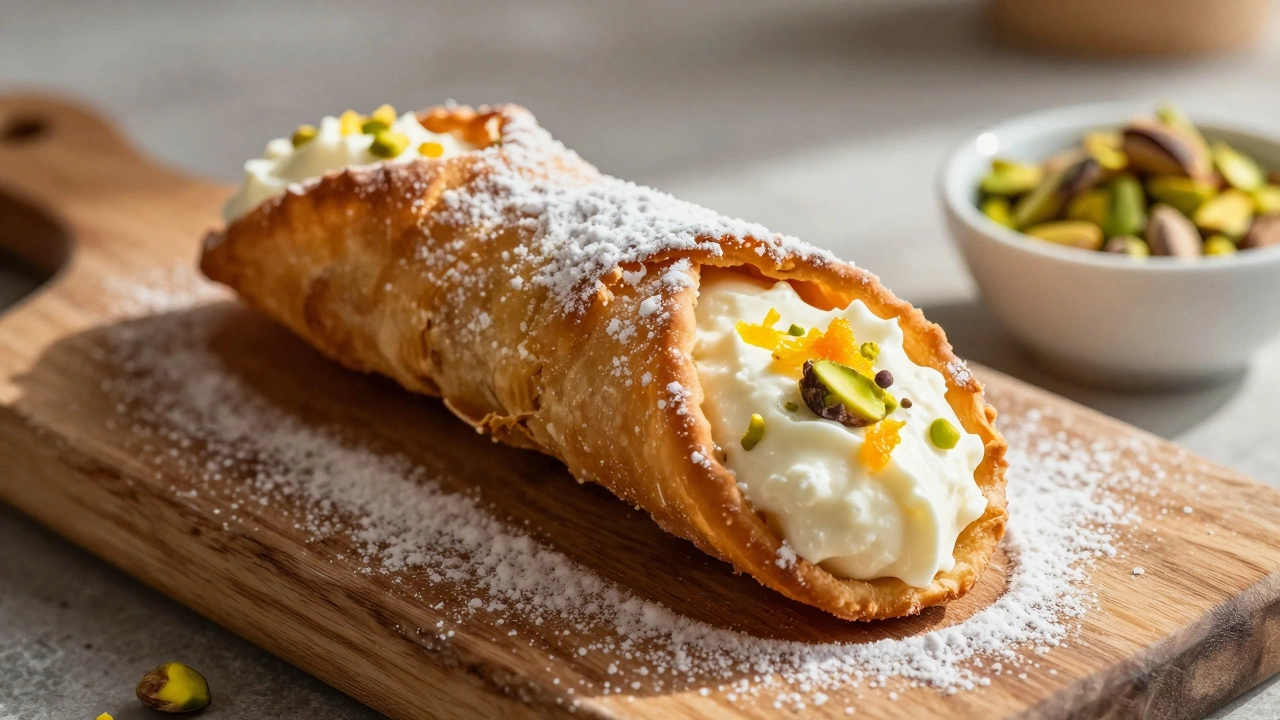
When you think of cannoli, a crisp, tube-shaped pastry shell filled with sweet ricotta cream, often dotted with chocolate chips or candied fruit. Also known as Sicilian cannoli, it’s one of Italy’s most iconic desserts—born not in a fancy restaurant, but in the kitchens of Sicilian convents and street vendors centuries ago. Unlike cakes or cookies, cannoli aren’t just sweet—they’re a cultural artifact. Their shape, texture, and filling tell a story of trade, religion, and regional pride.
The earliest versions of cannoli likely appeared in Sicily between the 9th and 11th centuries, during Arab rule. The island was a crossroads of flavors—honey, nuts, citrus, and spices from the Middle East mixed with local dairy and wheat. The word "cannolo" comes from the Italian "canna," meaning reed or tube, which refers to the hollow mold used to shape the pastry. Back then, ricotta wasn’t just a filling—it was a way to use up leftover cheese from sheep’s milk, often made by monks and nuns who preserved it in salt. Over time, the filling got sweeter, the shells got crispier, and the tradition spread from Palermo’s alleys to wedding tables and festivals like Carnevale.
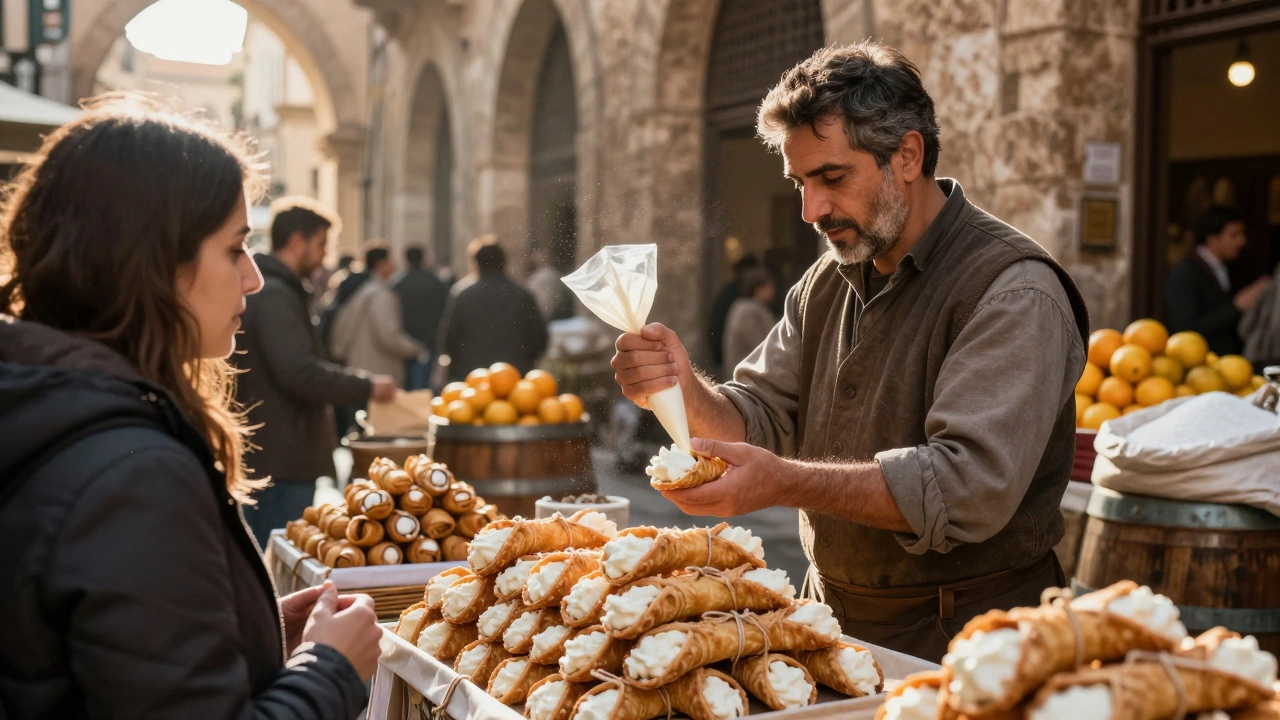
What makes cannoli different from other Italian pastries isn’t just the filling—it’s how they’re made. A true cannolo is fried fresh, then filled right before serving. If you fill it too early, the shell gets soggy. That’s why in Sicily, you’ll see vendors assembling them on the spot. The ricotta filling is usually strained to remove excess moisture, then mixed with sugar, vanilla, and sometimes citrus zest or cinnamon. Chocolate chips? That’s a modern twist. Traditional versions use candied orange peel or pistachios, which still show up in family recipes across the island. Even today, every town in Sicily has its own version—some use wine in the dough, others add marsala, and a few still roll the shells in crushed almonds.
Outside Italy, cannoli became popular through Italian immigrants in the U.S., especially in Philadelphia and New York. But the American version often misses the point: pre-filled shells, overly sweet ricotta, or shells that are too thick. Real cannoli are light, crunchy, and balanced—not a sugar bomb. The filling should taste like fresh cheese, not whipped cream with syrup. That’s why the best cannoli you’ll ever taste? Probably still in Sicily.
Today, you’ll find cannoli-inspired treats from Tokyo to Toronto, but the heart of the recipe hasn’t changed. It’s still about texture, timing, and tradition. Whether you’re making them for a holiday, a birthday, or just because you crave something crisp and creamy, understanding their history helps you bake them better. The posts below dive into everything from authentic ricotta fillings to how to keep shells crisp, what to do if your dough cracks, and even how to make vegan cannoli without losing that classic bite. You’ll find real tips from bakers who’ve spent years perfecting this one treat—not just recipes, but the why behind them.
The cannoli is a Sicilian dessert with roots in Arab-influenced medieval kitchens. No single person invented it-it evolved over centuries. Learn the real story behind its crispy shell and creamy ricotta filling.
Cannoli means 'little tube' in Italian and is a classic Sicilian dessert made of fried pastry shells filled with sweet ricotta. Learn its history, how to spot a real one, and why it's different from tiramisu.