Cannoli Authenticity Checker
Test Your Cannoli Knowledge
How well do you know authentic Sicilian cannoli? Answer these questions to see if you can spot the real deal from the tourist traps.
Your Authenticity Score
When you hear the word cannoli, you might picture a crispy tube of fried dough stuffed with sweet ricotta. But what does cannoli actually mean? It’s not just a dessert-it’s a piece of Sicilian history, wrapped in sugar, cinnamon, and centuries of tradition.
The Word Behind the Treat
The word "cannoli" comes from the Italian word "cannolo," which means "little tube." That’s because of its shape-hollow, cylindrical, and often slightly curved. The plural form is "cannoli," and the singular is "cannolo." It’s not just a name; it’s a description. These aren’t just pastries-they’re edible tubes, crafted to hold a creamy filling that contrasts perfectly with their crunchy shell.
There’s no mystery in the translation. But the story behind how it got there? That’s where things get interesting.
Where Cannoli Really Came From
Cannoli aren’t just Italian-they’re Sicilian. And more specifically, they’re tied to the city of Palermo and the surrounding areas. Historians trace them back to the Arab rule of Sicily between the 9th and 11th centuries. The Arabs brought sugarcane and almonds to the island, and local bakers began experimenting with sweet pastries. Over time, these early treats evolved into what we now recognize as cannoli.
One popular theory says cannoli were originally made during Carnevale, the festive season before Lent. Sweet treats were allowed during this time, and the tube shape may have symbolized fertility or abundance. Another story links them to the harem of a local nobleman, where sweet ricotta-filled pastries were served to guests. Either way, cannoli became a celebration food-something you ate on special days, not just any day.
The Filling That Makes It Real
Here’s where most people get it wrong. A real cannoli isn’t just any sweet cream in a shell. The filling is ricotta cheese-specifically, sheep’s milk ricotta, drained for at least 24 hours so it’s thick and not watery. Sugar, vanilla, and a pinch of cinnamon are mixed in. Some add chopped pistachios, candied orange peel, or chocolate chips. But the star is the ricotta. Not cream cheese. Not mascarpone. Ricotta.
Why does it matter? Because the texture is everything. The filling should be light, slightly grainy, and rich-not gloopy or overly sweet. The best cannoli are filled right before serving. If you fill them too early, the shell gets soggy and loses its crunch. That’s why in Sicily, you’ll often see cannoli displayed in bakeries with the shells and filling kept separate until ordered.
How They’re Made-The Real Way
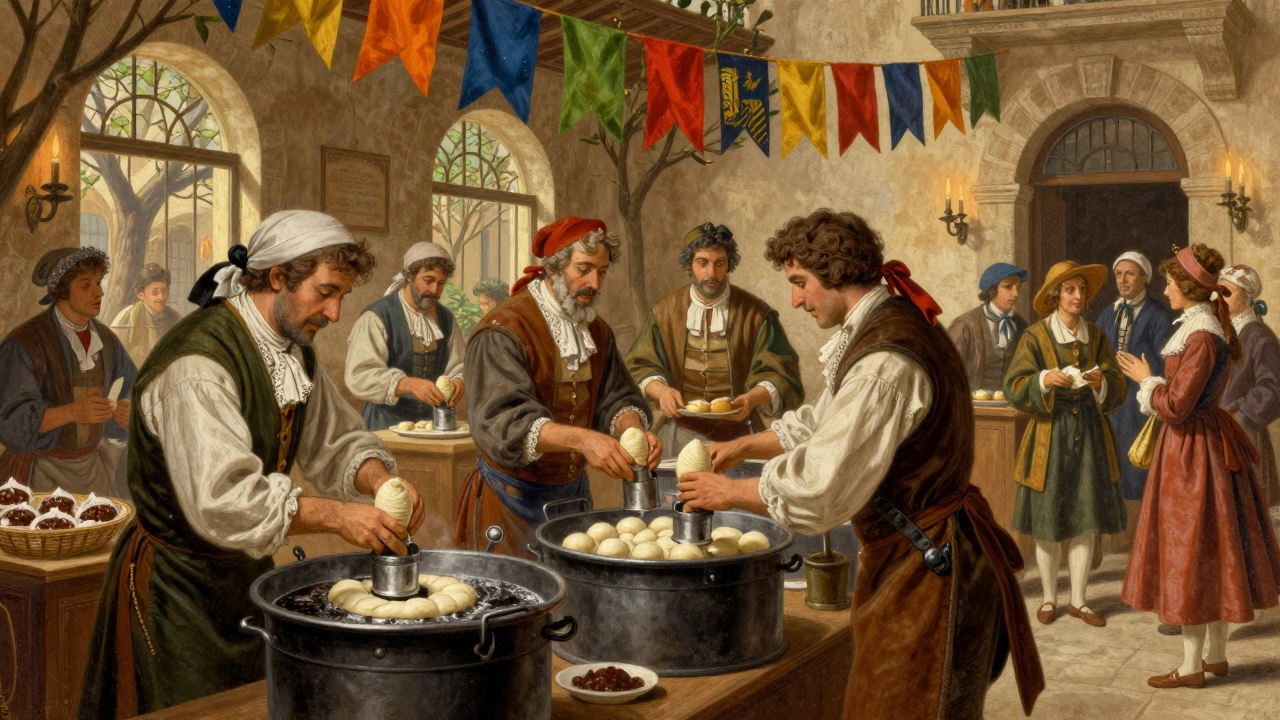
Making cannoli at home isn’t hard, but it takes patience. The dough is simple: flour, sugar, a little butter, wine (usually Marsala), and egg. You roll it thin, cut it into circles, wrap it around metal tubes, and fry until golden. Then you drain the excess oil and let it cool completely before filling.
There’s no shortcut that works. Using a store-bought shell? You lose the soul of the dessert. The shell should crack slightly when you bite into it-not snap like a chip, but give a gentle crunch that gives way to the creamy center. That’s the signature experience.
Why Cannoli Isn’t Just Another Dessert
Compare cannoli to tiramisu. Tiramisu is layered, elegant, and often served in a dish. Cannoli is handheld, messy, and meant to be eaten in one or two bites. One is a dessert you savor slowly. The other is a dessert you devour joyfully.
Cannoli doesn’t need a fancy plate or a candle. It’s street food turned fine pastry. You’ll find it in bakeries in Palermo, at family weddings in Catania, and even in small Italian-American shops in New York or Philadelphia. It’s a dessert that travels well, but never loses its roots.
And that’s the key to understanding what cannoli means. It’s not just a shape or a recipe. It’s identity. It’s tradition. It’s the taste of Sicily in every bite.
Common Mistakes People Make
- Using cow’s milk ricotta instead of sheep’s milk-it’s too watery and lacks depth.
- Buying pre-filled cannoli-they’re usually soggy and bland.
- Adding too much sugar to the filling. The ricotta should shine, not drown.
- Frying the shells too thick. They should be paper-thin and crisp.
- Storing them in the fridge. Cold temperatures make the shell lose its crunch.
How to Eat a Cannoli Like a Local
Don’t use a fork. Don’t try to eat it slowly. Take a bite, let the shell crack, feel the cream give way, and savor the contrast. Some people dip the ends in chocolate or crushed pistachios-that’s fine. But don’t soak the whole thing. You’re not making a dessert smoothie.
The best time to eat a cannoli? Right after it’s made. That’s why in Sicily, bakeries open early and sell out by noon. If you see a line, join it. You’re not just buying a pastry-you’re experiencing a ritual.
What to Look for in a Real Cannoli
- Shell: Light golden, not dark brown. Thin and crisp, not thick or greasy.
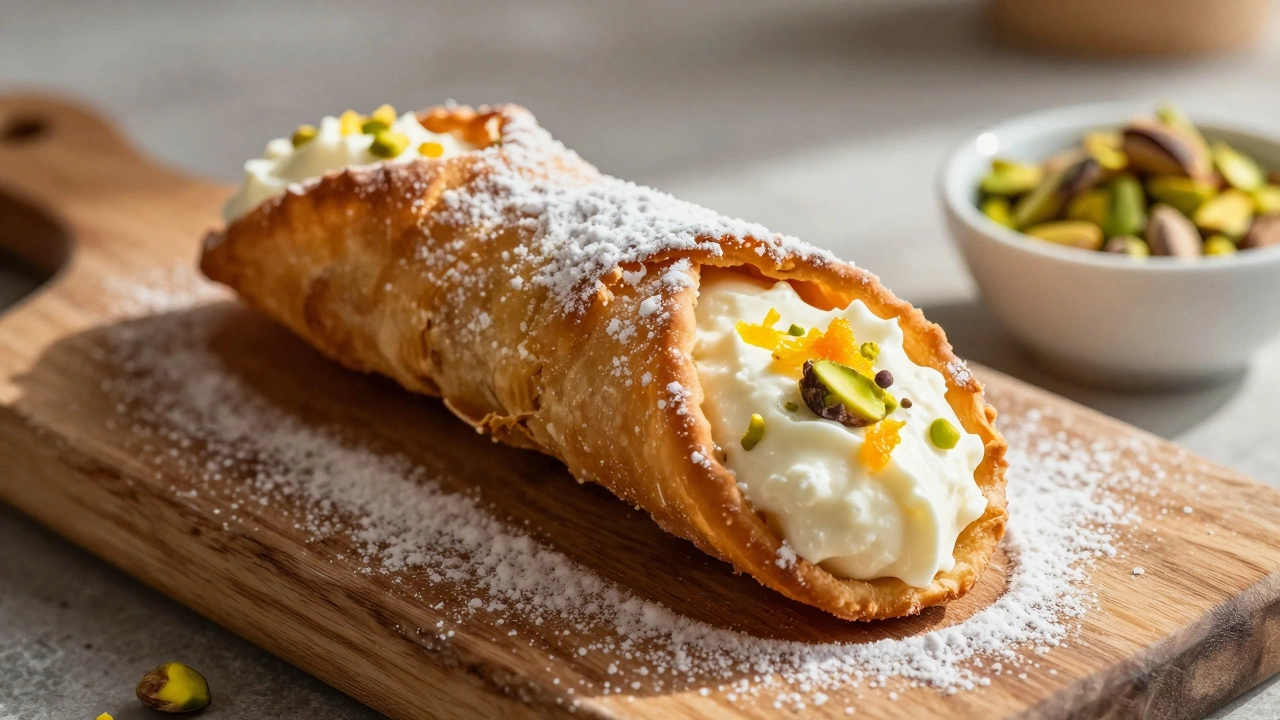
- Filling: Slightly grainy texture, not smooth like whipped cream. Should be pale ivory, not bright white.
- Flavor: Subtle sweetness, with hints of citrus or vanilla-not cloying.
- Optional toppings: Pistachios (real ones, not dyed green), chocolate chips, or candied fruit-not sprinkles.
If you find a cannoli with whipped cream, rainbow sprinkles, or a plastic wrapper, you’re not in Sicily. You’re in a tourist trap.
Can You Make Cannoli Without Frying?
Some people try baking the shells instead of frying them. It’s possible, but it’s not the same. Frying gives the shell its signature crispness and slight char. Baked shells are dry, cardboard-like, and lack the depth of flavor. If you want to try a healthier version, go ahead-but don’t call it a real cannoli.
True cannoli are fried. That’s part of the tradition. And if you’re going to make them, you might as well do it right.
Where to Find the Best Cannoli Outside Italy
Philadelphia has some of the best cannoli outside Italy, thanks to generations of Sicilian immigrants. Di Palo’s in New York, Mike’s Pastry in Boston, and Ferrara Bakery in Chicago are also trusted names. But don’t just go by reputation. Taste them. Look for the signs: fresh shell, creamy ricotta, no sogginess.
If you’re in the UK, check out Italian bakeries in London’s Little Italy or Manchester’s Northern Quarter. Ask if they make them fresh daily. If they say yes, ask if they use sheep’s milk ricotta. If they don’t know what you’re talking about, keep looking.
What does cannoli mean in Italian?
"Cannoli" is the plural of "cannolo," which means "little tube" in Italian. The name comes from the dessert’s shape-a hollow, cylindrical pastry shell.
Is cannoli the same as tiramisu?
No. Cannoli is a fried pastry shell filled with sweet ricotta cheese, often with chocolate chips or pistachios. Tiramisu is a layered dessert made with coffee-soaked ladyfingers, mascarpone cream, and cocoa powder. They’re both Italian, but they’re completely different in texture, preparation, and eating experience.
Can you freeze cannoli?
You can freeze the shells, but not the filled ones. Freeze the empty shells in an airtight container for up to a month. Fill them with ricotta the day you plan to eat them. Freezing filled cannoli makes the shell soggy and ruins the texture.
Why is ricotta used in cannoli?
Ricotta is used because it’s naturally sweet, slightly grainy, and holds its shape without being too heavy. Sheep’s milk ricotta is preferred because it’s richer and less watery than cow’s milk. It’s the traditional ingredient that gives cannoli its authentic flavor and texture.
Are cannoli gluten-free?
Traditional cannoli are not gluten-free because the shell is made with wheat flour. However, you can make gluten-free versions using almond flour or gluten-free flour blends. The filling is naturally gluten-free, so the challenge is just the shell.
Final Thought: It’s Not Just a Dessert
What does cannoli mean? It means heritage. It means patience. It means a culture that turned simple ingredients into something unforgettable. It’s not just about sugar and cream. It’s about the hands that shaped the dough, the ovens that fried it, and the families that passed it down.
Next time you see a cannoli, don’t just eat it. Taste the history. Feel the crunch. Let the ricotta melt on your tongue. That’s what it means to truly understand cannoli.