Mascarpone Freshness Checker
Check each condition below to determine if your mascarpone is safe to use. Remember: Trust your senses over expiration dates.
You’ve opened a tub of mascarpone for your tiramisu, but something feels off. The texture looks weird. There’s a faint sour smell. Maybe it’s just old-maybe it’s unsafe. You don’t want to ruin your dessert or, worse, make someone sick. The good news? You don’t need to guess. There are clear, reliable ways to tell if mascarpone has gone bad-and they’re easier than you think.
What mascarpone should look and smell like
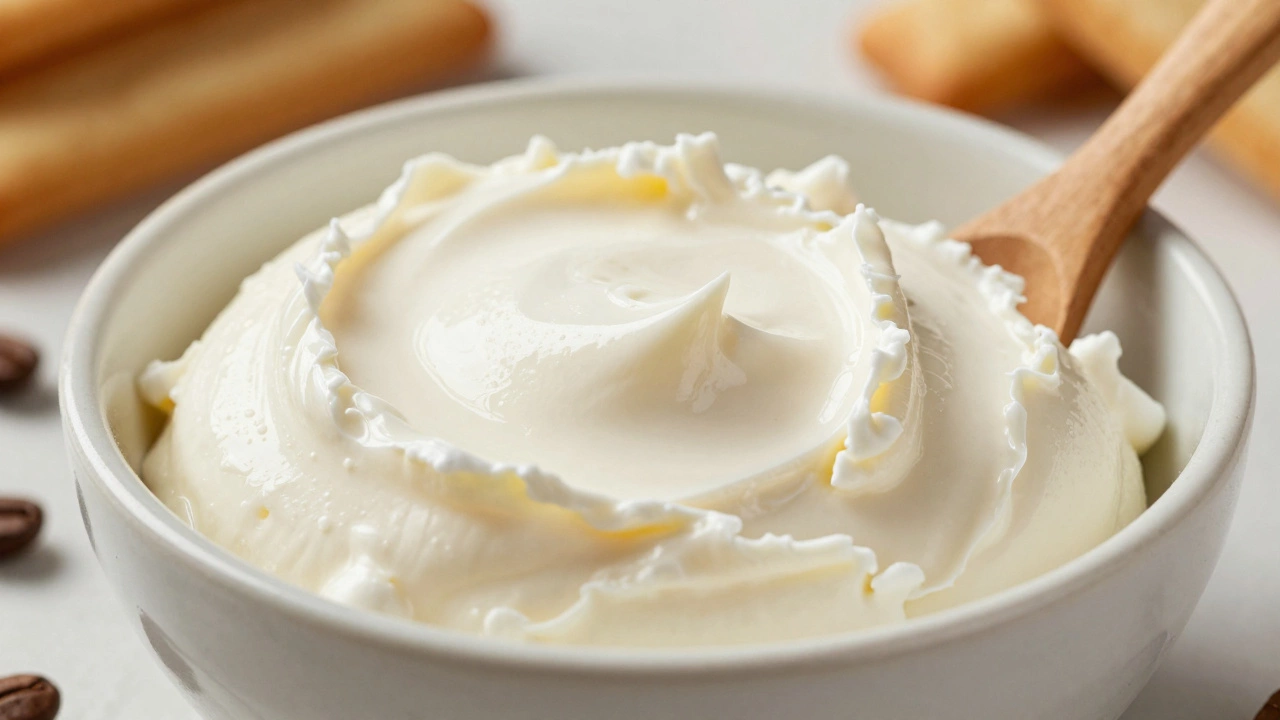
Mascarpone is an Italian cream cheese made from heavy cream and a touch of acid, like lemon juice or tartaric acid. It’s rich, smooth, and slightly sweet. Fresh mascarpone should have a uniform, velvety texture-like thick whipped cream that holds its shape. The color is off-white, never yellow or gray. It smells mild and creamy, with a faint tang, like fresh dairy. There’s no sharpness, no sour punch, and no moldy or yeasty odor.
If you’ve ever smelled sour milk, that’s the kind of smell you want to avoid. Mascarpone doesn’t go bad with a loud alarm-it fades quietly. One day it’s perfect. The next, it’s just… off. That’s why checking it before use matters more than the expiration date.
Five signs your mascarpone has gone bad
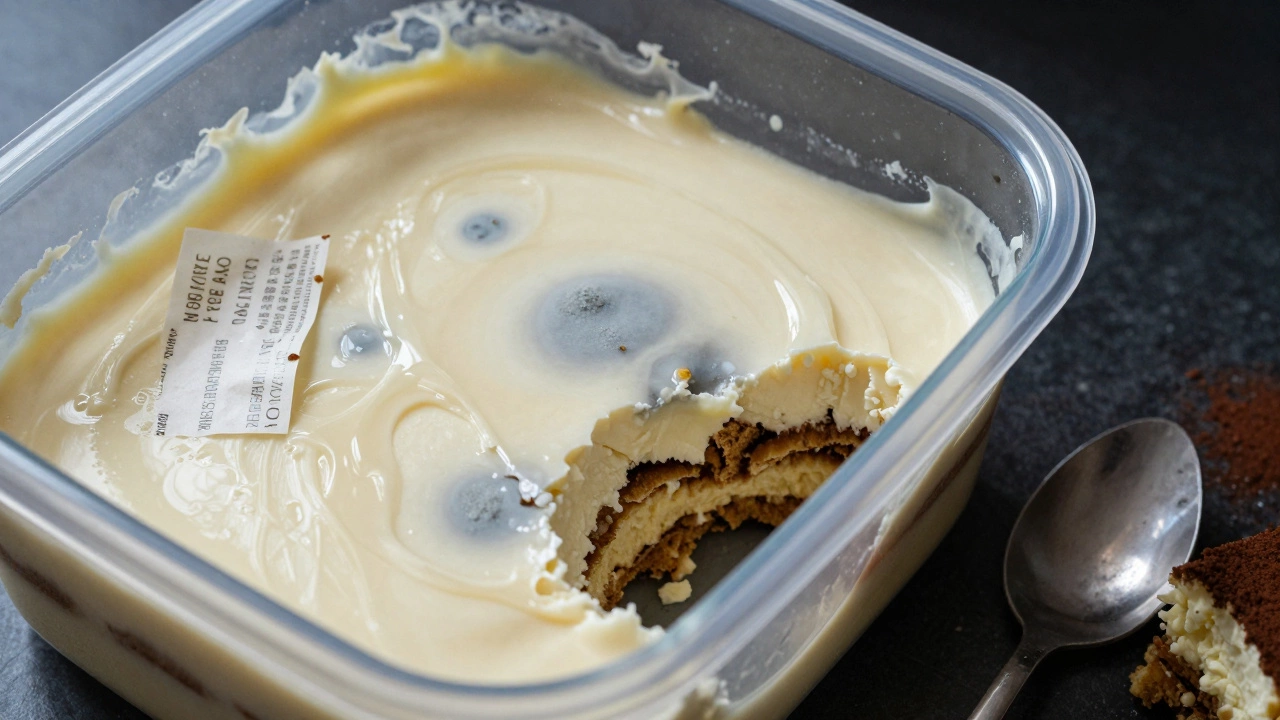
- Separation or watery liquid-A little whey on top is normal, especially if it’s been sitting for a few days. But if you see a lot of liquid pooling, or the cheese looks grainy and curdled, it’s breaking down. That’s a sign of bacterial activity.
- Unusual color changes-Fresh mascarpone is pure white or very pale cream. If you see green, blue, gray, or pink spots, toss it. Mold can grow even on creamy cheeses, and it doesn’t always look like fuzzy patches. Sometimes it’s just a discolored patch that’s slightly raised.
- Strong sour or ammonia smell-A little tang is fine. A sharp, chemical, or stinky smell? That’s not fermentation-it’s spoilage. Mascarpone doesn’t age like Parmesan. It’s meant to be eaten fresh.
- Off taste-If you’ve already tasted a tiny bit and it’s bitter, sour, or metallic, stop. Don’t risk it. Even if it looks okay, your tongue knows before your eyes do.
- Texture change-It should spread like butter. If it’s lumpy, gritty, or rubbery, it’s lost its structure. That’s not aging-it’s decay.
One common mistake: people think mascarpone is safe as long as it’s within the “best by” date. That’s not true. The “best by” date is about quality, not safety. Mascarpone can go bad days before that date if it’s been left out or stored poorly.
How storage affects shelf life
Mascarpone is highly perishable. It’s not like butter or hard cheese. Once opened, it should be used within 5-7 days. Unopened, it lasts about 2-3 weeks in the fridge-if kept at or below 4°C (40°F). Keep it in its original container, sealed tightly. If you’ve transferred it to another bowl, cover it with plastic wrap pressed directly on the surface to prevent air exposure.
Never leave mascarpone at room temperature for more than two hours. In hot kitchens or during summer, that time shrinks to one hour. If you’ve left it out overnight? Even if it looks fine, throw it away. Bacteria like Listeria and Salmonella can grow without changing the look or smell.
What to do if you’re unsure
When in doubt, throw it out. It’s not worth the risk. Mascarpone isn’t expensive, but food poisoning is. A single spoonful of spoiled cream can cause nausea, vomiting, diarrhea, or worse-especially for kids, pregnant people, seniors, or anyone with a weak immune system.
Some people try to “save” slightly off mascarpone by mixing it into baked goods. Don’t. Heat doesn’t kill all the toxins produced by spoilage bacteria. The harm is already done.
Instead, use fresh mascarpone. It makes all the difference in tiramisu. The cream should be light, cloud-like, and melt into the coffee-soaked ladyfingers. Spoiled mascarpone turns your dessert into a gritty, sour mess-no amount of cocoa or sugar can fix it.
How to extend its life (without freezing)
You can’t freeze mascarpone and keep its texture. It separates, turns grainy, and loses its silkiness. So don’t freeze it.
Instead, buy smaller tubs if you don’t use it often. Or, if you’re making tiramisu and only need half the tub, transfer the rest to a clean, airtight container. Press parchment paper directly on the surface before sealing. That keeps air out and moisture in.
Also, always use a clean spoon. Never dip a used spoon back into the tub. Even a tiny bit of bacteria from your spoon can start a chain reaction.
What to use instead if it’s gone bad
If you’re mid-recipe and realize your mascarpone is spoiled, don’t panic. You can substitute it with:
- Heavy cream whipped with cream cheese-Mix 8 oz of softened cream cheese with 1 cup of heavy cream and 2 tbsp sugar. Whip until thick. It won’t be identical, but it’ll hold shape and taste creamy.
- Full-fat Greek yogurt-Drain it overnight in a cheesecloth to thicken it. It’s tangier, but works in a pinch.
- Crème fraîche-Slightly more acidic, but similar richness. Use it straight from the tub.
None of these are perfect replacements, but they’ll keep your tiramisu from falling apart. And they’re better than risking illness.
How long does tiramisu last once made?
Once you’ve assembled tiramisu, it keeps for 3-4 days in the fridge. But only if you used fresh mascarpone. If the cream was already on its way out, the whole dessert can spoil faster. Always cover it tightly with plastic wrap or store it in an airtight container. Keep it chilled at all times.
Never leave tiramisu on the counter. The ladyfingers soak up moisture and become soggy, but more importantly, the dairy ingredients start to break down quickly. If it’s been sitting out for more than two hours, don’t eat it.
Final tip: Trust your senses, not the label
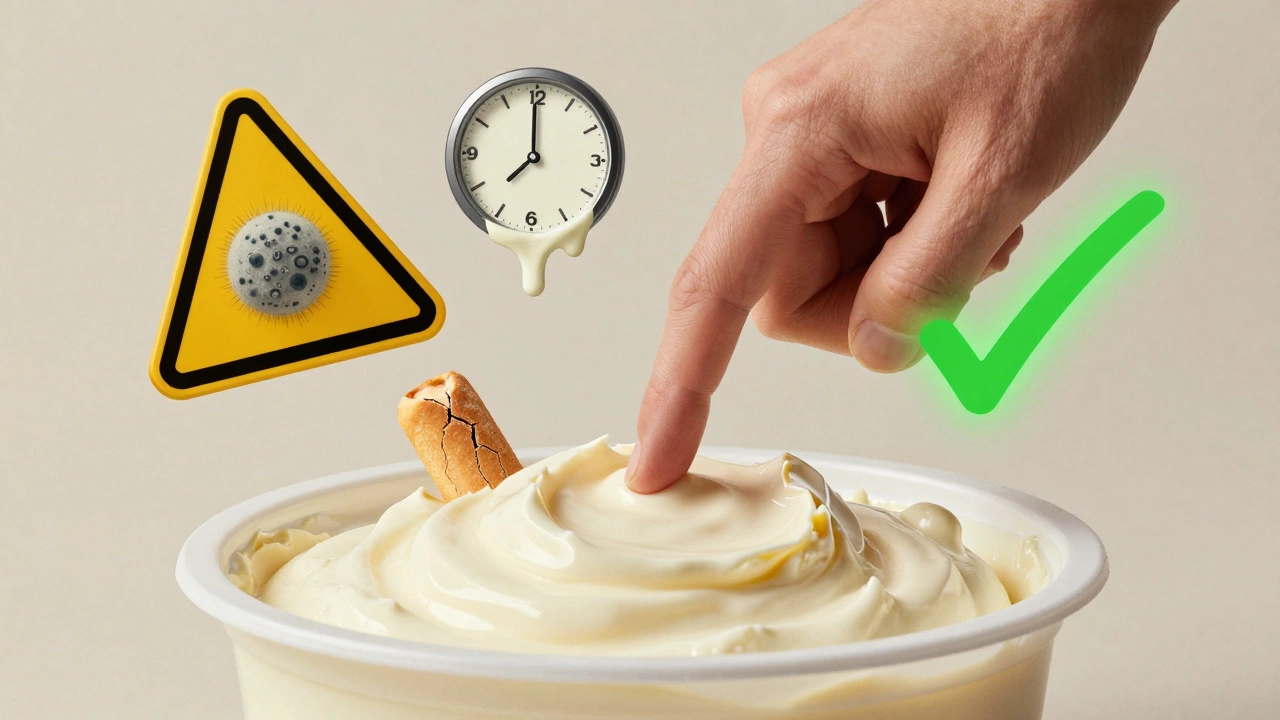
Expiration dates are helpful, but they’re not magic. Your nose, eyes, and fingers are more reliable. If it looks strange, smells wrong, or feels off-don’t use it. You’ll save yourself a trip to the doctor and a ruined dessert.
Mascarpone is a delicate ingredient. It deserves care. Treat it like fresh eggs or raw fish-handle it with respect, store it properly, and listen to your instincts. That’s how you make tiramisu that’s not just delicious, but safe.
Can you eat mascarpone past its expiration date?
Sometimes, but not always. The expiration date is a guideline for peak quality, not safety. If the mascarpone smells sour, looks moldy, or feels grainy-even if it’s one day past the date-discard it. If it looks, smells, and tastes normal, it’s likely fine. Always check before using.
Is it safe to scrape off mold from mascarpone?
No. Unlike hard cheeses, soft cheeses like mascarpone have moisture that lets mold spread deep into the product. Even if you can’t see it, harmful bacteria may be present throughout. Don’t try to salvage it. Throw the whole tub away.
Why does mascarpone sometimes smell like vinegar?
A faint tang is normal-it’s made with acid to thicken the cream. But a strong vinegar smell means it’s over-fermented or spoiled. That’s a sign of unwanted bacteria breaking down the fats and proteins. Discard it if the smell is sharp or overwhelming.
Can you freeze mascarpone for later use?
Technically yes, but it’s not recommended. Freezing changes the texture, making it grainy and separated. It won’t whip or spread properly anymore. For tiramisu or desserts where texture matters, frozen mascarpone will ruin the result. Use it fresh instead.
What’s the difference between mascarpone and cream cheese?
Mascarpone is made from heavy cream and has a higher fat content-usually 60-75%-making it richer and smoother. Cream cheese is made from milk and cream, with about 33% fat. It’s tangier and firmer. Mascarpone melts into desserts; cream cheese holds its shape. They’re not interchangeable in recipes like tiramisu without altering the texture.