Gluten Recovery Timeline Calculator
How long until you feel better?
Answer a few quick questions to see your estimated recovery timeline
Your Recovery Timeline
Bloating and brain fog begin to lift
Energy improves. Digestion becomes more regular
Skin clears up. Joint pain fades
Gut lining begins to repair. Nutrient absorption improves
Full recovery for most with celiac disease
If you’ve been eating gluten and suddenly feel bloated, tired, or foggy-headed, you’re not imagining it. Gluten doesn’t just sit around-it triggers real reactions in your body, especially if you’re sensitive or have celiac disease. The good news? Your body knows how to clear it out. You don’t need special supplements, detox teas, or extreme cleanses. You just need to stop eating gluten and let your system do its job.
What happens when you eat gluten?
Gluten is a protein found in wheat, barley, and rye. For most people, it’s harmless. But if you have celiac disease, non-celiac gluten sensitivity, or even a mild intolerance, your immune system sees gluten as a threat. It responds by attacking the lining of your small intestine. That’s why you might get bloating, diarrhea, stomach cramps, headaches, or even joint pain after eating bread, pasta, or even hidden gluten in sauces and soups.
Once gluten enters your system, it takes time to break down. In people with celiac disease, the damage to the gut lining can last weeks-even after you stop eating gluten. That’s why simply skipping a meal won’t fix it. You need to cut out gluten completely for your body to start healing.
How long does gluten stay in your system?
Gluten itself doesn’t stick around for months. Most of it passes through your digestive tract within 24 to 72 hours. But the real issue isn’t the gluten lingering-it’s the inflammation and immune response it triggers.
For someone with celiac disease, it can take 3 to 6 months for the gut lining to fully heal. In milder cases, symptoms like brain fog or bloating may improve within days. But if you keep eating even small amounts of gluten-like crumbs from a shared toaster or soy sauce with hidden wheat-you’re restarting the cycle every time.
How to flush gluten out of your body
You can’t sweat it out, pee it out, or take a pill to speed it up. The only proven way to flush gluten from your system is to stop eating it. Here’s how to do it right:
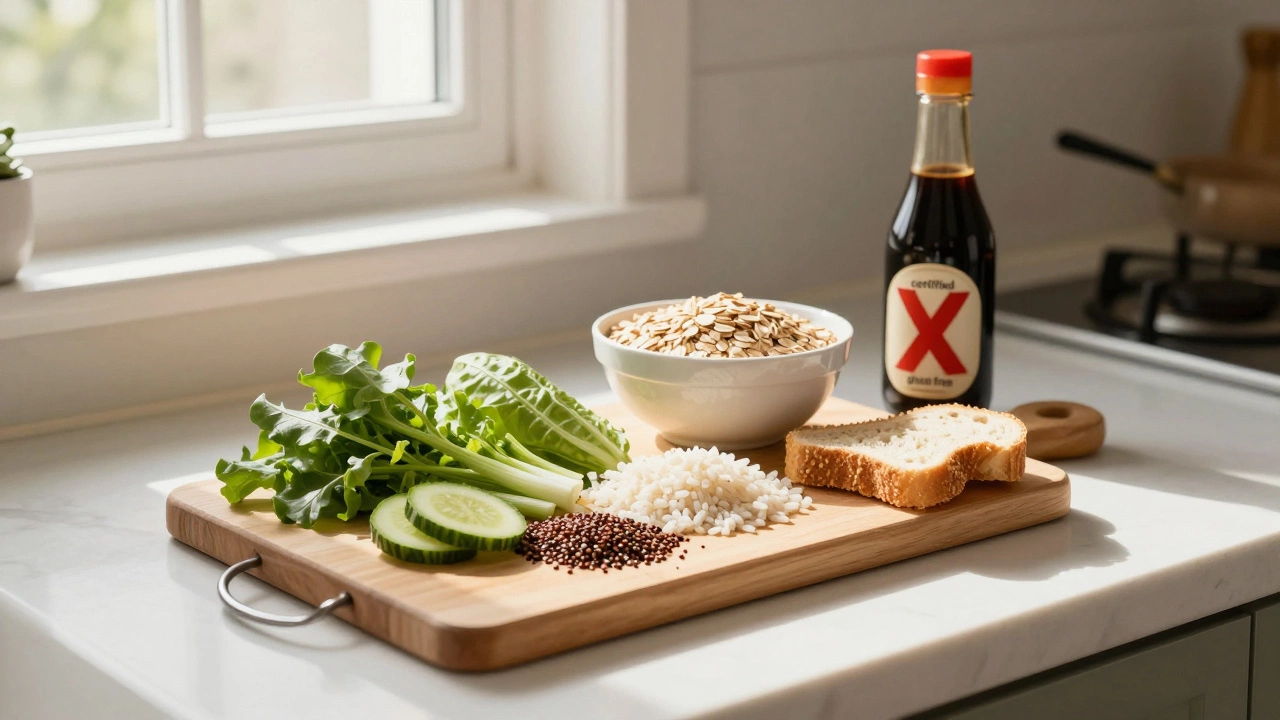
- Stop all gluten-containing foods. That means no bread, pasta, cereal, beer, or baked goods made with wheat, barley, or rye. Even oats can be contaminated unless they’re labeled gluten-free.
- Check every label. Gluten hides in soy sauce, salad dressings, processed meats, spice blends, and even some medications. Look for “gluten-free” certification or check the ingredients list for wheat, barley, rye, malt, or triticale.
- Clean your kitchen. Cross-contamination is a silent killer. Use separate toasters, cutting boards, and utensils. Wipe down counters. Wash pots and pans thoroughly. A crumb of bread in your peanut butter jar can undo weeks of progress.
- Focus on whole, unprocessed foods. Fresh meat, fish, eggs, vegetables, fruits, rice, quinoa, potatoes, and legumes are naturally gluten-free. These foods give your gut a chance to heal without adding more irritants.
- Stay hydrated. Drink plenty of water. It helps your kidneys flush out waste and keeps your digestion moving smoothly.
- Give it time. Don’t expect instant results. Many people notice improvements in 48 hours. But full recovery can take weeks or months, depending on how long you were exposed and how sensitive you are.
What helps your body recover faster?
There’s no magic supplement that flushes gluten. But some things support your body’s natural healing process:
- Probiotics. A 2021 study in the Journal of Clinical Gastroenterology found that people with celiac disease who took probiotics alongside a gluten-free diet had faster improvement in gut symptoms. Look for strains like Lactobacillus and Bifidobacterium.
- L-glutamine. This amino acid is the main fuel for intestinal cells. Some people find it helps repair the gut lining. Talk to your doctor before taking supplements.
- Rest. Your body uses energy to heal. Don’t push yourself with intense workouts or stress. Sleep and calm help more than you think.
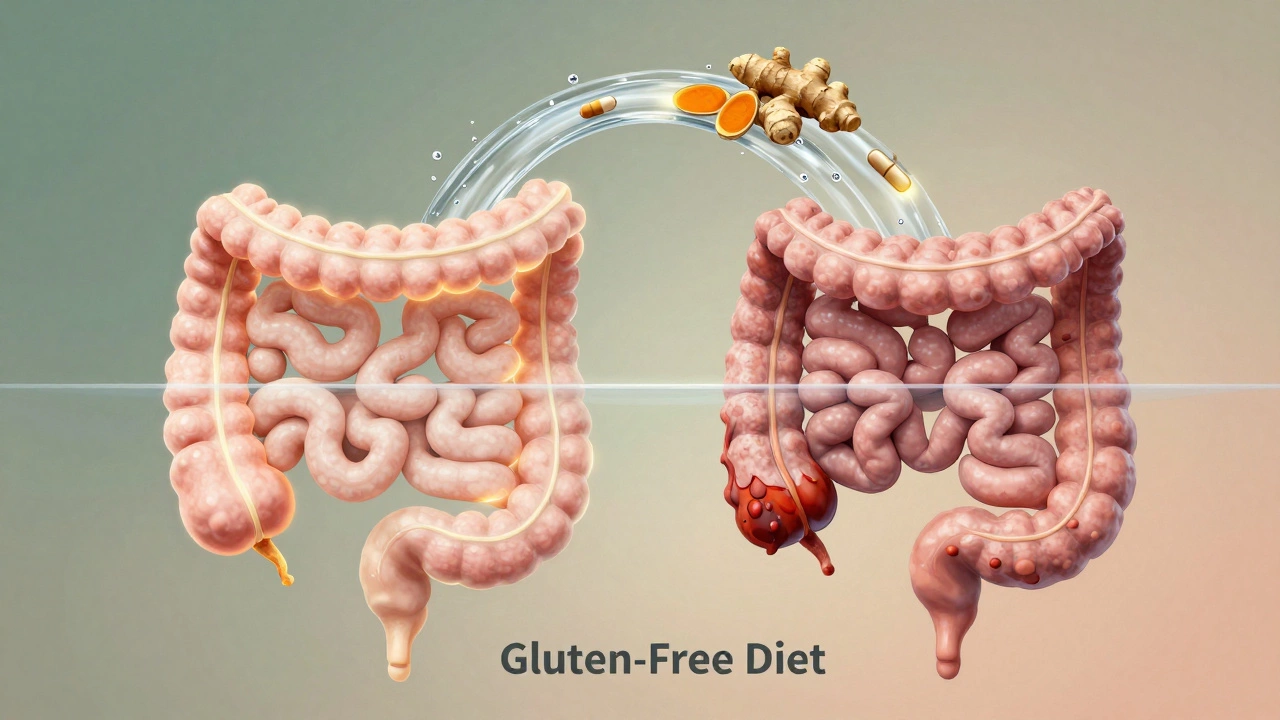
- Anti-inflammatory foods. Eat more ginger, turmeric, fatty fish, leafy greens, and berries. They reduce the inflammation gluten causes.
Forget the detox powders, colon cleanses, or lemon water fasts. They don’t remove gluten. They just make you feel like you’re doing something. The real work is in the food you stop eating-and the food you start eating instead.
What if you accidentally eat gluten?
It happens. Maybe you ate a slice of pizza at a party or didn’t notice gluten in your soup. If you’re sensitive, you might feel awful for a day or two. Here’s what to do:
- Don’t panic. One slip won’t permanently damage you if you’re otherwise gluten-free.
- Go back to strict gluten-free eating immediately.
- Drink water. Eat easy-to-digest foods like rice, bananas, and boiled chicken.
- Rest. Your body is working hard to repair itself.
- Track your symptoms. If you’re having severe reactions-vomiting, intense pain, or prolonged fatigue-see a doctor.
Keep a food journal. Write down what you ate and how you felt. Over time, you’ll spot hidden sources of gluten you didn’t know about.
Why gluten-free cakes matter
If you’re avoiding gluten, you don’t have to give up desserts. Gluten-free cakes made with almond flour, rice flour, or certified gluten-free oat flour can taste just as good-and they’re safe. But here’s the catch: not all gluten-free cakes are created equal.
Some are full of sugar, cornstarch, and gums to mimic texture. These can still cause bloating or blood sugar spikes. Look for recipes that use whole-food flours and minimal additives. A cake made with chickpea flour, applesauce, and cinnamon is better than one made with modified starches and artificial flavors.
When you bake your own gluten-free cakes, you control what goes in. That means fewer surprises and better healing for your gut.
When to see a doctor
If you suspect gluten sensitivity or celiac disease, don’t self-diagnose. Cutting out gluten before testing can make diagnosis harder. Talk to your doctor if you have:
- Chronic digestive issues
- Unexplained fatigue or anemia
- Weight loss without trying
- Family history of celiac disease
A simple blood test can check for antibodies linked to celiac disease. If it’s positive, an endoscopy confirms the diagnosis. Even if you feel better on a gluten-free diet, knowing for sure helps you manage your health long-term.
What to expect after going gluten-free
Most people feel better within days. But healing takes patience. Here’s a rough timeline:
- Days 1-3: Bloating and brain fog start to lift.
- Week 1-2: Energy improves. Digestion becomes more regular.
- Week 3-4: Skin clears up. Joint pain fades.
- Month 2-3: Gut lining begins to repair. Nutrient absorption improves.
- Month 6+: Full recovery for most with celiac disease.
Everyone’s different. Some feel amazing right away. Others take longer. Don’t compare your progress to someone else’s.
Final thought: It’s not a detox. It’s a lifestyle.
Flushing gluten out isn’t about a quick fix. It’s about choosing foods that don’t hurt your body. Once you stop feeding your system something it can’t handle, your body takes over. It repairs itself. It regains balance. You don’t need to chase a miracle cure. Just be consistent. Eat real food. Read labels. Stay patient.
And yes-you can still have cake. Just make sure it’s gluten-free.
Can you flush gluten out of your body with water or detox drinks?
No. Water helps your kidneys flush waste, but it doesn’t remove gluten from your system. Detox teas, lemon water, or juice cleanses don’t target gluten. The only way to clear gluten is to stop eating it and let your body heal naturally.
How long does it take to feel better after going gluten-free?
Most people notice improvement in 48 to 72 hours. Bloating, brain fog, and fatigue often start to fade within a week. Full healing of the gut lining can take 3 to 6 months, especially for those with celiac disease.
Is it possible to be sensitive to gluten without having celiac disease?
Yes. Non-celiac gluten sensitivity (NCGS) affects up to 6% of people. Symptoms are similar to celiac disease-bloating, fatigue, headaches-but without the intestinal damage or autoimmune response. Diagnosis is made by ruling out celiac and wheat allergy.
Can gluten be hidden in foods labeled ‘gluten-free’?
Legally, foods labeled gluten-free in the UK and EU must contain less than 20 parts per million (ppm) of gluten. That’s considered safe for most people. But cross-contamination can still happen in shared kitchens or factories. Always check for certification logos like the Crossed Grain symbol.
Do I need to avoid oats if I’m gluten-free?
Most oats are contaminated with wheat during farming or processing. If you have celiac disease or severe sensitivity, only eat oats labeled gluten-free. Even then, some people react to avenin, a protein in oats similar to gluten. Monitor how you feel.
Can gluten cause long-term damage if ignored?
Yes. In celiac disease, ongoing gluten exposure can lead to malnutrition, osteoporosis, infertility, neurological issues, and a higher risk of intestinal cancers. Even mild gluten sensitivity can cause chronic inflammation, which is linked to many long-term health problems.