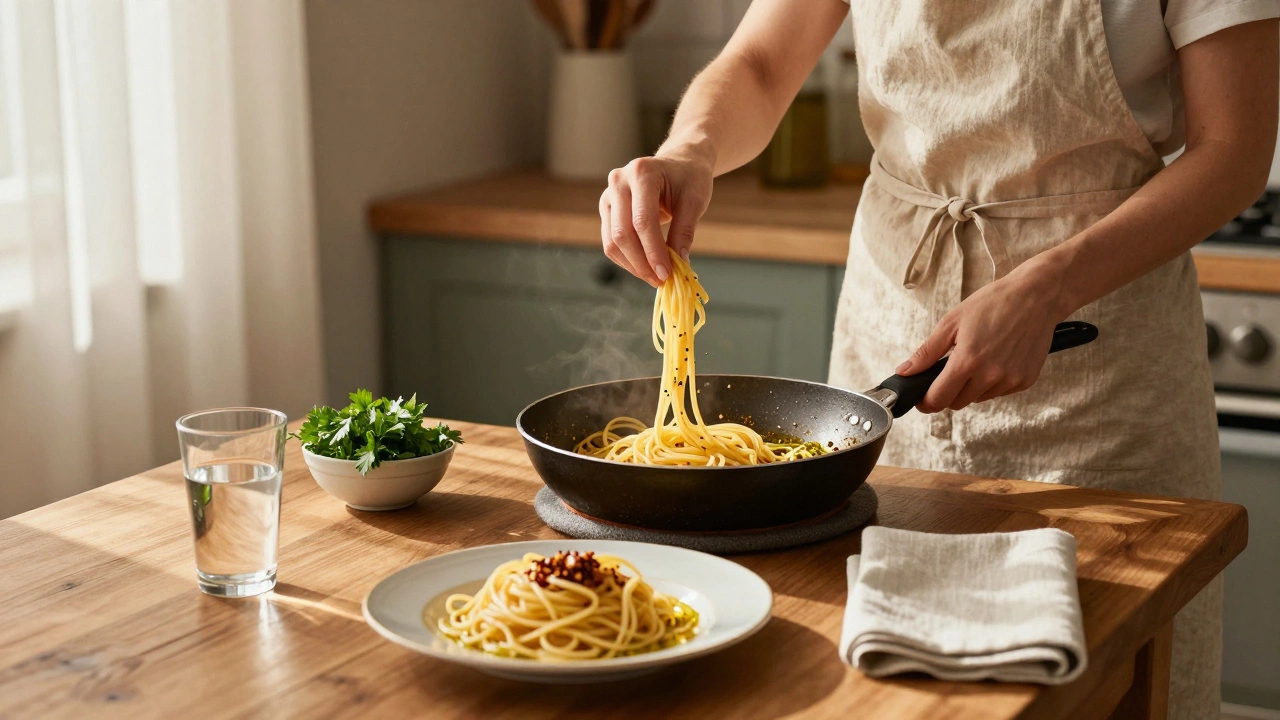
When you think of Italian food, pasta is the first thing that comes to mind. But it’s not just about the sauce or the shape. In Italy, how you eat pasta matters just as much as what’s on the plate. It’s not a side dish. It’s not a snack. It’s a ritual - part of daily life, passed down through generations, and treated with quiet reverence.
Most outsiders imagine Italians eating giant bowls of spaghetti with meatballs, drowning in tomato sauce. That’s not wrong - but it’s not real either. In Italy, pasta is eaten in precise, thoughtful ways. There are rules. Not strict laws, but unwritten customs that shape how, when, and why it’s served.
Pasta Is a Course, Not the Whole Meal
In Italy, a typical lunch or dinner follows a sequence: antipasto, primo, secondo, contorno, dolce. Pasta falls under primo - the first course. That means it comes before the meat or fish (secondo), before the salad (contorno), and before dessert. It’s not the main event. It’s the warm-up.
Portion sizes reflect this. A serving of pasta in Italy is rarely more than 80-100 grams dry per person. That’s about half of what you’d get in a U.S. restaurant. Why? Because it’s meant to leave room for what comes next. A heavy pasta course would ruin the appetite for the meat, the vegetables, and the cheese that follows.
Try this: next time you make pasta, serve it as the first course. Pair it with a light salad and a simple grilled chicken breast. You’ll notice how much more satisfying the whole meal feels.
The Sauce Never Overpowers the Pasta
There’s a myth that Italians use tons of sauce. The truth? Sauce clings to the pasta - it doesn’t swim in it. In Bologna, ragù is thick, rich, and meaty. In Naples, tomato sauce is bright, sharp, and barely cooked. In Sicily, it’s sweet with raisins and pine nuts. But in every region, the sauce is balanced.
Italian cooks don’t drown their pasta. They toss it gently in a pan with just enough sauce to coat each strand. The goal is harmony: the texture of the pasta should still be visible. You should taste the grain, not just the tomato.
One trick they use: reserve a cup of starchy pasta water before draining. That water helps the sauce stick. It’s not a trick - it’s science. The starch bonds with the fat and flavor in the sauce, creating a creamy texture without cream.
No Forks? No. But No Spoons Either
You’ve seen the movies: someone twirling spaghetti with a fork and spoon. In Italy, that’s cringe-worthy. No one uses a spoon. Ever.
The fork is the only tool you need. You hold it like a pencil - not like a shovel. You use the tines to gather a small bundle of pasta, then gently roll it against the side of the plate. It takes practice. But once you get it, you’ll never go back.
Why no spoon? Because it’s messy. It’s loud. And it’s not traditional. Italians value quiet, controlled eating. A spoon clinking against a plate? That’s not elegance. That’s a tourist.
It’s Eaten Standing Up - Or Sitting Down, But Never on the Go
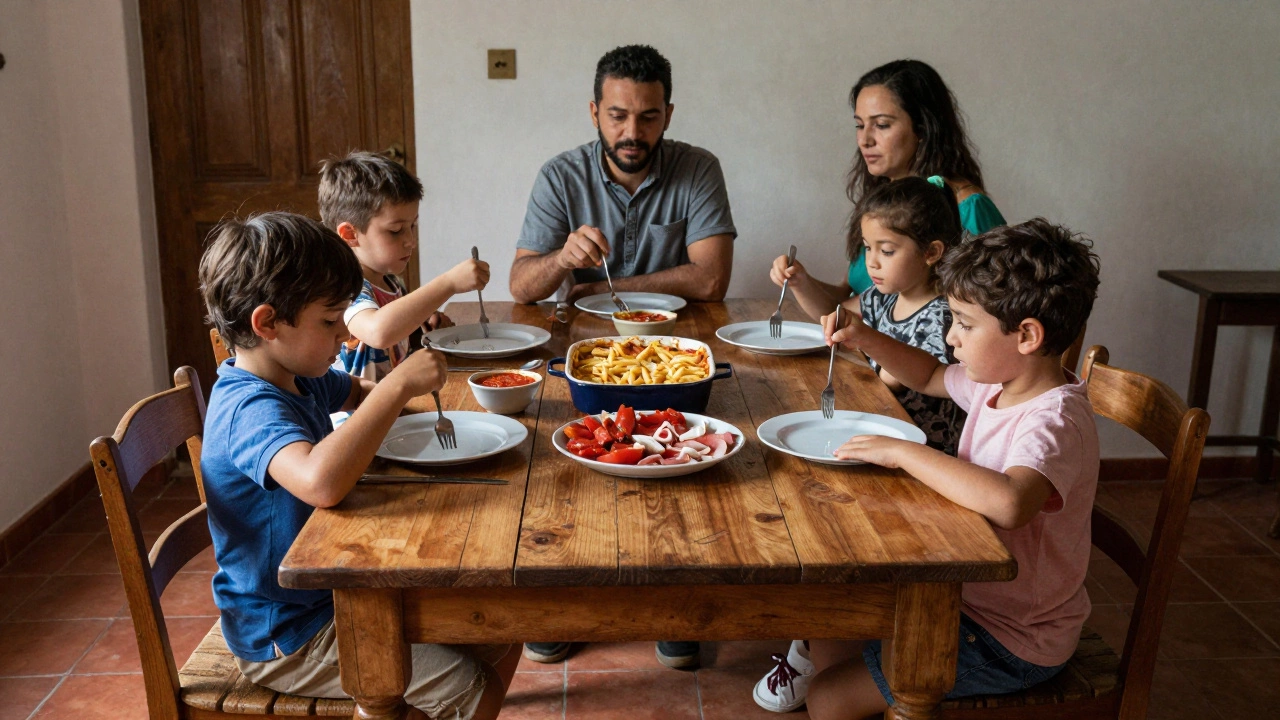
Italians don’t eat pasta while walking. They don’t eat it in the car. They don’t eat it at their desks. Pasta is meant to be savored. Even in busy cities like Milan or Rome, you’ll see people sitting at small tables, eating slowly, sometimes alone, sometimes with family.
It’s not about luxury. It’s about rhythm. Meals in Italy are not rushed. Lunch can last an hour. Dinner can last two. And pasta? It’s the centerpiece of that pause.
Try this: next time you make pasta, turn off your phone. Sit at the table. Eat without distractions. Notice how the flavors change when you’re not multitasking.
Shape Matters - More Than You Think
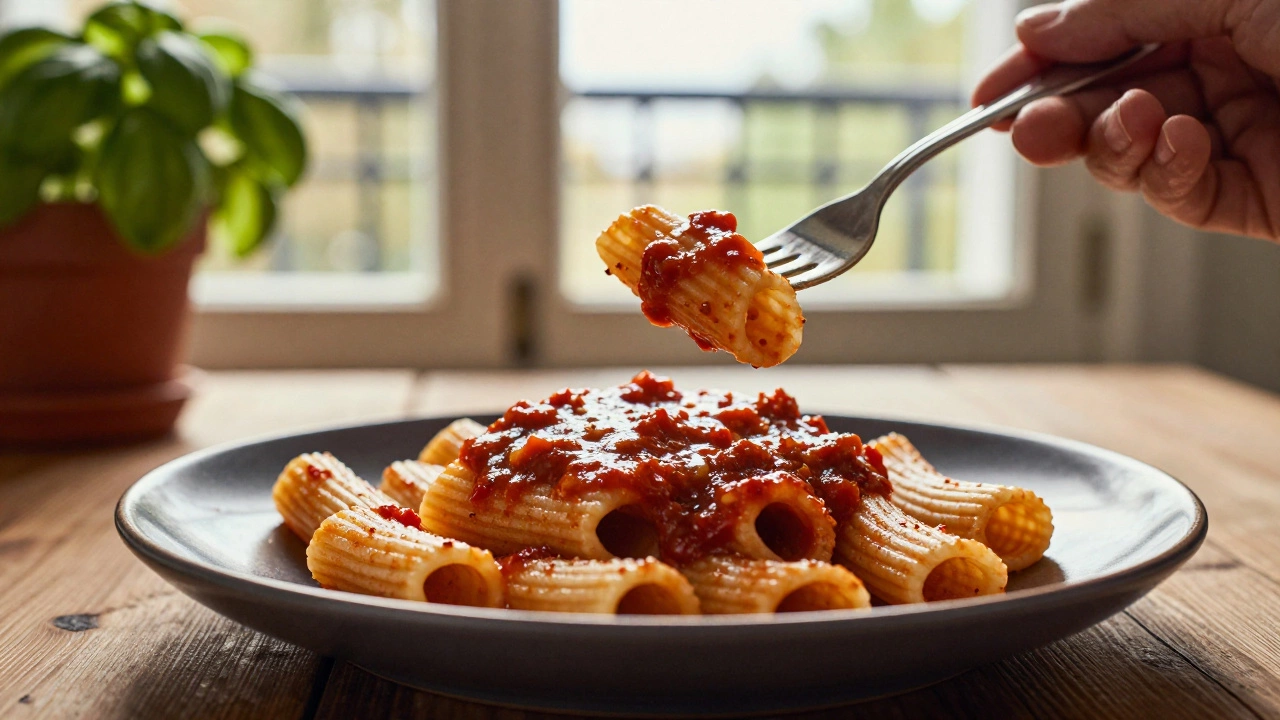
Not all pasta shapes are equal. In Italy, shape is chosen for a reason. Long, thin pasta like spaghetti or linguine? Perfect for light, oily sauces - think garlic, olive oil, chili flakes. Short, tubular pasta like penne or rigatoni? Built for thick, chunky sauces - think ragù or vegetable stew.
Why? Surface area. Texture. Flow. A smooth, long noodle doesn’t hold heavy sauce well. A ridged tube catches it like a net. Italians know this. They don’t serve carbonara with farfalle. They don’t serve pesto with orecchiette.
Here’s a simple rule: if the sauce is light, go long. If it’s thick, go short. If it’s creamy, go ridged. If it’s brothy, go small. It’s not magic. It’s physics.
Leftovers? Not Really
Italians don’t save pasta for tomorrow. Not because they can’t - but because they don’t want to. Freshly cooked pasta is a moment. Once it sits, it changes. The texture goes soft. The sauce separates. The magic fades.
So what do they do with extra? They make pasta al forno - baked pasta. Leftover pasta, layered with cheese, tomato, and sometimes meat, then baked until golden. It’s not reheated pasta. It’s a new dish.
Try this: if you have leftover pasta, don’t microwave it. Turn it into a baked casserole. Add a layer of béchamel, a sprinkle of Parmesan, and bake for 20 minutes. You’ll get something better than the original.
It’s Not About Fancy Ingredients - It’s About Freshness
Italians don’t need truffles or saffron to make great pasta. They use what’s in season. Tomatoes in summer. Garlic in winter. Fresh basil in May. Olive oil from the next town over. Salt from the sea. That’s it.
One of the most famous pasta dishes - spaghetti aglio e olio - has only five ingredients: pasta, garlic, olive oil, chili, and parsley. That’s it. No cream. No cheese. No meat. And yet, it’s one of the most beloved dishes in the country.
The secret? Quality. Fresh garlic. Cold-pressed olive oil. Real sea salt. These aren’t luxury items. They’re everyday staples. And they’re the reason Italian pasta tastes different.
Children Learn to Eat Pasta Early
Italian kids start eating pasta around 8 months old. Not as mush. Not as puree. As real, cooked pasta - small shapes like ditalini or stars. They’re taught to use a fork early. No spoons. No distractions.
By age three, most Italian children can twirl spaghetti without help. They’re not forced. They’re shown. They watch their parents. They copy. And they learn that food isn’t just fuel - it’s connection.
When you serve pasta to kids, don’t simplify it. Don’t hide the sauce. Don’t add sugar. Let them taste the real thing. They’ll surprise you.
There’s No ‘Italian Pasta’ - Just Regional Pasta
There’s no single way Italians eat pasta. It changes from north to south. In Lombardy, they eat risotto more than pasta. In Emilia-Romagna, tagliatelle with ragù is sacred. In Sicily, pasta with sardines and fennel is common. In Calabria, it’s spicy and oily.
Ask an Italian from Naples what’s the best pasta, and they’ll say their own. Ask one from Turin, and they’ll say theirs. That’s not stubbornness. That’s pride. Each region has its own history, its own soil, its own climate - and its own pasta.
So if you want to understand how Italians eat pasta, don’t look for one answer. Look for many. Try a different shape. Try a different sauce. Try a different region’s version. That’s where the truth lives.
Do Italians really eat pasta every day?
Not every day, but often. Most Italians eat pasta 3-4 times a week. It’s not a daily staple like rice in Asia. It’s a regular treat - often for lunch on weekdays and dinner on weekends. The key is balance. It’s never the only thing on the plate.
Why don’t Italians use a spoon with pasta?
Because it’s not necessary - and it’s considered sloppy. The fork alone is all you need. You use the tines to gather pasta, then roll it gently against the side of the plate. This technique creates a neat, bite-sized bundle. Using a spoon is seen as a sign of inexperience or foreign influence.
Is it true Italians don’t put cheese on seafood pasta?
Yes, and it’s a firm rule. In Italy, cheese is never added to pasta with seafood. The flavor of the ocean - clams, shrimp, squid - is delicate. Cheese overpowers it. This isn’t a preference. It’s a tradition. You’ll rarely see it done, even in tourist restaurants. If you’re making seafood pasta, skip the Parmesan.
Can you reheat pasta in Italy?
Technically yes - but no one does. Reheating pasta ruins the texture. Instead, Italians turn leftovers into baked dishes like pasta al forno or frittatas. It’s not about saving food. It’s about transforming it into something new. A leftover spaghetti dish is not a good thing. A baked pasta casserole? That’s art.
What’s the most common pasta shape in Italy?
Spaghetti is popular, but far from the most common. In fact, short pasta like penne, rigatoni, and fusilli are eaten more often in homes. They’re easier to serve, easier to clean up, and hold sauce better. Spaghetti is more of a special-occasion shape. Daily meals? Short shapes win.
So if you want to eat pasta like an Italian, forget the movies. Forget the oversized portions. Forget the cheese on seafood. Instead, focus on the rhythm: slow, simple, intentional. Use the right shape. Use fresh ingredients. Serve it as a course. Eat it with care. And don’t forget - it’s not just food. It’s a way of life.