
Fudge Storage Advisor
Not sure whether to chill your homemade fudge in the fridge or freezer? Use this tool to get personalized storage recommendations based on your timeline and fudge type.
You’ve just finished stirring that pot of sugar, butter, and cream. It’s thick, glossy, and smells like pure comfort. You pour it into the tin, smooth the top with a spatula, and now comes the panic moment. Do you put this precious batch in the fridge? Or do you shove it straight into the freezer to speed things up?
I’ve made enough fudge in my Bristol kitchen to know that the answer isn’t as simple as 'yes' or 'no.' If you want that classic, creamy texture that melts on your tongue, how you chill your fudge matters just as much as the recipe itself. Put it in the wrong place, and you risk condensation, graininess, or a rock-hard block that takes an ice pick to cut.
Quick Answer: Where Should You Chill Fudge?
The refrigerator is best for setting fudge. It cools the mixture slowly and evenly, allowing the sugar crystals to form properly without shocking the structure. Use the freezer only if you are in a huge rush, but be aware it can make the fudge harder and more prone to cracking when cut.
Why Texture Depends on Cooling Speed
Fudge is essentially supersaturated sugar syrup. When you boil the mixture to the soft-ball stage (around 114°C or 238°F), you’re dissolving more sugar than water can normally hold at room temperature. As it cools, that sugar wants to crystallize. The size of those crystals determines whether your fudge is silky smooth or gritty like sandpaper.
If you cool fudge too quickly-like throwing it directly from a hot stove into a sub-zero freezer-you shock the system. The outside sets instantly while the inside remains warm. This rapid temperature drop can cause uneven crystallization. You might end up with a dense, hard exterior and a softer, potentially weepy center. Worse, the thermal shock can cause the fudge to crack or separate, especially if there’s a high fat content from butter or cream.
Conversely, cooling it too slowly at room temperature (especially in a humid British summer) gives bacteria time to party before the sugar concentration gets high enough to preserve it. Plus, you’ll be waiting hours for it to set firm enough to cut.
The refrigerator sits in the sweet spot. It’s cold enough to set the fudge within two to four hours, but gentle enough to let the structure stabilize uniformly.
The Refrigerator Method: The Gold Standard
For most home cooks, the fridge is your best friend. Here’s why it works so well:
- Even Cooling: The ambient air in a fridge moves slowly around your tin, ensuring the entire slab cools at roughly the same rate.
- Moisture Control: While fridges can be dry, they don’t create the violent condensation cycles that happen when moving food between extreme temperatures.
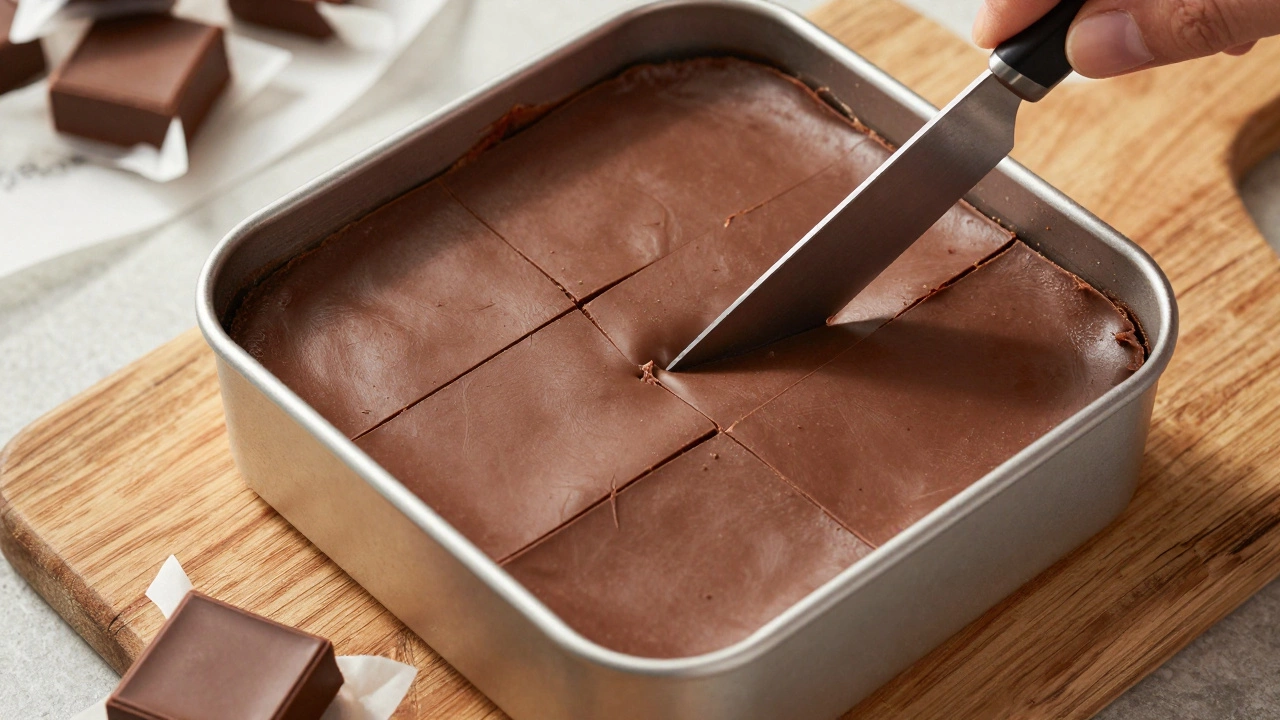
- Cutting Ease: Fudge set in the fridge holds its shape perfectly. You get clean squares without crumbling or smearing.
To do this right, wait until the fudge has stopped steaming vigorously after pouring it into your prepared tin. Give it five minutes on the counter to take the edge off the heat. Then, cover it loosely with parchment paper or cling film (plastic wrap) and slide it into the fridge. Don’t seal it airtight immediately; you want any remaining steam to escape so it doesn’t turn into water droplets on the surface.
After about three hours, check it. Press gently with a finger. If it springs back slightly and feels firm, it’s ready to cut. If it still feels gooey, give it another hour. Once cut, store the pieces in an airtight container in the fridge for up to two weeks.
The Freezer Shortcut: When Time Is Tight
Let’s be honest. Sometimes you need fudge set by tonight, and it’s already 6 PM. Can you use the freezer? Yes, but with caveats.
Freezing sets fudge in under an hour. That’s great for impatience, terrible for texture if you’re not careful. The extreme cold makes the fats (butter and cream) rigid. When you try to cut frozen fudge, it can shatter like chocolate rather than slice cleanly. You also risk 'freezer burn' if the fudge isn’t wrapped perfectly, which dries out the surface and ruins that melt-in-your-mouth quality.
If you must use the freezer, follow these steps to minimize damage:
- Pour the hot fudge into your tin.
- Let it sit on the counter for 10-15 minutes to reduce the temperature gap.
- Cover tightly with cling film, pressing it directly onto the surface to prevent air exposure.
- Place in the freezer for 45-60 minutes.
- Crucial Step: Remove from the freezer and let it sit at room temperature for 10 minutes before cutting. This allows the fats to soften slightly, making slicing possible without cracking.
Note: Frozen fudge tastes slightly different. The cold numbs your taste buds, so it may seem less sweet or rich than fridge-set fudge. Let it come to room temperature for a few minutes before eating to appreciate the full flavor profile.
Avoiding Condensation: The Silent Killer
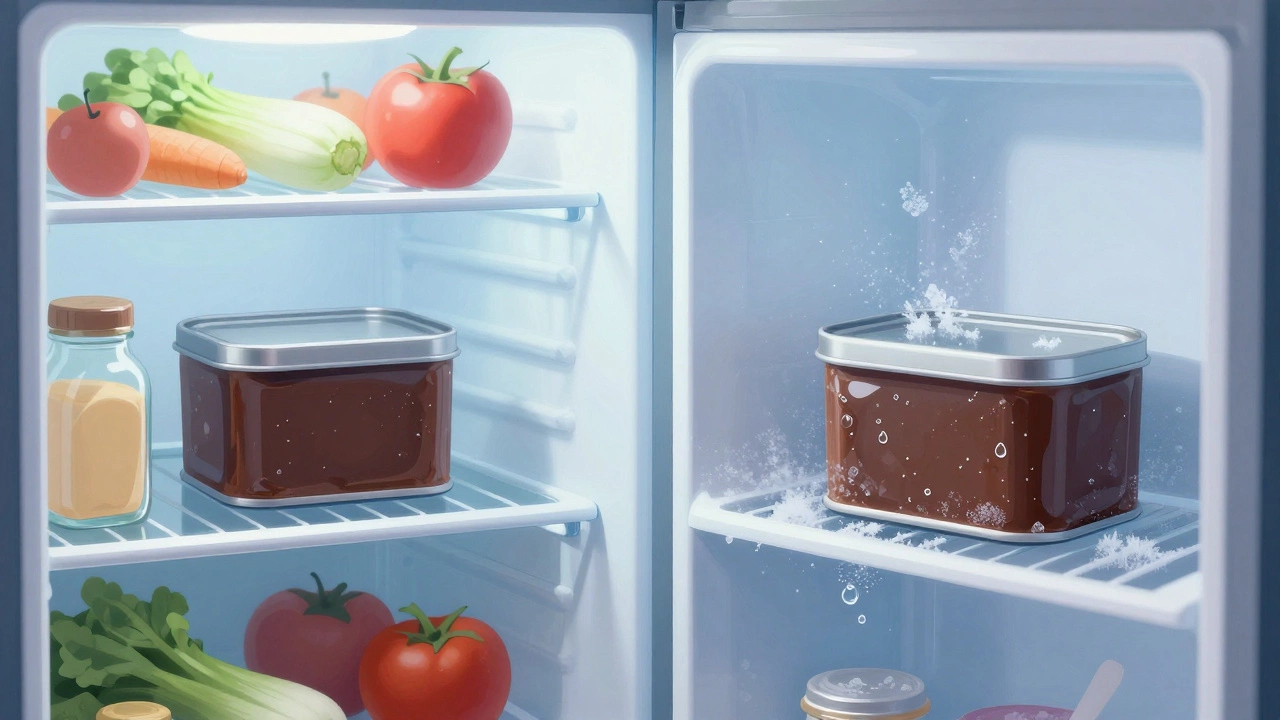
Whether you choose fridge or freezer, condensation is your enemy. Water is the kryptonite of fudge. When moisture settles on the surface, it dissolves the sugar crystals, creating a sticky, slimy layer known as 'weeping.'
This happens most often when you move fudge from a cold environment to a warm one. If you take chilled fudge out of the fridge and leave it uncovered on a warm kitchen counter, sweat forms on the surface. To prevent this:
- Always wrap fudge tightly before storing.
- If storing long-term, keep it in the fridge or freezer, not on the counter.
- If serving guests, take the fudge out of the fridge 15-20 minutes before presenting it. This brings it to a palatable temperature without causing excessive sweating if kept covered.
Storage Solutions for Different Fudge Types
Not all fudge is created equal. The ingredients you use change how you should store it.
| Fudge Type | Best Storage Location | Shelf Life | Key Tip |
|---|---|---|---|
| Classic Milk Chocolate | Refrigerator | 2-3 Weeks | Keep away from strong odors (onions, cheese) |
| Butterscotch / Caramel | Refrigerator | 2 Weeks | Higher sugar content helps preservation |
| Nutty Varieties (Peanut, Almond) | Refrigerator or Cool Pantry | 1-2 Weeks | Nuts can go rancid; fridge extends freshness |
| Fruit-Infused (Lemon, Raspberry) | Refrigerator | 1 Week | Acidity and moisture reduce shelf life |
| Coconut Fudge | Refrigerator | 2 Weeks | Coconut oil solidifies in cold; soften before eating |
If you’re making fudge as a gift, presentation matters. Wrap individual squares in wax paper or cellophane. For longer transport, pack them in a sturdy box with layers of tissue paper. Avoid stacking heavy items on top, as fudge is surprisingly fragile even when set.
Troubleshooting Common Chilling Issues
Even with the right method, things can go wrong. Here’s how to fix common problems related to chilling and storage.
My Fudge Is Too Hard to Cut
This usually means it was cooled too fast (freezer shock) or boiled too long (too little water). If it’s just cold, let it sit at room temperature for 15 minutes. If it’s genuinely overcooked, you can’t undo it, but you can grate it over ice cream or melt it down to use as a sauce.
My Fudge Is Grainy
Graininess happens when large sugar crystals form. This isn’t always about chilling speed, but rapid cooling can exacerbate poor mixing. Ensure you beat the fudge continuously as it cools to the correct temperature (around 40°C/104°F) before pouring. If you skipped the beating step, the crystals grow unchecked. Next time, use a hand mixer for smoother results.
My Fudge Is Sticky and Weeping
Condensation has gotten to it. Wipe the surface gently with a dry paper towel. If it’s severely weepy, crumble the fudge and re-melt it carefully, adding a teaspoon of water to rebalance the syrup. Re-boil to the soft-ball stage and re-chill in the fridge, not the freezer.
Long-Term Storage: Can You Freeze Fudge?
Yes, you can freeze fully set fudge for months. This is different from using the freezer to *set* fresh fudge. Freezing for storage preserves the flavor and texture beautifully if done correctly.
To freeze fudge for later enjoyment:
- Cut the fudge into squares.
- Wrap each piece individually in plastic wrap.
- Place wrapped pieces in a heavy-duty freezer bag or airtight container.
- Remove as much air as possible.
- Label with the date. Fudge freezes well for up to 3 months.
To serve, thaw the fudge in the fridge overnight, then bring to room temperature for an hour. Never thaw at room temperature directly, as the condensation will ruin the texture.
Final Thoughts on Chilling Your Fudge
So, should you chill fudge in the fridge or freezer? For the best texture, ease of cutting, and reliable results, the refrigerator is the clear winner. It respects the chemistry of sugar crystallization and keeps your fudge creamy and consistent. Save the freezer for emergencies or long-term storage, and always remember to let your fudge acclimate before cutting or eating.
Your fudge deserves patience. Treat it gently during the cooling phase, and it will reward you with that perfect, nostalgic bite every time.
Can I leave fudge out at room temperature to set?
It is not recommended. Leaving fudge at room temperature, especially in warm or humid conditions, can lead to bacterial growth before the sugar concentration becomes preservative. It also takes much longer to set, increasing the risk of contamination. Always refrigerate to set safely.
How long does homemade fudge last in the fridge?
Homemade fudge typically lasts 2 to 3 weeks in the refrigerator if stored in an airtight container. Fudge with fresh fruit or dairy-heavy ingredients may have a shorter shelf life of about 1 week. Always check for signs of mold or off-odors before eating.
Why did my fudge crack when I took it out of the freezer?
Cracking occurs due to thermal shock. The extreme cold makes the fats and sugar structure brittle. To prevent this, let the fudge sit at room temperature for 10-15 minutes after removing it from the freezer before attempting to cut it. This allows the structure to relax slightly.
Does covering fudge affect how it sets?
Yes. Covering fudge traps steam, which can lead to condensation and a sticky surface. For the first hour of cooling in the fridge, cover loosely with parchment paper to allow steam to escape. Once set, store in an airtight container to prevent drying out.
Can I microwave fudge to soften it if it's too hard?
You can, but be very careful. Microwave in 5-second bursts on low power. Overheating will melt the fudge completely. It is better to let hard fudge sit at room temperature for 20-30 minutes to soften naturally, preserving its texture and preventing melting.