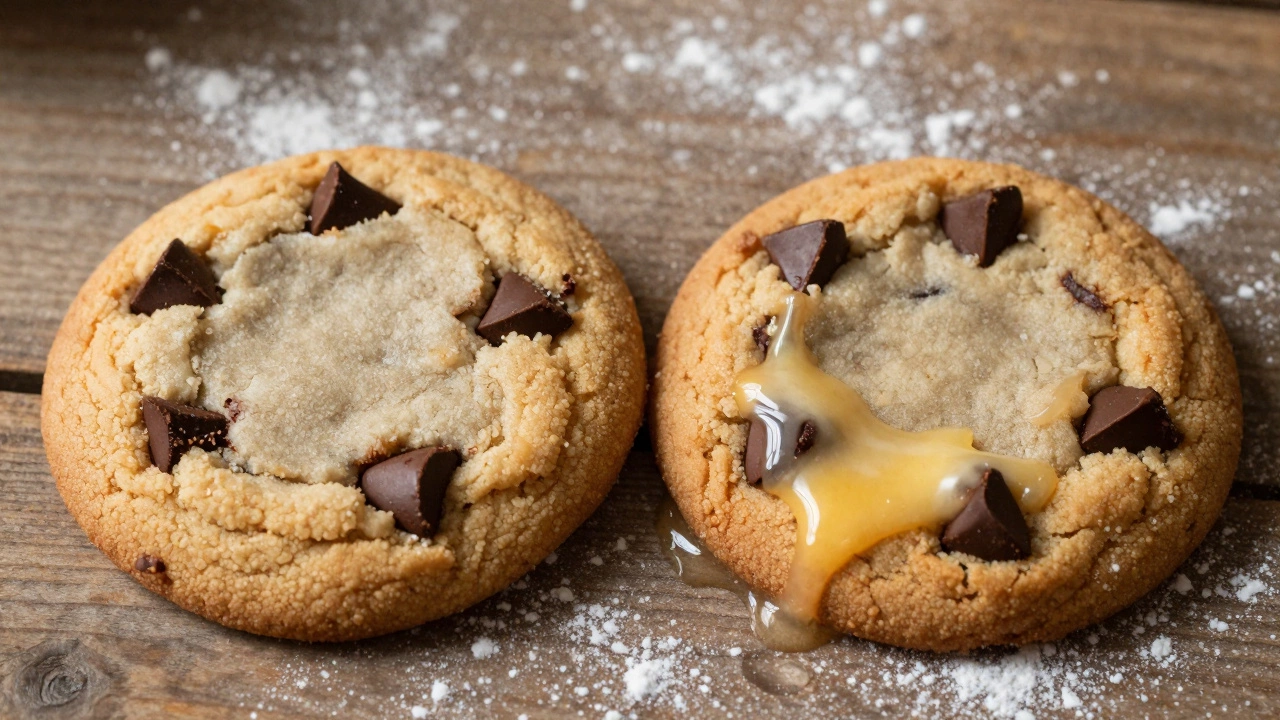
Butter-to-Flour Ratio Calculator
Calculate Your Optimal Butter Amount
Ever pulled a batch of cookies out of the oven, only to find they’re crisp around the edges and dry in the middle? You might’ve blamed the baking time. But what if the real issue was how much butter you used? It’s a simple question: does more butter make cookies softer? The answer isn’t just yes or no-it’s about chemistry, temperature, and how fat behaves when it melts.
Why Butter Matters More Than You Think
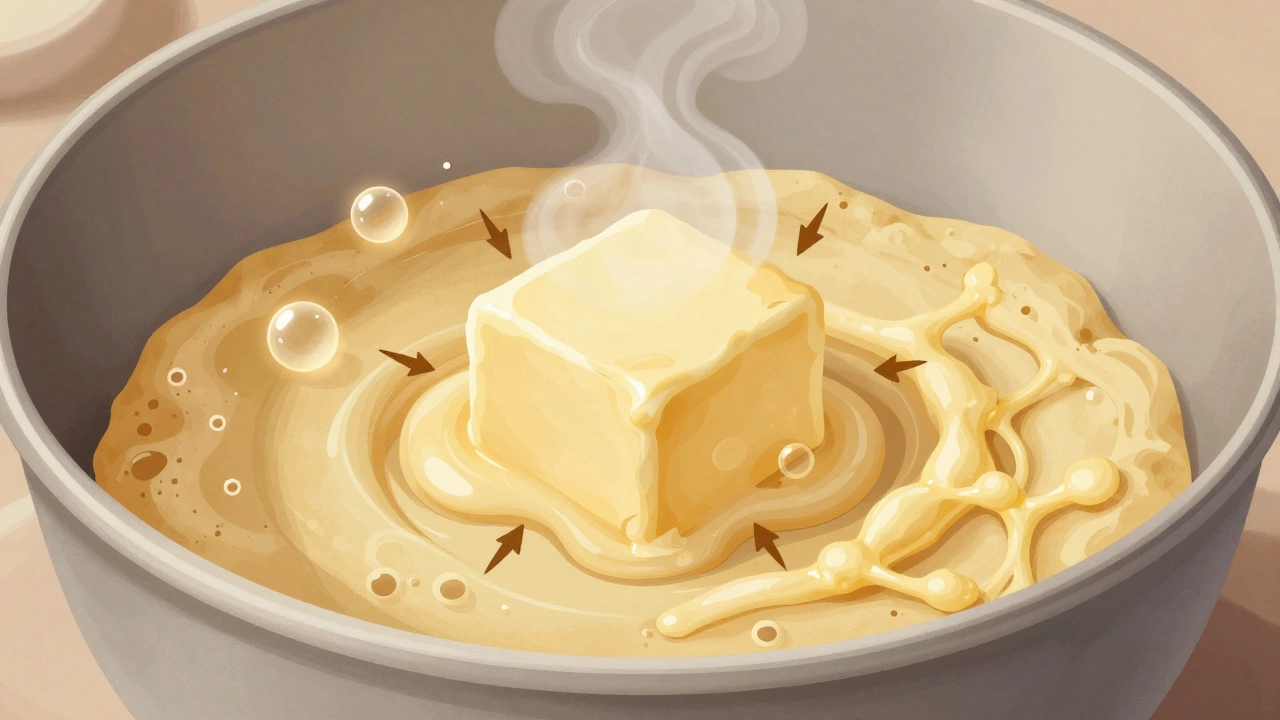
Butter isn’t just flavor in cookies. It’s the main source of moisture, structure, and spread. When you cream butter with sugar, you’re trapping air. That air expands in the oven, helping cookies rise. But the real magic happens when butter melts. The more butter you add, the more liquid fat is released early in baking. That liquid fat coats the flour proteins, stopping them from forming gluten. Less gluten means less chewiness-and more tenderness.
Compare two recipes: one with 1 cup of butter for 3 cups of flour, and another with 1.5 cups. The one with extra butter will spread more, bake faster on the edges, and stay softer longer. That’s not magic. It’s science. Butter is about 15% water. When that water turns to steam during baking, it creates tiny pockets. Those pockets keep the crumb loose and airy instead of dense and crumbly.
What Happens When You Add Too Much Butter
There’s a limit. Go too far, and your cookies turn into greasy puddles. I learned this the hard way last Christmas. I doubled the butter in my go-to chocolate chip recipe, thinking, “More butter = more delicious.” Instead, the cookies spread into thin, crispy discs with butter pooling at the edges. They tasted fine, but they didn’t hold their shape. They were more like butter cookies than soft, chewy chocolate chip ones.
The sweet spot for most drop cookies is between 0.75 and 1.25 cups of butter per 3 cups of flour. Beyond that, you lose structure. The eggs and flour can’t hold everything together anymore. The cookies lose their bounce. They don’t rise. They just flatten. And while they might start soft, they cool into a greasy, limp texture that feels more like pastry than cookie.
Butter Temperature Changes Everything
It’s not just how much butter you use-it’s how you use it. Cold butter doesn’t cream well. It doesn’t trap air. Room-temperature butter (around 65°F or 18°C) is ideal for creaming. But if you melt the butter before mixing, you skip the air-trapping step entirely. Melted butter makes cookies denser and chewier, not softer. That’s why brown butter cookies often have a deeper flavor but a firmer bite.
Soft cookies come from creamed butter, not melted. Creaming builds volume. Melting builds density. So if you want soft, go for creamed butter. If you want chewy, go for melted. Don’t confuse the two.
Other Ingredients That Affect Softness
Butter isn’t working alone. Sugar plays a big role too. Brown sugar has molasses, which holds onto moisture better than white sugar. That’s why recipes with more brown sugar often stay soft longer. Corn syrup or honey can do the same thing.
Flour type matters. Cake flour has less protein than all-purpose, so it forms less gluten. That means even with standard butter amounts, you’ll get a softer crumb. Using bread flour? You’ll get chewy, almost bagel-like cookies-even with extra butter.
And don’t forget the eggs. Egg yolks add fat and emulsifiers that help retain moisture. Extra yolks = softer cookies. Egg whites? They dry things out. That’s why some recipes use just one whole egg and one yolk for maximum softness.
Real Recipe Example: The Soft Cookie Formula
Here’s what works for consistently soft cookies, tested over 20 batches:
- 1 cup (225g) unsalted butter, softened
- 3/4 cup (150g) granulated sugar
- 1 cup (200g) packed brown sugar
- 2 large eggs + 1 extra yolk
- 2 1/4 cups (280g) all-purpose flour
- 1 tsp baking soda
- 1/2 tsp salt
- 1 tsp vanilla
- 1 1/2 cups chocolate chips
Why this works: The 1:1 ratio of white to brown sugar keeps moisture locked in. The extra yolk adds richness without making the dough too wet. The butter is creamed until light and fluffy-about 4 minutes with a stand mixer. Bake at 350°F (175°C) for 9-11 minutes. The centers will look underdone. That’s good. They firm up as they cool.
What About Butter Substitutes?
Margarine? It has more water and less fat than real butter. That means more steam, but less richness. Cookies made with margarine often puff up then collapse, leaving them flat and chewy. Shortening? It’s 100% fat, so it doesn’t spread as much. You get thicker, cakey cookies, but they lack flavor and don’t stay soft as long. Coconut oil? Solid at room temp, but melts at 76°F. In warm kitchens, it can make cookies greasy before they even bake.
Stick with real, unsalted butter. It’s the only fat that gives you the right balance of flavor, spread, and softness.
Storage Tips to Keep Cookies Soft Longer
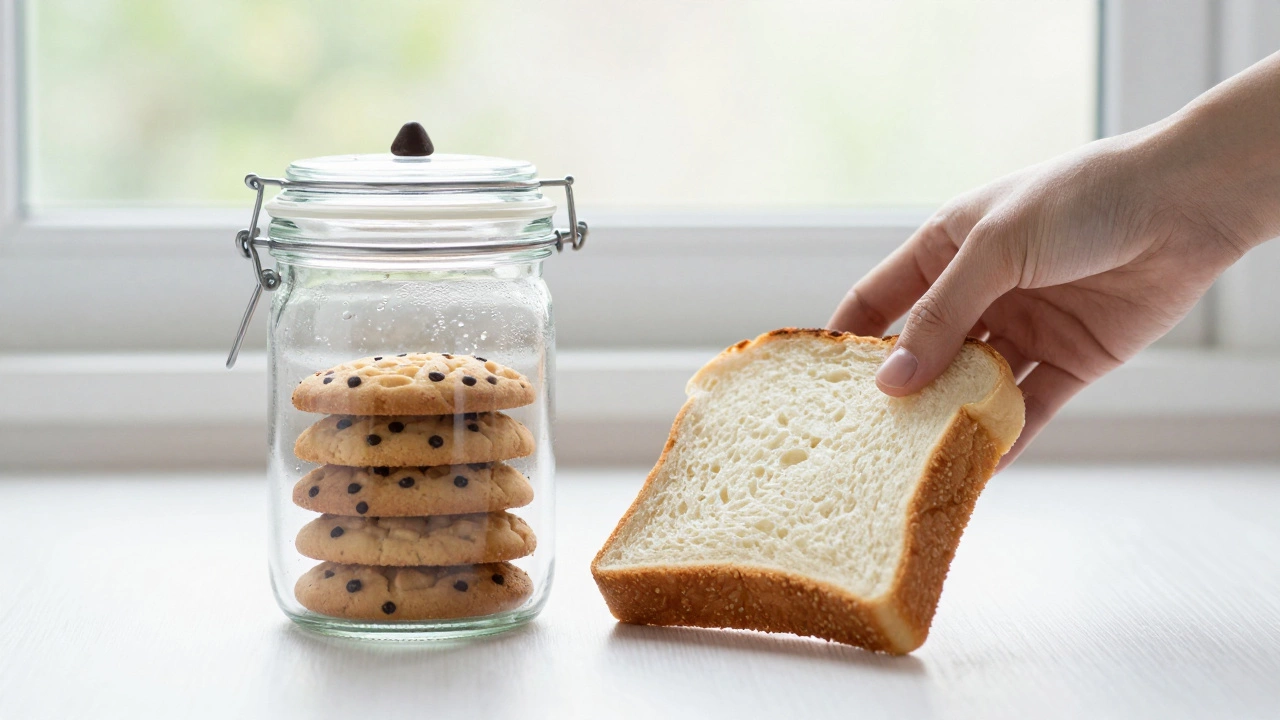
Even the best butter-to-flour ratio won’t save cookies if you store them wrong. Air dries them out. So keep them in an airtight container. Add a slice of bread. Yes, bread. The cookies will pull moisture from it. Replace the bread every two days. Or use a small piece of apple. The same principle applies.
Don’t refrigerate cookies unless you’re freezing them. Cold air pulls moisture out. Room temperature, sealed container, bread slice-this trio keeps cookies soft for up to a week.
Final Answer: Yes, But Only Up to a Point
Does more butter make cookies softer? Yes-but only if you’re within the right range. Too little butter, and cookies are dry and crumbly. Too much, and they spread into greasy messes. The key is balance. Aim for about 1 cup of butter per 3 cups of flour. Use room-temperature butter, cream it well, pair it with brown sugar and an extra yolk, and bake just until the edges set. That’s the formula for soft, chewy, melt-in-your-mouth cookies every time.
It’s not about dumping in extra butter. It’s about understanding how each ingredient plays its part. Butter is the star, but it needs the right supporting cast.
Does using melted butter make cookies softer?
No. Melted butter makes cookies denser and chewier because it skips the creaming step that traps air. Soft cookies come from creamed butter, which creates a lighter, more tender crumb. Melted butter is better for chewy or flat cookies, like brownies or some oatmeal cookies.
Can I use margarine instead of butter for softer cookies?
Margarine has more water and less fat than butter, which can make cookies puff up then collapse. They’ll be flatter and less flavorful. Margarine also doesn’t brown as nicely. For soft cookies, real butter is the only reliable choice.
Why do my cookies get hard after a day?
Cookies harden because moisture evaporates. To prevent this, store them in an airtight container with a slice of bread or a piece of apple. The cookies will absorb moisture from it. Avoid the fridge-it dries them out faster.
Does chilling cookie dough make cookies softer?
Chilling dough doesn’t make cookies softer-it makes them thicker and chewier. Cold butter melts slower in the oven, so the cookies spread less. This gives you a puffier, chewier texture. For soft, wide cookies, skip chilling. For thick, chewy ones, chill for at least 24 hours.
What’s the best flour for soft cookies?
All-purpose flour works fine, but cake flour (with lower protein) makes cookies even softer because it forms less gluten. If you want maximum tenderness, swap half the all-purpose flour for cake flour. Don’t use bread flour-it’ll make cookies tough.