Italian Dessert Matchmaker
Not sure which Italian sweet to try? Answer three quick questions to discover your perfect match.
Energetic & Bold
Relaxed & Calm
Nostalgic & Cozy
Smooth & Creamy
Crispy & Crunchy
Light & Airy
Chilled (No-Bake)
Warm (Baked/Cooked)
Room Temperature
Dessert Name
RegionDescription goes here.
Tip goes here.
Ask any Italian what their favorite sweet is, and you will likely get ten different answers. Italy is not a monolith when it comes to dessert; it is a patchwork of regional traditions, each with its own signature treat. While tiramisu has become the global face of Italian pastry, the truth is far more deliciously complex. The "typical" Italian sweet depends entirely on where you are standing in the country.
If you are looking for the one dessert that defines modern Italian hospitality, it is tiramisu. But if you want to understand the soul of Italian baking, you need to look at the ingredients: mascarpone, ricotta, zabaglione, and fresh fruit. These components form the backbone of a culinary heritage that prioritizes quality over complexity. Let’s explore the real icons of Italian sweetness, starting with the undisputed king of coffee desserts.
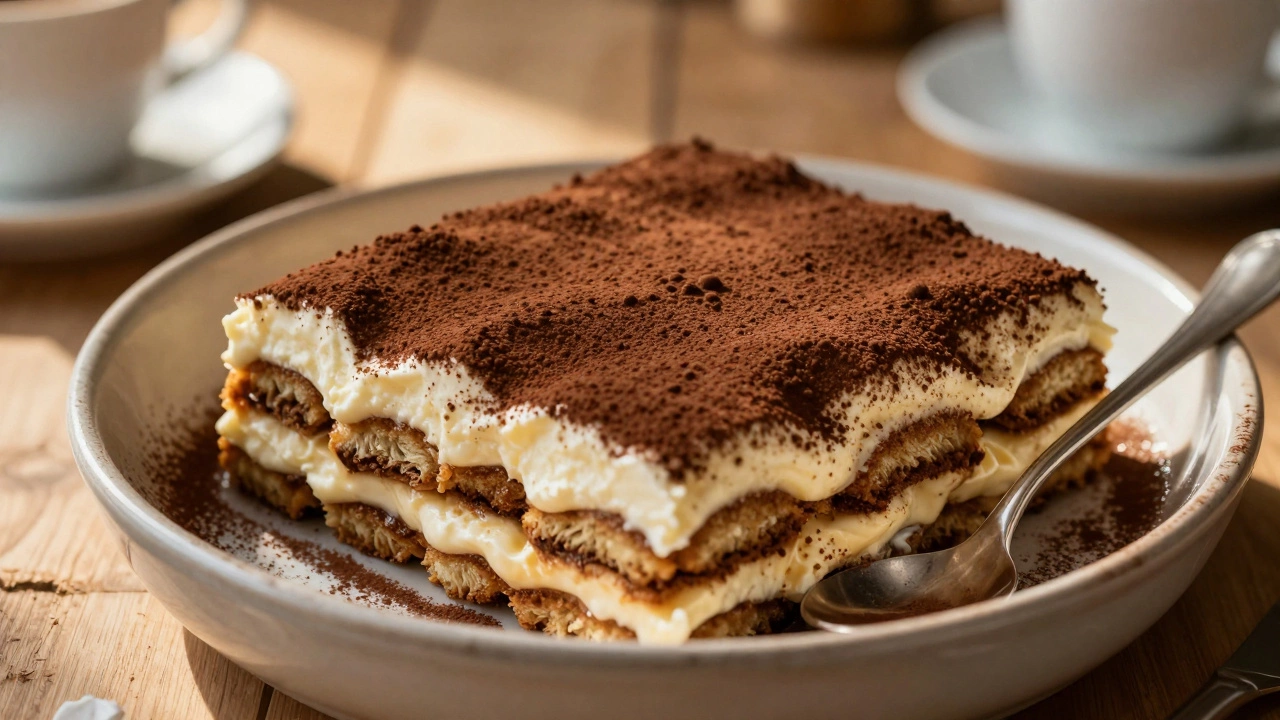
The Global Icon: Tiramisu
What makes tiramisu the quintessential Italian sweet is its balance. It is rich but not cloying, bitter from the coffee but softened by the cream. A proper tiramisu relies on three key elements:
- Mascarpone Cheese: This high-fat Italian cream cheese provides the luxurious texture. Never substitute with whipped cream alone; the result will be too airy and lack body.
- Savoiardi (Ladyfingers): These dry biscuits must be dipped quickly-just a second per side. Soak them too long, and the dessert turns into soup. Keep them just firm enough to hold structure.
- Espresso: Use strong, cooled coffee. Adding a splash of Marsala wine or Amaretto is traditional in some regions, but purists often stick to plain coffee to let the flavor shine.
The magic happens during the resting phase. Tiramisu must sit in the refrigerator for at least four hours, preferably overnight. This allows the flavors to meld and the ladyfingers to soften evenly. Skipping this step results in a disjointed dessert rather than a harmonious whole.
The Sicilian Star: Cannoli
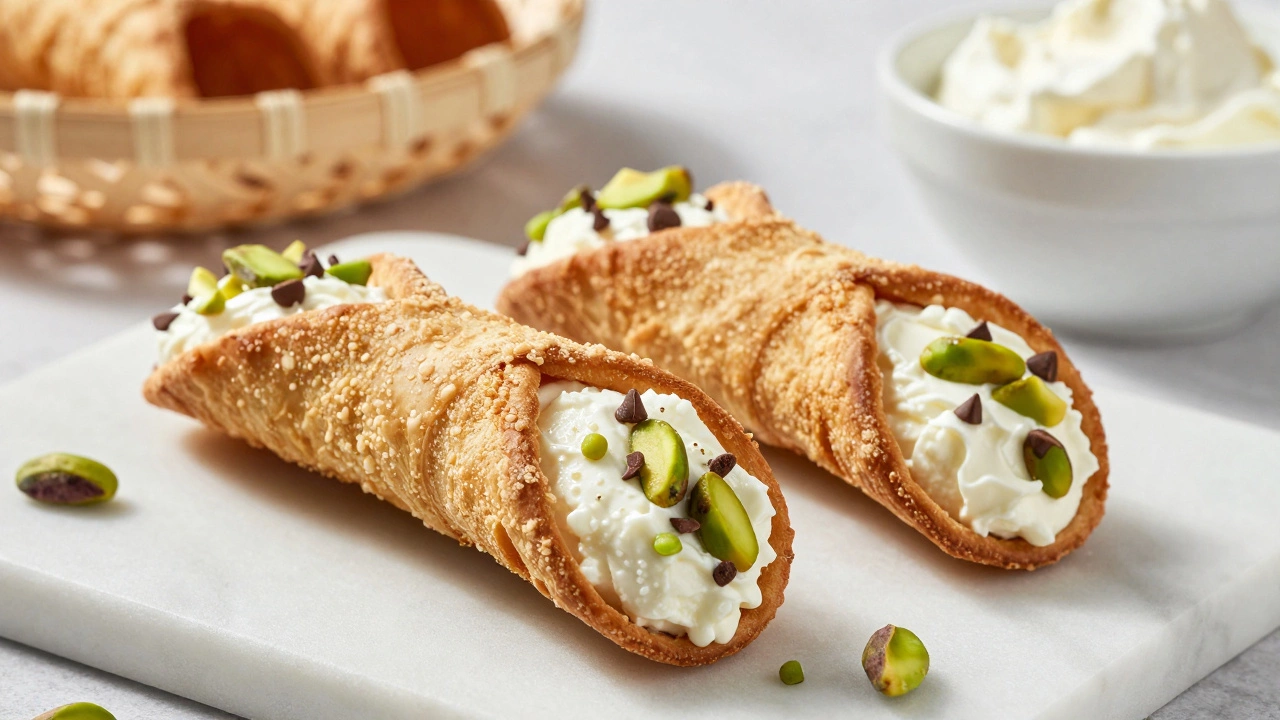
Move south to Sicily, and the conversation shifts immediately to Cannoli, which are crispy fried pastry tubes filled with sweet, creamy ricotta cheese. Unlike tiramisu, cannoli are best eaten immediately. The contrast between the shattering crisp shell and the cool, dense filling is the entire point of the dish.
A common mistake outside of Italy is pre-filling cannoli shells. In authentic Italian bakeries, the shells are stored empty until an order is placed. Filling them ahead of time causes the moisture from the ricotta to seep into the pastry, making it soggy within minutes. The filling itself is simple: sweetened sheep’s milk ricotta, powdered sugar, and often chopped pistachios from Bronte, candied orange peel, or chocolate chips.
The secret to a great cannolo lies in the ricotta. Commercial cow’s milk ricotta can be watery and bland. For the best results, drain your ricotta in cheesecloth for several hours to remove excess liquid. Then, mix it gently with sugar. Over-mixing incorporates air, leading to a fluffy texture that lacks the desired density. You want the filling to be smooth and heavy, not light like mousse.
Venice’s Delicate Gem: Zabaione
While tiramisu and cannoli dominate discussions, Zabaione (or Zabaglione) deserves a spot in the top tier. Originating from Friuli-Venezia Giulia, this custard-like dessert is made by whisking egg yolks, sugar, and sweet wine-usually Marsala-over gentle heat.
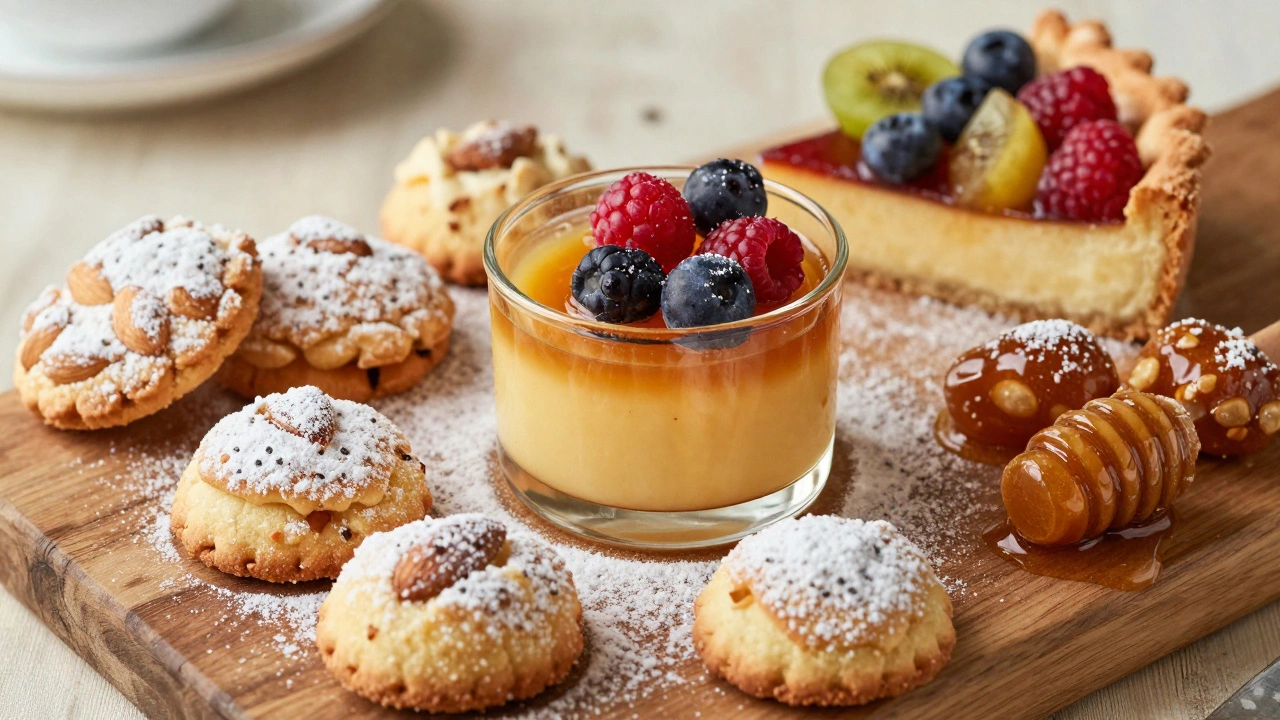
Zabaione is a study in technique. It requires constant stirring to prevent the eggs from scrambling while achieving a thick, ribbon-like consistency. The result is a warm, aromatic foam that tastes of citrus and alcohol without being boozy. It is traditionally served in small glasses, sometimes topped with fresh berries or a dollop of mascarpone.
This dessert highlights another aspect of Italian sweets: simplicity. There are no flour, no butter, and no complex layering. Just three ingredients transformed by heat and motion. It pairs beautifully with stronger flavors like dark chocolate or tart fruits, making it a versatile option for dinner parties.
Regional Favorites Beyond the Big Three
To truly appreciate Italian desserts, you must look beyond the national exports. Each region boasts specialties that locals cherish more than tiramisu.
| Dessert | Region | Key Ingredients | Texture/Profile |
|---|---|---|---|
| Panna Cotta | Piedmont | Cream, sugar, gelatin | Smooth, wobbly, milky |
| Struffoli | Naples | Fried dough balls, honey, candied fruit | Sticky, crunchy, floral |
| Baci di Donna | Venice | Almonds, powdered sugar, egg whites | Crumbly, nutty, melt-in-mouth |
| Crostata | Central Italy | Shortcrust pastry, jam | Buttery, fruity, rustic |
Panna Cotta from Piedmont is essentially cooked cream set with gelatin. Its neutrality makes it a canvas for sauces-raspberry coulis, caramel, or passion fruit. The challenge here is achieving the perfect set: firm enough to unmold, yet soft enough to cut with a spoon. Too much gelatin makes it rubbery; too little, and it collapses.
In Naples, Struffoli are festive treats associated with Christmas. Small balls of fried dough are coated in honey infused with saffron and citrus zest, then decorated with candied orange and silver dragées. They are intensely sweet and sticky, meant to be shared in small bites.
Venice offers Baci di Donna, or "Kisses of Women." These almond cookies are split in two, pressed together with a dusting of powdered sugar, and baked until golden. Their crumbly texture and intense almond flavor make them ideal companions to strong coffee or prosecco.
Why Simplicity Rules Italian Sweets
The unifying thread across all these desserts is ingredient quality. Italian baking does not rely on heavy chemical leaveners, artificial flavors, or excessive sugar manipulation. Instead, it trusts the natural properties of dairy, eggs, nuts, and fruit.
For example, a basic Crostata uses shortcrust pastry (pasta frolla) made from flour, butter, sugar, and eggs. The ratio of fat to flour determines whether the crust is tender or crumbly. Mastering pasta frolla is a rite of passage for Italian home bakers. Chilling the dough before rolling prevents shrinkage during baking, ensuring a clean edge around the jam filling.
This focus on fundamentals means that mistakes are hard to hide. If your mascarpone is low-quality, your tiramisu will taste sour. If your ricotta is watery, your cannoli will fail. This is why sourcing matters. When replicating these desserts at home, invest in good mascarpone, fresh eggs, and high-grade vanilla extract. These small upgrades yield dramatic improvements in flavor.
Common Mistakes to Avoid
Even experienced cooks stumble when attempting classic Italian sweets. Here are the most frequent pitfalls:
- Over-sweetening: Italian desserts are rarely as sweet as American counterparts. Trust the original ratios. Adding extra sugar masks the nuanced flavors of citrus, coffee, or nuts.
- Ignoring resting times: Whether it’s tiramisu setting in the fridge or biscotti cooling before the second bake, patience is non-negotiable. Rushing leads to structural failure.
- Using substitutes indiscriminately: Substituting margarine for butter in pasta frolla changes the melting point and flavor profile. Use real butter. Similarly, avoid using instant pudding mixes in place of homemade custards.
- Serving temperature errors: Serve zabaione warm, tiramisu cold, and cannoli at room temperature. Temperature affects viscosity and aroma release.
Pairing Italian Sweets with Beverages
Italians rarely eat dessert in isolation. Pairing enhances the experience. Tiramisu pairs naturally with espresso or a glass of Vin Santo. Cannoli complement sparkling wines like Prosecco or Moscato d’Asti, whose acidity cuts through the richness of the ricotta. Panna cotta works well with lighter reds or berry-infused liqueurs.
For those who prefer non-alcoholic options, consider pairing nut-based desserts like Baci di Donna with almond milk or oat milk lattes. The nuttiness resonates, creating a cohesive flavor profile. Strong black tea also stands up well to chocolate-heavy desserts like Torta Caprese.
Final Thoughts on Choosing Your Favorite
So, what is the typical Italian sweet? If you need one answer for a trivia quiz, say tiramisu. But if you are planning a menu or exploring Italian cuisine, embrace variety. Start with a crispy cannolo for texture, move to a silky panna cotta for comfort, and finish with a bitter-sweet amaro-dipped biscotto for depth.
Each dessert tells a story about its region’s history, agriculture, and culture. By understanding the ingredients and techniques behind them, you gain more than just a recipe-you gain insight into how Italians celebrate life through food. Next time you crave something sweet, think beyond the cookie jar. Reach for the mascarpone, brew a strong coffee, and create something authentically Italian.
Is tiramisu the most popular Italian dessert?
Yes, tiramisu is widely considered the most famous Italian dessert globally due to its widespread availability in restaurants worldwide. However, locally, cannoli and regional specialties like struffoli or panforte may be more commonly consumed in their respective areas.
Can I make tiramisu without raw eggs?
Absolutely. Many modern recipes use pasteurized egg yolks or a stabilized mascarpone cream base using whipped cream instead of raw eggs. This maintains the creamy texture while eliminating health risks associated with raw eggs.
Why do my cannoli shells get soggy?
Cannoli shells absorb moisture from the ricotta filling very quickly. To prevent sogginess, fill them immediately before serving. Store shells and filling separately until ready to assemble. Additionally, ensure your ricotta is well-drained to minimize excess water content.
What is the difference between panna cotta and flan?
Panna cotta is made primarily with cream, sugar, and gelatin, resulting in a lighter, wobbly texture. Flan typically uses eggs, milk, and caramel, giving it a denser, custard-like consistency. Panna cotta is not baked, whereas flan is usually steamed or baked in a water bath.
How long does tiramisu last in the fridge?
Tiramisu keeps well in the refrigerator for up to 3-4 days if covered tightly. Because it contains dairy and potentially raw eggs, it should not be left at room temperature for more than two hours. For best flavor, consume within 48 hours.