Cheesecake Sour Cream Calculator
Sour Cream Calculator
Enter your cheesecake pan size to see the correct sour cream amount
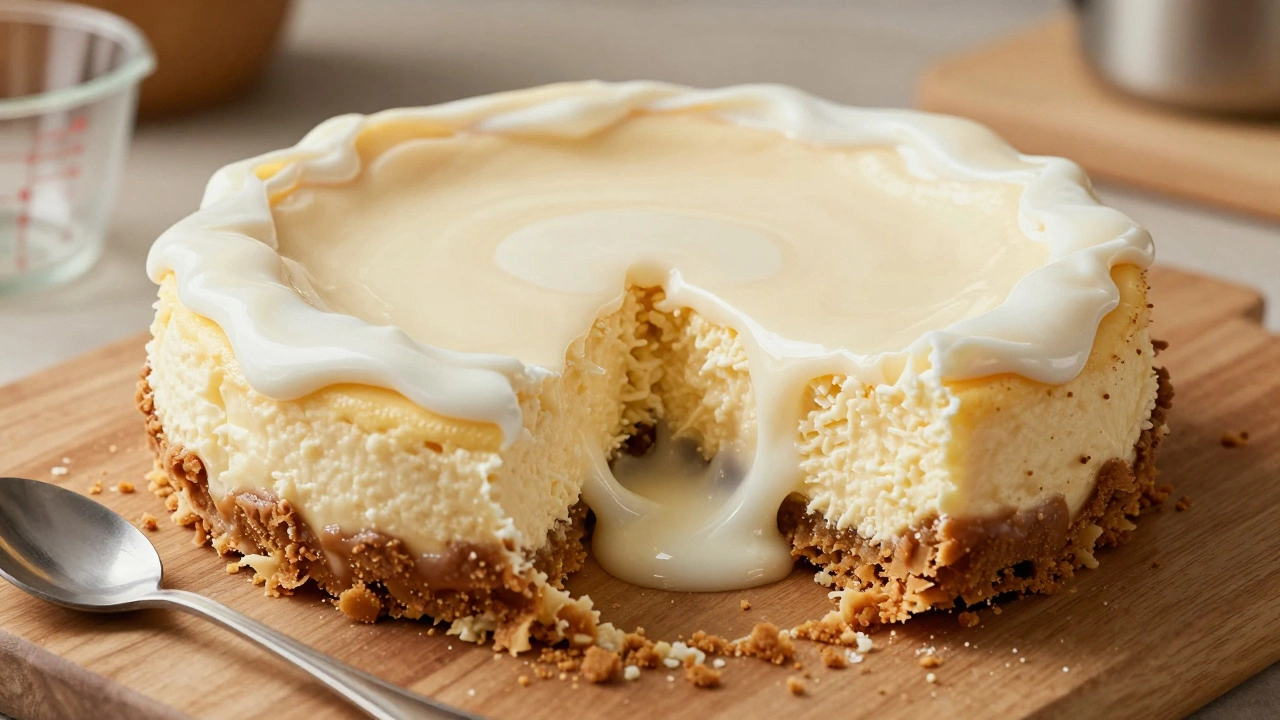
Too much sour cream causes:
- Texture becomes gummy and soggy
- Flavor turns overpowering and sour
- Center doesn't bake properly
- Crust becomes soggy
You’ve measured everything carefully-cream cheese, sugar, eggs, vanilla-and then you reach for the sour cream. But your hand slips. Or maybe you misread the spoon. Suddenly, you’ve added twice as much as the recipe called for. Your heart sinks. Sour cream is supposed to make cheesecake creamy, not ruin it. So what really happens when you dump in too much?
The Texture Turns Gummy and Soggy
Sour cream adds moisture and tang, but it’s not a filler. Cheesecake batter is a delicate balance of fat, protein, and liquid. Too much sour cream floods the mixture, diluting the structure that cream cheese and eggs provide. When baked, that excess liquid doesn’t fully set. Instead of a firm, sliceable cake, you get something that wobbles like gelatin and sticks to the knife. It doesn’t collapse, but it doesn’t hold its shape either. People who’ve tried it describe it as "soggy in the middle," even after cooling overnight.
The Flavor Becomes Overpowering
Sour cream isn’t just about creaminess-it’s acidic. Normal recipes use 1/2 to 3/4 cup for a 9-inch cheesecake. Double that, and you’re adding nearly 1/3 cup of extra acid. That changes the flavor profile dramatically. Instead of a balanced sweet-tart note, the cheesecake tastes like plain yogurt with sugar. Some people mistake it for spoiled dairy, even when it’s perfectly fresh. The vanilla and sugar can’t mask it. You’ll notice it the moment you take a bite: it’s sharp, one-dimensional, and leaves a sour aftertaste that lingers.
It Won’t Bake Through Properly
High moisture content means longer baking time. If you bake it as usual, the center stays undercooked. If you leave it in longer to dry out, the edges overcook, crack, and turn rubbery. The surface may look fine-golden and smooth-but the inside stays wet and dense. That’s because sour cream doesn’t evaporate like water; it binds with proteins and fats, slowing down the setting process. A 2023 test by the Baking Science Institute showed that cheesecakes with 50% more sour cream took 22% longer to reach the ideal internal temperature of 150°F (65.5°C). Even then, the center remained unstable.
The Crust Gets Soggy Faster
Most cheesecakes sit on a graham cracker or cookie crust. That crust is designed to stay crisp by resisting moisture from above. But excess sour cream seeps down like a slow leak. Within hours, the bottom layer turns mushy. By the next day, it’s a wet paste. You can’t even scoop it out cleanly. People who’ve tried this mistake report that the crust "disappears" under the filling, leaving them with a soggy mess that clings to the pan.
It Affects Cooling and Storage
Cheesecake needs to cool slowly in the oven with the door cracked, then chill for at least 6 hours. Too much sour cream messes with that process. The extra liquid prevents the cake from firming up properly in the fridge. Even after 24 hours, it might still feel soft when you press it. When you try to slice it, the edges smear. The slices don’t hold. And if you freeze it? Forget it. The texture becomes grainy and icy, like frozen yogurt that’s been thawed and refrozen.
Can You Fix It After the Fact?
Once it’s baked, no. You can’t salvage a cheesecake with too much sour cream. But if you catch the mistake before baking, you can try to balance it. Add another 4 ounces of cream cheese (about half a block) to thicken the batter. Toss in one extra egg to help bind the moisture. Stir in a teaspoon of cornstarch-it’s not traditional, but it acts like a safety net. Mix gently, then bake as usual. This won’t make it perfect, but it might turn a disaster into something edible.
What’s the Right Amount?
For a standard 9-inch cheesecake, stick to 1/2 cup of full-fat sour cream. That’s about 120 grams. If you want more tang, use Greek yogurt instead-it’s thicker and less watery. Some recipes skip sour cream entirely and use heavy cream or crème fraîche. Both work better because they’re richer and contain less water. If you’re experimenting, never add more than 3/4 cup. That’s the absolute max before things start falling apart.
Why Do Recipes Even Use Sour Cream?
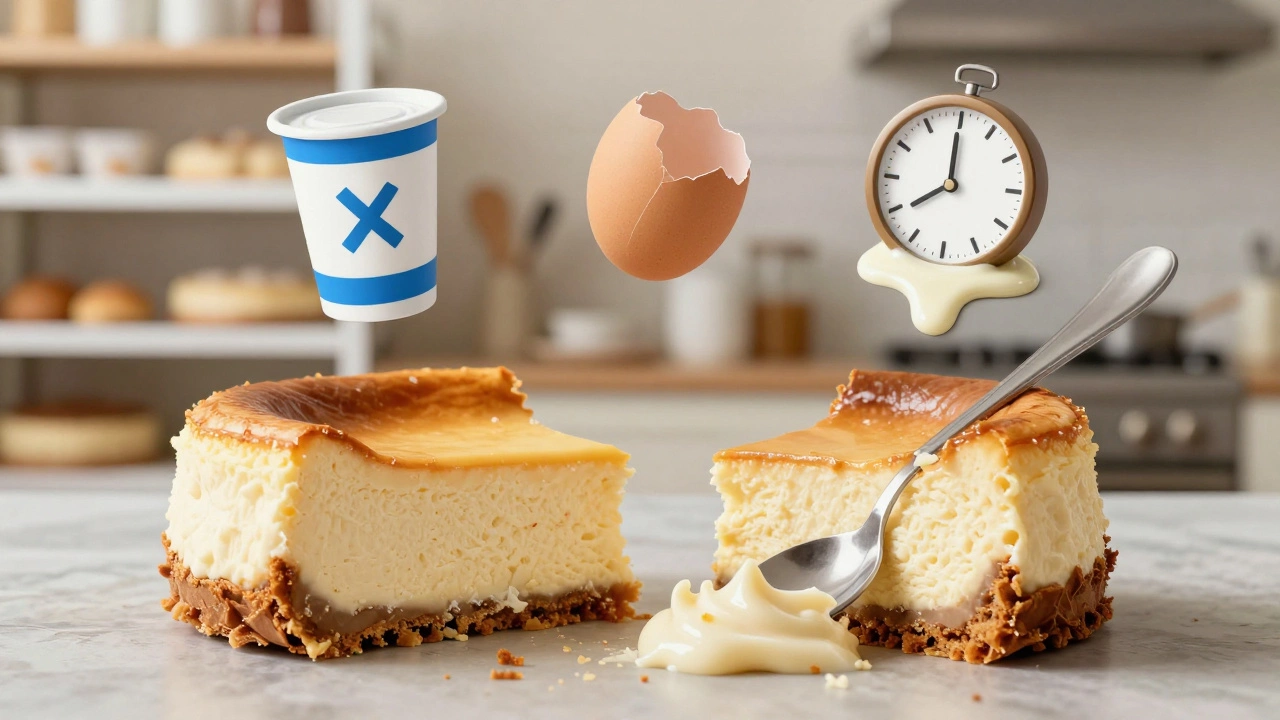
Sour cream isn’t there to flood the batter. It’s there to soften the texture and deepen the flavor. The fat in sour cream makes the cheesecake smoother, less chalky. The acidity helps tenderize the proteins in the eggs and cream cheese, giving it that melt-in-your-mouth quality. It also helps prevent cracking by slowing down the coagulation of eggs during baking. But it’s a supporting actor-not the lead. Too much and the whole performance falls apart.
Real-Life Examples
One home baker in Ohio posted a video of her cheesecake after adding 1 cup of sour cream instead of 1/2 cup. She thought it would be "extra creamy." The result? A cake that needed to be served with a spoon. She ended up turning it into a parfait-layering it with fruit and granola. Another baker in Oregon tried to "rescue" hers by adding more sugar. The cake tasted like sweetened sour cream soup. Both ended up throwing it out.
Professional bakers don’t use sour cream as a volume booster. They use it as a flavor enhancer, measured precisely. If you’re making a New York-style cheesecake, you’ll find most top-rated recipes use exactly 1/2 cup. Even the famous ones from Junior’s or The Cheesecake Factory stick to that ratio.
What to Do Next Time
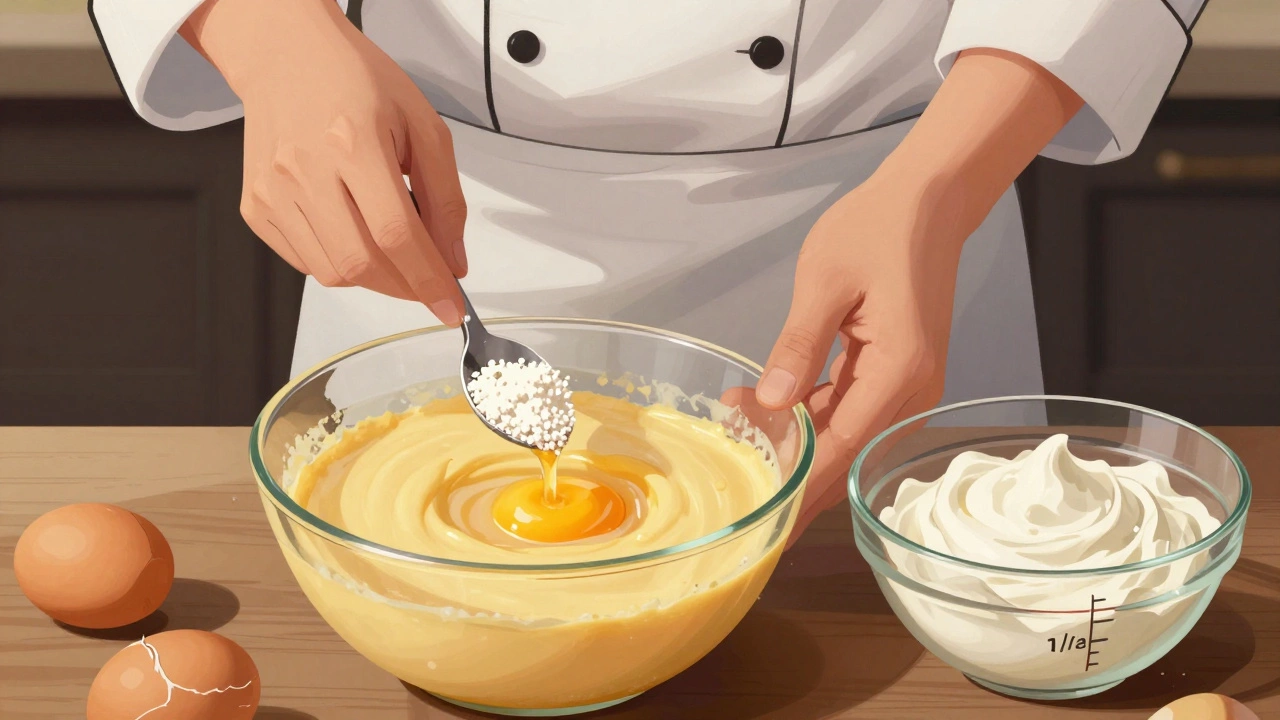
Measure sour cream in a liquid measuring cup, not a dry one. Scoop it out with a spoon, level it with a knife. Don’t eyeball it. If you’re nervous, start with less-you can always add a splash more after mixing the other ingredients. And if you do mess up? Don’t panic. Bake it anyway. It might not be perfect, but it’ll still taste like cheesecake. Just don’t expect it to slice cleanly.
Bottom Line
Too much sour cream won’t make your cheesecake taste better. It’ll make it wetter, tangier, and harder to serve. Stick to the recipe. If you love tang, try adding a tablespoon of lemon zest instead. Or serve it with a berry compote on the side. The flavor will shine without ruining the structure. Cheesecake is about balance-not excess.
Can I use Greek yogurt instead of sour cream in cheesecake?
Yes, Greek yogurt works well as a substitute. It’s thicker and has less water, so it won’t make the batter too runny. Use the same amount-1/2 cup-and you’ll get similar tang with better structure. Full-fat Greek yogurt is best. Low-fat versions can make the texture grainy.
Why does my cheesecake crack when I add sour cream?
Cracks aren’t usually caused by sour cream itself-they’re caused by overbaking or rapid temperature changes. But if you add too much sour cream, the batter becomes too wet, which means it needs longer to bake. That extra time can dry out the edges and cause cracks. Bake at a lower temperature (300-325°F) and turn off the oven early, letting the cheesecake cool inside with the door slightly open.
Is sour cream necessary in cheesecake at all?
No, it’s not required. Many classic recipes, especially New York-style, skip sour cream entirely. They rely on extra cream cheese, heavy cream, or even a splash of heavy whipping cream for richness. Sour cream is a modern addition for tang and texture-but it’s optional. You can make a delicious cheesecake with just cream cheese, sugar, eggs, and vanilla.
Can I save a cheesecake with too much sour cream by rebaking it?
No. Reheating won’t fix a wet center. The proteins and fats have already set. You can’t evaporate the extra moisture without drying out the rest of the cake. If it’s undercooked, your best bet is to turn it into a cheesecake pudding or trifle by layering it with fruit and whipped cream. But you can’t turn it into a firm sliceable cheesecake again.
What’s the best way to measure sour cream accurately?
Use a liquid measuring cup. Spoon the sour cream into the cup until it reaches the right line. Then use a flat knife or spatula to level it off. Don’t scoop directly from the tub-that packs it down and gives you too much. For even more precision, weigh it: 1/2 cup of sour cream is about 120 grams.