How to Tell When Fudge is Done: The Ultimate Guide
Learn exactly how to tell when fudge is done using a candy thermometer or the cold water test. Avoid grainy or hard fudge with these expert tips.
Ever wonder why some candy sticks together while other batches turn grainy? The secret is the soft ball stage – a specific temperature range that tells you when sugar syrup is ready for chewy treats. Hitting this stage makes caramel, fudge, and marshmallows smooth and stretchy.
When you heat sugar, water, and any flavorings, the mixture goes through several stages. The soft ball stage is reached at 235‑240 °F (112‑115 °C). At this point, a drop of syrup dropped into cold water will form a soft, pliable ball that flattens when you press it between your fingers.
If you don’t have a candy thermometer, the cold‑water test works fine. Fill a small bowl with ice water, then drop a tiny spoonful of the hot syrup into it. Let it sit a second, then scoop it up with a spoon. If it forms a smooth, malleable ball that you can roll, you’re at soft ball.
Using a thermometer gives more accuracy, especially for big batches. Clip the probe to the side of the pan, making sure it doesn’t touch the bottom, and watch the reading climb into the 235‑240 °F window. Once you see that, remove the pan from heat immediately – sugar can jump a few degrees in seconds.
Why does this matter? At the soft ball stage the sugar crystals are still dissolving, giving you the right balance of firmness and flexibility. Go lower, and the candy stays too soft; go higher, and you get a hard crack stage that makes brittle treats.
Typical recipes that rely on the soft ball stage include:
When you’re making these, keep a close eye on the pan. Sugar syrup can boil over fast, and the liquid evaporates quickly, raising the temperature. Stir gently and use a heavy‑bottomed pan to avoid hot spots.
Common mistakes:
Fixing a batch that’s gone wrong is easier than you think. If the candy is too soft, keep heating a few more degrees and test again. If it’s already too hard, you can melt it down, add a splash of water, and bring it back to the correct range.
Pro tip: Add a pinch of acid (like cream of tartar or lemon juice) at the start. This helps prevent crystal formation and makes reaching the soft ball stage smoother.
Now you’ve got the basics, it’s time to experiment. Grab a pot, a thermometer, and your favorite recipe. Remember: the soft ball stage is your sweet spot for chewy, gooey treats that melt in the mouth, not in the pan.
Enjoy the process, and don’t be afraid to taste a tiny piece once the candy cools. That’s the best way to know you’ve nailed the soft ball stage.
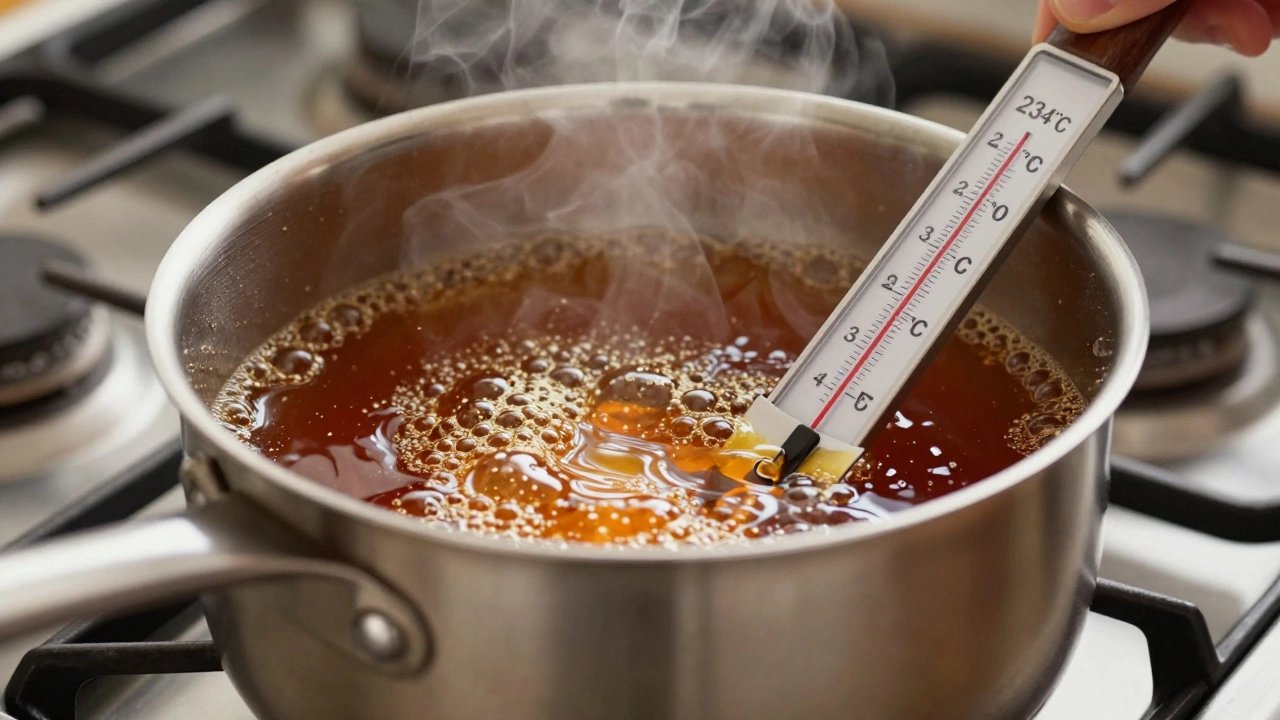
Learn exactly how to tell when fudge is done using a candy thermometer or the cold water test. Avoid grainy or hard fudge with these expert tips.

Boiling fudge to the perfect soft ball stage might seem tricky, but it's all about timing and technique. This article uncovers the secrets to achieving that ideal texture, offering practical tips and handy thermometers. We'll delve into the fascinating science of sugar stages and provide reliable methods to test your fudge, making great-tasting fudge a breeze.