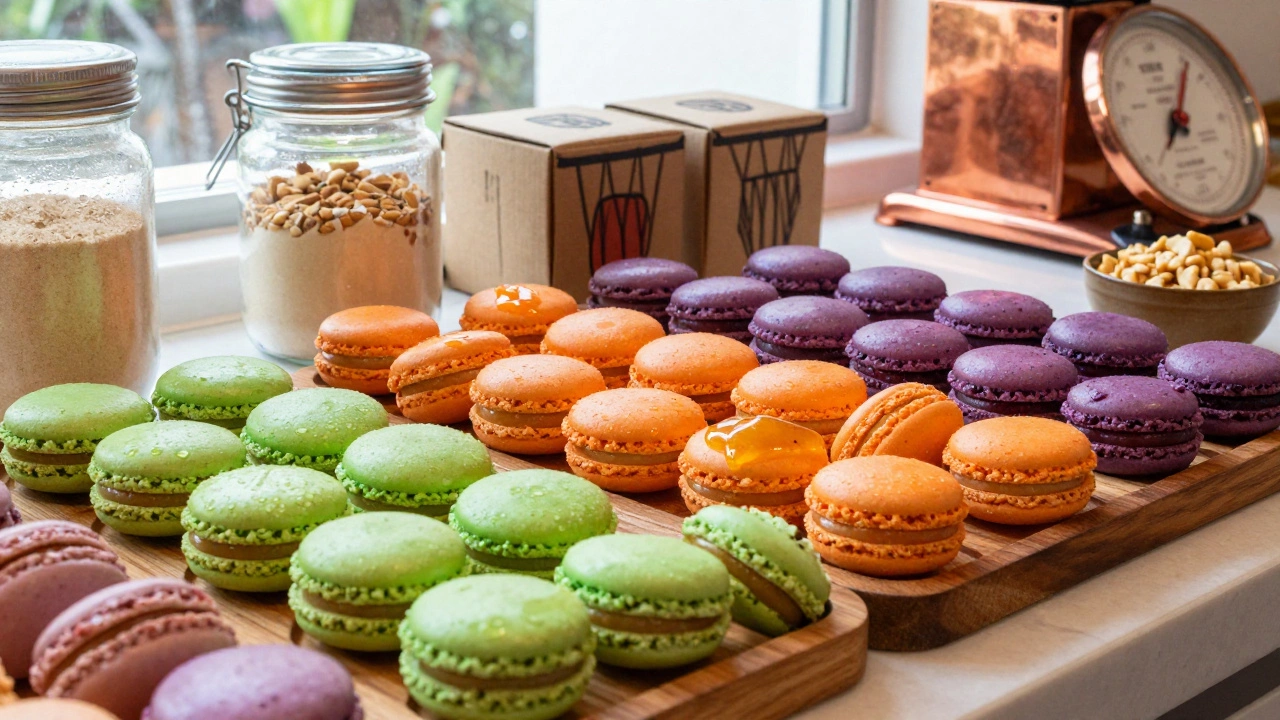
Macarons in Brazil
When you think of macarons, delicate French almond cookies with smooth shells and creamy fillings. Also known as macaron cookies, they’re a global pastry phenomenon that’s found surprising roots in Brazil. These aren’t just imported treats—they’ve been adapted, reinvented, and embraced by local bakers who mix traditional French methods with bold Brazilian flavors like açaí, guava, and cashew.
What makes macarons in Brazil different isn’t just the filling—it’s the whole experience. Brazilian bakers often use local ingredients like coconut sugar, passion fruit purée, and even guaraná syrup to give their macarons a tropical twist. Unlike in France, where flavor choices stick close to classic vanilla or pistachio, Brazilian shops offer wild combinations like brigadeiro-filled macarons or caipirinha-infused shells. The texture stays crisp on the outside, chewy inside, but the taste? That’s where Brazil makes it its own.
It’s not just about flavor. The rise of macarons in Brazil ties into a bigger shift in dessert culture. People are moving away from heavy, syrupy sweets and toward elegant, bite-sized treats that feel special without being overwhelming. You’ll find them in upscale cafés in São Paulo, street markets in Rio, and even at birthday parties where they’ve replaced traditional cakes. And while some still think macarons are too fancy or fragile to make at home, the truth is—anyone can do it. You just need patience, the right almond flour, and the courage to try something new.
What you’ll find in this collection isn’t just a list of recipes. It’s a look at how macarons travel, change, and grow when they land in new places. From the science behind perfect shells to the cultural reasons why Brazilian bakers are turning them into street food stars, these posts give you real insight—not just instructions. You’ll learn how to avoid cracked shells, what fillings work best with tropical fruits, and why some macarons in Brazil cost twice as much as in Paris—and why they’re still worth it.
Macarons are now a beloved treat in Brazil, with local bakers adapting the French classic using native flavors like dulce de leche, guava, and açaí. They’re sold everywhere - from luxury patisseries to street markets.