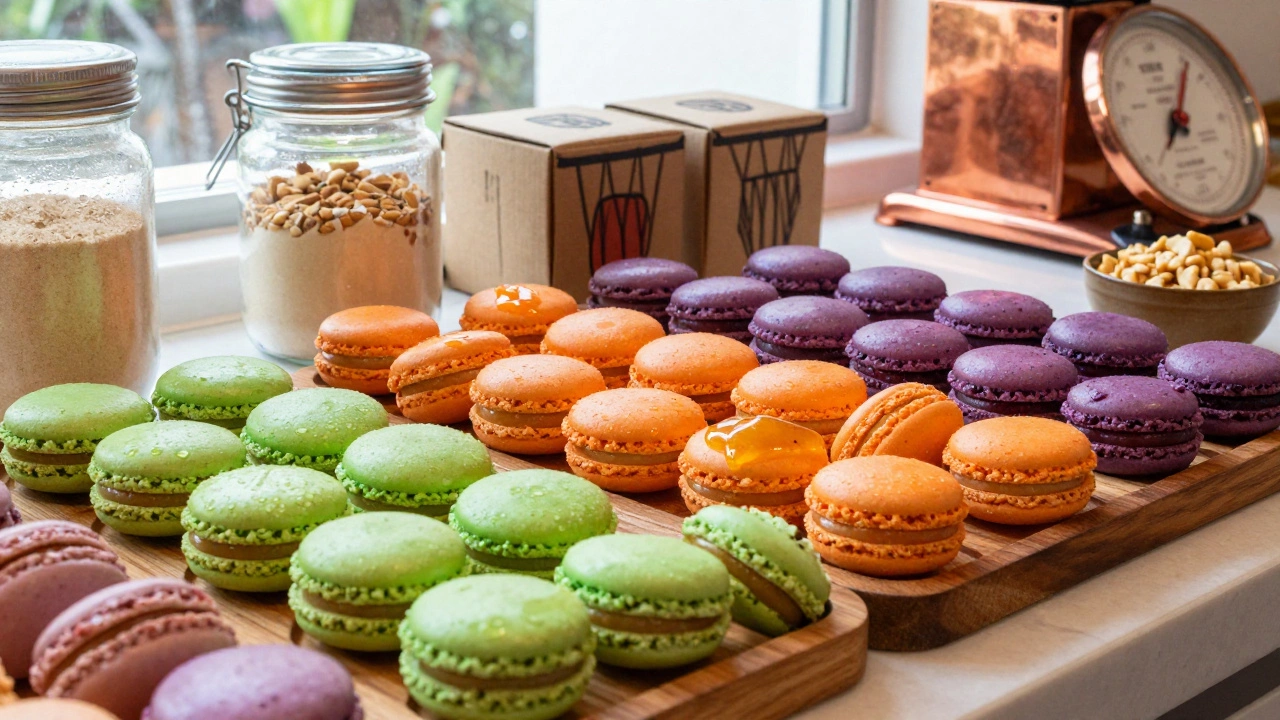
Walk into any bakery in São Paulo or Rio de Janeiro these days, and you’ll see rows of colorful, delicate cookies stacked like jewels. They’re not cookies. They’re not cupcakes. They’re macarons - and yes, they’re everywhere in Brazil now. But they weren’t always this popular. Ten years ago, if you asked someone in Brasília if they’d ever tried a macaron, most would’ve looked at you like you were speaking French. Now, they’re a staple at birthday parties, wedding favors, and even street food markets.
How Macarons Got to Brazil
Macarons didn’t start in France - they came from Italy. But they found their soul in Paris. Brazil’s love affair with them began in the early 2010s, when luxury hotels and upscale cafés in Rio and São Paulo started importing French pastry chefs. These chefs brought the classic almond flour, egg white, and sugar formula. But they didn’t stop there. They started experimenting.
By 2015, local bakers began adapting the recipe. They swapped out French fillings like ganache and buttercream for ingredients that tasted like home: dulce de leche, guava paste, passion fruit curd, and even açaí. The result? A macaron that looked French but tasted unmistakably Brazilian.
It wasn’t just about flavor. It was about identity. Brazilians didn’t want to copy France. They wanted to claim macarons as their own.
What Makes Brazilian Macarons Different
Let’s be clear: a Brazilian macaron isn’t just a French macaron with a different filling. The whole structure changed.
French macarons are known for their crisp shell and soft, chewy center. Brazilian versions often have a slightly thicker shell - more resistant to humidity. Why? Because Brazil is hot. And humid. A French macaron left out for two hours in Rio will turn soggy. Brazilian bakers adjusted the ratio of almond flour to sugar to make the shells more stable in tropical weather.
Then there’s the filling. While Parisian patisseries stick to classic pairings like raspberry and dark chocolate, Brazilian shops go wild. You’ll find:
- Dulce de leche with sea salt - a caramelized milk filling that’s thick, sticky, and deeply sweet
- Guava and cheese - inspired by the classic Brazilian combo of goiabada and queijo minas
- Cashew cream - made from cashew nuts, which grow in abundance in the northeast
- Cachaça and lime - a boozy twist for adults, using Brazil’s national spirit
- Açaí pulp - purple shells with a tart, antioxidant-rich center
Colors too are bolder. You won’t find just pastels here. Think neon green (matcha), fiery orange (tangerine), and deep purple (jabuticaba, a native Brazilian berry).
Where to Find the Best Macarons in Brazil
If you’re visiting Brazil and want real macarons, don’t go to the tourist traps. Skip the hotel gift shops. Head to these spots instead:
- La Macaronnerie in São Paulo - run by a former pastry chef from Lyon, they make 30 flavors daily, including one with Brazilian cocoa and cashew praline
- Doce de Festa in Belo Horizonte - famous for their guava and cheese macarons, sold in boxes shaped like mini samba drums
- Macarons & Co in Rio - they ship nationwide and use only organic, locally sourced ingredients
- Feira de São Joaquim in Florianópolis - a street market where a single vendor sells macarons with fillings made from native fruits like cupuaçu and pitanga
Many of these places sell their macarons in packs of six or twelve, wrapped in recycled paper with hand-drawn labels. They’re not just desserts - they’re art.
Are Macarons Popular Outside the Cities?
Yes. And that’s the real story.
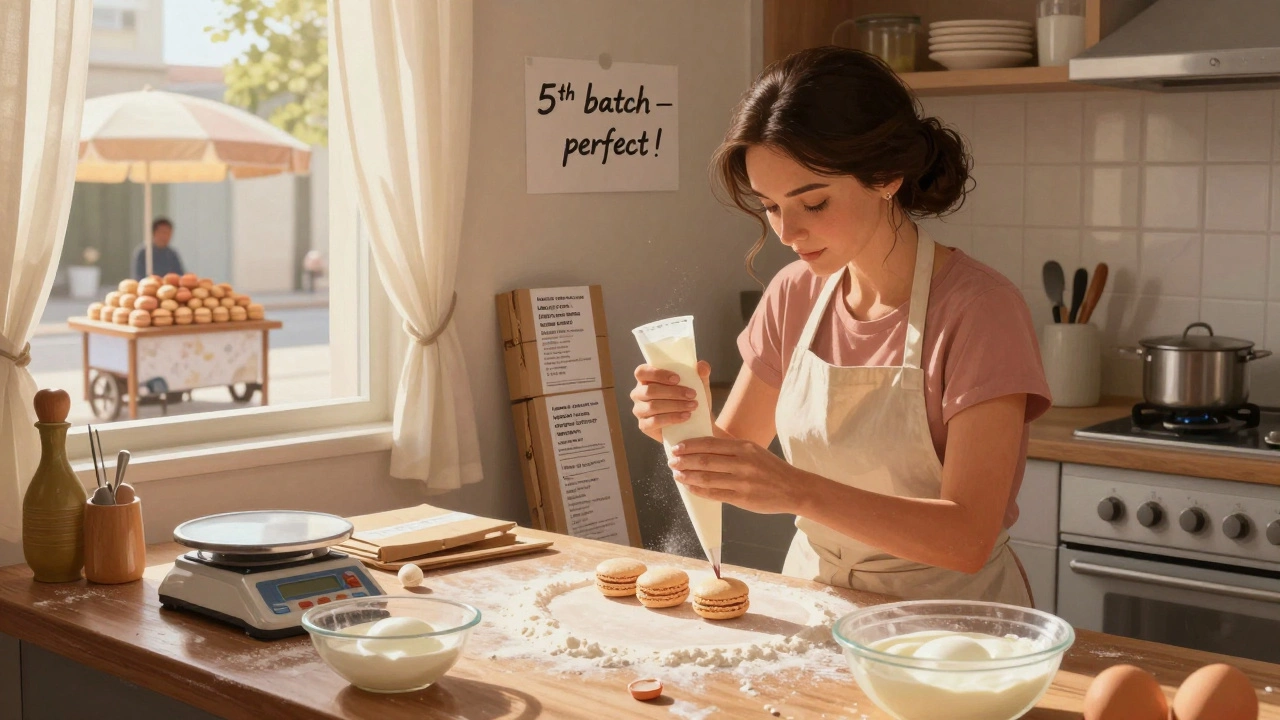
In smaller towns like Ouro Preto or Campinas, macarons are no longer a luxury. Local bakers, often women who learned from YouTube tutorials or online courses, started making them in home kitchens. They sell them at weekend fairs, school fundraisers, and even door-to-door.
One woman in Recife, Maria Santos, started baking macarons in her kitchen after losing her job in 2020. She used powdered sugar and almond flour bought from a local grocery. Her first batch was lopsided. Her second batch cracked. By her fifth batch, she had a customer list of 200. Today, she ships macarons to 12 states. Her bestseller? Coconut and lime.
Macarons became a lifeline. For many, they’re not just a treat - they’re a business.
Why Brazilians Love Macarons So Much
It’s not just the taste. It’s the feeling.
Brazilians love celebrating. Birthdays, baptisms, graduations, even football wins - everything gets a cake, a party, a sweet. Macarons fit perfectly. They’re small. They’re colorful. They’re Instagram-ready. And they’re easy to share.
Unlike a whole cake, which needs slicing and serving, macarons are grab-and-go. You can hand one to a friend without a plate. They’re the perfect gift - not too heavy, not too expensive, but still feels special.
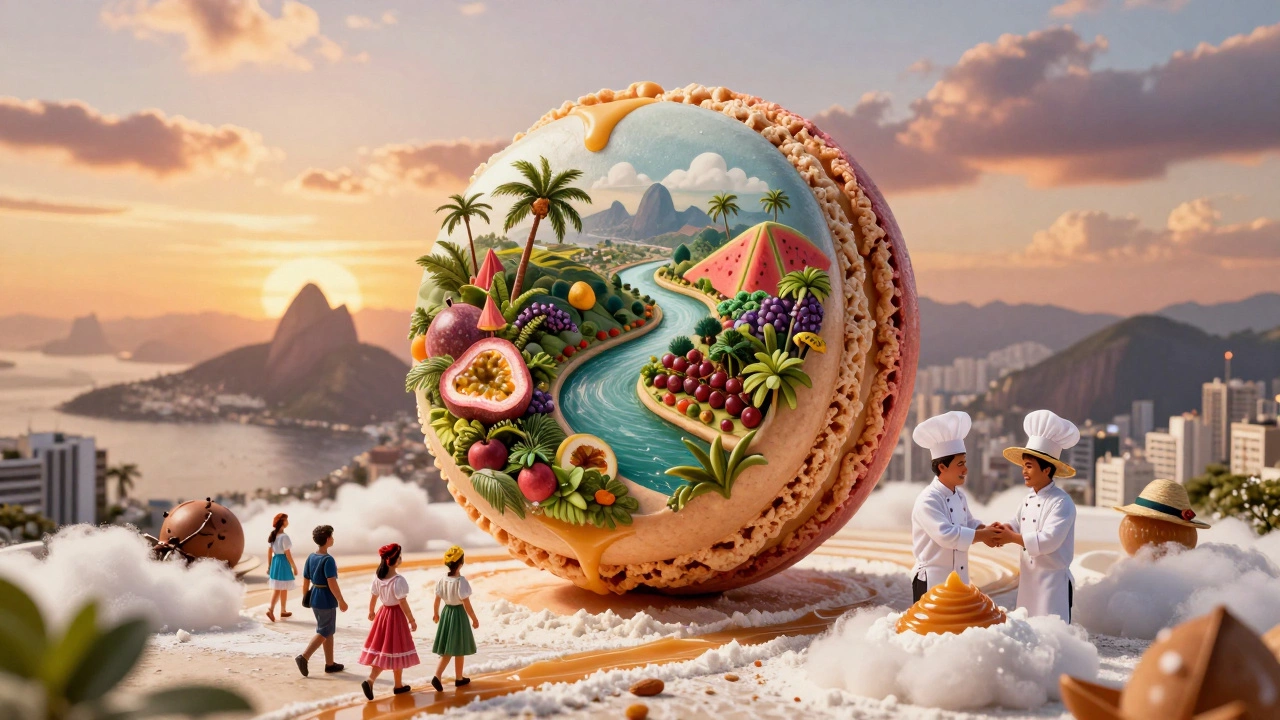
They also reflect Brazil’s mix of cultures. The technique is French. The ingredients are local. The spirit? Pure Brazilian joy.
Can You Make Brazilian Macarons at Home?
Yes - and you don’t need a French pastry degree.
Here’s what works for most home bakers in Brazil:
- Use finely ground almond flour - grind your own if you can. Pre-ground often has too much oil.
- Let your egg whites sit at room temperature for 24 hours before whipping. This helps them hold air better in humid climates.
- Use a digital scale. Measuring by cups doesn’t work. Precision matters.
- For fillings, start simple: mix dulce de leche with a splash of heavy cream until spreadable.
- Let the shells rest for 45 minutes before baking. This lets a skin form - the key to that signature foot.
- Bake at 150°C (300°F) for 14-16 minutes. Ovens vary. Watch for the feet to rise evenly.
Don’t expect perfection on the first try. The first batch I made cracked. The second stuck to the parchment. The third? Perfect. That’s the Brazilian way - trial, error, and lots of sugar.
The Future of Macarons in Brazil
Macarons in Brazil aren’t fading. They’re evolving.
Some bakers are now making vegan versions using aquafaba (chickpea water) instead of egg whites. Others are using cassava flour to make gluten-free shells. There are even macarons with CBD-infused fillings in wellness-focused shops in Curitiba.
And the demand keeps growing. In 2024, Brazil imported over 400 tons of almond flour - up 67% from 2020. Local farmers are starting to grow more almonds in the southeast. The market is growing from a niche treat to a full-blown industry.
Macarons in Brazil aren’t just a dessert. They’re a cultural shift. A sweet, colorful, crunchy, chewy symbol of creativity, resilience, and flavor.
Are macarons originally from Brazil?
No, macarons originated in Italy and became famous in France. But Brazil has made them its own by adapting the recipe with local ingredients like dulce de leche, guava, açaí, and cashew. Today, Brazilian macarons are a unique variation with a distinct flavor profile.
Where can I buy macarons in Brazil?
You can find macarons in major cities like São Paulo, Rio de Janeiro, and Belo Horizonte at specialty bakeries like La Macaronnerie, Doce de Festa, and Macarons & Co. Street markets like Feira de São Joaquim in Florianópolis also offer handmade versions. Many bakers now ship nationwide through online stores.
Why are Brazilian macarons different from French ones?
Brazilian macarons have thicker shells to handle humidity, and their fillings use local flavors like dulce de leche, guava paste, passion fruit, and açaí. They’re also often more colorful and bolder in taste. The texture is similar, but the soul is Brazilian.
Can I make macarons at home in Brazil’s climate?
Yes, but humidity is your biggest challenge. Let egg whites sit for 24 hours before whipping, use a digital scale, and let shells dry for 45 minutes before baking. Bake at 150°C for 14-16 minutes. Start with simple fillings like dulce de leche and cream. Don’t give up after the first batch - even professionals had bad ones.
Are macarons popular in small towns in Brazil?
Yes. In towns like Ouro Preto and Recife, home bakers are selling macarons at local fairs and online. One woman in Recife started with just a kitchen and now ships to 12 states. Macarons have become a low-cost, high-margin business for many small entrepreneurs.
Do Brazilian macarons contain gluten?
Traditional Brazilian macarons are naturally gluten-free since they’re made with almond flour and powdered sugar. However, some bakeries add fillings or decorations that may contain gluten. Always check with the maker if you have dietary restrictions.