Gluten-Free Ingredients: What Works, What Doesn’t, and How to Bake Without It
When you bake without gluten, you’re not just swapping flour—you’re rebuilding how your cake holds together. Gluten-free ingredients, the building blocks used in baking when wheat is avoided, including alternative flours, binders, and stabilizers. Also known as wheat-free baking components, they’re the foundation of every gluten-free cake, cookie, or cupcake that doesn’t turn to dust. Most people think switching to gluten-free flour is enough. It’s not. Gluten isn’t just a protein—it’s the elastic network that traps air, gives structure, and keeps things from crumbling. Take that away, and you need something else to do its job.
That’s where gluten-free flour blends, mixtures of rice, potato, tapioca, and other starches designed to mimic wheat flour’s behavior come in. But not all blends are made equal. Some are too starchy and gummy. Others lack body and fall apart in your hands. The best ones include a binder—like xanthan gum, a fermented polysaccharide that mimics gluten’s stretch and helps hold moisture. Without it, your muffins crack, your cookies spread too much, and your cake collapses. You don’t need much—just 1/4 to 1/2 teaspoon per cup of flour—but leave it out, and you’ll know it.
Then there’s the hidden stuff. Gluten-free substitutes, ingredients like oats, soy sauce, or even some vanilla extracts that may contain hidden gluten can ruin your whole batch if you’re not careful. A bag of oats labeled gluten-free might still be cross-contaminated if it was processed in the same facility as wheat. Same with store-bought vanilla extract—some use grain alcohol. Even your baking powder? Some brands add wheat starch as a filler. That’s why reading labels isn’t optional—it’s your first line of defense.
And let’s talk about what doesn’t work. Cornstarch alone? Too sticky. Almond flour by itself? Too dense and oily. Coconut flour? Absorbs so much liquid you’ll need eggs like they’re going out of style. These aren’t magic replacements—they’re tools. Each behaves differently. You need the right combo, the right ratios, and the right technique. It’s not about finding one perfect flour. It’s about understanding how each ingredient contributes.
People think gluten-free means bland or dry. That’s because they’re using the wrong tools. With the right blend, the right binder, and attention to moisture, you can bake cakes that are moist, tender, and just as satisfying as the real thing. The difference isn’t the absence of gluten—it’s the understanding of what replaces it.
Below, you’ll find real answers from real bakers who’ve tested these ingredients over and over. No fluff. No theory. Just what actually works in the kitchen when you’re trying to make something delicious—and safe—without wheat.
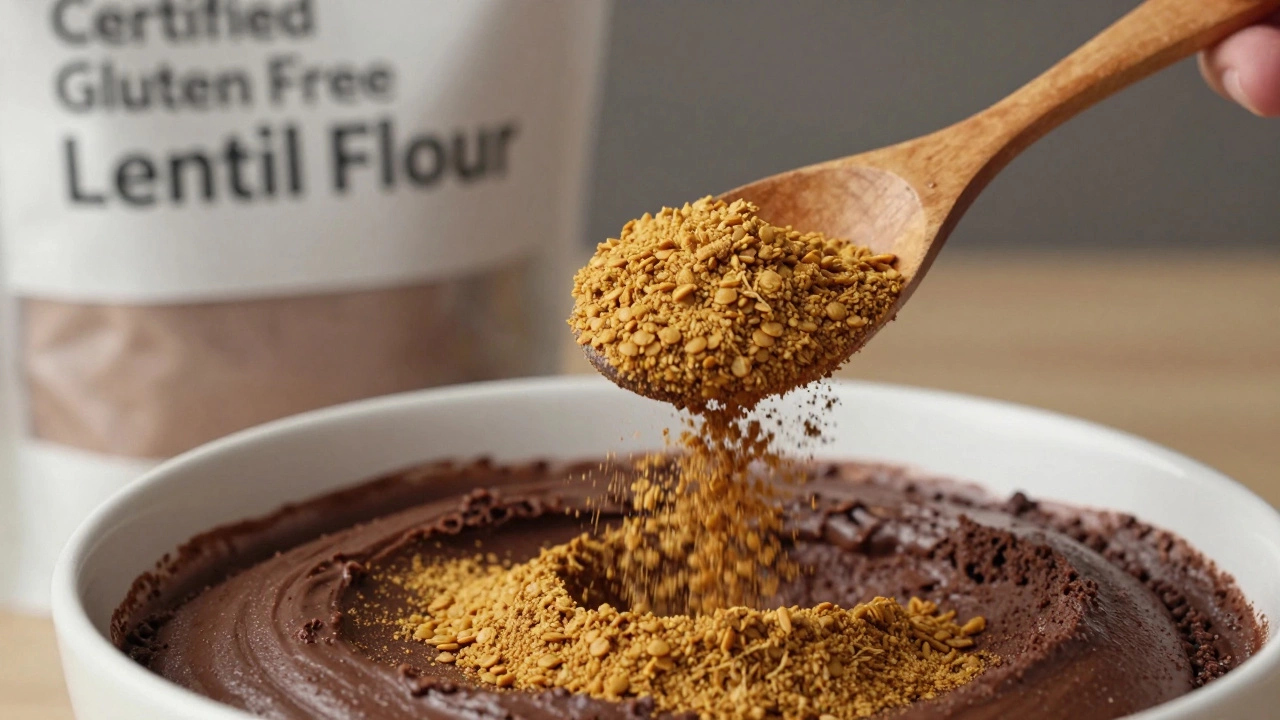
Lentils are naturally gluten-free and safe for gluten-free baking, but cross-contamination can be a risk. Learn how to use lentil flour in cakes, what to avoid, and how to pick the safest products.