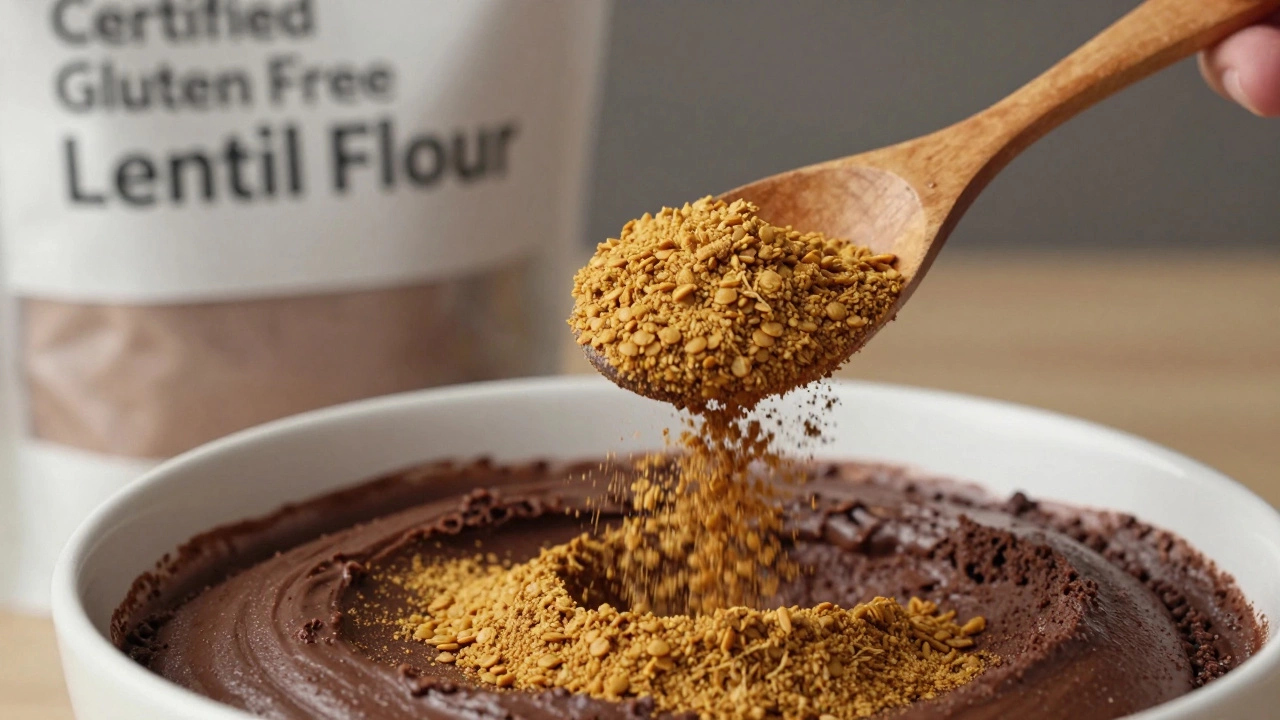
Gluten-Free Lentil Flour Ratio Calculator
How to Use This Calculator
Lentil flour works best in gluten-free baking when used in moderation. This calculator helps you determine the safe amount based on the article's recommendation: no more than 25% of total flour blend.
Use this tool to find out exactly how much lentil flour to use in your recipe.
When you’re baking gluten-free cakes, every ingredient matters. You check the flour, the baking powder, even the vanilla extract. But what about lentils? If you’re using them in a cake batter, a brownie, or even a flour substitute, you need to know: are lentils gluten-free? The short answer is yes - but there’s more to it than that.
Lentils are naturally gluten-free
Lentils are legumes, not grains. They grow in pods like peas and beans, and they don’t contain gluten proteins. Gluten is found in wheat, barley, rye, and their crossbred varieties. Lentils have none of those. That means plain, unprocessed lentils - whether red, green, brown, or black - are safe for people with celiac disease or gluten sensitivity.
The U.S. Food and Drug Administration (FDA) defines gluten-free as containing less than 20 parts per million (ppm) of gluten. Pure lentils naturally fall far below that threshold. In fact, they’re often used in gluten-free flour blends because they’re high in protein and fiber, and they add structure to baked goods without needing gluten.
But packaged lentils might not be
Here’s where things get tricky. While lentils themselves don’t contain gluten, they can become contaminated during farming, processing, or packaging. Many farms grow wheat and lentils in rotation. Shared equipment at processing plants can leave behind traces of gluten. A 2023 study by the Celiac Support Association tested 42 brands of packaged lentils and found that 8% had detectable gluten levels above 20 ppm - not because lentils have gluten, but because of cross-contact.
If you’re baking gluten-free cakes and want to use lentil flour or whole cooked lentils in your recipe, always look for a “gluten-free” label. That means the product was processed in a dedicated facility and tested to meet FDA standards. Don’t assume a bag labeled “organic” or “natural” is safe - those terms don’t guarantee gluten-free status.
How lentils work in gluten-free baking
Lentil flour is becoming popular in gluten-free baking because it’s nutrient-dense and adds a rich, earthy flavor. It’s often blended with rice flour, tapioca starch, or almond flour to balance texture. One tablespoon of lentil flour adds about 2 grams of protein and 3 grams of fiber - something white rice flour can’t match.
Many bakers use lentil flour in dense cakes, brownies, and muffins. It works especially well in chocolate-based recipes because its mild bitterness complements cocoa. You won’t taste lentils if you use it in moderation - usually no more than 25% of the total flour blend. Too much can make the final product gritty or overly dense.
Some gluten-free cake recipes even call for cooked, pureed lentils. Think of it like using mashed beans in brownies. The lentils add moisture and structure without needing eggs or dairy. A 2024 test by a gluten-free bakery in Portland replaced 30% of the flour in a chocolate cake with blended cooked red lentils. The cake held together well, stayed moist for five days, and had 40% more protein than the control.
What to avoid when using lentils in gluten-free baking
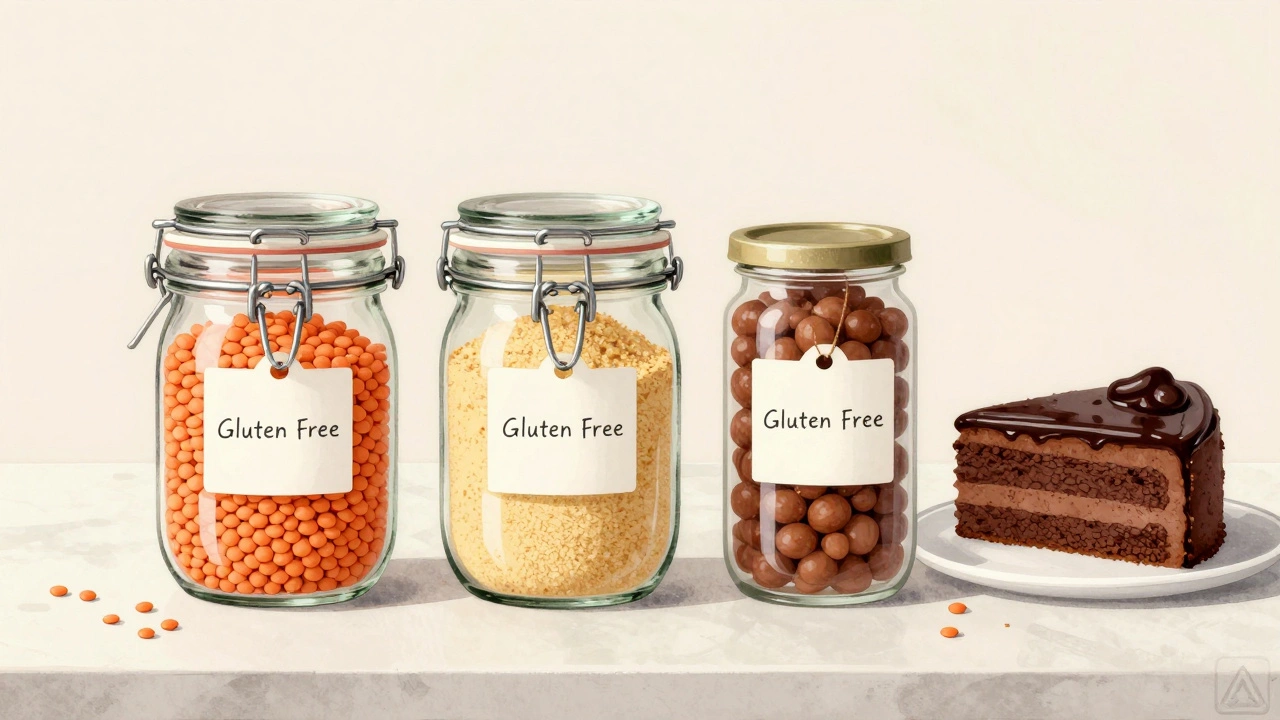
Not all lentil products are equal. Avoid:
- Pre-seasoned lentils - those often contain wheat-based thickeners or malt vinegar
- Lentil pasta or snacks - even if they say “lentil-based,” they might include wheat flour for texture
- Lentils from bulk bins - even if they look clean, shared scoops can carry gluten residue
- Instant lentil soups or meal kits - many contain barley or wheat-based flavorings
Stick to plain, dry lentils from sealed bags labeled gluten-free. If you’re grinding your own flour, use a dedicated coffee grinder or food processor that’s never touched wheat flour.
Real-world use: Gluten-free lentil cake recipe tip
Try this simple swap: replace 1/4 cup of almond flour in your favorite gluten-free chocolate cake with 1/4 cup of finely ground red lentil flour. Add an extra teaspoon of baking powder to help lift the batter. The cake will be slightly denser, but richer in protein and iron. Pair it with a dairy-free ganache and you’ve got a dessert that’s not just safe - it’s nutritionally smarter than most store-bought gluten-free cakes.
Many people with celiac disease report better digestion and fewer bloating issues when they use legume-based flours like lentil or chickpea instead of rice or potato flour. That’s because lentil flour has a lower glycemic index and more resistant starch - which means slower sugar release and longer fullness.
Other gluten-free legumes you can use
Lentils aren’t the only safe legume for gluten-free baking. Chickpeas, black beans, and peas are all naturally gluten-free and can be ground into flour. Chickpea flour (also called gram flour) is common in Indian and Mediterranean baking. Black bean flour works well in brownies and cookies. Pea flour is neutral in flavor and great for blending.
Just like with lentils, always choose certified gluten-free versions. Even though these legumes don’t contain gluten, the risk of cross-contamination is real - especially with products sold in bulk or imported from countries with less strict labeling laws.
What about lentil sprouts or canned lentils?
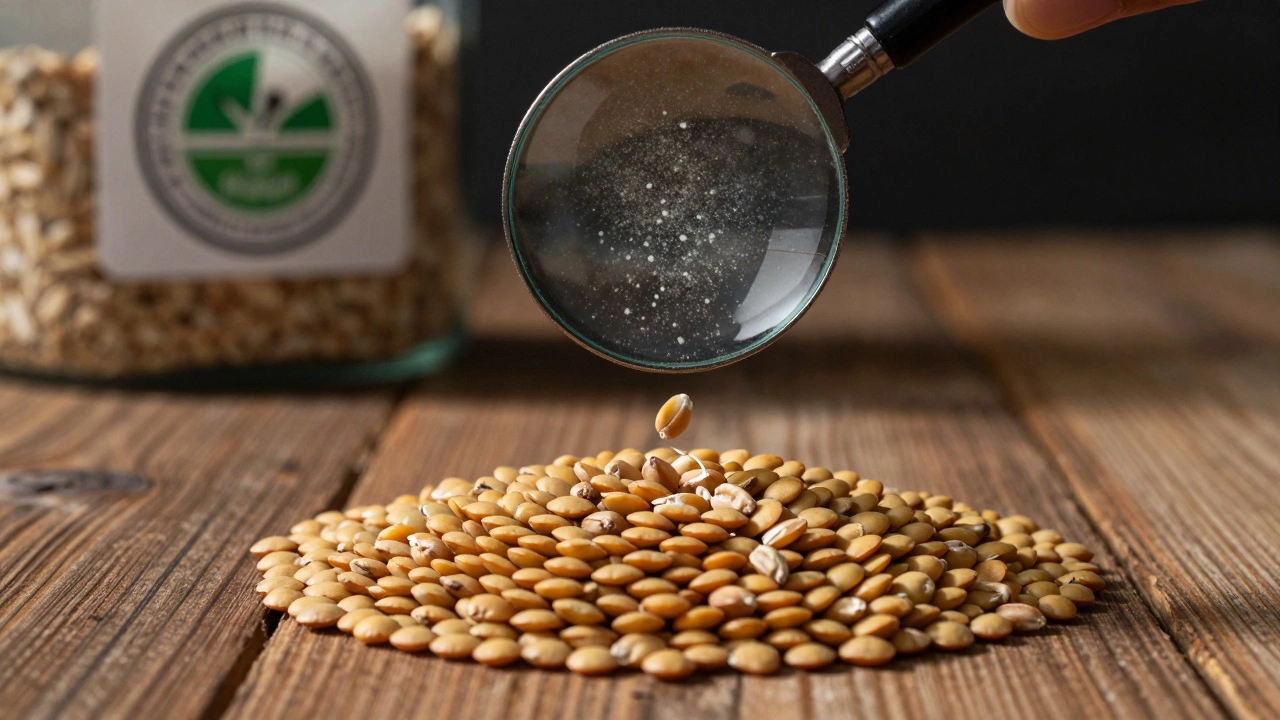
Sprouted lentils are just as safe as dried ones - if they’re grown and packaged without gluten exposure. Canned lentils are usually fine, but check the ingredients. Some brands add modified food starch or maltodextrin, which can come from wheat. Look for cans with only lentils and water - maybe salt. No extra ingredients means no hidden gluten.
One brand to watch: Eden Foods. Their canned lentils are certified gluten-free and processed in a dedicated facility. Many home bakers use their lentils to make purees for cake fillings or frostings.
Final checklist for gluten-free baking with lentils
- Always choose lentils labeled “gluten-free” - never rely on “natural” or “organic” alone
- Use lentil flour in moderation - no more than 25% of total flour in a recipe
- Grind your own flour in a clean, dedicated grinder
- Avoid pre-cooked or seasoned lentils unless they have a gluten-free certification
- Store lentil flour in an airtight container in the fridge - it goes rancid faster than wheat flour
- Test your baked goods with a gluten test strip if you’re highly sensitive - they’re cheap and reliable
Using lentils in gluten-free baking isn’t just a workaround - it’s an upgrade. You’re not sacrificing flavor or texture. You’re adding nutrients, fiber, and plant-based protein that most gluten-free flours lack. The key is being smart about sourcing and handling.
Are lentils naturally gluten-free?
Yes, lentils are naturally gluten-free because they’re legumes, not grains. They don’t contain wheat, barley, or rye proteins. However, cross-contamination during farming or processing can introduce gluten, so always choose certified gluten-free lentils if you have celiac disease or a severe sensitivity.
Can I use lentil flour in gluten-free cakes?
Yes, lentil flour works well in gluten-free cakes, especially chocolate or spice cakes. It adds protein, fiber, and structure. Use it as up to 25% of your total flour blend. Pair it with lighter flours like rice or tapioca starch to avoid a dense or gritty texture.
Do canned lentils contain gluten?
Plain canned lentils with only lentils and water are gluten-free. But some brands add thickeners like modified food starch or maltodextrin, which can come from wheat. Always check the ingredient list. Choose brands with a gluten-free certification for safety.
Why do some gluten-free recipes use lentils?
Lentils boost nutrition in gluten-free baking. Most gluten-free flours are low in protein and fiber. Lentil flour adds both, improves moisture retention, and helps baked goods hold their shape without eggs or dairy. It’s especially useful in vegan and high-protein recipes.
Can I grind lentils at home for flour?
Yes, but use a clean, dedicated grinder that’s never touched wheat or gluten-containing grains. Wash and dry lentils thoroughly before grinding. Store the flour in the fridge - it can turn rancid faster than wheat flour due to its higher fat content.
Next steps if you’re new to lentil baking
Start small. Try replacing just one tablespoon of flour in your favorite gluten-free cookie recipe with lentil flour. Taste it. Note how the texture changes. Then try a 1:4 ratio in a cake. Keep a baking journal - write down what worked, what didn’t, and which brand of lentils you used.
Once you get comfortable, experiment with blending lentil flour with other legume flours like chickpea or pea flour. You’ll find that combining them creates a more balanced flavor and texture than using any single one.
And remember: gluten-free baking isn’t about making things taste like the original. It’s about making something new that’s just as satisfying - and often healthier. Lentils are a powerful tool in that kitchen.