Gluten Cross-Contamination: How to Avoid It in Your Kitchen
When you're following a gluten cross-contamination, the accidental mixing of gluten into foods that should be gluten-free. Also known as gluten exposure, it’s not about what’s in the ingredient list—it’s about what’s on your knife, your toaster, or your mixing bowl. Even a tiny crumb of bread can trigger reactions in people with celiac disease or gluten sensitivity. You don’t need to be a professional baker to cause this. It happens in home kitchens every day—because most people don’t realize how easily gluten spreads.
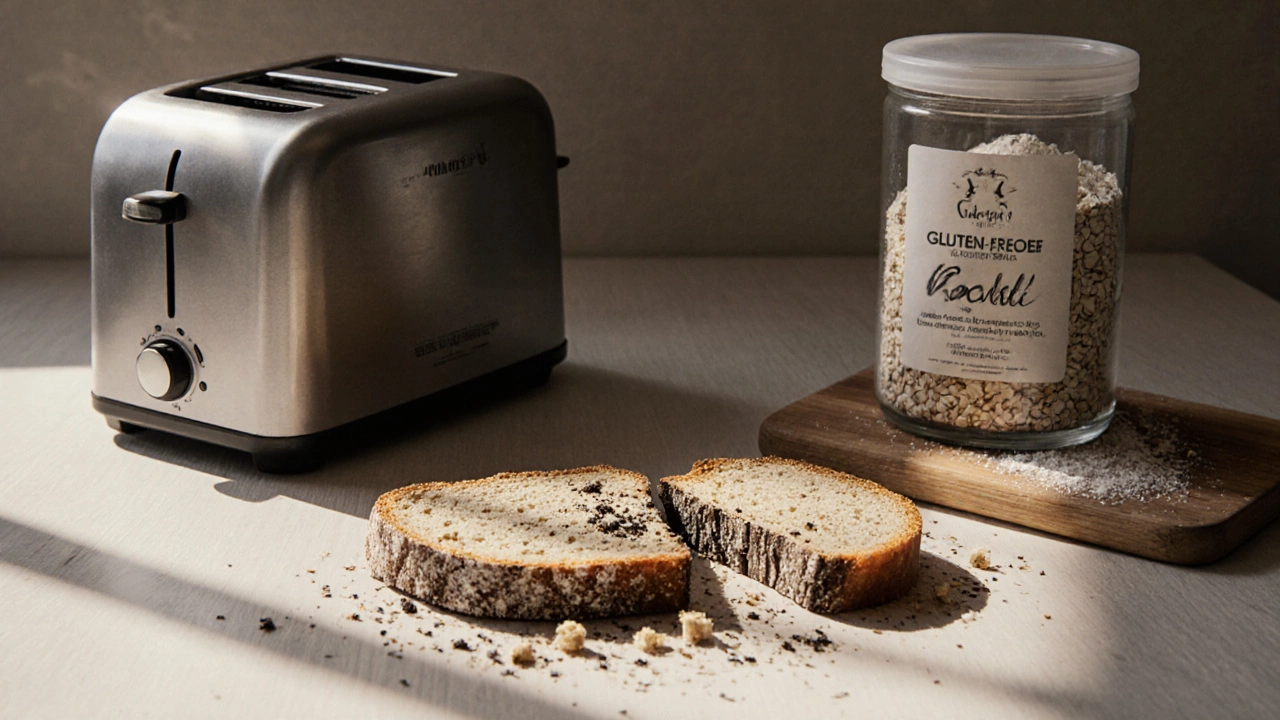
Think about your toaster. If you toast regular bread and then put a gluten-free bagel in it, those crumbs? They’re still there. Same with shared cutting boards, colanders, or even a spoon you used to stir pasta. gluten-free baking, baking without wheat, barley, or rye. Also known as gluten-free cooking, it requires more than just swapping flour—you need a clean workspace. A study from the University of Maryland found that 35% of people with celiac disease still had symptoms even after going gluten-free—because of cross-contamination, not the food itself. That’s not a failure of diet. It’s a failure of awareness.
And it’s not just about the food. hidden gluten, gluten hiding in sauces, spices, supplements, or even lipstick. Also known as stealth gluten, it shows up where you least expect it. Your soy sauce might have wheat. Your oats might be processed in the same facility as wheat. Your butter knife? It touched peanut butter that had a crumb of toast stuck to it. These aren’t myths. They’re real risks that show up in your kitchen, even if you’re careful.
So what do you actually need to do? Start with one thing: separate your tools. Buy a dedicated toaster for gluten-free bread. Use color-coded cutting boards. Wash everything thoroughly—don’t just rinse. Store gluten-free flour in a sealed container, away from wheat flour. If you’re baking for someone with celiac disease, clean surfaces with a disinfectant, not just a damp cloth. These aren’t extreme steps. They’re basic hygiene for anyone serious about gluten-free living.
You’ll find posts here that break down what foods hide gluten, why your Greek yogurt might not be safe, and how to fix crumbly gluten-free cakes caused by cross-contamination. These aren’t theory lessons. They’re real fixes from people who’ve been there—baking in shared kitchens, raising kids with allergies, or managing their own health after a diagnosis. This isn’t about perfection. It’s about reducing risk, one clean spoon at a time.
Discover the hidden foods that can trigger gluten intolerance symptoms, from soy sauce to restaurant fries, and learn how to bake safe, delicious gluten-free cakes without cross-contamination.