Macaron Flavor Pairing Calculator
Create Your Custom Macaron
Flavor Profile
Your macaron combination
Macarons aren’t just pretty cookies-they’re flavor bombs in a delicate shell. If you’ve ever stood in front of a bakery case wondering how many flavors actually exist, you’re not alone. The truth? There’s no fixed number. But that doesn’t mean there’s no structure. From classic vanilla to wild combinations like matcha white chocolate or rosemary olive oil, macarons have exploded into a global art form with hundreds of variations. And it’s not just about the filling. The shell itself can change everything.
What Makes a Macaron Flavor?
Most people think macaron flavor means the filling. But it’s more than that. The shell-made from almond flour, powdered sugar, and egg whites-can be flavored too. A hint of cocoa powder in the batter, a sprinkle of freeze-dried raspberry powder, or even matcha mixed into the dry ingredients changes the whole experience. Then comes the filling: buttercream, ganache, jam, curd, or even cream cheese. Each layer adds its own flavor profile.
So when someone asks how many flavors exist, they’re really asking: how many ways can you combine shell, filling, and accent notes? The answer? Almost infinite. But there are clear categories that most bakers follow.
Classic Macaron Flavors (The Timeless Favorites)
These are the ones you’ll find in every Parisian patisserie and most high-end bakeries. They’re not trendy-they’re trusted. And for good reason.
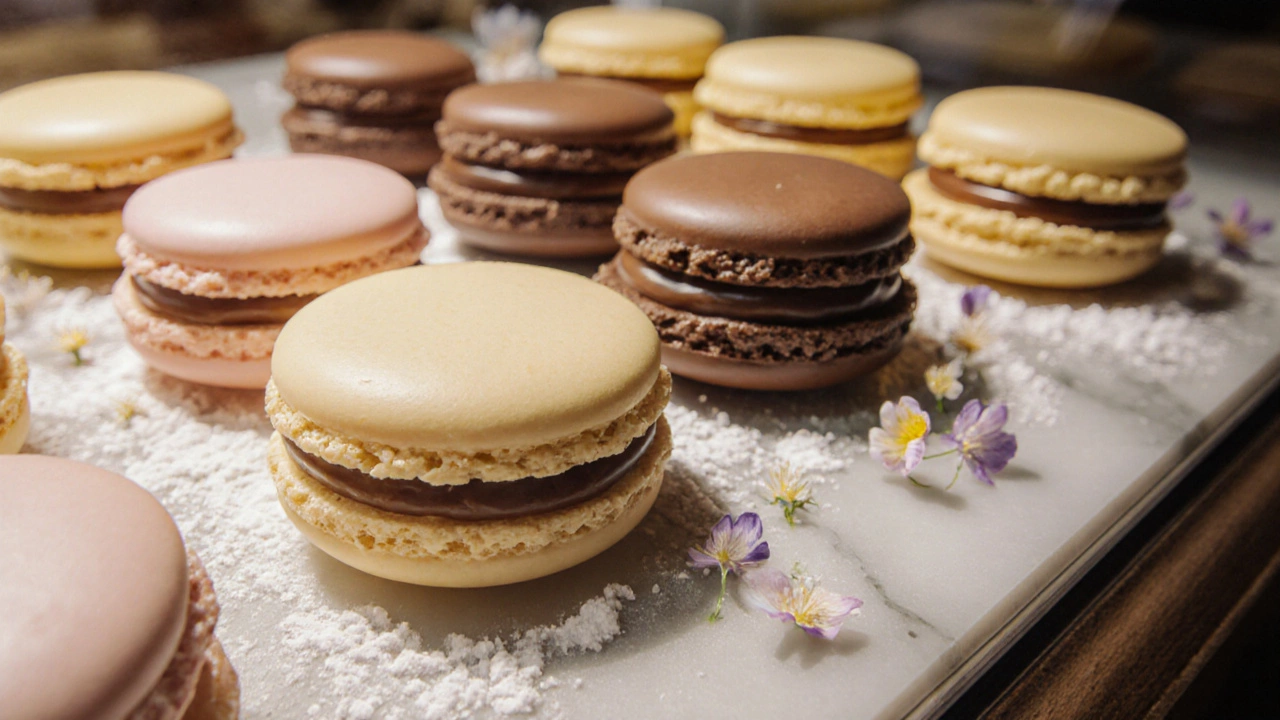
- Vanilla - Often paired with vanilla bean buttercream or vanilla ganache. Simple, elegant, and perfect for beginners.
- Chocolate - Dark, milk, or white chocolate ganache. Sometimes the shells are dusted with cocoa powder.
- Strawberry - Usually a strawberry jam or coulis filling with a hint of natural flavoring. Bright, sweet, and colorful.
- Lemon - Tart lemon curd inside, sometimes with a hint of zest in the shell. A refreshing contrast to the sweet cookie.
- Espresso - Coffee-infused ganache or buttercream. A favorite among adults who want a little kick.
These five are the foundation. If you’re new to macarons, start here. They’re forgiving, widely loved, and teach you the balance between sweetness and texture.
Modern Macaron Flavors (The Creative Explosion)
Over the last decade, macarons have become a canvas for innovation. Bakers are experimenting with global ingredients, unexpected pairings, and even savory notes.
- Matcha - Green tea powder in both shell and filling. Earthy, slightly bitter, and beautifully vibrant.
- Red Velvet - Cocoa shell with cream cheese filling. A nod to American baking culture.
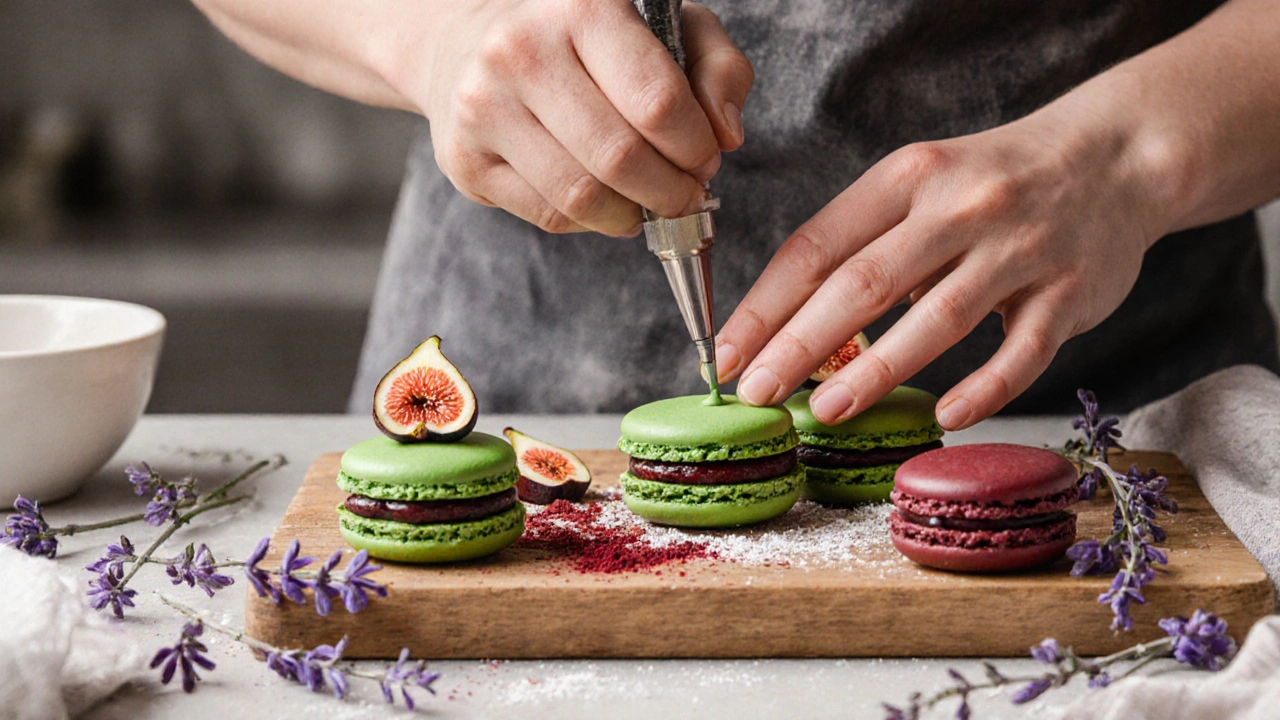
- Blueberry Lavender - A floral, fruity combo that’s surprisingly balanced. Often uses lavender-infused honey in the filling.
- Balsamic Fig - Sweet fig jam with a splash of aged balsamic vinegar. Deep, complex, and not as sweet as you’d expect.
- Salted Caramel - Still wildly popular. The salt cuts through the sugar, making it addictive.
- Pistachio - Ground pistachios in the shell, paired with pistachio cream or ganache. Nutty and rich.
- Coconut Lime - Tropical vibes with shredded coconut in the shell and lime curd inside.
These aren’t just flavors-they’re stories. A bakers’ way of blending cultures, memories, and seasons into a single bite.
Savory Macarons? Yes, They Exist
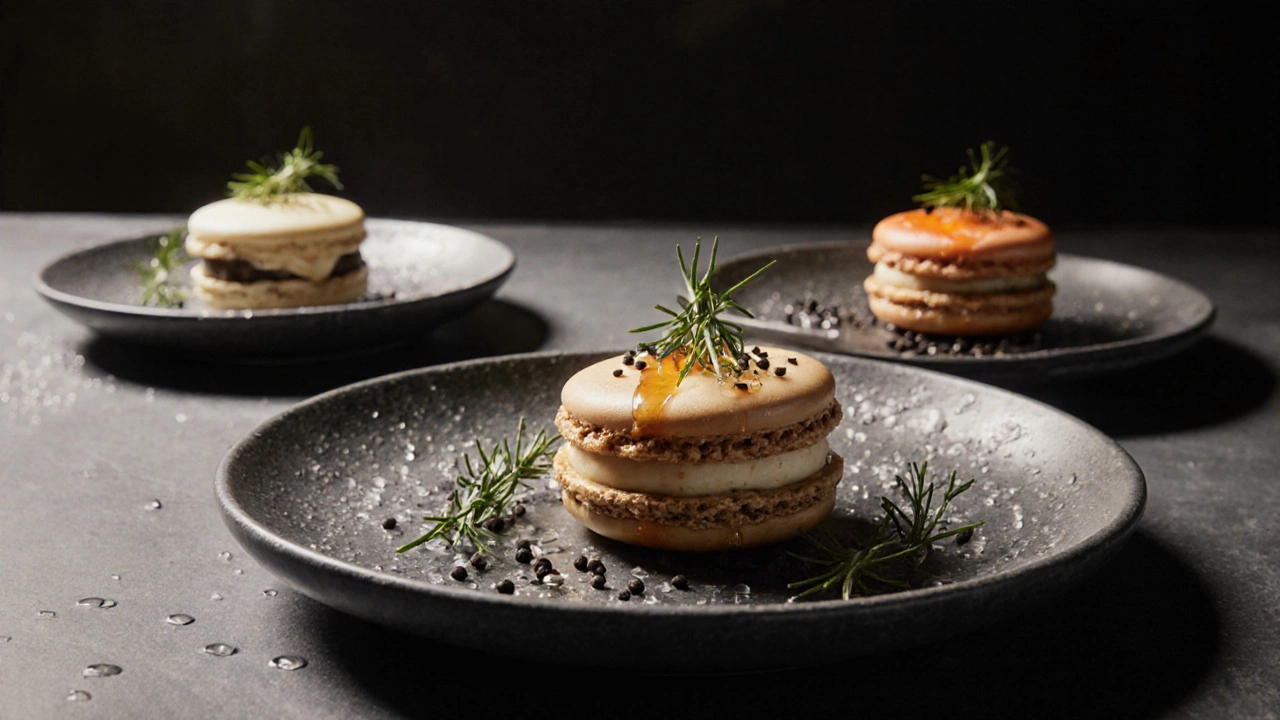
Most people think macarons are strictly sweet. But savory versions have been popping up in high-end restaurants and food festivals since 2020. They’re not common in home kitchens, but they’re real.
- Goat Cheese & Honey - Creamy goat cheese filling with a drizzle of wildflower honey. The shell is often made with herbs like thyme.
- Truffle & Parmesan - Earthy truffle oil mixed into a cheese ganache. The shell has a hint of black pepper.
- Smoked Salmon & Dill - A chilled cream cheese filling with real smoked salmon flakes. Served chilled, not at room temperature.
These are usually served as appetizers at tasting menus. They’re not sold in bulk like sweet ones, but they prove macarons can go beyond dessert.
Seasonal and Holiday Macarons
Macarons change with the calendar. In December, you’ll see peppermint, gingerbread, and eggnog. In spring, you’ll find elderflower, peach, and violet. Summer brings mango, passionfruit, and coconut. Fall? Pumpkin spice, apple cider, and maple walnut.
These aren’t gimmicks. They’re intentional. Bakers use seasonal ingredients because they taste better and are fresher. A pumpkin spice macaron made in October with real roasted pumpkin puree tastes nothing like the one made in July with artificial flavoring.
How Many Flavors Are There Really?
Let’s get real. If you count every single variation-every different fruit, spice, herb, alcohol, or cheese-you’re talking about thousands. A single bakery in Lyon might offer 30 flavors at once. A high-end Parisian house like Ladurée has had over 100 in their lifetime. Online, you’ll find bloggers listing 50+ recipes.
But here’s the practical answer: if you’re making macarons at home, you don’t need 100 flavors. You need 5 to 10 that you love. Master those. Then experiment. The magic isn’t in the number-it’s in the balance of texture, sweetness, and flavor intensity.
What’s Missing? Common Mistakes
Many people think adding more flavor = better macaron. But that’s not true. Over-flavoring ruins the delicate structure. Too much extract can make the filling too wet. Too much food coloring can alter the batter’s pH and cause cracks.
Here’s what actually works:
- Use powdered extracts (like freeze-dried fruit powder) instead of liquid extracts. They don’t add moisture.
- Infuse flavors into the filling slowly. Steep lavender in cream overnight, not for 10 minutes.
- Test small batches. Make just 6 macarons with a new flavor before committing to a full tray.
- Balance sweet and tart. A hint of lemon or vinegar cuts through sugar and makes flavors pop.
Where to Find New Macaron Flavors
Want to try something new? Skip the supermarket. Head to local artisan bakeries. Look for pop-ups at farmers markets. Follow macaron artists on Instagram-they often post limited-edition flavors. In Bristol, bakeries like The Macaron Room and Flour & Co. rotate seasonal flavors every 6 weeks.
Or try this: take a flavor you love in another dessert-say, tiramisu or key lime pie-and turn it into a macaron. That’s how most new flavors start.
Final Thought: It’s Not About Quantity
There are hundreds of macaron flavors. Maybe thousands. But the best ones? The ones that surprise you without overwhelming you. A perfect macaron isn’t loud. It’s quiet. It’s the kind of bite that makes you pause. The shell cracks gently. The filling melts. The flavor lingers-not because it’s strong, but because it’s real.
So don’t count the flavors. Taste them. Start with one you’ve never tried. Then another. And keep going.
Are there really thousands of macaron flavors?
Technically, yes. Every bakery, chef, and home baker creates their own variations. Some use unique ingredients like yuzu, black sesame, or even chili chocolate. But most commercial bakeries stick to 15-40 flavors at a time. The real number is infinite because anyone can combine flavors in new ways.
What’s the most popular macaron flavor worldwide?
Salted caramel remains the top seller globally. It’s sweet, salty, and creamy-perfect for first-timers and longtime fans. In Europe, raspberry and vanilla lead. In Asia, matcha and red bean are more popular. Flavor preferences vary by region, but salted caramel crosses cultures.
Can you make macarons without food coloring?
Absolutely. Many bakers skip artificial dyes entirely. Natural color comes from ingredients like beetroot powder (pink), spirulina (blue-green), matcha (green), or cocoa powder (brown). The shells might be more muted, but the flavor is purer and the texture often better.
Do macaron flavors affect how they bake?
Yes. Adding wet ingredients like fruit purees or citrus zest can throw off the batter’s moisture balance. Dry powders like matcha or cocoa are safer. Too much liquid = cracked shells or hollows. Always adjust the recipe if you’re adding anything beyond extracts or powders.
Are savory macarons safe to eat?
Yes, if made properly. Savory macarons are usually served chilled and eaten fresh. They’re not meant to sit out like sweet ones. Fillings should be stable-like cream cheese or ganache with low moisture. Always refrigerate them and consume within 24 hours.