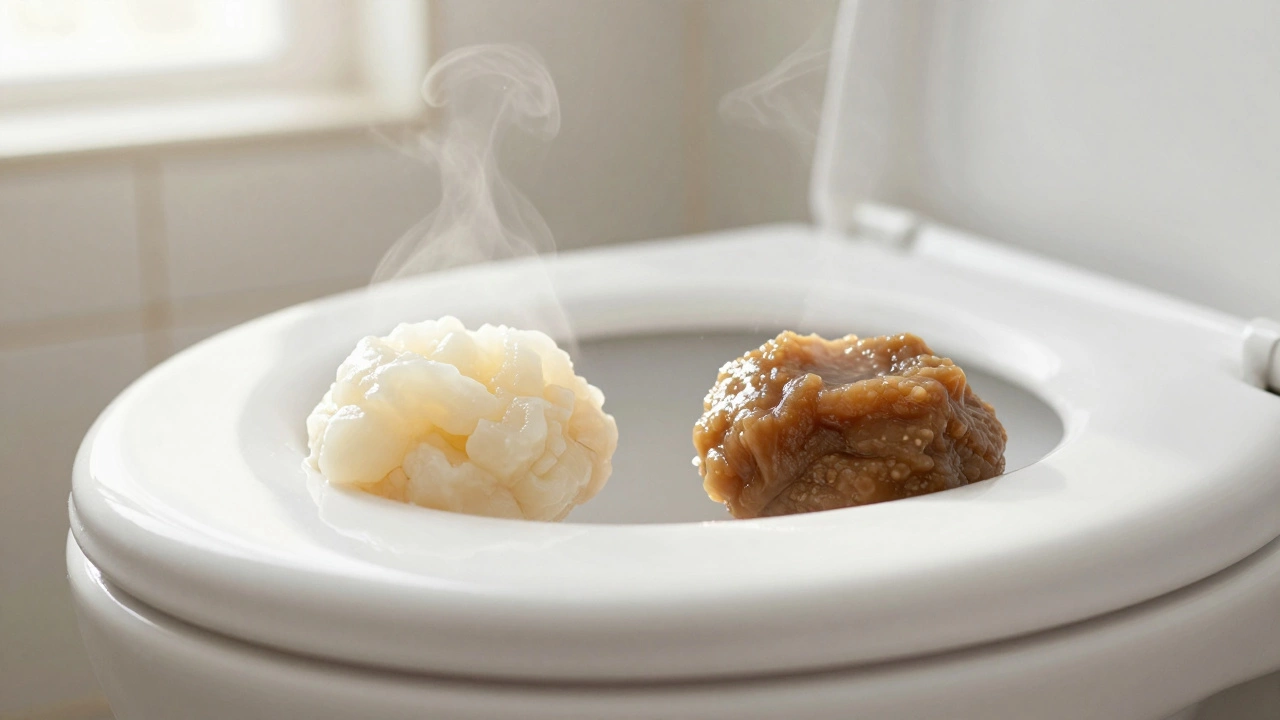
When you first cut out gluten, your body doesn’t just stop craving bread-it starts rewriting how it handles everything you eat. For a lot of people, the biggest surprise isn’t how their skin clears up or how their energy spikes. It’s what happens in the bathroom.
Before going gluten-free, many people deal with bloating that lasts all day, loose stools that come out of nowhere, or constipation that feels like a brick wall. Some think it’s just stress or bad luck. Others blame dairy, caffeine, or too much sugar. But when gluten’s the real culprit, removing it doesn’t just make you feel better-it changes your poop in ways you can’t ignore.
Your poop before gluten-free
If you were eating gluten regularly-bread, pasta, cookies, cakes, even soy sauce or processed snacks-you might have noticed your bowel habits were unpredictable. Stools that were either too watery or too hard. Frequent trips to the bathroom, especially after meals. A feeling of incomplete evacuation. Smelly gas that wouldn’t quit. These aren’t normal. They’re signs your gut is irritated.
A 2021 study tracking over 2,000 people with undiagnosed gluten sensitivity found that 73% reported irregular bowel movements before eliminating gluten. Of those, 61% said their stools were consistently loose or mushy. Another 22% struggled with constipation so bad they needed laxatives. Only 17% said their digestion felt regular.
That’s not just ‘a little off.’ That’s your immune system reacting to gluten proteins, triggering inflammation in the small intestine. When the lining gets damaged, nutrients don’t absorb right. Water rushes in. Waste moves too fast-or gets stuck. And the smell? That’s undigested food fermenting in the wrong place.
What changed after going gluten-free
Within days to a couple of weeks, people who cut out gluten start noticing shifts. Not always overnight, but fast enough to know something’s different.
First, the frequency drops. Instead of three or four bowel movements a day, it’s usually one-solid, well-formed, and predictable. No more mid-meeting dashes. No more anxiety about where the nearest bathroom is.
Then, the texture. Gone are the mushy, floating stools. What’s left is dense, brown, and sinks slowly. That’s a sign your gut lining is healing. Your pancreas and liver are working better. Your bile flow is normal. Your microbiome is rebalancing.
Odor improves too. No more that sharp, sour, rotten-egg smell. It becomes more earthy, less offensive. People often say, ‘I didn’t realize my poop used to stink this bad until it didn’t.’
And the urgency? Disappears. No more sudden, uncontrollable urges. No more waking up at 3 a.m. because your gut decided it was time. You start feeling like your body and your bowels are finally on the same team.
It’s not just about celiac disease
You don’t need a diagnosis of celiac disease to feel this change. In fact, most people who notice dramatic improvements in their digestion after going gluten-free don’t have celiac. They have non-celiac gluten sensitivity (NCGS)-a real, measurable condition.
Celiac is an autoimmune disorder. Your body attacks your own intestines when gluten shows up. NCGS is different. It’s more like your gut is overwhelmed. It can’t process gluten cleanly. The result? Inflammation, gas, bloating, and messy stools.
There’s no blood test for NCGS. No biopsy. Doctors often dismiss it. But the evidence is in the poop. When you remove gluten and your bowel habits normalize? That’s your body telling you what it needed all along.
What if your poop doesn’t change?
Not everyone sees a difference. And that’s okay-but it means something else is going on.
If you went gluten-free and your stools are still irregular, smelly, or painful, gluten wasn’t the problem. Maybe it’s FODMAPs-fermentable carbs in onions, garlic, apples, or beans. Maybe it’s dairy. Maybe it’s low stomach acid, small intestinal bacterial overgrowth (SIBO), or even stress.
One woman I talked to cut out gluten for three months. Her bloating didn’t budge. Then she tried cutting out dairy. Within a week, her stools became regular for the first time in years. Gluten was a red herring. Lactose was the real issue.
Going gluten-free isn’t a magic cure. It’s a diagnostic tool. If your poop improves, you’ve found a trigger. If it doesn’t, you’ve ruled something out. Either way, you’re closer to the truth.
What about gluten-free cakes?
Here’s the catch: just because a cake says ‘gluten-free’ doesn’t mean it’s healthy-or easy on your gut.
Many gluten-free cakes swap wheat flour for rice flour, potato starch, or tapioca. These are all highly processed carbs. They spike blood sugar fast. They feed bad bacteria. And they can cause the same bloating and loose stools as gluten-just with a different name on the label.
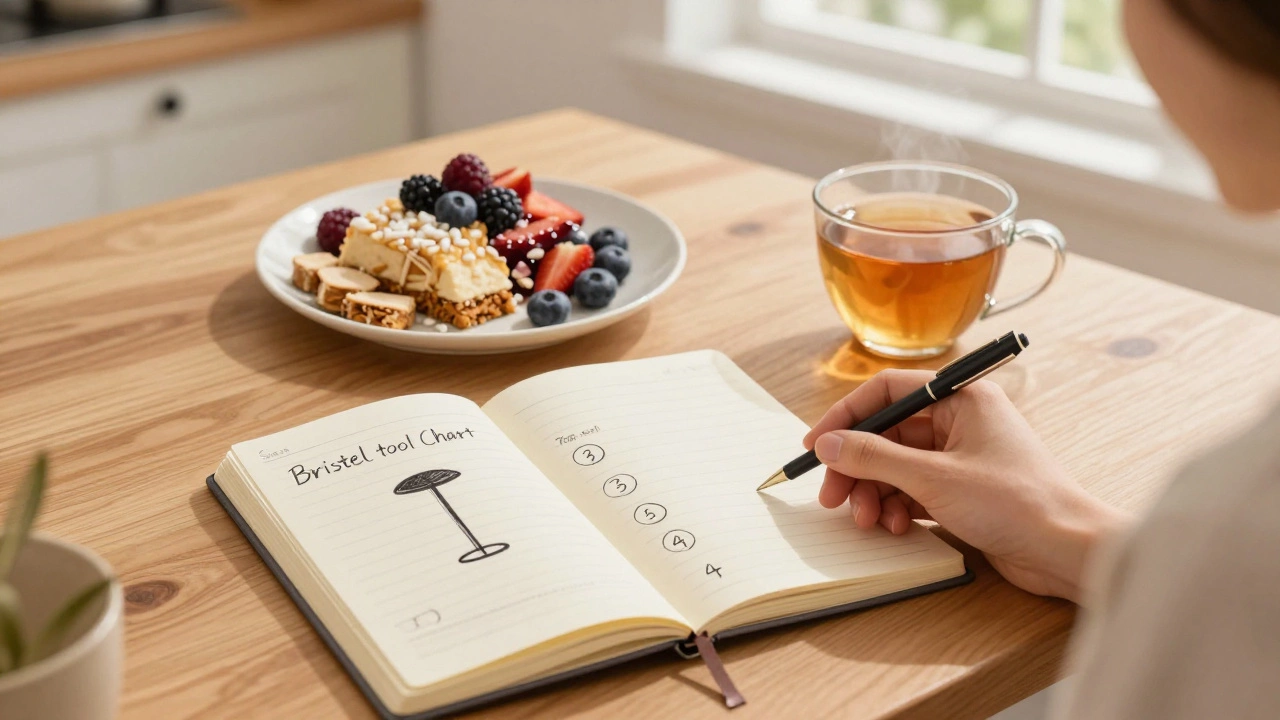
One person I spoke to went gluten-free but ate gluten-free cakes every weekend. Her stools stayed loose. She thought she was doing everything right. Then she started eating whole-food, low-sugar desserts-almond flour cakes, coconut yogurt parfaits, fruit-based treats. Her digestion cleared up in days.
Gluten-free doesn’t mean auto-immune-friendly. It just means no wheat. Your gut still cares about sugar, additives, and how processed your food is.
How to track your progress
Don’t guess. Track it.
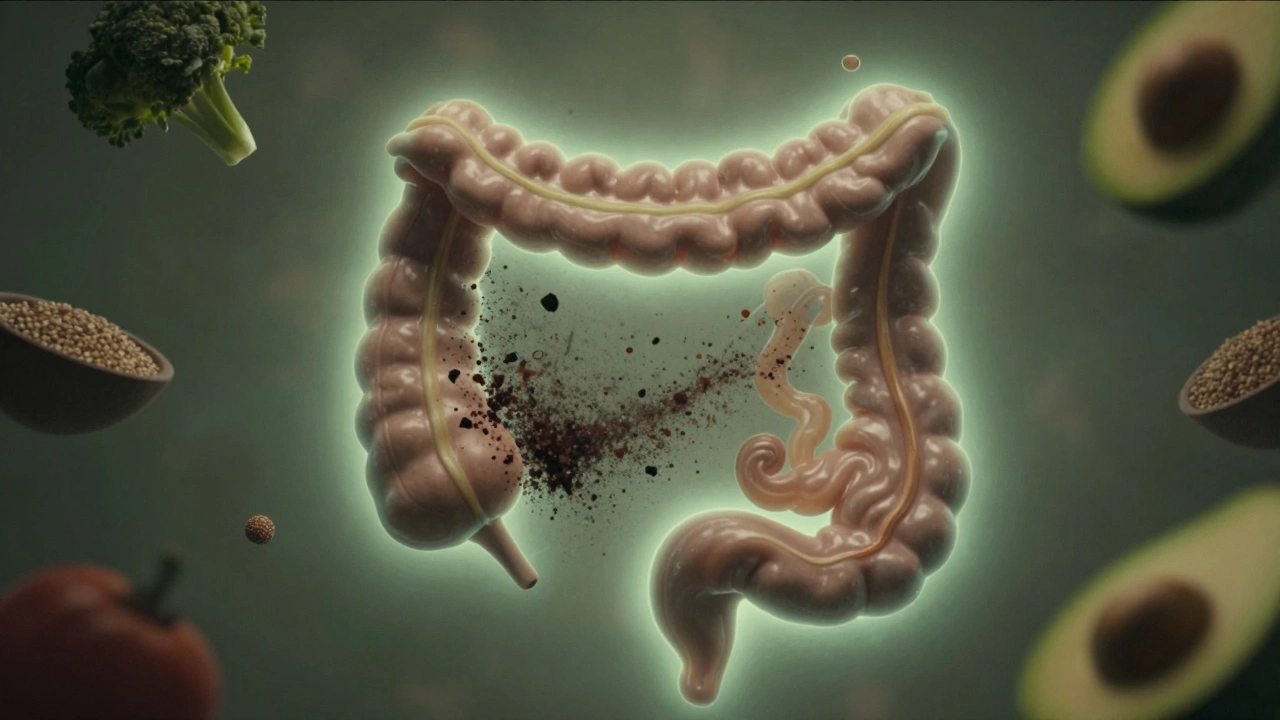
For two weeks before going gluten-free, write down:
- How often you poop
- What it looks like (use the Bristol Stool Chart: Type 3-4 is ideal)
- How much gas you have
- Any pain or urgency
- What you ate the day before
Then, after 30 days off gluten, do it again. Compare. Look for patterns. You’ll see it clearly.
Some people use apps like MySymptoms or Bowel Diary. Others just use a notebook. Doesn’t matter. Just write it down.
What to eat instead
Forget the gluten-free junk food aisle. Focus on real food:
- Vegetables-especially leafy greens, broccoli, zucchini
- Fruits-berries, apples, bananas
- Lean proteins-chicken, fish, eggs, tofu
- Healthy fats-avocado, olive oil, nuts
- Gluten-free whole grains-quinoa, buckwheat, millet, oats (if certified gluten-free)
And if you want cake? Make it yourself. Use almond flour, coconut flour, or oat flour. Sweeten with maple syrup or dates. Skip the xanthan gum and artificial gums. Your gut will thank you.
It’s not just about digestion
When your gut settles down, other things improve too. Brain fog lifts. Skin clears. Joint pain fades. Mood steadies. Sleep gets deeper.
That’s because your gut and your brain are wired together. Inflammation in your intestines sends signals to your nervous system. Remove the trigger, and your whole body relaxes.
Going gluten-free isn’t a fad. For millions, it’s the missing piece. And for many, the first sign it’s working isn’t how they feel on the outside. It’s what happens on the inside.
So if you’ve been wondering why your digestion feels off-try it. Cut out gluten for 30 days. Eat clean. Track your poop. See what changes.
You might be surprised at how much better your body feels-starting from the bottom up.