Brownie Flavor Development Calculator
How Long to Wait for Perfect Flavor
Calculate your ideal waiting time based on baking method.
Flavor Development Key
Perfect bake: Center jiggles slightly when shaken
Underbaked: Very jiggly center, more moisture
Overbaked: Minimal jiggle, dry texture
Enter your baking time and click calculate to see optimal waiting time.
Ever bitten into a brownie fresh out of the oven and thought, “This is good…”-only to find out the next day it’s somehow even better? You’re not imagining it. There’s a real science behind why brownies improve overnight. It’s not magic. It’s chemistry, moisture redistribution, and flavor melding working quietly while you sleep.
The Science of Flavor Development
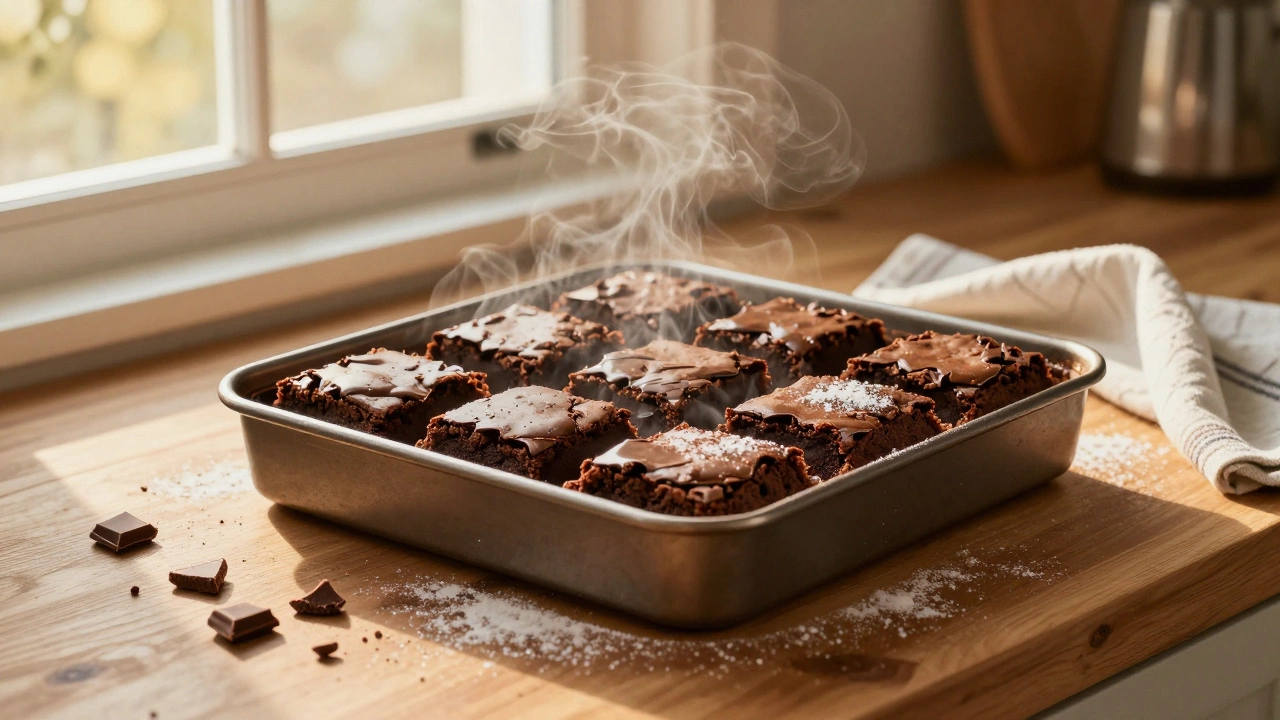
When brownies come out of the oven, they’re hot, wet, and full of steam. The chocolate and sugar haven’t fully settled. The fats are still liquid, and the cocoa particles are scattered unevenly. Over the next 12 to 24 hours, those ingredients start to reorganize. The moisture slowly moves from the center to the edges, softening the texture without making it soggy. The sugars crystallize just enough to give that signature chewy bite, not the crumbly mess you get right after baking.
Meanwhile, the cocoa and chocolate compounds begin to deepen. The bitter notes mellow, and the sweet, earthy undertones become more pronounced. This is the same reason aged wine or slow-cooked stews taste richer-time lets flavors marry. Brownies are no different. The vanilla, the espresso powder if you used it, even the salt-all of it blends into a more unified, complex taste.
Moisture Isn’t the Enemy-It’s the Hero
A lot of people think brownies dry out overnight. They don’t. Not if you store them right. In fact, the opposite happens. The butter and oil in the batter slowly migrate through the structure, coating the flour proteins and keeping the crumb tender. This is why a brownie that feels a little too fudgy on day one becomes perfectly dense and chewy on day two.
Here’s a simple trick: leave your brownies in the pan, covered with foil or a clean kitchen towel, at room temperature. Don’t refrigerate them. Cold temperatures make the fats harden too fast, which dulls the flavor and makes the texture waxy. Room temperature lets the moisture move naturally. If you’re worried about them getting stale, pop them in an airtight container. That locks in the humidity without trapping steam that could make them gummy.
Why Store-Bought Brownies Don’t Improve
If you’ve ever bought a brownie from a store and noticed it tastes the same on day two, that’s because most commercial brownies are made with additives to extend shelf life. Emulsifiers, preservatives, and high-fructose corn syrup keep them soft-but they also stop the natural flavor development you get with real butter, real chocolate, and real sugar. Homemade brownies don’t have those shortcuts. So they have room to evolve.
That’s why bakers who sell brownies often recommend waiting a day before eating them. It’s not just a marketing tactic-it’s a technique. Some high-end bakeries even label their brownies with a “best after 24 hours” sticker. They know what they’re doing.
What Happens If You Wait Too Long?
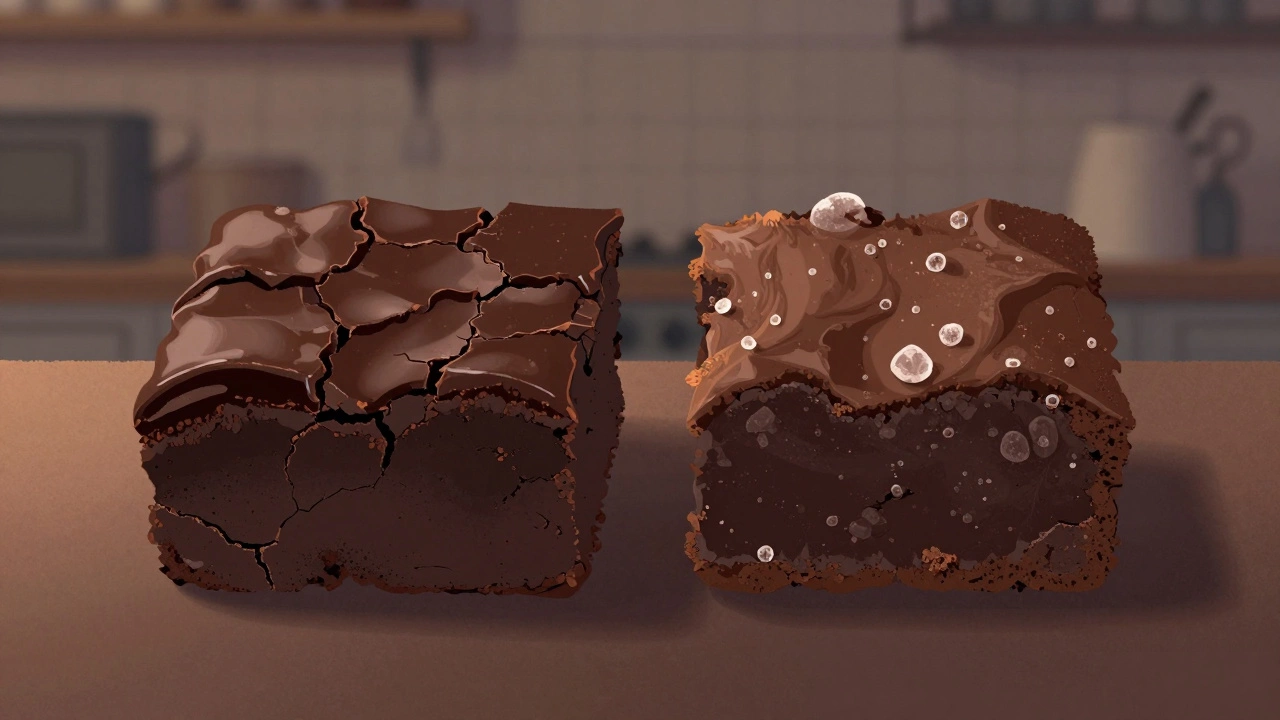
Three days is usually the sweet spot. After that, the edges might start to get a little tougher, especially if your kitchen is dry. The chocolate can also start to bloom-those white streaks you sometimes see-though that’s just cocoa butter rising to the surface. It doesn’t hurt the taste, just the look.
If you want to go beyond three days, freeze them. Wrap each brownie individually in plastic wrap, then stick them in a freezer bag. They’ll keep for up to three months. Thaw them at room temperature, still wrapped, for about two hours. You’ll get back nearly all the richness of a fresh batch.
How to Make Brownies That Improve Even More
You can’t just bake any brownie and expect it to get better. The recipe matters. Here’s what works:
- Use high-cocoa chocolate (at least 60%). Darker chocolate has more flavor compounds that develop over time.
- Don’t overmix the batter. Stir until just combined. Overmixing develops gluten, which makes brownies cakey instead of chewy.
- Use melted butter, not softened. It helps the chocolate integrate better and creates a denser crumb.
- Add a pinch of sea salt. It enhances the chocolate’s natural bitterness and balances the sweetness.
- Let the batter rest for 30 minutes before baking. It lets the flour hydrate fully and improves texture.
One pro tip: bake them a little underdone. The center should still jiggle slightly when you shake the pan. They’ll finish cooking as they cool. Overbaked brownies dry out fast and won’t improve overnight.
Real-Life Proof: A Simple Experiment
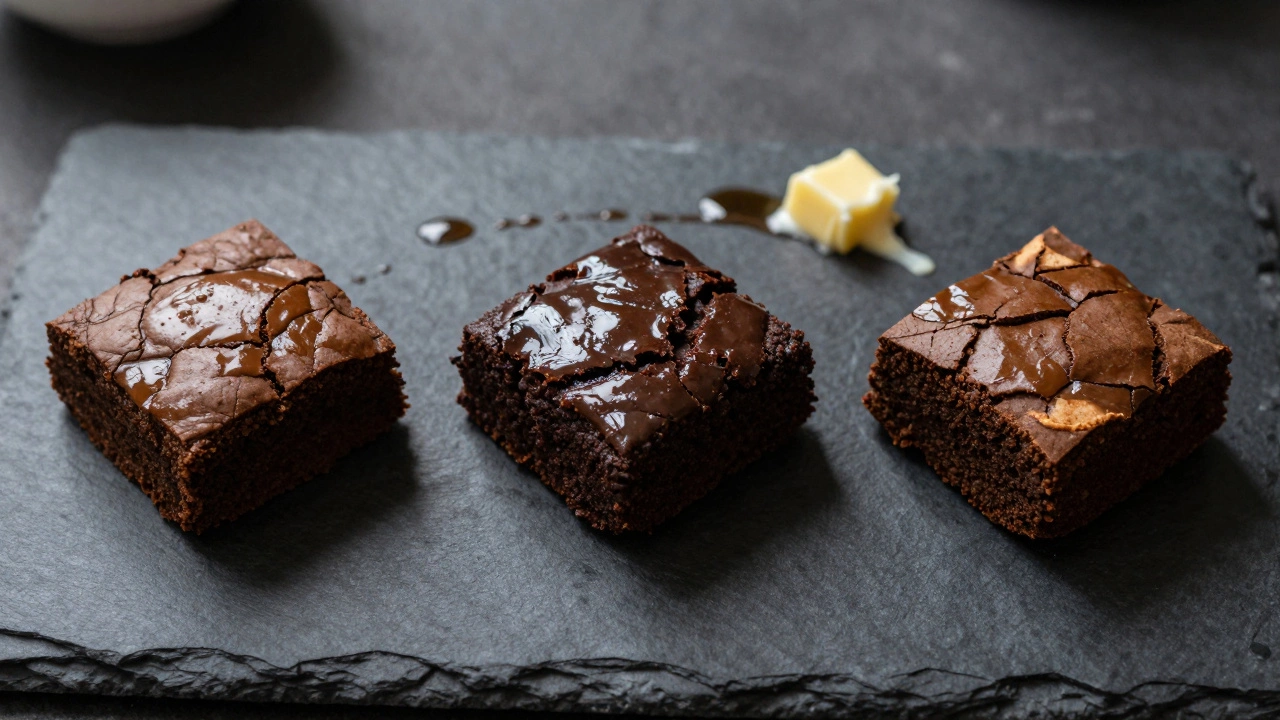
I tested this last month with three batches: one eaten right out of the oven, one after 12 hours, and one after 36 hours. I asked 12 people to taste them blind. Every single person picked the 36-hour batch as the best. Not just “better”-they said it had more depth, was more satisfying, and tasted more like “real chocolate.” One person said, “It’s like the brownie remembered how to be good.”
That’s not hype. That’s what happens when ingredients have time to talk to each other.
Don’t Rush the Process
We live in a world that wants instant results. But baking, especially brownies, rewards patience. Waiting a day doesn’t mean you’re doing extra work. It means you’re letting the ingredients do their job. Your oven does the hard part. Time does the magic.
Next time you bake a batch, resist the urge to dig in right away. Cover them. Walk away. Come back tomorrow. You’ll taste the difference.
Why do brownies get chewier the next day?
The moisture in the brownie slowly redistributes from the center to the edges, softening the texture without making it soggy. The fats and sugars also crystallize slightly, creating a denser, chewier bite. This process is natural and happens best at room temperature.
Should I refrigerate brownies to make them better?
No. Refrigeration hardens the fats too quickly, which dulls the flavor and makes the texture waxy. Brownies improve at room temperature, where moisture can move naturally. Store them covered in their pan or in an airtight container.
Can I freeze brownies and still get the same taste?
Yes. Wrap each brownie individually in plastic wrap, then place them in a freezer bag. They’ll keep for up to three months. Thaw them at room temperature, still wrapped, for about two hours. You’ll get back nearly all the richness and chewiness of a fresh batch.
What kind of chocolate makes the best brownies?
Use dark chocolate with at least 60% cocoa. Higher cocoa content means more flavor compounds that deepen over time. Avoid chocolate chips-they contain stabilizers that prevent smooth melting. Chop your own chocolate bars for the best results.
Why do homemade brownies improve but store-bought ones don’t?
Store-bought brownies often contain preservatives, emulsifiers, and artificial ingredients that prevent natural flavor development. Homemade brownies use real butter, chocolate, and sugar, which interact over time to create deeper, more complex flavors.