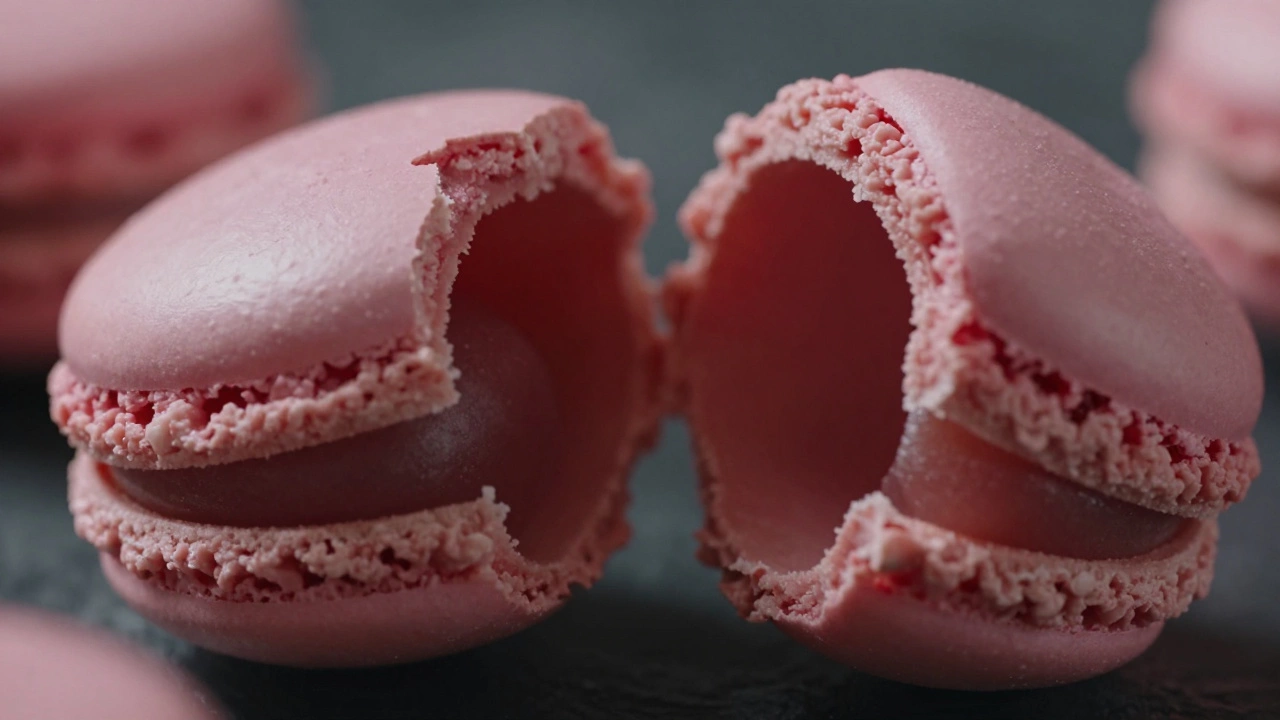
Macaron Hollow Shell Diagnostic Tool
Select all the issues or symptoms you experienced during your last batch:
Diagnosis Results
Action Plan for Next Batch
There is nothing quite as heartbreaking as cracking open a perfectly risen, beautifully colored macaron is a delicate French confection made from almond flour, egg whites, and sugar, known for its crisp shell and chewy interior. only to find it completely empty inside. You’ve spent hours making the batter, piping precise circles, and waiting for them to dry. But instead of that coveted soft, chewy center (often called the 'feet'), you get a hollow echo. It’s a frustrating experience that plagues even seasoned bakers.
If your macarons are coming out hollow, don’t throw away your recipe just yet. This issue is rarely about bad luck; it is almost always a matter of physics and chemistry gone slightly awry. Understanding why this happens allows you to fix it permanently. Let’s break down the science behind the hollow shell and how to stop it from happening again.
The Science Behind the Hollow Shell
To fix the problem, we first need to understand what a macaron actually is. A successful macaron shell consists of a thin, crisp outer layer surrounding a soft, airy, and chewy interior. This structure relies on air bubbles expanding during baking. When the oven heat hits the batter, the moisture turns to steam, and the air trapped in the meringue expands. This expansion pushes the batter outward, creating the characteristic ruffled "feet" at the base.
Hollowness occurs when these air bubbles expand too quickly or become too large before the structure of the cake sets. Imagine blowing up a balloon very fast-the rubber stretches thin and might pop or leave large gaps. In a macaron, if the air pockets grow larger than the protein structure can support, they merge into one giant void. Once the outside crusts over, that big bubble gets trapped inside, leaving an empty space where the chewy center should be.
This phenomenon is often referred to as "over-expansion." The goal is not to eliminate air, but to control it. You want thousands of tiny, uniform bubbles rather than a few massive ones. When those tiny bubbles expand gently, they create a dense, spongy texture. When they expand violently, you get a hollow shell.
Cause #1: Over-Mixed Meringue
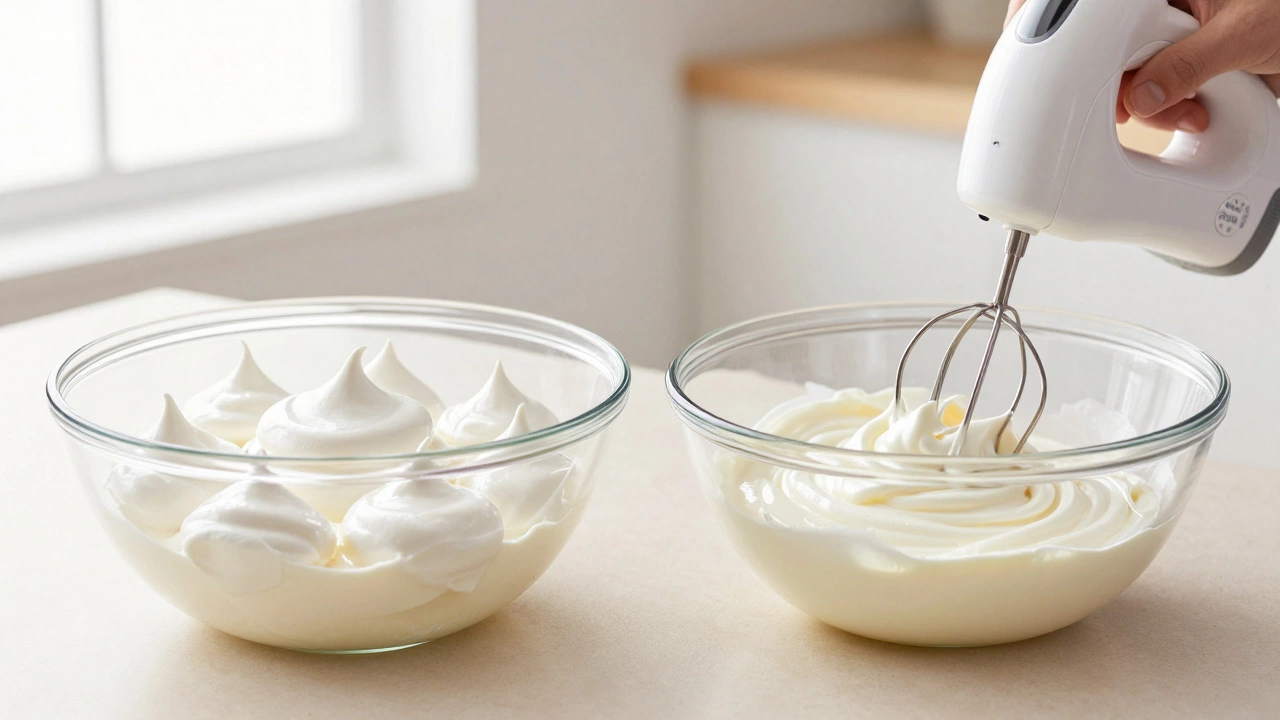
The most common culprit for hollow macarons is an over-whipped meringue. Many bakers believe that stiffer peaks equal better results, but with macarons, this is a dangerous myth. Meringue is a mixture of whipped egg whites and sugar that provides structure and lift to baked goods. When you whip egg whites, you trap air inside the protein network. If you whip them until they are stiff, glossy, and hold rigid peaks, you have created a structure that is too strong and holds too much air pressure.
When this stiff meringue goes into the oven, the trapped air expands aggressively. Because the protein strands are so tight and strong, they resist stretching evenly, leading to large, uneven bubbles. Instead, aim for soft to medium-stiff peaks. The meringue should look creamy and matte, not shiny and glass-like. If you tilt the bowl, the meringue should flow slowly like lava, not sit still like concrete.
For French meringue, which involves whipping raw egg whites with granulated sugar without heat, this is especially critical. If you use Swiss or Italian meringue, the heat stabilizes the proteins, but you can still over-whip them. Always check the consistency before folding in the dry ingredients. If it looks dry or cracks when you pull the whisk, you’ve gone too far.
Cause #2: Improper Macaronage
Macaronage is the process of folding dry ingredients into the meringue to create the final batter. This step determines the viscosity of your batter. If you under-mix, the batter will be too thick, trapping large air bubbles that won’t deflate. If you over-mix, the batter becomes too runny, causing the shells to spread too thin and potentially hollow out as they rise.
However, hollowness is more frequently linked to under-mixing or improper folding technique. When you fold, you must deflate some of the air from the meringue. If you fold too gently or too little, those large air pockets remain intact. The batter should flow off the spatula in a continuous ribbon, resembling flowing lava. It should take about 20-30 seconds for the ribbon to flatten back into the bowl. If it piles up and stays there, you haven’t mixed enough.
Use a J-motion or figure-eight motion when folding. Press the spatula against the side of the bowl, scrape across the bottom, and fold over the top. Do not stir in circles, as this incorporates more air. Watch the batter closely; it changes quickly. Once it reaches the right consistency, stop immediately. Testing a small amount by piping a circle can help-you should see smooth edges without peaks.
Cause #3: Oven Temperature Issues
Temperature control is perhaps the most volatile variable in baking macarons. If your oven temperature is too high, the exterior of the macaron sets before the interior has fully expanded. This creates a hard crust that traps expanding steam inside, forcing it to push upward and create a large cavity. Conversely, if the temperature is too low, the macarons may not rise properly, leading to flat spots rather than hollowness, but inconsistent heating can also cause erratic expansion.
Many home ovens have hot spots or inaccurate thermostats. An oven that reads 300°F (150°C) might actually be running at 325°F (160°C). This extra heat causes rapid initial expansion. To combat this, consider using an oven thermometer to verify the actual temperature. Lowering the temperature by 10-15 degrees and extending the bake time slightly can allow the macarons to rise more gradually and evenly.
Additionally, avoid opening the oven door during the first half of baking. Every time you open the door, you release heat and cause a sudden drop in temperature, which can shock the batter and lead to structural collapse or uneven rising. Patience is key here. Let them bake undisturbed.
Cause #4: Insufficient Drying Time
Before hitting the oven, macarons need to rest. This resting period allows a skin to form on the surface of the piped shells. This skin acts as a barrier that controls how the interior expands. If you bake them immediately after piping, the lack of a skin means the surface expands too quickly, leading to irregular feet and potential hollowness.
How long should you wait? It depends on humidity. In a dry environment, 30-45 minutes might be enough. In humid conditions, it could take two hours or more. Test the skin by gently touching the surface. If it feels tacky or sticky, wait longer. If it feels dry and leaves no fingerprint, they are ready. Using a fan to circulate air around the trays can speed up this process significantly.
Skip this step at your peril. Even if the shells look perfect coming out of the oven, skipping the drying phase often results in shells that separate from the filling or develop hollow centers because the structural integrity wasn’t established before baking began.
Other Contributing Factors
While meringue, mixing, and temperature are the big three, other factors play a role. Old egg whites, for instance, are easier to whip into stiff peaks than fresh ones. Some bakers prefer aged egg whites (left out at room temperature for 24-48 hours) because the water content evaporates slightly, concentrating the proteins. However, if you age them too long or whip them too vigorously, you risk over-stabilization.
The type of sugar matters too. Using coarse sugar instead of fine caster sugar or powdered sugar can prevent proper dissolution, leading to graininess and unstable meringue structures. Ensure all sugars are fully dissolved before proceeding. If you’re using Swiss or Italian meringue, the sugar syrup must reach the correct temperature (usually 118°C/244°F for Italian) to stabilize the whites properly.
Finally, consider your pans. Dark metal pans absorb heat faster than light-colored ones, potentially causing the bottoms to set too quickly. Silicone mats are excellent for even heat distribution, but parchment paper works well too. Just ensure your pans are flat; warped pans can cause uneven baking, leading to inconsistent results.
| Problem | Symptom | Solution |
|---|---|---|
| Over-whipped Meringue | Stiff, glossy peaks; batter holds shape too well | Whip to soft-medium peaks; matte finish |
| Under-mixed Batter | Batter piles up; doesn't flow like lava | Fold more thoroughly until ribbon stage |
| Oven Too Hot | Rapid rise, then collapse or hollow center | Lower temp by 10-15°F; use oven thermometer |
| No Skin Formed | Tacky surface before baking | Rest until dry to touch; use fan if needed |
| Old Egg Whites | Unstable meringue; difficult to control | Use fresh whites or age consistently |
Step-by-Step Fix for Your Next Batch
Ready to try again? Here is a streamlined approach to ensure success:
- Check your equipment: Ensure your oven thermometer is accurate. Preheat to your recipe’s specified temperature, usually between 290°F-300°F (140°C-150°C).
- Prepare the meringue carefully: Whip egg whites with cream of tartar (if using French method) until foamy. Add sugar gradually. Stop when you reach soft, matte peaks. Do not go past this point.
- Sift your dry ingredients: Combine almond flour and powdered sugar. Sift twice to remove lumps. Lumps can disrupt the batter’s consistency.
- Perform the macaronage: Fold dry ingredients into meringue in three additions. Use the J-motion. Stop when the batter flows like lava and ribbons settle in 20-30 seconds.
- Pipe and tap: Pipe onto lined baking sheets. Tap the sheet firmly on the counter 3-4 times to release large air bubbles. Use a toothpick to pop any visible bubbles.
- Rest adequately: Let shells sit until a dry skin forms. Touch test is essential.
- Bake patiently: Bake without opening the door. Rotate trays halfway through for even baking.
- Cool completely: Let shells cool on the tray before removing. They firm up as they cool.
By paying attention to these details, you transform the macaron from a finicky challenge into a reliable treat. Remember, baking is a science, but it’s also a practice. Each batch teaches you something new about your specific kitchen environment. Keep notes on humidity, temperature, and timing. Soon, you’ll know exactly how your oven behaves and how to adjust accordingly.
Hollow macarons are not a sign of failure; they are a signal to tweak your technique. With a softer meringue, proper folding, controlled heat, and adequate drying, you will achieve that perfect, chewy center every time. Happy baking!
Why do my macarons crack instead of being hollow?
Cracking is usually caused by over-mixing the batter or insufficient drying time. If the batter is too runny, it spreads too thin and cracks as it rises. If the skin isn't formed, the surface expands unevenly. Aim for a lava-like consistency and ensure the shells are dry to the touch before baking.
Can I use old egg whites for macarons?
Yes, many bakers prefer aged egg whites (24-48 hours at room temperature) because they whip up more easily and create stable meringues. However, be careful not to over-whip them, as this can lead to hollowness. Fresh whites work fine too, but may require more whipping time.
What is the ideal oven temperature for macarons?
Most recipes recommend 290°F-300°F (140°C-150°C). However, every oven is different. Use an oven thermometer to verify accuracy. If your macarons are browning too quickly or becoming hollow, try lowering the temperature by 10-15 degrees and increasing the bake time slightly.
How long should I rest my macarons before baking?
Resting time varies based on humidity. In dry climates, 30-45 minutes may suffice. In humid environments, it can take 1-2 hours. The key indicator is the skin: touch the shell lightly. If it feels sticky, wait longer. If it feels dry and doesn't stick to your finger, they are ready to bake.
Should I tap the baking sheet after piping?
Yes, tapping the baking sheet firmly on the counter helps release large air bubbles trapped in the batter. This prevents uneven rising and reduces the chance of hollowness. After tapping, use a toothpick to pop any remaining visible bubbles on the surface.