Birthday Cake Cost Calculator
Calculate Your Cake Cost
Estimated Cost Breakdown
Ever looked at a birthday cake and thought, ‘How is this $120?’ You’re not alone. A simple vanilla cake with buttercream frosting shouldn’t cost more than a week’s groceries. But when you walk into a bakery, that same cake can easily hit $80, $100, or even $200. So what’s really going on? Why are birthday cakes so expensive?
It’s Not Just the Ingredients
Most people assume the price comes from sugar, flour, eggs, and butter. But those make up less than 15% of the final cost. A standard 8-inch cake uses about £5-£8 worth of ingredients. Even a fancy chocolate cake with raspberries and ganache rarely breaks £15 in raw materials. So where’s the rest of the money going?The real cost isn’t in the pantry. It’s in the time, skill, and labor. Baking a cake isn’t like making cookies. It’s a multi-step process that takes hours - not minutes. You’ve got mixing, baking, cooling, leveling, crumb coating, chilling, decorating, and then cleaning up. A professional cake decorator might spend 6 to 10 hours on a single cake. That’s nearly a full day’s work for one dessert.
Art, Not Just Baking
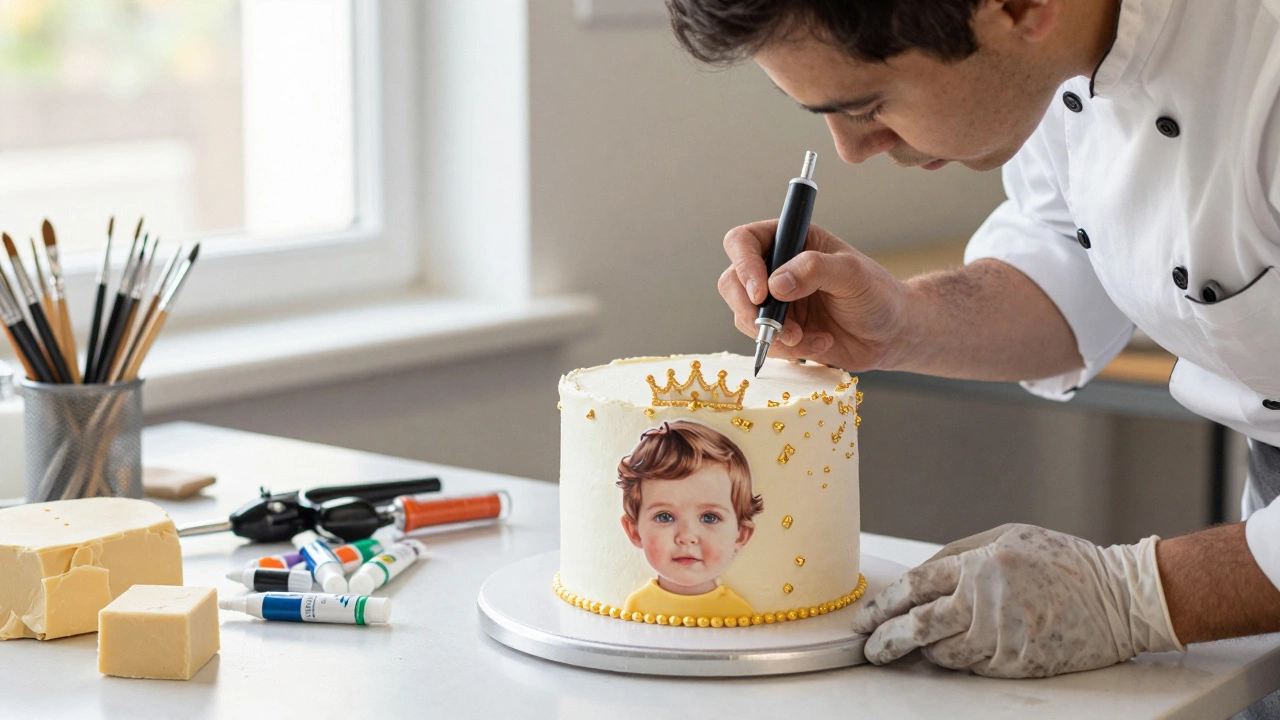
A birthday cake isn’t just food. It’s a centerpiece. A memory. A piece of art. People don’t just want something sweet - they want something that looks like a character from their favorite movie, a miniature version of their house, or a lifelike portrait of their child. That’s not just frosting. That’s sculpting, painting, airbrushing, and hand-crafting details that can take hours to perfect.Think about it: if you hired an artist to paint a portrait of your dog on canvas, you’d expect to pay £150-£300. A cake portrait uses edible paint, royal icing, and fondant instead of oil and canvas - but the skill level is just as high. A single face on a cake can take 3-5 hours to get right. And if you want it to look like your niece in her ballet outfit? That’s another 2 hours for the dress, the tiara, the ribbon details.
Custom Work Isn’t Mass-Produced
Supermarkets sell cakes for £15 because they make hundreds of the same design every week. They use pre-made molds, automated piping, and standardized recipes. A bakery that does custom work doesn’t have that luxury. Every cake is one-of-a-kind. That means:- No bulk discounts on packaging
- No repeat orders to streamline the process
- No assembly-line efficiency
- Every design needs a new plan, new colors, new tools
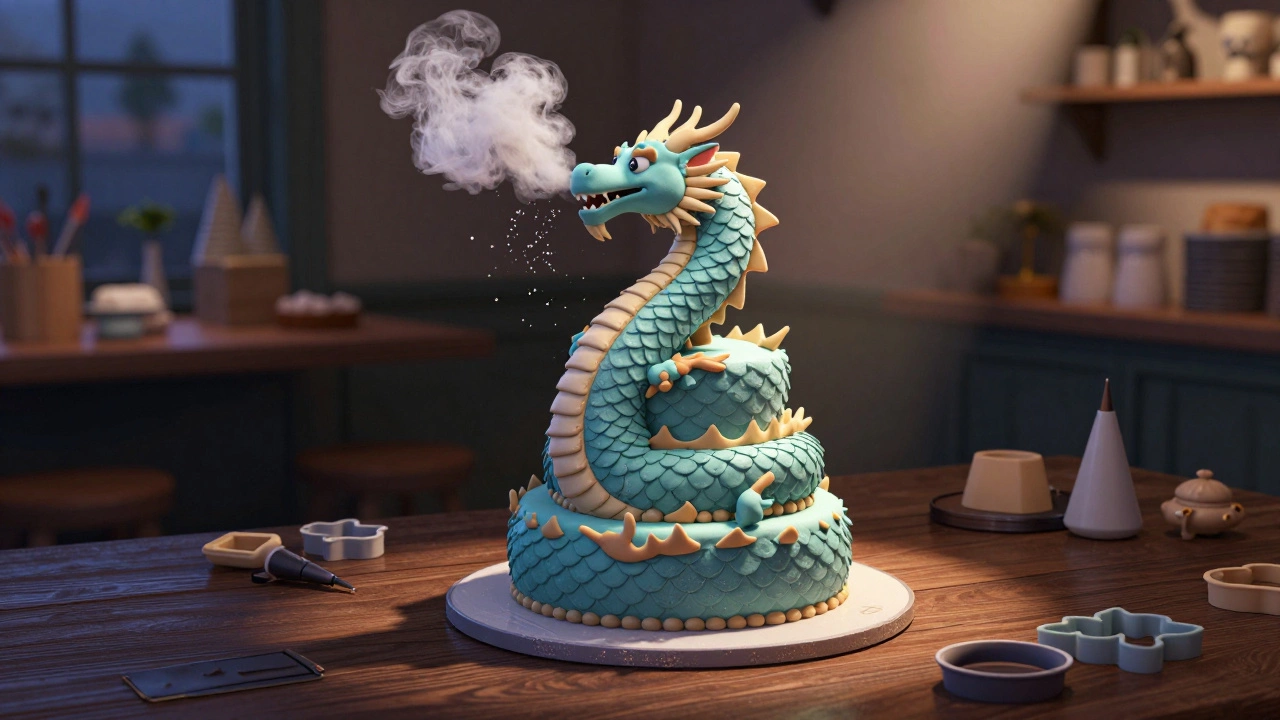
One baker in Bristol told me she once spent 14 hours on a cake shaped like a dragon for a 7-year-old’s party. The client wanted scales made from hand-painted fondant, smoke rising from the nostrils (using edible cotton candy), and glitter that wouldn’t melt. She didn’t charge extra - but she didn’t sleep that night. That’s the reality: custom means custom labor. And labor costs money.
Equipment and Materials Add Up
You might not think about it, but cake decorating requires tools most kitchens don’t have. A decent airbrush system costs £300. A set of silicone molds for intricate designs runs £50-£100. Edible gold leaf? £20 for a tiny sheet. High-quality food coloring? £15 a bottle - and you go through them fast. Fondant isn’t cheap either. A 2kg block costs £12-£18, and you might use half of it on one cake.Then there’s the packaging. A sturdy cake box with a clear lid, a ribbon, a personalized card, and a non-slip base? That’s £8-£15 per cake. And if the cake has to be delivered? Fuel, insurance, and time add another £10-£25. Many bakers don’t charge enough for delivery - they absorb it to keep customers happy.
Experience Matters - And It’s Not Just About Taste
You wouldn’t hire a plumber who’s never fixed a leak before. Why would you hire a cake decorator who’s never made a multi-tiered cake? Professional bakers spend years learning. They take courses on sugar art, attend workshops, study color theory, and practice for months just to get a smooth fondant finish.There’s also the risk. A cake that collapses on the way to the party isn’t just embarrassing - it’s a financial loss. One wrong move while piping, one too-hot oven, one humid day - and the whole thing can fail. Experienced bakers build that risk into their pricing. They know how to prevent it. And that knowledge? It’s worth paying for.
Seasonal Demand Drives Prices Up
Birthdays happen all year, but they spike in summer and around holidays. In the UK, June, July, and December are the busiest months. During peak season, bakers get booked out weeks - sometimes months - in advance. That’s when prices rise. Why? Because demand outstrips supply.Some bakers raise prices during peak times to manage workload. Others turn away customers. Either way, you’re paying for the convenience of getting a cake when you need it. If you want a cake for Christmas Eve, you’re not just paying for the cake - you’re paying for the baker to say no to 10 other orders.

What You’re Really Paying For
When you buy a birthday cake, you’re not buying sugar and butter. You’re buying:- Time - 6 to 10 hours of skilled labor
- Artistry - custom design, painting, sculpting
- Reliability - a cake that won’t fall apart
- Stress-free celebration - no DIY disasters
- Emotional value - a cake that makes someone feel special
That’s why a cake from a home baker might cost £40 and one from a professional bakery costs £120. One is a dessert. The other is an experience.
How to Save Without Sacrificing
You don’t have to break the bank. Here’s how to get the best value:- Book early - especially for holidays. Many bakers offer 10-15% off for bookings 6+ weeks ahead.
- Go for simpler designs. A two-tone buttercream finish costs less than fondant flowers.
- Choose a smaller size. A 6-inch cake feeds 8-10 people. Most parties don’t need 12+ servings.
- Ask for a semi-custom cake. Some bakeries have templates you can tweak - change the color, add a name, swap the flower.
- Consider a cake topper instead of a full custom design. A printed photo topper on a plain cake looks just as personal - and costs a fraction.
And if you’re still on the fence? Ask the baker for a breakdown. Most will happily show you how their pricing works. You might be surprised to see how much goes into every layer - literally and figuratively.
Final Thought: You Get What You Pay For
A birthday cake isn’t a commodity. It’s a moment. And moments like that deserve more than a supermarket tub of icing. When you pay for a custom cake, you’re not paying for ingredients. You’re paying for someone’s passion, their skill, and the quiet magic of turning flour and sugar into a memory that lasts a lifetime.Why are custom birthday cakes more expensive than store-bought ones?
Store-bought cakes are mass-produced using automated machines, standardized recipes, and bulk ingredients. Custom cakes are made one at a time by hand, often taking 6-10 hours of skilled labor. Each design is unique, requiring custom tools, materials, and attention to detail - none of which can be scaled like factory production.
Is it cheaper to bake a birthday cake at home?
Yes, baking at home cuts the labor cost, which is the biggest expense. A homemade 8-inch cake costs £5-£10 in ingredients. But it still takes 4-6 hours of your time - and if you’re inexperienced, you might end up with a lopsided, overbaked, or poorly decorated cake. For many, the time and stress aren’t worth it unless they enjoy baking.
Do expensive cakes taste better?
Not necessarily. Taste depends on the recipe and ingredients, not the price tag. A £40 cake from a local bakery can taste better than a £150 one if the baker uses quality butter and fresh fruit. But expensive cakes often use better ingredients - like real vanilla bean, European chocolate, or organic eggs - which do improve flavor. The difference is usually in presentation, not taste.
Why do some bakers charge so much for fondant?
Fondant isn’t just icing - it’s a sculpting medium. It requires precise temperature control, kneading, rolling, and smoothing. It also needs to be covered in a clean, dust-free environment. The material itself is expensive, and applying it well takes years of practice. A smooth fondant finish can take 2-4 hours alone, not including the design work on top.
Can I negotiate the price of a birthday cake?
Some bakers are open to negotiation, especially if you’re flexible on timing, size, or design. But most won’t lower prices below their cost of labor and materials. A baker who charges £120 isn’t making £100 profit - they’re covering £30 in ingredients, £40 in tools and packaging, and £50 in time. Asking for a discount might mean they lose money. Instead, ask for a simpler version - it’s often a better solution.