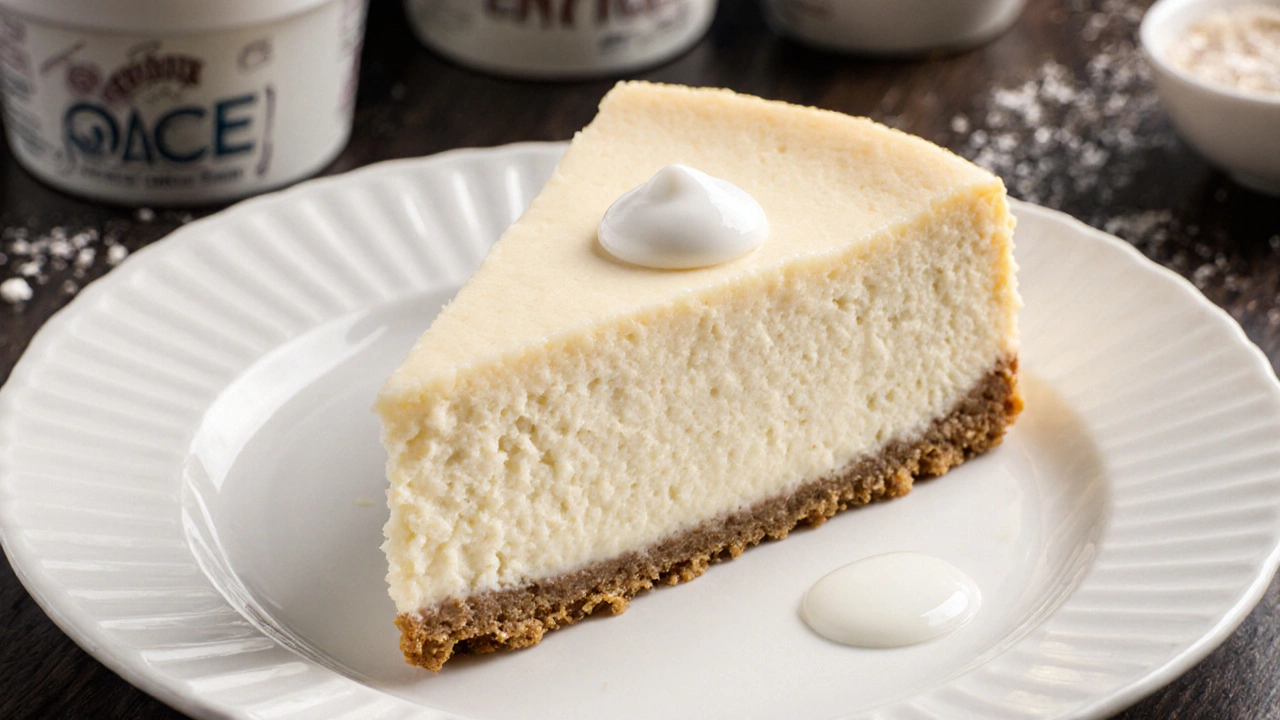
Cheesecake Science Calculator
Texture Analysis
Your ratio suggests a creamy, stable texture with minimal cracking risk.
Key Science Insights
When fat content exceeds 33%, the emulsification properties of cream cheese improve, allowing for a silkier mouthfeel without compromising structural integrity.
Critical Warning
Low fat content (below 30%) may cause rubbery texture and loss of tang.
Baking Recommendations
Water Bath Required
Chilling Time
Ever take a bite of cheesecake and just stop? Not because you’re full, but because it feels like your brain hit a sweet, creamy reset button. It’s not just sugar. It’s not just cream cheese. There’s something deeper happening in that slice-something science, tradition, and a little bit of magic all rolled into one.
The Cream Cheese Factor
Cream cheese is the backbone of any good cheesecake. It’s not just a filler-it’s the reason the texture feels like silk sliding over your tongue. Real cream cheese has about 33% fat, which is higher than most other cheeses. That fat doesn’t just add richness; it carries flavor. When you bake it, the fat molecules slowly melt and bind with sugar and eggs, creating a custard-like structure that holds its shape but still melts at body temperature. That’s why a perfect slice doesn’t just taste creamy-it feels creamy.
Low-fat cream cheese? It won’t cut it. You’ll end up with a rubbery, chalky texture. That’s because fat is the carrier for flavor compounds. Without enough of it, the sweetness feels flat, and the tang from the cheese gets lost. High-quality cream cheese, like Philadelphia or a local artisanal brand, has a cleaner taste and smoother mouthfeel. It’s not about price-it’s about fat content and how it’s made.
Sugar Isn’t Just Sweetness
Sugar does more than make cheesecake sweet. It’s a texture engineer. When you mix sugar into cream cheese, it starts to dissolve and pull water out of the cheese. That water then interacts with the proteins in the eggs, helping them set just right during baking. Too little sugar, and the cheesecake can taste eggy or grainy. Too much, and it overwhelms the subtle tang of the cheese.
Most classic recipes use granulated white sugar because it dissolves evenly. But brown sugar? It adds molasses notes that deepen the flavor-like caramel and toffee-without making it taste like dessert wine. A pinch of sea salt on top of the baked crust? That’s not a garnish. It’s a flavor amplifier. Salt blocks bitterness and lets the sweetness sing louder.
The Egg Connection
Eggs are the glue. But not just any glue. Egg yolks are packed with lecithin, a natural emulsifier that helps fat and water blend smoothly. That’s why a cheesecake with too many egg whites ends up cracked and dry. The whites set fast and hard. The yolks? They’re slow, rich, and forgiving. A classic New York cheesecake uses 3-4 whole eggs plus extra yolks. That’s not excess. That’s intention.
Overmixing eggs into the batter is the #1 mistake home bakers make. You don’t want air bubbles. You want a dense, velvety batter. Whipping it like meringue turns your cheesecake into a soufflé that collapses. Stir gently. Just until the ingredients disappear. No more.
Acidity: The Secret Flavor Booster
Ever notice how a slice of cheesecake tastes better with a spoonful of sour cream or Greek yogurt on the side? That’s not just a garnish-it’s chemistry. The slight acidity in sour cream, lemon juice, or even a splash of vanilla extract (which contains natural acids) cuts through the fat. It wakes up your taste buds. Without it, cheesecake can feel heavy, even cloying.
Most recipes call for a tablespoon of lemon juice. That’s not for citrus flavor. It’s for balance. It’s the difference between a flat note and a chord. Even a teaspoon of white vinegar in the crust can help tenderize the graham cracker crumbs by slightly breaking down the starches. You won’t taste it. But you’ll notice the difference in texture.
The Crust Matters More Than You Think
A cheesecake isn’t just the filling. The crust is the stage. Graham crackers are popular because they’re mildly sweet and have a fine crumb that holds together without being soggy. But butter? That’s the real hero. Melted butter binds the crumbs and, when baked, turns into a thin, crisp layer that contrasts with the soft filling.
Too little butter? The crust falls apart. Too much? It turns greasy. The sweet spot is about 1/4 cup for a standard 9-inch crust. Toasting the crumbs before mixing with butter? That’s a pro move. It deepens the flavor and removes excess moisture, so the crust stays crisp even after hours in the fridge.
Temperature and Timing: The Silent Players
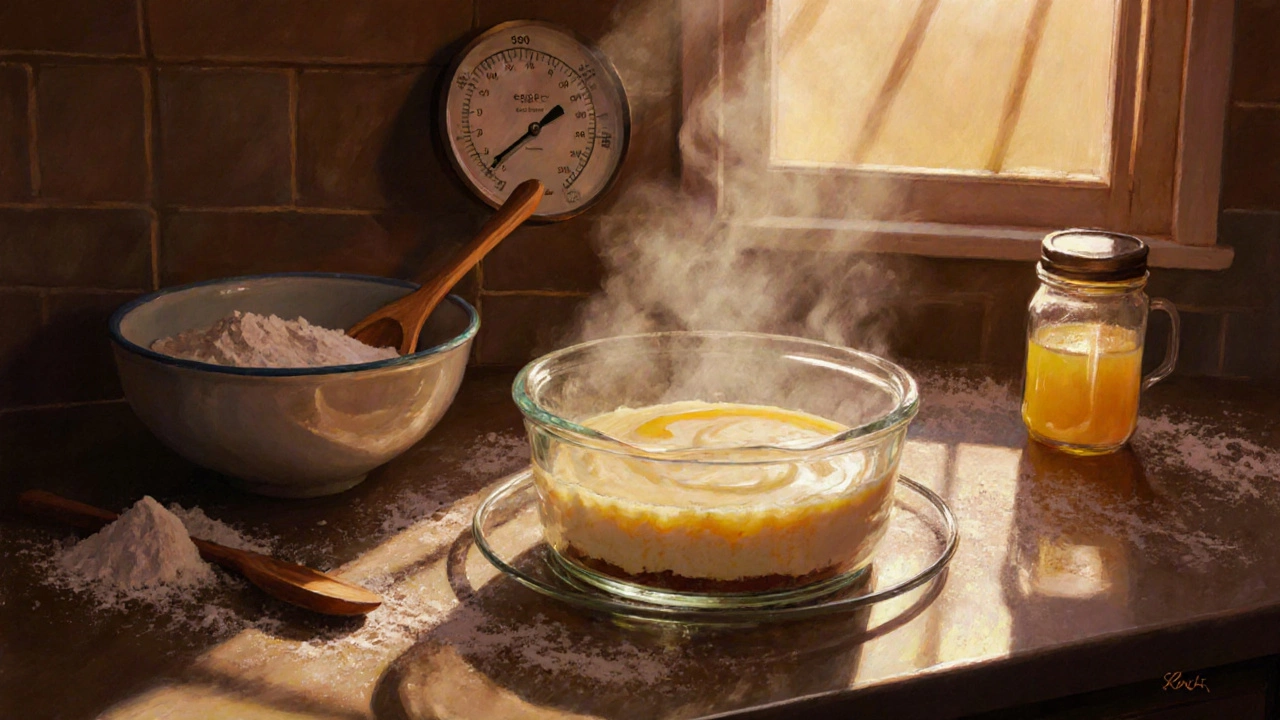
Baking cheesecake isn’t like baking a cake. You don’t want it to rise. You want it to set slowly. That’s why water baths (bain-marie) exist. The steam from the water bath keeps the oven humid, preventing cracks and ensuring even cooking. A cheesecake baked without one will likely split on top-like a dried-up riverbed.
And don’t open the oven door in the first 45 minutes. The sudden drop in temperature can cause the filling to sink. Bake until the edges are set but the center still jiggles slightly-like Jell-O. It will firm up as it cools. Let it sit in the turned-off oven with the door cracked open for an hour. That’s not a trick. That’s how professionals avoid cracks.
Chilling Isn’t Optional
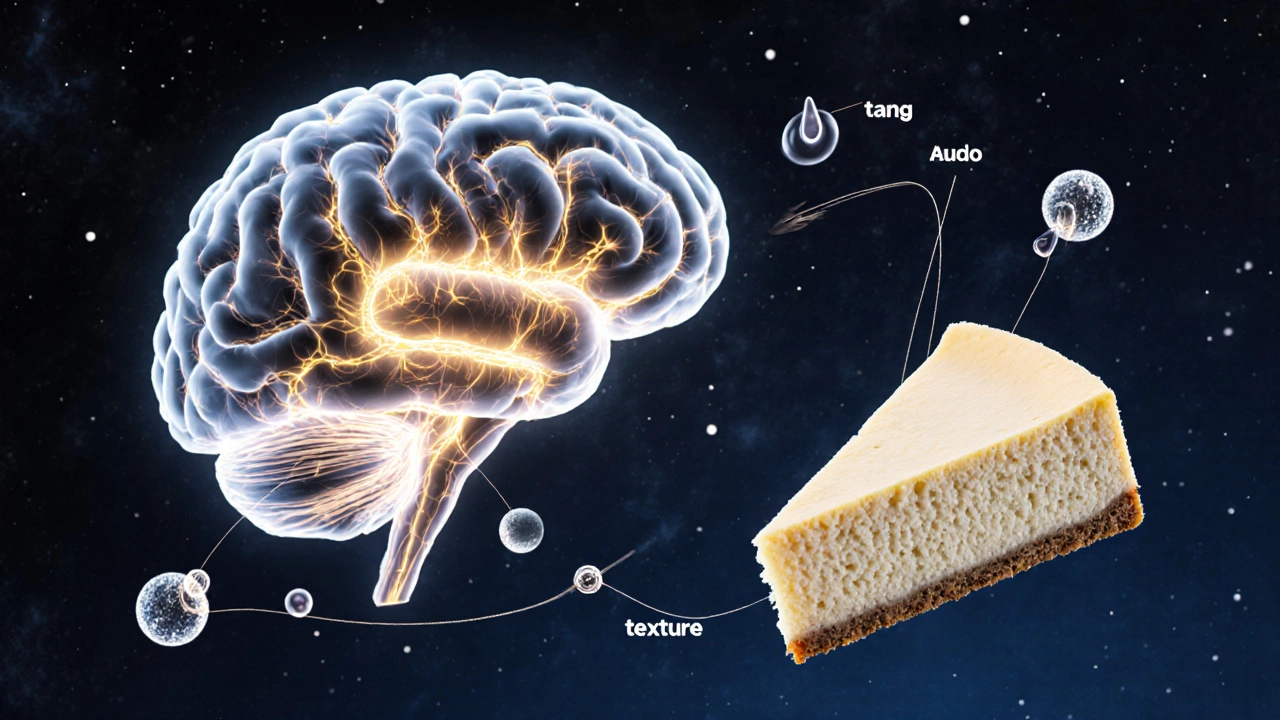
Here’s the truth: cheesecake doesn’t taste good right out of the oven. It tastes like warm custard. It needs at least 6 hours in the fridge-preferably overnight. Why? Because cold temperatures let the fat molecules re-solidify in a way that locks in the texture. It also lets the flavors meld. The tang of the cheese deepens. The sugar mellows. The vanilla and lemon notes become clearer.
Try slicing it too soon, and you’ll get a messy, crumbly edge. Wait, and you’ll get clean, sharp slices that hold their shape. That’s not magic. That’s science.
Why It Feels Like Comfort
There’s a reason cheesecake feels like a hug. It’s high in fat, which triggers dopamine release in the brain. It’s sweet, which activates reward pathways. But it’s also complex-tangy, creamy, slightly salty, with a crunch beneath. That combination hits multiple taste receptors at once. It’s not just satisfying. It’s reinforcing.
Unlike a chocolate cake that’s all about richness, or a fruit tart that’s bright and light, cheesecake is both indulgent and balanced. It doesn’t shout. It whispers-and you lean in to hear it.
What Makes a Great Cheesecake?
It’s not about fancy toppings. It’s about control. Control over fat. Control over sugar. Control over heat. Control over time. A great cheesecake doesn’t need berries on top. It doesn’t need chocolate swirls. It just needs to be smooth, cool, slightly tangy, and perfectly set. Everything else is decoration.
If your cheesecake cracks? It’s not broken. It’s just a lesson. Try a water bath next time. If it’s too sweet? Cut the sugar by 10%. If it’s dense? You overmixed. If it’s dry? You baked it too long.
There’s no single secret. Just a few simple rules-and the patience to follow them.