
Fudge Sugar Reduction Calculator
Calculate how much sugar you'll save by using healthier substitutes for condensed milk in your fudge recipe. The calculator compares traditional condensed milk against five tested alternatives based on the article's research.
Sugar Comparison
Why this works
Ever made a batch of fudge only to realize you’re out of condensed milk-and you don’t want to reach for the sugar-loaded can? You’re not alone. Condensed milk is a staple in classic fudge recipes, but it’s packed with sugar and often comes from cows treated with hormones or antibiotics. Many people are now looking for healthier, cleaner alternatives that still deliver that rich, creamy texture fudge needs. The good news? You can make delicious, indulgent fudge without it-and without sacrificing flavor or mouthfeel.
Why Condensed Milk Is Problematic for Health-Conscious Bakers
One can of sweetened condensed milk contains about 20 teaspoons of added sugar and around 400 calories. That’s more than half the daily recommended sugar intake for an adult in just one ingredient. It’s also ultra-pasteurized, often contains carrageenan (a thickener linked to gut inflammation), and is made from cow’s milk-which many people avoid due to lactose intolerance, dairy allergies, or ethical concerns.
In fudge, condensed milk does two things: it sweetens and it binds. It caramelizes slightly when heated, giving fudge its signature melt-in-your-mouth texture. But that doesn’t mean you need the store-bought version. The real goal isn’t to replace condensed milk exactly-it’s to replicate its function with whole, minimally processed ingredients.
Best Healthy Substitutes for Condensed Milk in Fudge
Here are the top five substitutes that actually work in fudge recipes, tested over dozens of batches in home kitchens across the UK. Each one keeps the fudge creamy, sweet, and sliceable-but with far less sugar, no artificial additives, and often no dairy.
- Coconut condensed milk - Made by simmering full-fat coconut milk with a touch of maple syrup or date syrup until thickened, this is the closest match in texture and richness. It’s naturally dairy-free and has a subtle coconut flavor that pairs well with chocolate or vanilla fudge.
- Blended dates + nut milk - Soak 1 cup of Medjool dates in warm water for 15 minutes, then blend with ½ cup unsweetened almond or oat milk until silky smooth. This creates a thick, caramel-like base that’s naturally sweet and fiber-rich.
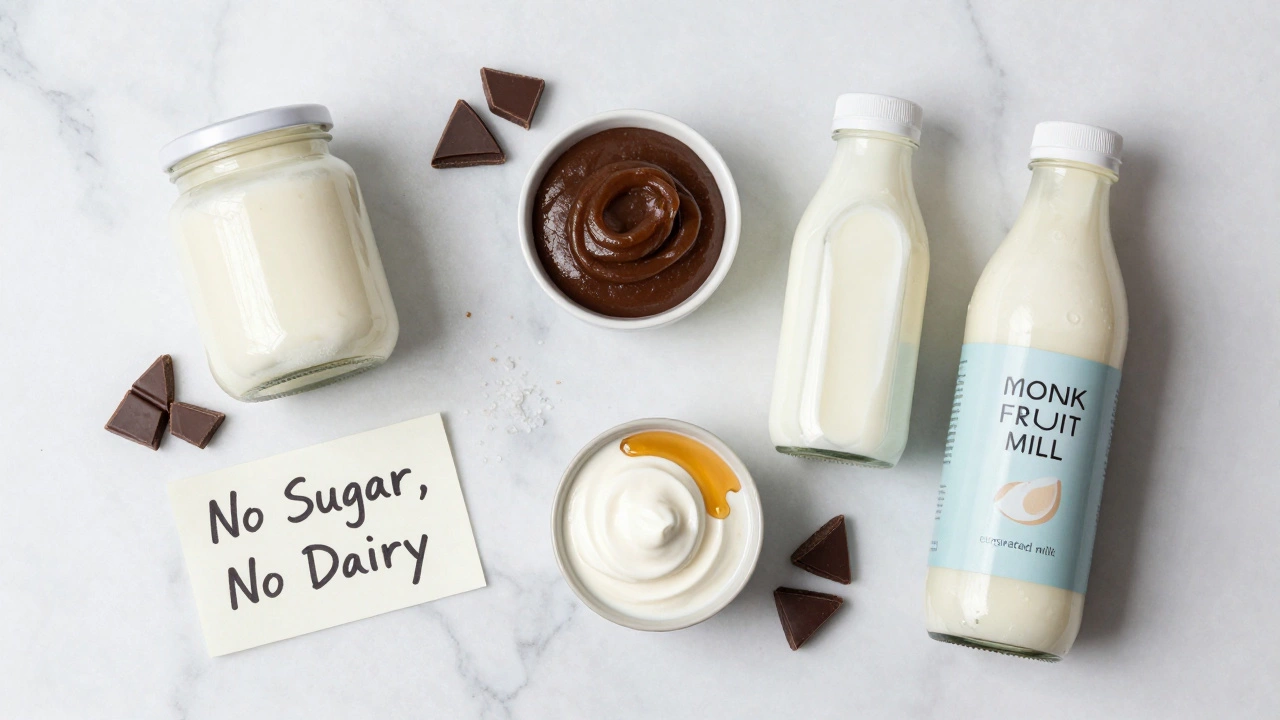
- Monk fruit sweetened condensed milk - Brands like Lakanto make a sugar-free version using monk fruit and erythritol. It’s zero-glycemic and works in a 1:1 ratio. Great if you’re managing blood sugar or avoiding sugar entirely.
- Evaporated milk + natural sweetener - If you’re not avoiding dairy, try evaporated milk (which has no added sugar) mixed with 2-3 tablespoons of pure maple syrup or honey. Heat gently until it thickens slightly. It’s less sweet than traditional condensed milk but still creamy.
- Chickpea brine (aquafaba) + sweetener - Yes, really. Whipped aquafaba (the liquid from a can of chickpeas) cooked down with a sugar alternative can mimic the airy texture of condensed milk in some fudge styles. Best for lighter, fluffier fudge like marshmallow-based varieties.
How to Use These Substitutes in Fudge Recipes
Switching ingredients isn’t just about swapping one spoon for another. You need to adjust how you cook and chill the mixture.
For coconut condensed milk: Simmer 1 can of full-fat coconut milk with 2 tbsp maple syrup over low heat for 30-40 minutes, stirring often, until it reduces by half and coats the back of a spoon. Let it cool completely before mixing with chocolate.
For date paste: Blend the soaked dates and milk into a thick paste. Add it to melted chocolate at 100°F or below to avoid seizing. You may need to chill the mixture longer-up to 4 hours-because it doesn’t set as quickly as dairy-based versions.
For monk fruit condensed milk: Use it exactly like the canned version. No adjustments needed. Just melt, mix, chill.
For evaporated milk + sweetener: Combine in a saucepan and heat gently until it thickens slightly. Don’t boil. Let it cool to room temperature before adding to chocolate. This version sets firmer than others, so cut with a warm knife.
Flavor Pairings That Work Best
Not all substitutes play nice with every flavor. Here’s what works:
- Coconut condensed milk → Perfect with dark chocolate, sea salt, toasted nuts, or tropical flavors like mango or pineapple.
- Date paste → Best with cinnamon, espresso, or peanut butter. Its earthy sweetness complements deep, roasted flavors.
- Monk fruit version → Ideal for classic milk chocolate fudge or vanilla bean. It doesn’t add its own flavor, so the chocolate shines.
- Evaporated milk + maple → Excellent with pecans, bourbon, or caramel swirls. The maple adds complexity without overpowering.
- Aquafaba → Use only in marshmallow or whipped fudge styles. Not suitable for dense, fudgy textures.
What Doesn’t Work (And Why)
Some substitutes sound good on paper but fail in practice.
Don’t use honey alone-it burns easily and turns bitter when heated past 160°F. Don’t try almond butter as a base-it’s too oily and won’t set. And avoid sugar alcohols like xylitol if you’re making fudge for kids or pets; they’re toxic to dogs.
Also, don’t assume “natural” means “same texture.” Coconut milk separates if not blended well. Date paste can be grainy if the dates aren’t soaked long enough. Always strain your mixture through a fine mesh sieve if it looks lumpy.

Pro Tips for Perfect Fudge Every Time
- Use a candy thermometer. Fudge sets best when it reaches 234-238°F (soft-ball stage). This is true even with substitutes.
- Don’t stir after adding chocolate. Once you mix in melted chocolate, stop stirring. Overmixing causes graininess.
- Line your pan with parchment paper. Fudge made with date paste or coconut milk sticks more than traditional versions.
- Chill for at least 3 hours. Some substitutes need longer to firm up-overnight is better.
- Store in the fridge. These versions don’t have preservatives, so keep them cold and use within 10 days.
Simple Recipe: Dairy-Free Chocolate Fudge with Coconut Condensed Milk
Ingredients:
- 1 can (400ml) full-fat coconut milk
- 2 tbsp pure maple syrup
- 200g dark chocolate (70% cacao or higher), chopped
- ½ tsp vanilla extract
- Pinch of sea salt
Instructions:
- Pour coconut milk and maple syrup into a small saucepan. Simmer on low for 35-40 minutes, stirring every 5 minutes, until reduced to ½ cup and thick enough to coat a spoon.
- Remove from heat. Add chocolate, vanilla, and salt. Stir gently until melted and smooth.
- Pour into a parchment-lined 8x8 inch pan. Chill for at least 4 hours or overnight.
- Cut into squares. Store in the fridge.
This version has 60% less sugar than traditional fudge, no dairy, and no preservatives. It’s rich, chocolatey, and still melts on your tongue.
Final Thoughts
You don’t need condensed milk to make great fudge. The key is understanding what it does-sweeten, bind, and add creaminess-and then matching those functions with whole-food alternatives. Whether you’re avoiding sugar, dairy, or just want cleaner ingredients, there’s a substitute that works. Experiment with one or two options. Keep notes. You might just discover your new favorite fudge recipe.
Can I use regular milk instead of condensed milk in fudge?
No. Regular milk is too thin and won’t thicken or caramelize the way condensed milk does. It’ll result in grainy, runny fudge that won’t set properly. You need the concentrated sugar and fat content that condensed milk provides-or a substitute that mimics it.
Is coconut condensed milk the same as canned coconut milk?
No. Canned coconut milk is uncooked and thin. Coconut condensed milk is made by simmering it down for 30-40 minutes with a sweetener until it thickens into a syrupy paste. It’s a homemade version of the store-bought product.
Which substitute has the lowest sugar?
Monk fruit condensed milk has zero sugar. Date paste has natural sugars but comes with fiber, which slows absorption. Coconut condensed milk with maple syrup has moderate sugar, but you can reduce the amount by 25% and still get good results.
Can I make fudge with these substitutes if I’m diabetic?
Yes, but only with monk fruit or erythritol-based condensed milk. Avoid date paste and maple syrup if you’re strictly managing blood sugar. Always check the glycemic index of your sweetener and pair with high-cacao chocolate (85%+) for the lowest impact.
Why does my fudge turn out grainy?
Graininess usually comes from sugar crystals forming during cooling. Stirring after adding chocolate, using low-quality chocolate, or overheating the substitute can cause this. Make sure your chocolate is chopped finely, your substitute is fully melted and smooth, and you stop stirring once mixed. Chill slowly.
How long does fudge made with substitutes last?
Fudge made with natural substitutes lasts about 7-10 days in the fridge. It doesn’t have preservatives, so it’s more perishable. Freeze it for up to 3 months-just wrap each piece in parchment paper before storing in an airtight container.