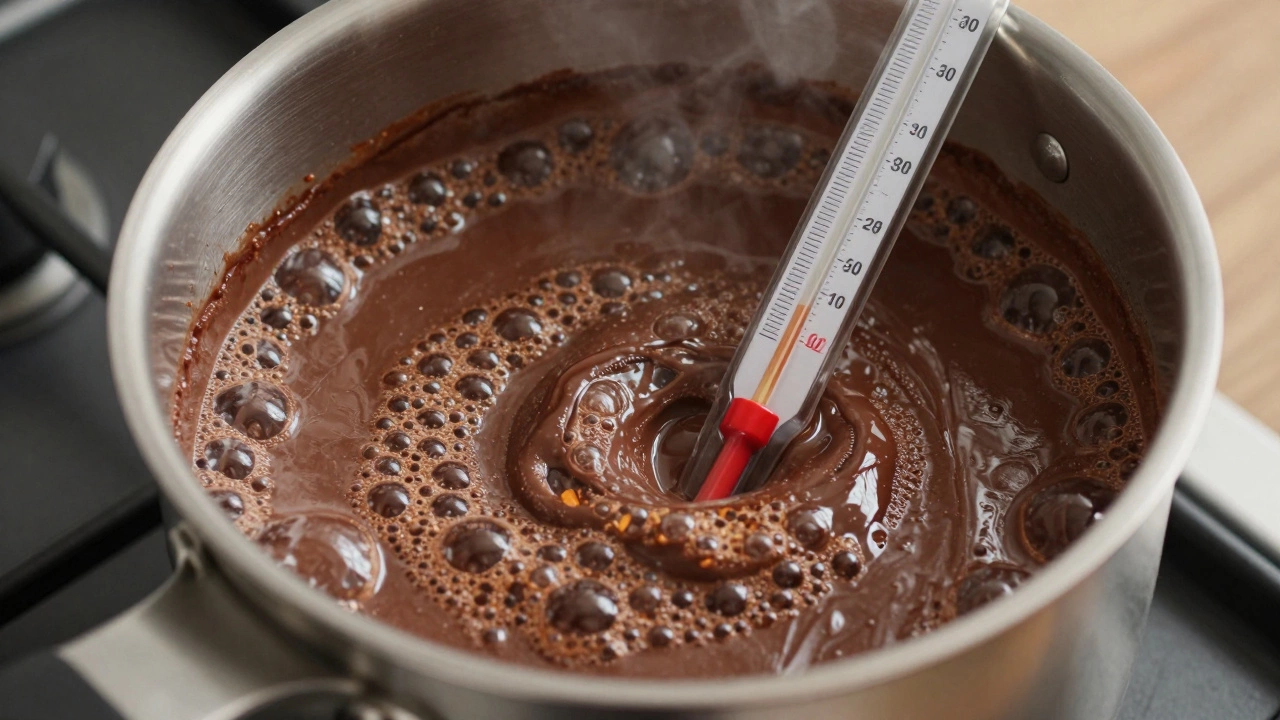
Fudge Temperature & Texture Guide
Enter your current thermometer reading below to identify your sugar stage or diagnose a texture problem.
Quick Reference:
When you make fudge, you're essentially managing the concentration of sugar. As water evaporates from the mixture, the sugar concentration increases, and the boiling point rises. If you keep heating it past the point where the recipe tells you to stop, you're moving from the "soft-ball stage" into the "hard-ball" or even "hard-crack" stages. This is where the magic of fudge-that creamy, melt-in-your-mouth texture-disappears and is replaced by something closer to a hard candy or a rock.
The Science of Overcooking Your Sugar
To understand why your fudge went wrong, you have to look at boil fudge too long is essentially a lesson in sugar concentration. Sucrose is the primary sugar used in fudge, which crystallizes into different structures depending on the temperature reached. Most fudge recipes aim for about 235°F to 240°F (113°C to 115°C). At this heat, enough water has evaporated to allow the sugar to set, but not so much that it becomes brittle.
If you push the temperature to 250°F or 260°F, you enter the hard-ball stage. If you hit 300°F, you're in the hard-crack stage. The fewer water molecules left in the mixture, the tighter the sugar bonds become. Instead of a smooth, creamy fudge with tiny, invisible crystals, you end up with a dense, grainy mass or a piece of candy that could realistically be used as a doorstop. You've effectively turned your fudge into Taffy or hard candy.
Signs You've Gone Too Far
Sometimes you don't have a thermometer, or yours is lagging. How do you know you've overboiled the mixture? Look for these red flags:
- The Texture Change: When you drop a small bit of the syrup into a glass of cold water, it doesn't form a soft, squishy ball. Instead, it forms a firm ball that holds its shape or a brittle thread that snaps when you bend it.
- The Color Shift: The mixture starts to look darker than usual. This isn't just the chocolate; it's the sugar starting to caramelize or even burn.
- The Bubble Pattern: The bubbles become smaller, thicker, and slower. They don't pop quickly; they linger and look "syrupy."
- The Final Result: After cooling, the fudge is hard, crumbly, or feels like it has sand in it.
Can You Save Overcooked Fudge?
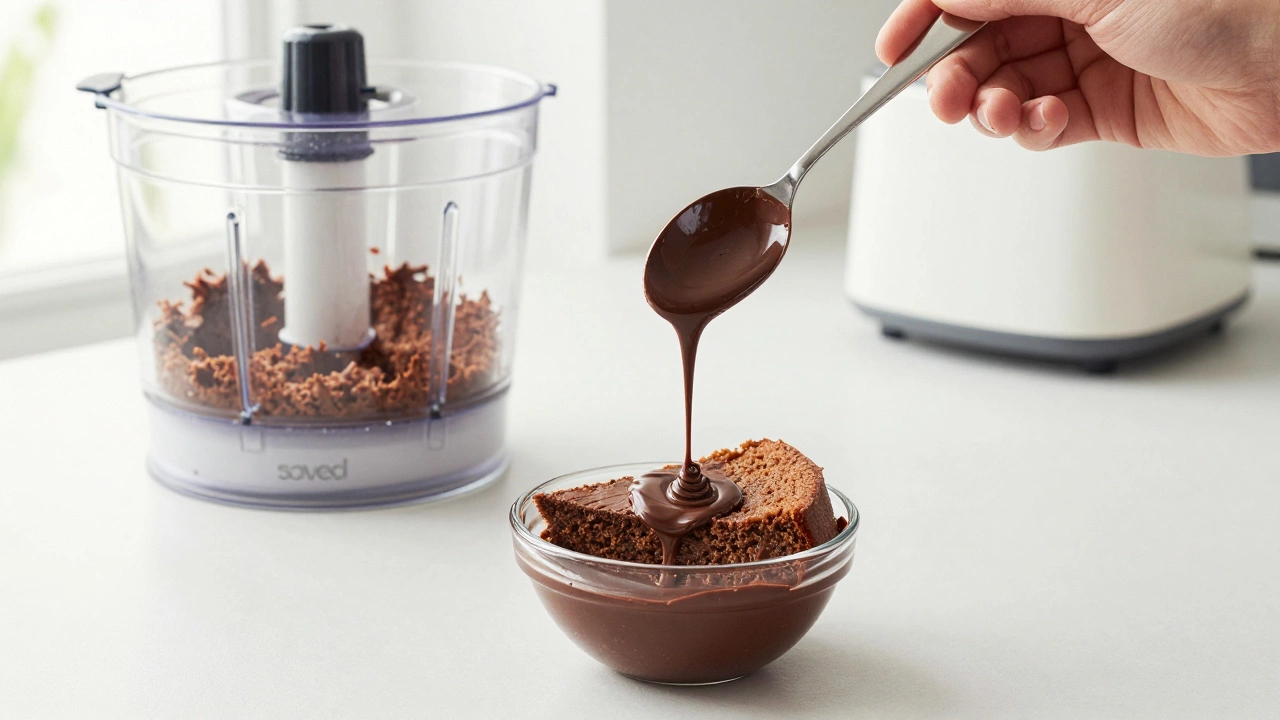
If you've only gone a few degrees over, you might get away with it. But if it's truly hard, you can't simply "un-boil" it. However, you can repurpose the ingredients. One of the best ways to save a failed batch is to turn it into a Ganache or a sauce. By adding more liquid (like heavy cream or milk) and reheating the mixture gently, you can break down those hard sugar bonds. You won't get that classic fudge texture back, but you'll have a delicious chocolate glaze for cakes or a topping for ice cream.
Another trick is to blend the hard fudge into a powder using a food processor. You can then use these "fudge crumbs" as a topping for cupcakes or mix them into a batter for brownies. You're essentially taking a texture failure and turning it into a design feature.
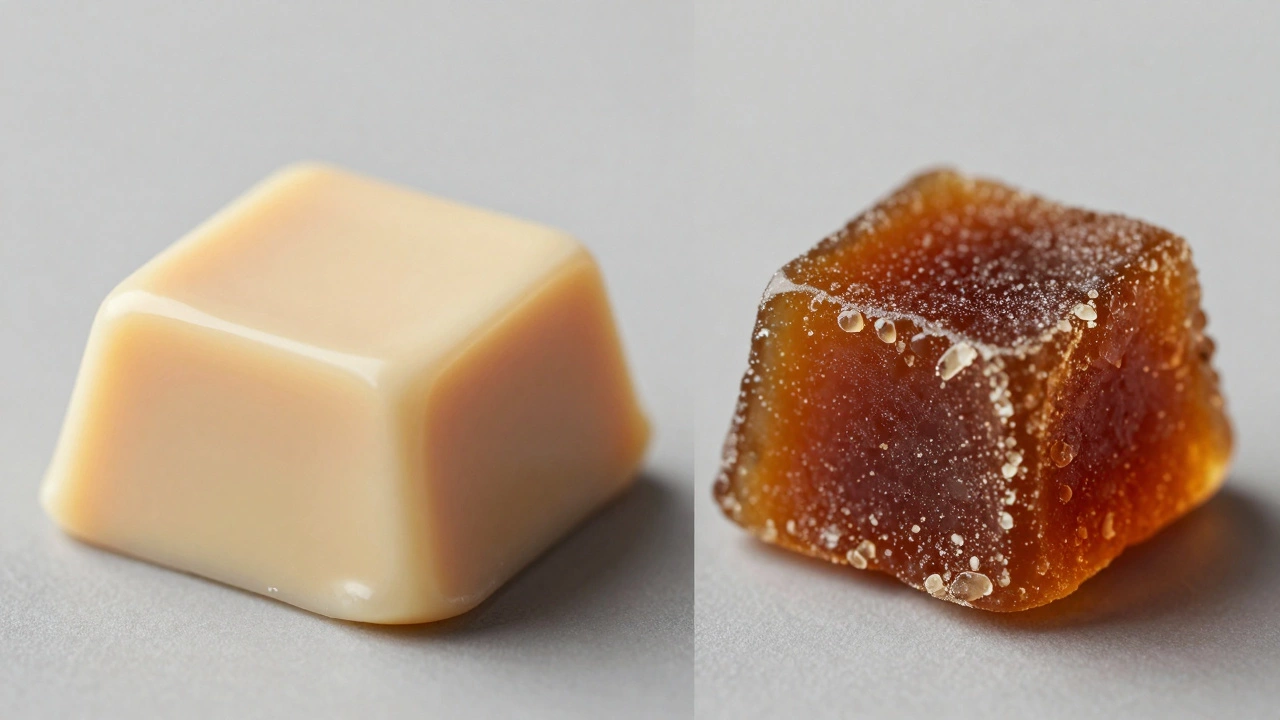
Essential Tools for Precision Candy Making
To avoid this headache, you need a reliable setup. Relying on "visual cues" is a gamble. Using a Candy Thermometer is the only way to ensure consistency. Not all thermometers are equal, though. A digital probe is fast, but a traditional glass mercury-free thermometer is often more durable when sitting in a boiling pot of sugar for ten minutes.
| Stage | Temperature (°F) | Resulting Texture | Common Use |
|---|---|---|---|
| Soft Ball | 230°F - 235°F | Soft, holds shape | Fudge, Pralines |
| Firm Ball | 235°F - 240°F | Firmer, less sticky | Caramels |
| Hard Ball | 245°F - 250°F | Hard, brittle | Hard Candies |
| Soft Crack | 270°F - 290°F | Forms threads | Taffy |
Using a Double Boiler can also prevent overshooting your temperature. By heating the fudge in a bowl over simmering water rather than directly on a burner, you slow down the heating process. This gives you a much wider window of time to catch the exact degree you need before the sugar crosses the line into "rock territory."
Preventing Grainy Texture and Crystallization
Overboiling isn't the only way to ruin fudge; crystallization is the other big enemy. This happens when sugar crystals form too early, creating a gritty texture. To stop this, professional candy makers use an "interfering agent." This is something that prevents the sucrose molecules from bonding together too quickly.
Common agents include Corn Syrup or a squeeze of lemon juice. The glucose in corn syrup is a different type of sugar that gets in the way of the sucrose crystals, keeping the fudge smooth. If you've overboiled your fudge and it's also grainy, the damage is more severe because you're fighting both a temperature issue and a structural issue. In this case, your best bet is to melt it down with cream as mentioned earlier.
The Role of Fat and Emulsification
Fudge is an emulsion of fat (from butter or cream) and sugar. When you boil the mixture too long, you're not just removing water; you're also stressing the emulsion. If the heat gets too high, the butter can separate, leaving you with a greasy film on top of your hard candy. This happens because the proteins and fats can't hold onto the sugar syrup once the water content drops below a certain threshold.
If you see oil separating, stop stirring immediately. Sometimes, whisking in a tiny bit of room-temperature butter at the very end of the cooling process can help re-incorporate some of that fat, but once the sugar has hard-set, the oil separation becomes a permanent part of the texture.
Common Mistakes That Lead to Overboiling
Why does this happen in the first place? Usually, it's one of three things: a faulty thermometer, an oversized pot, or a lack of attention. If your pot is too small, the fudge can bubble over, causing you to panic and move the pot, often missing the temperature mark. If the pot is too large, the heat distributes unevenly, and you might have "hot spots" where the sugar is scorching even if the average temperature seems fine.
Another common slip-up is ignoring the "carry-over heat." Even after you take the pot off the stove, the sugar continues to climb in temperature for a minute or two. If you hit 238°F on the burner, you might actually hit 242°F by the time you start stirring in your butter. To prevent this, remove the pot from the heat exactly 2 degrees before your target.
Pro Tips for a Perfect Batch
- Use a Wet-Sponge Brush: Use a pastry brush dipped in warm water to wash down the sides of the pot. Any sugar crystals clinging to the side can fall back into the mixture and trigger a chain reaction of crystallization.
- Don't Stir During the Boil: Once the mixture reaches a simmer, stop stirring. Stirring introduces air and can encourage crystals to form. Only stir again once you've reached the target temperature and removed the pot from the heat.
- Control Your Cooling: Don't put your hot fudge in the fridge to speed things up. Slow cooling at room temperature allows the crystals to form more uniformly, resulting in a smoother bite.
Can I just add more milk to fix hard fudge?
Adding milk to cold, hard fudge won't do anything. You have to reheat the fudge with the milk over low heat to dissolve the sugar bonds. However, this will change the texture from a fudge to a sauce or a soft caramel; you cannot return it to a traditional fudge consistency once it has been overboiled.
Why is my fudge grainy even if I didn't overboil it?
Graininess is usually caused by premature crystallization. This happens if you stir the mixture too much while it's boiling or if you didn't use an interfering agent like corn syrup. It can also happen if there were sugar crystals on the side of the pot that fell back in.
What is the best thermometer for fudge?
A digital probe thermometer is great for speed, but a traditional glass candy thermometer is often preferred by pros because it allows you to see the temperature rise in real-time without constantly inserting and removing a probe, which can cool down the mixture.
Does the type of sugar affect how fudge boils?
Yes. Using brown sugar instead of white granulated sugar introduces molasses, which contains invert sugars. These act as natural interfering agents and make the fudge less likely to crystallize, but they also change the boiling point slightly and add a deeper flavor.
How do I know if I've hit the soft-ball stage without a thermometer?
Drop a small spoonful of the syrup into a cup of ice-cold water. If you can pick up the syrup and mold it into a soft, squishy ball that flattens when you press it, you've hit the soft-ball stage. If it's too runny to form a ball, keep boiling. If it's hard and doesn't flatten, you've overboiled it.