Cookie Creaming Checker
This tool helps you recognize the ideal creaming stage to prevent cakey cookies. Based on the article: Overcreaming butter and sugar turns soft cookies into greasy, cakey disasters.
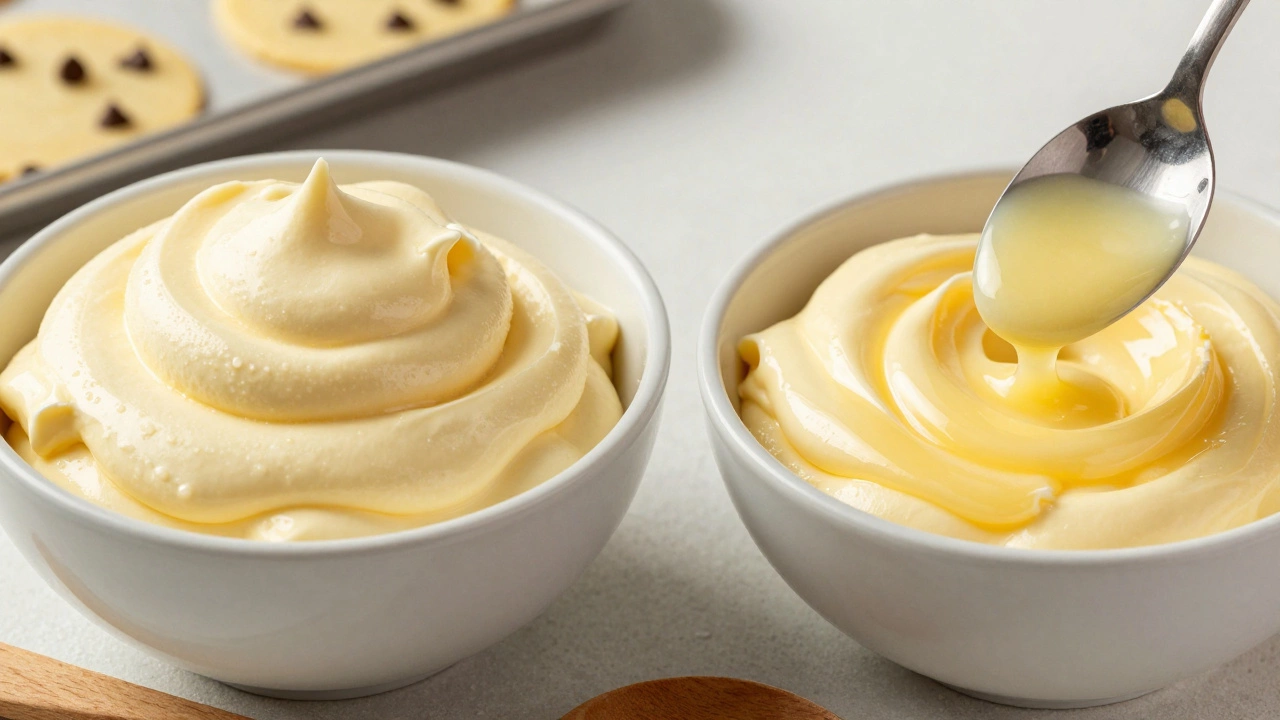
✅ Perfect creaming detected!
The mixture is pale yellow, fluffy, and holds its shape. It creates the ideal structure for chewy, spreading cookies.
This is the texture you should aim for: light and fluffy with no grease or separation.
Most people think the secret to perfect cookies is just using the right recipe. But here’s the truth: overcreaming butter and sugar is one of the most common mistakes that turns soft, chewy cookies into greasy, cakey disasters. And no, it’s not just about how long you mix it-it’s about what’s happening to the fat, the air, and the structure of your dough.
What Overcreaming Actually Does
When you cream butter and sugar together, you’re not just mixing ingredients. You’re trapping tiny air bubbles into the softened butter. These bubbles are what make cookies rise and spread just right in the oven. But if you keep mixing past the point where the mixture is light and fluffy-say, past 5 to 7 minutes on medium speed-you start to break those bubbles. The butter gets too warm, the sugar dissolves too much, and the whole mixture turns into a greasy paste.
That’s when things go wrong. Instead of getting a crisp edge with a chewy center, you end up with cookies that puff up like cakes, then collapse into thick, dense discs. They don’t spread. They don’t crisp. They taste more like shortbread than classic chocolate chip cookies.
The Science Behind the Mistake
Butter is about 15-20% water and 80% fat. When you cream it with sugar, the granules of sugar cut into the fat, creating those air pockets. The sugar also pulls in a little moisture from the butter, which helps form gluten later when you add flour. But if you overmix, the sugar dissolves completely. No more granules means no more air pockets. The fat becomes too liquid, and the dough loses its structure.
Think of it like whipping cream. You want it stiff, not runny. Overwhip it, and it turns to butter. Overcream butter and sugar, and you get something closer to melted margarine than a cookie base.
How to Tell If You’ve Overcreamed
You don’t need a timer. You need your eyes and your fingers.
- Perfect creaming: The mixture is pale yellow, fluffy, and holds its shape when you lift the spatula. It should leave a trail that slowly sinks back in.
- Overcreamed: It looks shiny, greasy, and thin. It might even look like it’s starting to separate. If you scoop a spoonful and it drips off, you’ve gone too far.
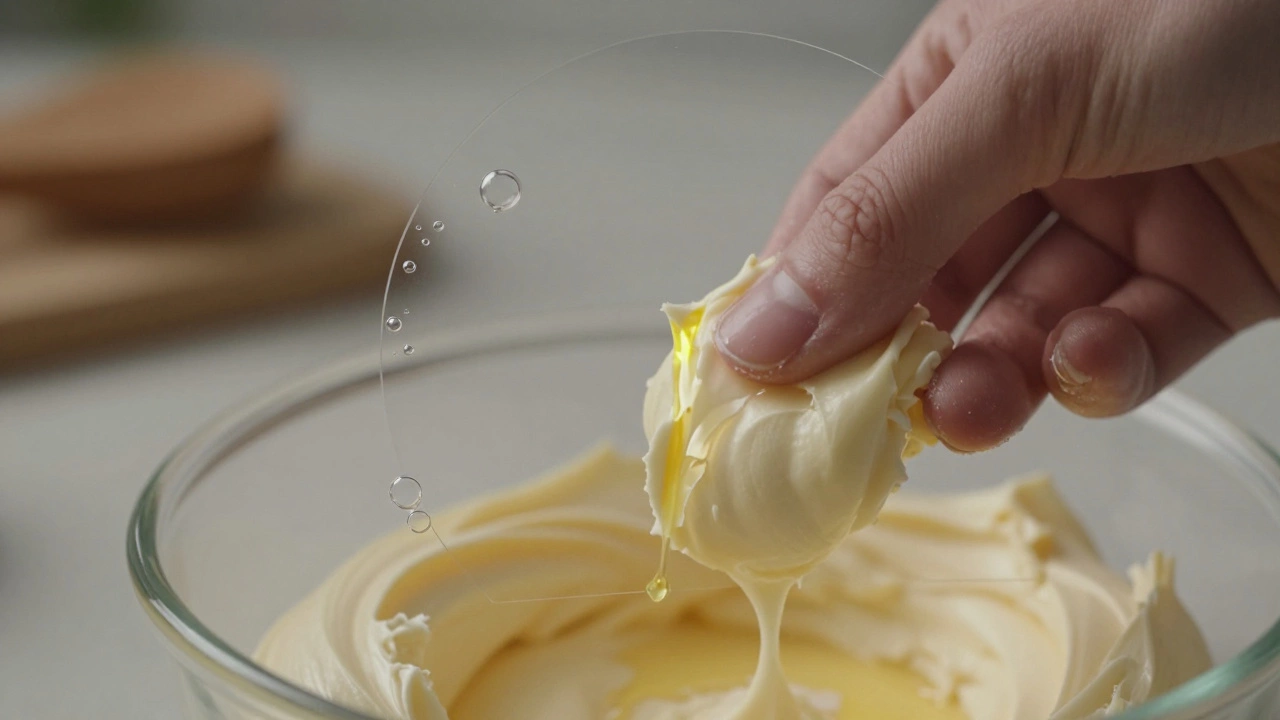
Some bakers swear by the “finger test”: dip a clean finger into the mixture. If it sticks to your finger like glue, you’re over. If it just lightly clings and falls off easily, you’re good.

What Happens in the Oven
When you bake overcreamed dough, the excess liquid fat melts too fast. Instead of slowly releasing steam to create lift, the fat pools at the bottom. Your cookies spread too little, then sink. They end up thick, greasy, and heavy-like a cookie version of a dense muffin.
Texture-wise, they lose that satisfying contrast. No crisp edges. No chewy middle. Just a uniform, almost doughy bite. And because there’s no air left to trap steam, they don’t develop that golden-brown color you want. They stay pale, and they taste bland-even if you used expensive chocolate.
Real-Life Example: The Chocolate Chip Cookie That Failed
A friend of mine once followed a recipe that said, “Cream until light and fluffy, about 8 minutes.” She used a stand mixer on medium-high. After 10 minutes, the butter looked glossy and runny. She added eggs, flour, chocolate chips, and baked. The cookies came out thick, greasy, and oddly spongy. She thought the recipe was broken. It wasn’t. She just overdid it.
She tried again, this time creaming for 4 minutes-just until the color lightened and the texture looked like whipped frosting. The second batch? Perfect. Crisp edges, soft center, rich flavor. The only difference? She stopped mixing before it looked “done.”
How to Fix It (If You Already Overcreamed)
Once it’s overcreamed, you can’t undo it. But you can salvage the batch.
- Chill the dough for at least 2 hours. Cold butter firms up, which helps slow down spreading and gives structure back.
- Add 1-2 tablespoons of flour to absorb excess moisture. Don’t overmix-just fold it in gently.
- Shape the cookies slightly thicker than usual. They’ll bake more evenly.
- Bake at a slightly lower temperature (325°F instead of 350°F) to give the structure time to set before the fat melts completely.
It won’t be perfect, but it’ll be edible. And you’ll know better next time.
Pro Tips to Avoid Overcreaming
- Use room temperature butter-not melted, not cold. It should give slightly when pressed with your finger.
- Use a paddle attachment, not a whisk. Whisks incorporate too much air too fast.
- Stop mixing as soon as the color lightens and the texture looks fluffy. If you’re unsure, err on the side of undermixing.
- Use a timer. Set it for 3-5 minutes. Most stand mixers are too powerful. Hand mixing gives you more control.
- Don’t rely on recipes that say “cream for 10 minutes.” That’s usually a mistake. Most professional bakers cream for under 5.
Why This Matters More Than You Think
Cookie texture isn’t magic. It’s physics. And overcreaming is like overinflating a balloon until it pops. You can’t get the same rise, the same spread, or the same mouthfeel once you’ve destroyed the structure.
That’s why the best cookie recipes don’t just list ingredients-they describe the texture you’re aiming for: “light and fluffy,” “pale yellow,” “pea-sized lumps.” They’re telling you what success looks like. Not how long to mix.
Final Thought: Less Is More
There’s a myth that more mixing = better cookies. It’s not true. In baking, timing matters less than texture. A perfectly creamed mixture takes less than five minutes. Anything longer just makes things worse.
Next time you make cookies, stop before you think you’re done. Let the butter do its job. Let the sugar do its job. And let the oven do the rest.
Can you fix cookies if you overcream the butter and sugar?
You can’t undo overcreaming, but you can improve the outcome. Chill the dough for at least 2 hours to firm up the fat. Add 1-2 tablespoons of flour to absorb extra moisture. Shape the cookies thicker and bake at 325°F instead of 350°F to help them set before the fat melts. They won’t be perfect, but they’ll still be tasty.
How long should you cream butter and sugar for cookies?
Cream for 3 to 5 minutes on medium speed with a paddle attachment. Stop when the mixture is pale yellow, fluffy, and holds a soft peak. If you’re mixing by hand, it may take 7-10 minutes. The goal isn’t time-it’s texture. If it looks greasy or shiny, you’ve gone too far.
Does room temperature butter make a difference?
Yes. Butter that’s too cold won’t cream properly. Butter that’s too warm (melting) turns into oil and won’t trap air. Ideal temperature is around 65-68°F (18-20°C). Press it gently with your finger-it should indent slightly without collapsing.
Why do my cookies turn out cakey instead of chewy?
Overcreaming is one of the top reasons. When you trap too much air and dissolve the sugar, the dough behaves more like cake batter than cookie dough. Other causes include using too much leavening (baking soda or powder) or too many eggs. But overcreaming is the most common.
Should I use a stand mixer or hand mix?
A stand mixer is fine if you use the paddle and monitor closely. But hand mixing gives you more control and helps you feel the texture as it changes. Many bakers in the UK prefer hand mixing for cookies because it’s easier to stop before overdoing it. If you use a stand mixer, set it to medium-not high-and check every minute.