Spanish Brownie Phrase Builder
Build the perfect sentence to order your dream brownie in a Spanish-speaking bakery. Select options below to see the real-time translation.
1. Start the Sentence
2. Choose the Item
3. Flavor & Texture (Optional)
4. Add-ons (Optional)
Your Order
...
...
The Short Answer: It’s Still "Brownies"
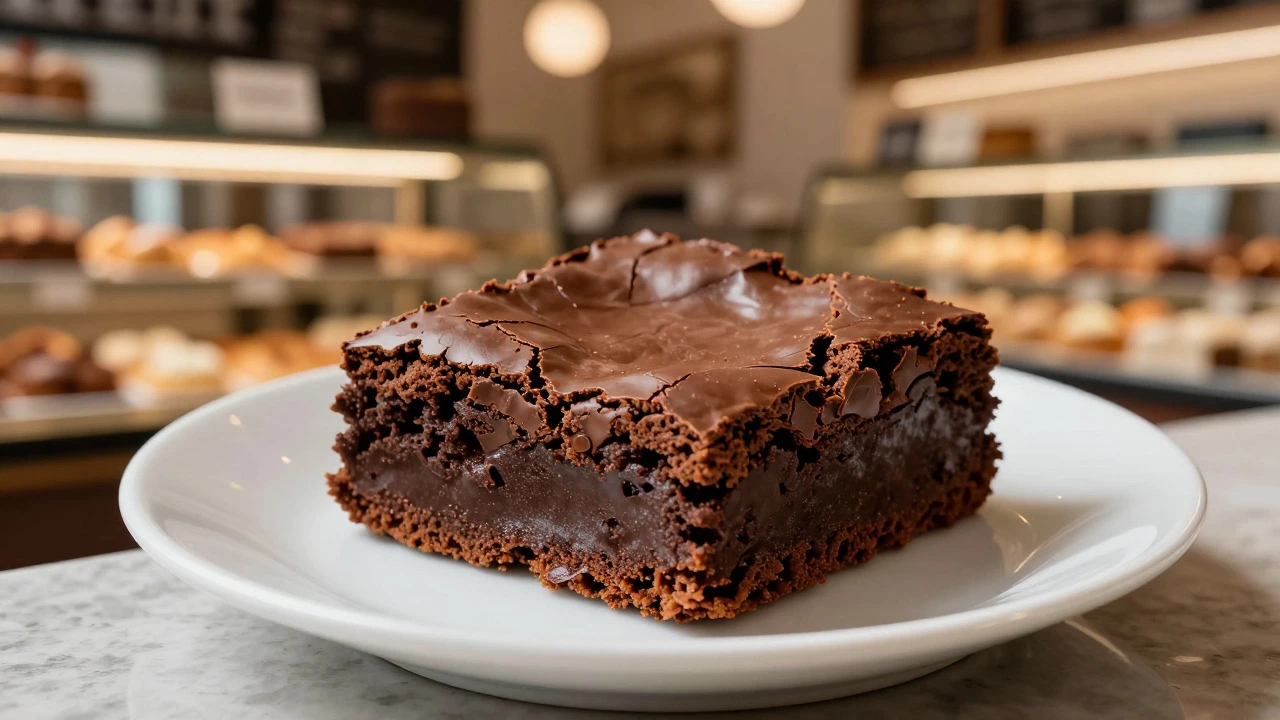
If you walk into a bakery in Madrid, Mexico City, or Buenos Aires and ask for brownies, the staff will likely understand you immediately. In most modern Spanish-speaking contexts, the word brownie has not been translated; it has been adopted. You will see menus listing "Brownies de Chocolate," "Brownies de Vainilla," or simply "Brownies." This is because the treat is distinctly American in origin, and Spanish speakers often borrow English terms for cultural imports that don't have a direct historical equivalent.
However, if you are looking for a descriptive term to explain what a brownie is to someone who has never heard of them, or if you want to use the traditional culinary vocabulary, there are specific phrases used across different regions. Understanding these nuances helps you navigate everything from high-end patisseries to casual family gatherings where homemade desserts are served.
Why There Is No Single Direct Translation
To understand why we say "brownies" instead of translating the word literally, we have to look at the nature of the dessert itself. A brownie is a dense, square-cut chocolate bar cookie made with butter, sugar, eggs, flour, and cocoa powder. Unlike a cake, which relies on leavening agents like baking powder to rise and become airy, a brownie relies on the emulsion of eggs and melted chocolate to create a fudgy, chewy texture.
In Spanish, the word "brown" translates to marrón (in Spain) or café (in Latin America). The suffix "-ie" doesn't have a direct equivalent in Spanish noun formation. If you were to translate it literally, you might get something awkward like "pastelitos marrones" (little brown cakes), but this description fails to capture the specific texture and ingredients that define the treat. Because the concept is tied so closely to its American roots, borrowing the word became the standard practice.
Descriptive Terms Used in Different Regions
While "brownies" is the dominant term, regional variations exist, especially when people try to describe the dessert without using the English loanword. These descriptions often focus on the primary ingredient: chocolate.
| Region | Common Term | Literal Meaning | Context & Usage |
|---|---|---|---|
| Mexico & Central America | Brownies / Torta de Chocolate | Chocolate Cake | Often confused with small chocolate cakes. If it's fudgy, they usually stick to "brownies." |
| Spain | Brownies / Galletas de Chocolate | Chocolate Cookies | Sometimes referred to as soft cookies due to their density, though "brownies" is widely understood. |
| Argentina & Uruguay | Brownies / Alfajores de Chocolate | Chocolate Alfajores | Rarely called alfajores unless filled with dulce de leche. Usually just "brownies." |
| Colombia & Peru | Brownies / Pastelito de Chocolate | Little Chocolate Pie/Cake | Generic term for any small chocolate baked good. |
It is important to note that calling a brownie a "torta de chocolate" can lead to confusion. In many Latin American countries, a torta implies a layered cake with frosting, which is structurally very different from a dense brownie. Using the wrong term might result in receiving a slice of fluffy angel food cake with chocolate glaze instead of the fudgy bar you expect.
Fudgy vs. Cakey: How Texture Changes the Vocabulary
The texture of a brownie plays a significant role in how it is described in Spanish. Bakers distinguish between two main types: fudgy and cakey. When ordering or describing these variations, specific adjectives come into play.
- Fudgy Brownies: Described as "brutales" (intense/dense) or "con textura de trufa" (truffle-like texture). The key attribute here is density. You might hear phrases like "muy denso" (very dense) or "humedo" (moist).
- Cakey Brownies: Described as "esponjosos" (spongy) or "aireados" (airy). These are closer to what a Spanish speaker would recognize as a standard cake (pastel or torta).
If you are making brownies and want to emphasize the richness, you might use the phrase "de chocolate intenso" (intense chocolate). For those with dietary restrictions, the terminology shifts slightly. Vegan brownies are often labeled "brownies veganos" or "sin lácteos" (dairy-free), while gluten-free versions are clearly marked as "sin gluten".
Key Ingredients and Their Spanish Names
Understanding the translation of ingredients helps clarify why the dessert is named the way it is. The core components of a brownie have straightforward translations, but knowing them helps you identify authentic recipes versus imitations.
- Cocoa Powder: Cacao en polvo or cacao amargo (bitter cocoa).
- Dark Chocolate: Chocolate negro or chocolate con cacao.
- Butter: Mantequilla (common in most regions) or manteca (shortening/lard, used in some older recipes).
- Eggs: Huevos.
- Flour: Harina de trigo (wheat flour).
- Sugar: Azúcar.
When a recipe calls for "chocolate derretido" (melted chocolate) rather than just cocoa powder, the resulting brownie will be denser and richer. This distinction is crucial for achieving the authentic American style that has become popular globally.
Cultural Context: Are Brownies Popular in Spanish-Speaking Countries?
Yes, absolutely. Brownies have gained immense popularity across the Hispanic world, particularly in urban centers. In Mexico, they are a staple in cafes and bakeries, often served warm with a scoop of vanilla ice cream (helado de vainilla). In Argentina, the love for sweet, dense treats aligns well with the brownie profile, and you will find innovative variations topped with dulce de leche.
In Spain, brownies are common in modern pastry shops (patisserías) and coffee chains. They are often marketed as a quick snack or a companion to a strong espresso. The globalization of food culture means that younger generations in Spanish-speaking countries are just as familiar with brownies as they are with local traditional desserts like tres leches or churros.
How to Order Brownies in Spanish
Knowing how to ask for brownies correctly ensures you get exactly what you want. Here are some practical phrases you can use:
- Standard Request: "¿Tienen brownies?" (Do you have brownies?)
- Specific Flavor: "Quisiera un brownie de chocolate con nueces." (I would like a chocolate walnut brownie.)
- Texture Preference: "Prefiero los más densos y húmedos." (I prefer the denser and moister ones.)
- With Toppings: "¿Puedo añadir helado o crema batida?" (Can I add ice cream or whipped cream?)
If you are in a more traditional setting where they might not carry them, you can describe it: "Busco una barra cuadrada de chocolate, densa y sin levadura." (I'm looking for a square chocolate bar, dense and without leavening.)
Variations and Modern Twists
As with any globalized food, brownies have evolved in Spanish-speaking markets. Common variations include:
- Brownies con Dulce de Leche: Especially popular in Argentina and Uruguay, featuring a swirl of caramelized milk.
- Brownies de Café: Infused with espresso powder, appealing to coffee lovers in Spain and Colombia.
- Brownies Frutos Rojos: Made with berries, offering a lighter, fruitier alternative.
- Brownies Proteicos: A growing trend in health-conscious circles, using almond flour (harina de almendras) and protein powder.
These variations show how the basic concept of the brownie has been adapted to local tastes and dietary trends, further cementing its place in the culinary vocabulary of Spanish speakers.
Is "brownie" a loanword in Spanish?
Yes, "brownie" is considered a loanword (préstamo lingüístico) in Spanish. It is widely accepted and used without translation in most Spanish-speaking countries, especially among younger generations and in urban areas.
What is the difference between a brownie and a torta de chocolate?
A brownie is dense, fudgy, and typically does not use chemical leavening agents like baking powder. A torta de chocolate is a cake that is lighter, airier, and usually layered with frosting. The texture and preparation methods are significantly different.
How do you say "fudgy brownie" in Spanish?
You can say "brownie con textura de trufa" or describe it as "muy denso y húmedo." There isn't a single direct translation for "fudgy," so descriptive phrases are commonly used.
Are brownies called something else in Mexico?
In Mexico, they are almost exclusively called "brownies." Sometimes they might be referred to generically as "pastelitos de chocolate," but this is less common and can be ambiguous.
Can I order a brownie in a traditional Spanish bakery?
In larger cities in Spain, yes. In smaller towns or very traditional bakeries that focus on pastries like croissants and empanadas, they might not carry them. It's always safe to ask: "¿Tienen brownies?"