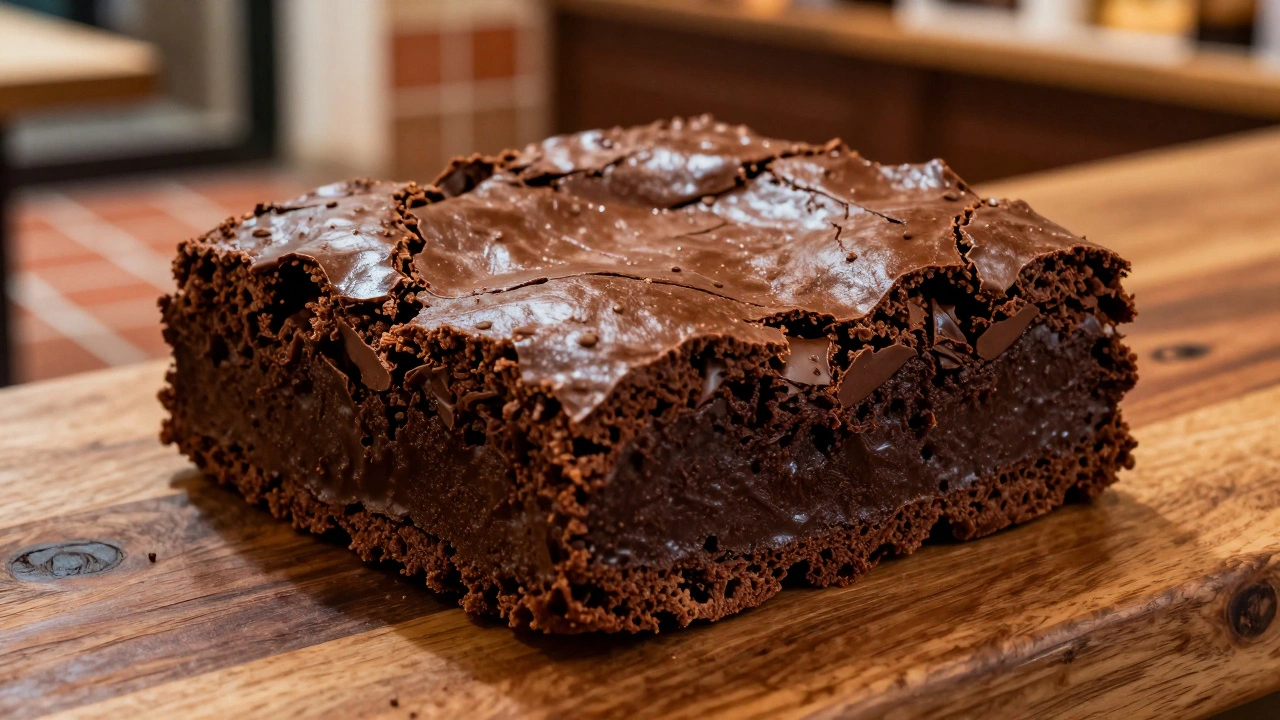
Interactive Spanish Brownie Phrasebook
Select your options below to generate the correct Spanish phrase for ordering or describing brownies.
You walk into a bakery in Madrid or Mexico City, spot that dense, fudgy square of chocolate goodness, and wonder: what do you call it here? The word "brownies" is one of those culinary exports that has crossed borders with ease, but its translation isn't always as straightforward as you might think. While many people assume there is a single, perfect Spanish equivalent, the reality is a bit more nuanced depending on where you are and exactly what kind of treat you're looking at.
If you are traveling, hosting friends from Spanish-speaking countries, or just curious about language nuances, understanding how "brownies" translates helps you navigate menus and bakeries without confusion. It’s not just about swapping words; it’s about recognizing cultural differences in texture, ingredients, and even the name itself. Let’s break down exactly what "brownies" means in Spanish, why some regions keep the English word, and what traditional alternatives exist if you can’t find them.
The Direct Translation: "Brownies" vs. "Barritas de Chocolate"
In most parts of the world today, the simplest answer is that brownies are still called "brownies." Just like we say "pizza," "sushi," or "hamburger" in English, many Spanish speakers have adopted the original English term. If you order "unos brownies" in Buenos Aires, Bogotá, or Barcelona, everyone will know exactly what you want. This linguistic borrowing happens frequently with food items that don’t have a direct historical counterpart in the local cuisine.
However, if you need a formal or descriptive translation-perhaps for a menu, a recipe book, or when speaking to someone who doesn’t recognize the loanword-the standard phrase is barritas de chocolate. Literally, this translates to "little bars of chocolate." You’ll also see variations like:
- Tortitas de chocolate: Meaning "little chocolate cakes." This is common in Latin America, especially in countries like Colombia and Peru.
- Galletas de chocolate: Meaning "chocolate cookies." Note that this can be confusing because "galleta" usually implies a crispier, cookie-like texture rather than the soft, fudgy interior of a true brownie.
- Barras de chocolate: Similar to barritas, but slightly less diminutive. Often used in Spain.
When writing recipes or describing the item formally, "barrita de chocolate" is your safest bet. It describes the shape (bar) and the primary flavor (chocolate), which captures the essence of the dessert without relying on an English loanword.
Regional Differences: Where Do They Say What?
Language is deeply tied to geography, and the way Spanish speakers refer to these chocolate squares varies significantly by region. Understanding these regional preferences can help you sound more natural and avoid awkward misunderstandings.
| Region/Country | Common Term Used | Notes & Context |
|---|---|---|
| Mexico | Brownies / Tortas de chocolate | Highly popular. "Torta" here refers to a small cake slice, not the sandwich known as a torta elsewhere. |
| Spain | Brownies / Barras de chocolate | Often found in cafes alongside churros. The English term is widely understood among younger generations. |
| Argentina | Brownies | Extremely common due to strong Italian and Anglo influence in their pastry culture. Rarely translated. |
| Colombia | Tortitas de chocolate / Brownies | "Tortita" emphasizes the cake-like nature. Homemade versions are very common. |
| Peru | Brownies / Bizcochos de chocolate | Sometimes confused with generic chocolate cakes unless specified as "fudgy" or "dense." |
| Chile | Brownies | Widely accepted loanword. Bakeries list them simply as "brownies." |
In Mexico, you might hear "tortas de chocolate" used interchangeably, but be careful: in other countries, "torta" means a meat sandwich. Context is key. In Argentina, the culinary scene is so influenced by international trends that the English word stuck immediately. You won’t often hear an Argentine try to translate it; they just say "brownie."
In Spain, while "brownie" is common, older generations or more traditional bakers might describe it as a "pastel de chocolate denso" (dense chocolate cake) if they feel the need to explain it. However, the trend is clearly moving toward keeping the original name.
Traditional Alternatives: Closest Spanish Equivalents
If you’re looking for a traditional Spanish dessert that resembles a brownie in texture or flavor, you won’t find an exact match. The brownie is distinctly American, originating in the early 20th century. However, several traditional sweets share similarities in ingredients or mouthfeel.
One close relative is the tarta de chocolate (chocolate tart/cake). Unlike a brownie, which is typically bar-shaped and fudgy, a tarta is usually round, layered, and served in slices. It tends to be lighter and airier. If you crave something denser, look for flan de chocolate or budín de chocolate. These are steamed or baked puddings that offer a moist, custard-like consistency similar to a very wet brownie.
Another option is polvorones de chocolate, particularly in Andalusia, Spain. These are shortbread-style cookies dusted with powdered sugar. While they are dry and crumbly rather than fudgy, they satisfy the same craving for intense chocolate flavor in a handheld format. For a truly authentic experience, try torrijas during Easter season, though these are soaked bread slices, quite different from a brownie.
Understanding these distinctions helps you set expectations. If you ask for a "brownie" in a traditional Spanish bakery that only makes pastries, they might point you toward a "bizcocho de chocolate" (chocolate sponge cake). It’s delicious, but it lacks that signature gooey center.
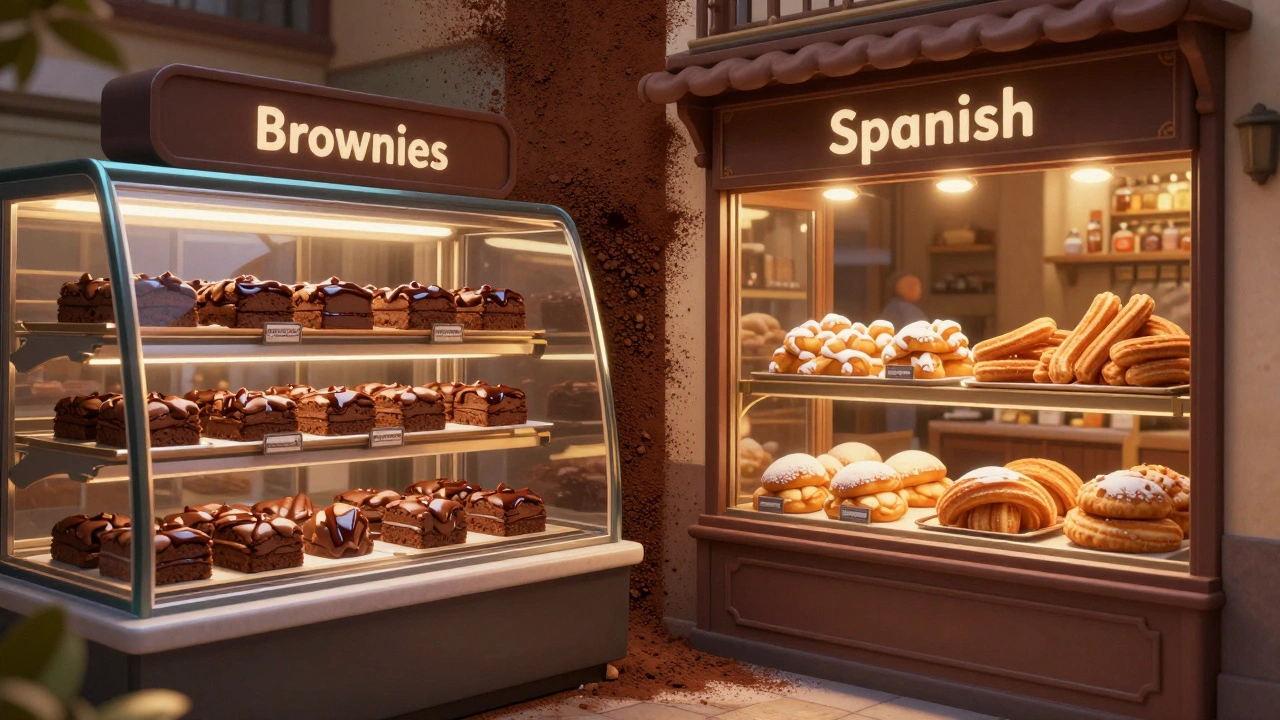
Describing Texture: Fudgy vs. Cakey in Spanish
A crucial part of the brownie identity is its texture. In English, we distinguish between "fudgy" (dense, moist, chewy) and "cakey" (lighter, fluffier). Spanish has specific adjectives to capture these nuances, which can help you order or bake the perfect batch.
- Fudgy: Use words like denso (dense), húmedo (moist), or meloso (gooey/sticky). You might say, "Quiero un brownie muy húmedo" (I want a very moist brownie).
- Cakey: Use esponjoso (spongy/fluffy) or aéreo (airy). "Este brownie es más esponjoso que el otro" (This brownie is fluffier than the other).
- Crunchy Top: Many brownies have a thin, crackly crust. This is described as crujiente por encima or con costra.
When baking, if you want to ensure your Spanish-speaking friend gets the right texture, specify these terms. A "brownie esponjoso" might disappoint someone expecting a dense, chocolate-packed bite. Conversely, a "brownie seco" (dry brownie) is generally considered a failure in both cultures!
How to Order Brownies in Spanish: Practical Phrases
Knowing the vocabulary is half the battle; using it correctly in conversation is the rest. Here are some practical phrases to help you navigate a bakery or café in a Spanish-speaking country.
- Asking for availability: "¿Tienen brownies?" (Do you have brownies?) or "¿Venden barritas de chocolate?" (Do you sell chocolate bars?)
- Ordering one: "Me gustaría un brownie, por favor." (I would like a brownie, please.)
- Specifying type: "¿Tienen brownies con nueces?" (Do you have brownies with nuts?) or "¿Están hechos con chocolate negro o con leche?" (Are they made with dark or milk chocolate?)
- Describing preference: "Prefiero los que son más densos." (I prefer the ones that are denser.)
- Checking ingredients: "¿Llevan gluten o frutos secos?" (Do they contain gluten or nuts?) - important for allergies.
Remember, smiling and pointing never hurts! If you’re unsure, showing a picture of a brownie on your phone can bridge any linguistic gap. Most bartenders and bakers are used to tourists and will appreciate your effort to speak their language.
Baking Brownies: Key Ingredients in Spanish
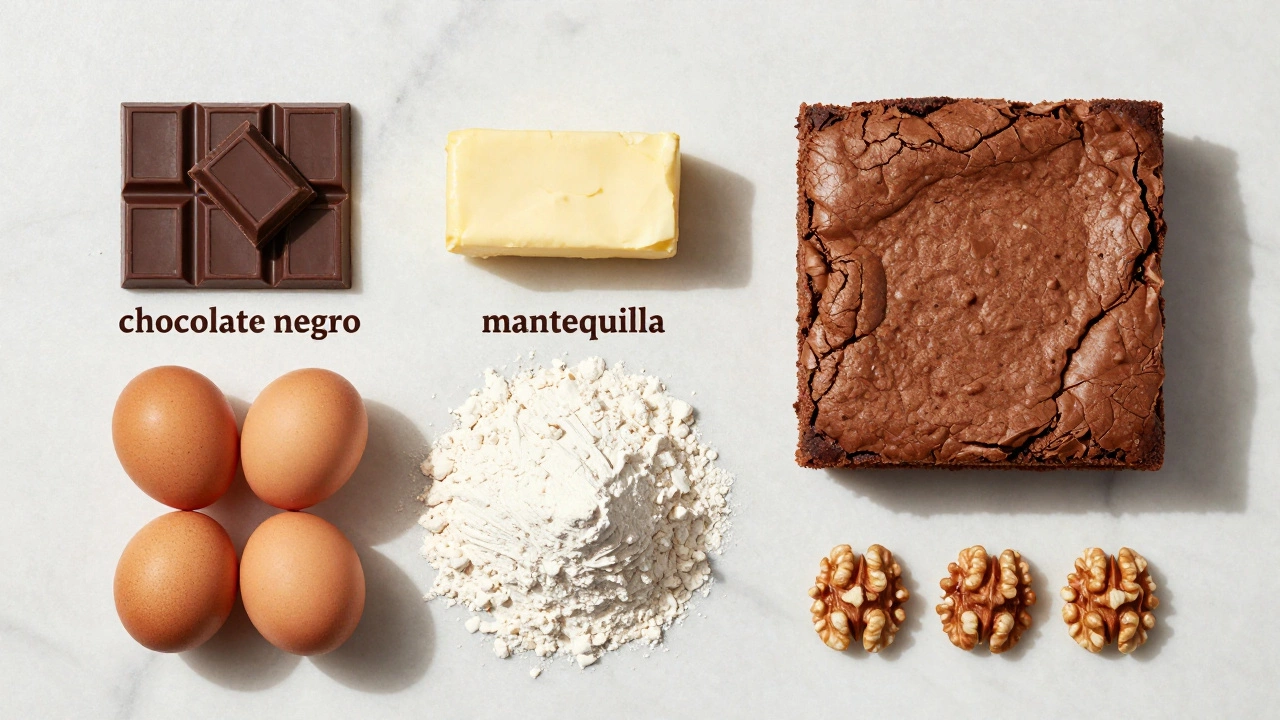
If you decide to make your own brownies and need to shop for ingredients in a Spanish-speaking country, knowing the names of the components is essential. Grocery store labels can be tricky if you don’t know the terminology.
- Chocolate: Chocolate. Specify chocolate negro (dark chocolate) or chocolate con leche (milk chocolate). For baking, look for chocolate para fundir (couverture/chocolate for melting).
- Butter: Mantequilla. Usually unsalted is mantequilla sin sal.
- Sugar: Azúcar. White sugar is azúcar blanca; brown sugar is azúcar morena or azúcar rubia.
- Eggs: Huevos.
- Flour: Harina. All-purpose flour is harina de trigo or harina común.
- Vanilla Extract: Esencia de vainilla or extracto de vainilla.
- Nuts: Frutos secos. Walnuts are nueces; pecans are nueces de pecana or simply pecanas.
One tip: In Spain, "nueces" specifically refers to walnuts. In some Latin American countries, it can be a broader term for various nuts, so always clarify if you need a specific type. Also, check the cocoa percentage (porcentaje de cacao) on the chocolate packaging. Higher percentages (70%+) yield a more intense, bitter-sweet brownie, while lower percentages result in a sweeter, milder taste.
Why Do Some Places Keep the English Name?
You might wonder why Spanish speakers don’t just create a new word. Linguists call this phenomenon "lexical borrowing." It happens when a concept is new to a culture and lacks a pre-existing label. Since brownies were invented in the United States in the 1920s, they didn’t exist in Spanish-speaking culinary traditions before modern globalization.
Additionally, marketing plays a huge role. International chains like Starbucks, Dunkin’, and various boutique bakeries use English names to convey a sense of modernity, luxury, or exotic appeal. Calling a product "brownie" sounds trendy and familiar to global consumers. Over time, the word becomes normalized, much like "email," "internet," or "wifi" have been integrated into everyday Spanish speech.
This doesn’t mean the language is stagnant. Spanish is dynamic and constantly evolving. New words are added, old ones fade, and loanwords become naturalized. So, whether you say "brownie" or "barrita de chocolate," you’re participating in this living, breathing evolution of language.
Is "brownie" a masculine or feminine noun in Spanish?
The word "brownie" is treated as a masculine noun in Spanish. You would say "un brownie" (one brownie) and "los brownies" (the brownies). Even though it ends in 'e', loanwords often default to masculine unless they clearly refer to a feminine concept (like "la radio").
Can I use "galleta de chocolate" to mean brownie?
Technically, yes, but it’s risky. "Galleta" usually implies a crisp, crunchy cookie. If you ask for a "galleta de chocolate," you might get a thin, hard cookie instead of a soft, fudgy brownie. It’s better to use "brownie" or "barrita de chocolate" to avoid confusion.
What is the difference between a brownie and a cupcake in Spanish?
A cupcake is called a "cupcake" or "magdalena" in many places, but increasingly "mini pastel" or "queque" in some regions. The key difference is texture and form: cupcakes are tall, fluffy, and topped with frosting, while brownies are flat, dense, and rarely frosted (though they can be). In Spanish, "magdalena" often refers to a muffin-like bread, so context matters.
Are brownies popular in all Spanish-speaking countries?
Yes, they are widely popular, especially in urban areas and among younger demographics. In countries with strong European influence like Argentina and Uruguay, they are extremely common. In more traditional rural areas, you might find fewer options, but major cities everywhere have bakeries selling them.
How do I say "fudge brownie" in Spanish?
You can say "brownie tipo fudge" or "brownie denso y húmedo." The word "fudge" itself is sometimes used as-is in upscale bakeries, but describing it as "denso" (dense) and "meloso" (gooey) ensures everyone understands the texture you’re looking for.