
Macaron Shelf Life Calculator
How to Use
Select your storage method and filling type to see how long your macarons will stay fresh.
Macarons look delicate, taste divine, and disappear fast - but how long do they actually stay fresh? If you’ve ever bought a box of colorful French cookies only to find them soggy or stale a day later, you’re not alone. The truth is, macarons don’t last like regular cookies. Their crisp shell and soft filling make them tricky to store, and getting them right means knowing exactly when to eat them - and how to keep them that way.
How Long Do Macarons Stay Fresh at Room Temperature?
Macarons stored at room temperature last about 24 to 48 hours, but only if conditions are perfect. That means a cool, dry kitchen - no humidity, no direct sunlight, and no heat sources nearby. In a place like Bristol, where damp mornings are common, even a few hours can be too long. The filling, especially if it’s buttercream or ganache, starts to soften the shell from the inside. Within 36 hours, you’ll notice the crisp outer layer turning chewy, then mushy. The flavor doesn’t vanish right away, but the texture? That’s what makes a macaron special. Once it’s lost its signature crunch, it’s not really a macaron anymore.
Refrigeration: The Best Way to Extend Freshness
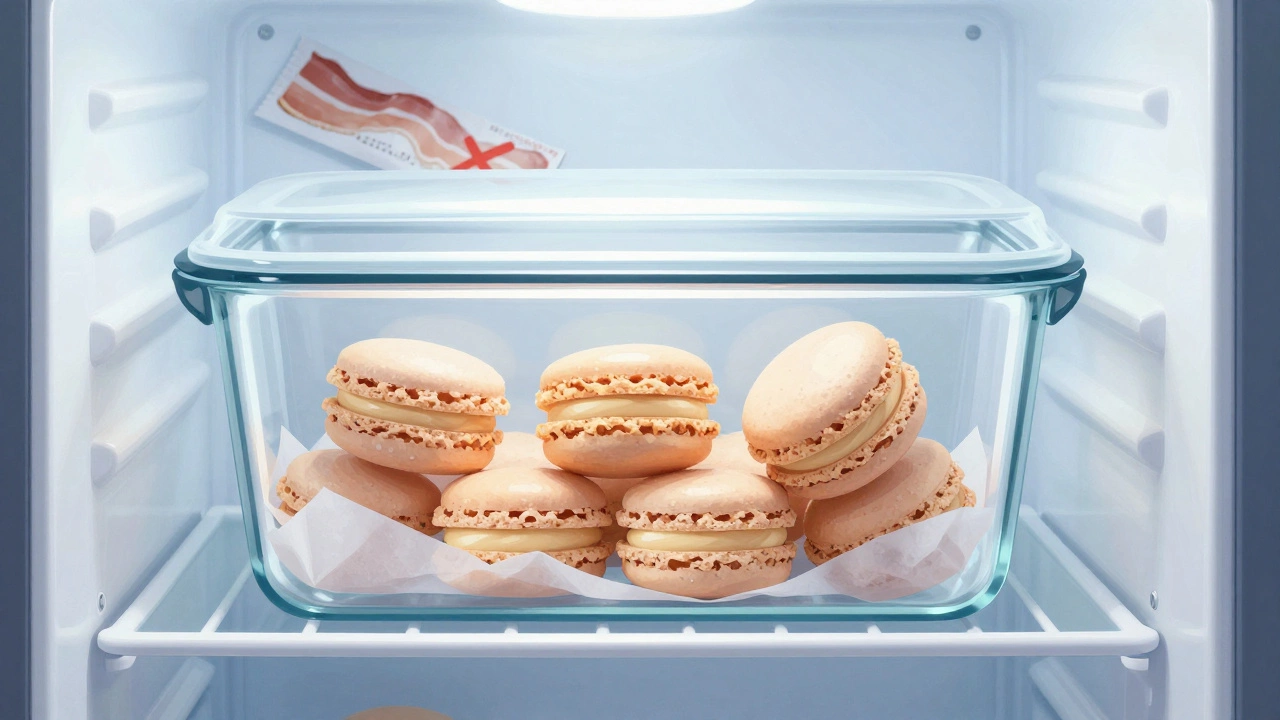
If you’re not eating them the same day, refrigeration is your best friend. Stored in an airtight container, macarons can last 4 to 7 days in the fridge. But here’s the catch: they need to rest in the fridge for at least 24 hours after baking before you eat them. That’s right - cold macarons taste better. The filling settles into the shell, the flavors meld, and the texture becomes more balanced. Think of it like aging cheese. The first day in the fridge might feel odd - too firm, too cold - but by day two or three, they’re at their peak. Just make sure the container is truly airtight. Otherwise, the macarons will absorb fridge smells. Bacon and macarons? Never a good combo.
Freezing Macarons: The Long-Term Solution
Need to keep them for weeks? Freeze them. Unfilled macaron shells can be frozen for up to 3 months without losing quality. Fill them after thawing, not before. Why? Because fillings like fruit curds or whipped cream can break down or release water during freezing, turning the shells soggy. If you’ve already filled them, freeze them in a single layer on a baking sheet first, then transfer to a sealed container. That way, they won’t stick together. When you’re ready to eat, let them thaw in the fridge for 4 hours, then bring them to room temperature for 30 minutes. This slow thaw keeps the shell crisp and the filling creamy. A frozen-and-thawed macaron might not be as perfect as one baked yesterday, but it’s still far better than a stale one.
Signs Your Macarons Have Gone Bad
Not all changes in texture mean spoilage - but some do. Here’s how to tell the difference:
- Moisture spots or sticky shells - this is normal aging, not spoilage. Just let them sit out for 30 minutes to dry slightly.
- Mold - fuzzy white, green, or black spots? Toss them. Mold grows fast on moist fillings, especially those with dairy or fruit.
- Strong sour or alcoholic smell - if the filling smells off, like vinegar or yeast, it’s fermented. This happens with cream-based fillings left too long.
- Separation or oily filling - if the buttercream looks greasy or the ganache has split, it’s broken, not spoiled. Still edible, but not pleasant.
When in doubt, trust your nose. Macarons don’t usually get dangerous to eat - they just stop being enjoyable. But if you see mold, don’t risk it. Even one moldy macaron can contaminate the whole batch.
Why Some Macarons Last Longer Than Others
Not all macarons are made the same. The filling is the biggest factor in shelf life. Buttercream-filled macarons last longer than those with fresh fruit, whipped cream, or curd. A simple chocolate ganache can hold up for nearly a week in the fridge. A raspberry coulis? Maybe 3 days max. Even the almond flour matters. High-quality, finely ground almond flour absorbs less moisture, keeping shells crisper longer. Cheap, coarse almond meal? It turns gummy fast. And don’t forget the sugar ratio. Too much sugar in the meringue can make shells sticky. Too little? They crack. Professional bakers balance these variables carefully - and that’s why their macarons stay perfect longer.
Storage Tips That Actually Work
Here’s what works - and what doesn’t:
- Do: Use glass or hard plastic containers with tight lids. Avoid zip-top bags - they let in air and odors.
- Do: Place a small piece of parchment paper between layers to prevent sticking.
- Do: Label containers with the date you filled them. Macarons don’t have expiration dates - you have to track them yourself.
- Don’t: Store them in the fridge door. It’s the warmest, most temperature-fluctuating spot.
- Don’t: Freeze filled macarons unless you’re sure the filling is freezer-stable. Fruit fillings? Skip it.
- Don’t: Reheat them in the microwave. You’ll turn them into rubber.
What Happens If You Eat Old Macarons?
Eating macarons past their prime won’t usually make you sick - unless they’re moldy or fermented. But you’ll notice the difference. A stale macaron feels like eating a dry cookie with a gooey center. The flavors are dull, the texture is off, and the joy is gone. Macarons are meant to be a sensory experience - the crunch, the soft middle, the burst of flavor. When that’s lost, you’re not enjoying a dessert. You’re just eating sugar and almonds. And that’s not worth it.

Best Practices for Buying and Serving
If you’re buying macarons from a bakery, ask when they were made. Reputable places will tell you. If they say "they’re fresh all day," be skeptical. The best macarons are made the day before and chilled overnight. If you’re making them at home, bake the shells one day, fill them the next, and serve them on day two or three. That’s when they’re at their best. Serve them at room temperature. Cold macarons hide flavor. Let them sit out for 20 to 30 minutes before serving. That’s when the filling softens, the aroma opens up, and the texture becomes perfect.
How to Revive Stale Macarons
Accidentally left them out too long? Don’t throw them away yet. Place them in an airtight container with a slice of apple or a damp paper towel for 12 hours. The moisture will slowly transfer to the shells, softening them back up. It won’t bring back the crispness, but it’ll make them edible again. This trick works best for macarons that are just dry, not moldy or smelly. Think of it as a rescue mission - not a restoration.
How long do macarons last in the fridge?
Macarons last 4 to 7 days in the fridge when stored in an airtight container. For best flavor, let them rest for at least 24 hours after filling. Always check for mold or sour smells before eating.
Can you freeze macarons?
Yes, but only unfilled shells freeze well. Freeze them on a tray first, then store in a sealed container for up to 3 months. Fill them after thawing. Filled macarons can be frozen too, but only if the filling is stable - like chocolate ganache or buttercream. Avoid fruit fillings.
Why are my macarons soggy?
Soggy macarons usually mean they absorbed moisture from the air or the filling. This happens if they’re stored in a humid environment, not in an airtight container, or if the filling is too wet. Let them sit at room temperature for 30 minutes - sometimes the shell firms up again. If they’re still mushy, they’ve been sitting too long.
Do macarons expire?
They don’t have a printed expiration date, but they do go bad. After 7 days in the fridge or 2 days at room temperature, they lose quality. Mold, sour smells, or oily fillings mean they’ve expired. Always check before eating.
Can you reheat macarons?
No. Microwaving or baking macarons ruins their texture. They become rubbery or hard. If they’re cold, let them come to room temperature naturally. If they’re stale, try the apple-slice trick to add back moisture - never heat them.
Final Tip: Eat Them Like They’re Meant to Be
Macarons aren’t meant to be hoarded. They’re made to be shared, enjoyed fresh, and savored slowly. The best ones are eaten within 48 hours of being filled. If you’re making them for a gift, deliver them the day after baking. That’s when they’re perfect. If you’re buying them, eat them within 24 hours. Don’t wait. Don’t overthink it. The magic of a macaron isn’t in how long it lasts - it’s in how quickly it disappears.