Brownie Matchmaker
Answer a few quick questions about your taste preferences and situation to find your perfect brownie match.
Select your preferences and click "Find My Brownie" to see which recipe suits you best.
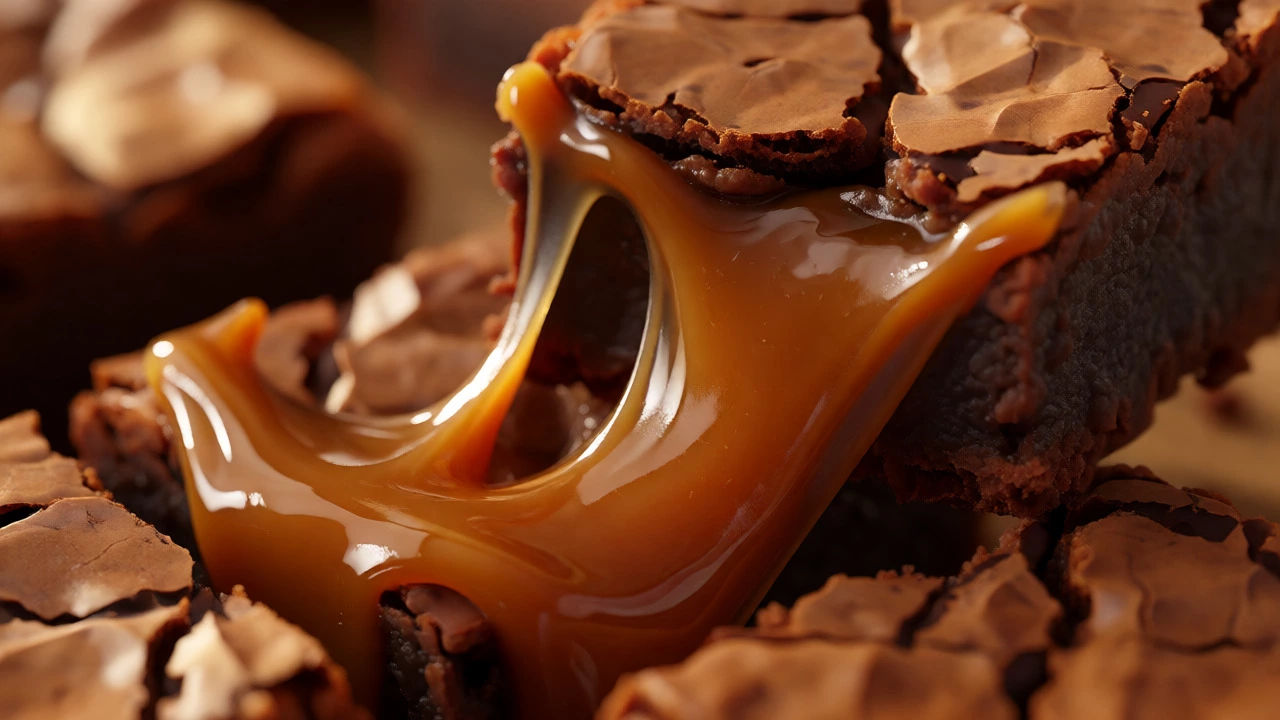
You bite into a brownie expecting the familiar fudgy crunch of cocoa and sugar, but instead, you get a gooey, caramel-like pull that sticks to your teeth. Is it burnt? Did someone swap the ingredients? No, you’ve just encountered a dulce de leche brownie, a distinct cousin of the classic chocolate brownie that changes everything about the eating experience. While both start with a similar batter base, the introduction of dulce de leche transforms the chemistry, texture, and flavor profile entirely. If you’re wondering whether to stick with your trusted chocolate recipe or try this South American-inspired twist, understanding the core differences is key to deciding which one belongs in your oven tonight.
The Core Ingredient Shift
At its heart, a classic brownie relies on melted butter, sugar, eggs, flour, and cocoa powder or melted dark chocolate. The goal here is usually a balance between cakey and fudgy textures, driven by the ratio of fat to flour. When you introduce dulce de leche, which is essentially sweetened condensed milk cooked for hours until it turns into a thick, caramel-colored spread, you are adding a massive amount of moisture, sugar, and dairy solids to the mix. This isn’t just a flavor addition; it’s a structural change. Dulce de leche has a high water content compared to solid chocolate, which means the batter behaves differently during baking. You aren’t just adding sweetness; you’re altering how the gluten forms and how the starches gelatinize.
This shift explains why many people find their first attempt at these brownies too wet or undercooked. In a standard recipe, the chocolate sets as it cools, giving the brownie its firm structure. Dulce de leche remains soft and viscous even after cooling. If you don’t adjust the flour or baking time, you end up with something closer to a warm pudding than a sliceable bar. It’s not a failure of skill; it’s a misunderstanding of ingredient behavior.
Texture and Mouthfeel Comparison
The most immediate difference you’ll notice is in the mouthfeel. A traditional brownie offers resistance. You have to chew through the dense, slightly dry crumb, especially if it’s a cakey version. There’s a snap when you break it apart. Dulce de leche brownies, however, offer little resistance. They are inherently softer, moister, and often described as "melt-in-your-mouth." Because the caramel component doesn’t crystallize like sugar in a crust does, the center stays tender indefinitely. This can be a pro or a con depending on what you want from a dessert.
If you prefer a clean cut and a defined edge, classic brownies win every time. But if you’re looking for indulgence and richness that coats the palate, the dulce de leche variety provides a creamy density that chocolate alone struggles to match without becoming overly heavy. Think of it this way: a classic brownie is a sturdy building block; a dulce de leche brownie is a lush, flowing landscape.
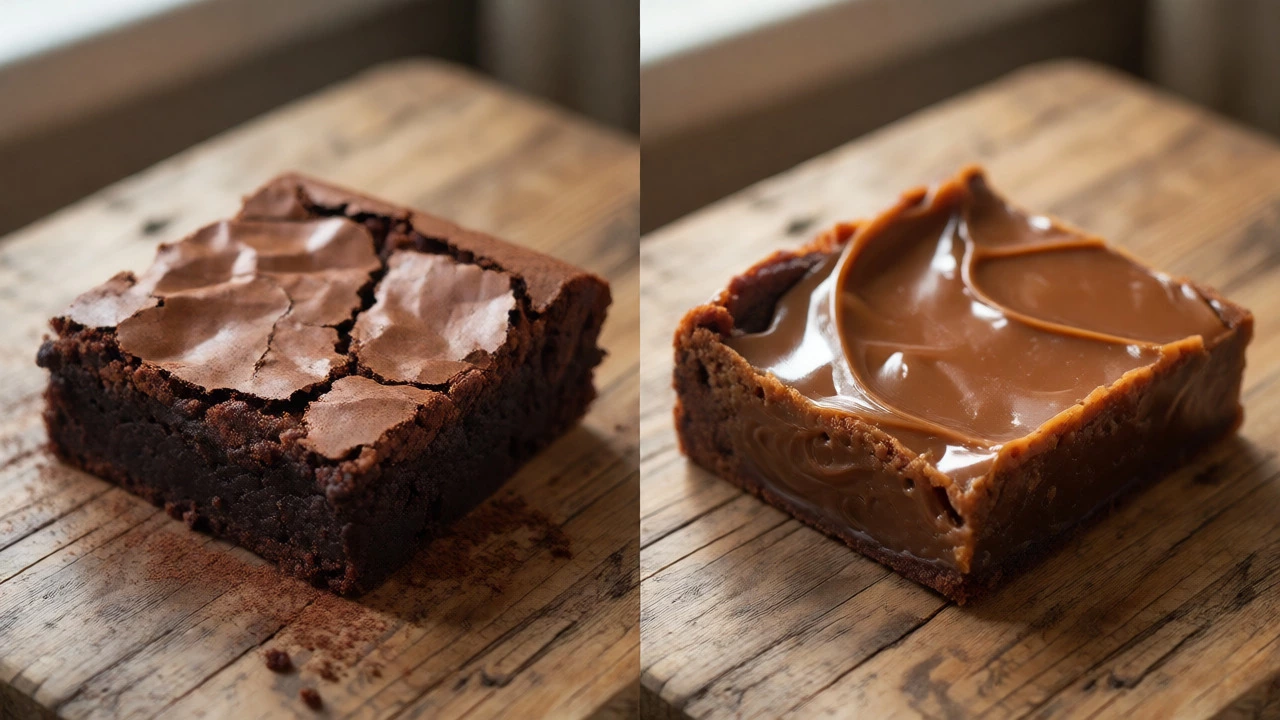
| Feature | Classic Chocolate Brownie | Dulce de Leche Brownie |
|---|---|---|
| Primary Flavor Profile | Bitter-sweet, roasted cocoa notes | Caramelized sugar, vanilla, milky sweetness |
| Texture | Fudgy, cakey, or crackly top | Soft, moist, gooey, tender crumb |
| Moisture Content | Moderate (controlled by baking time) | High (due to dairy and water content) |
| Structural Integrity | Holds shape well when cooled | Prone to spreading; requires chilling to slice cleanly |
| Sweetness Level | Variable (depends on sugar/chocolate ratio) | Naturally very sweet (requires less added sugar) |
Flavor Complexity and Pairing
Chocolate is complex on its own, offering notes of fruit, earth, or smoke depending on the bean origin. However, it is fundamentally bitter. To make it palatable, we add sugar and fat. Dulce de leche brings its own complexity, derived from the Maillard reaction-the browning of proteins and sugars during slow cooking. This creates flavors reminiscent of toffee, butterscotch, and vanilla, all wrapped in a milky base. It lacks the bitterness of cocoa, making it universally appealing to those who might find dark chocolate too intense.
This flavor profile opens up different pairing opportunities. While classic brownies pair beautifully with salty elements like sea salt or peanut butter to cut the bitterness, dulce de leche brownies shine when paired with acidic or fresh components. A scoop of tart raspberry sorbet or a drizzle of lemon curd cuts through the richness much better than salt alone. I’ve found that adding a pinch of espresso powder to dulce de leche brownies doesn’t enhance the coffee flavor so much as it deepens the caramel notes, creating a more sophisticated taste profile that mimics expensive pralines.
Baking Challenges and Solutions
Baking with dulce de leche introduces specific challenges that don’t exist with standard cocoa-based batters. The primary issue is heat distribution. Sugar burns easily, and because dulce de leche is concentrated sugar, the edges can darken quickly while the center remains liquid. You need to lower your oven temperature by about 25°F (15°C) compared to your standard brownie recipe. This slower bake allows the interior to set without scorching the exterior.
Another common pitfall is over-mixing. When you fold dulce de leche into the batter, you risk deflating the air bubbles that give lift. Unlike chocolate, which melts smoothly, dulce de leche is thick and sticky. Use a spatula and fold gently until just combined. If you use an electric mixer, you’ll likely end up with a gummy texture. Also, resist the urge to test for doneness with a toothpick inserted in the center. For these brownies, a wet toothpick is actually correct. Pull them out when the edges look set and the center still jiggles slightly, like Jell-O. They will firm up as they cool.
Which One Should You Choose?
Your choice depends largely on the occasion and the audience. If you are serving a crowd with diverse tastes, including children or those who dislike bitter flavors, dulce de leche brownies are a safer bet. Their universal appeal makes them excellent for potlucks or birthday parties where you need a crowd-pleaser. They also photograph beautifully, with that glossy, golden-brown surface that looks appetizing even before you take a bite.
On the other hand, if you are hosting a dinner party for adults who appreciate nuanced flavors, or if you are pairing the dessert with a strong red wine or black coffee, stick with the classic brownie. Its robust character stands up to bold beverages without being overshadowed. Furthermore, if you need to prepare the dessert days in advance, classic brownies hold their texture better over time. Dulce de leche versions can become overly soft or lose their shape if stored for more than two days, unless kept refrigerated, which alters the texture further.
Variations and Hybrid Options
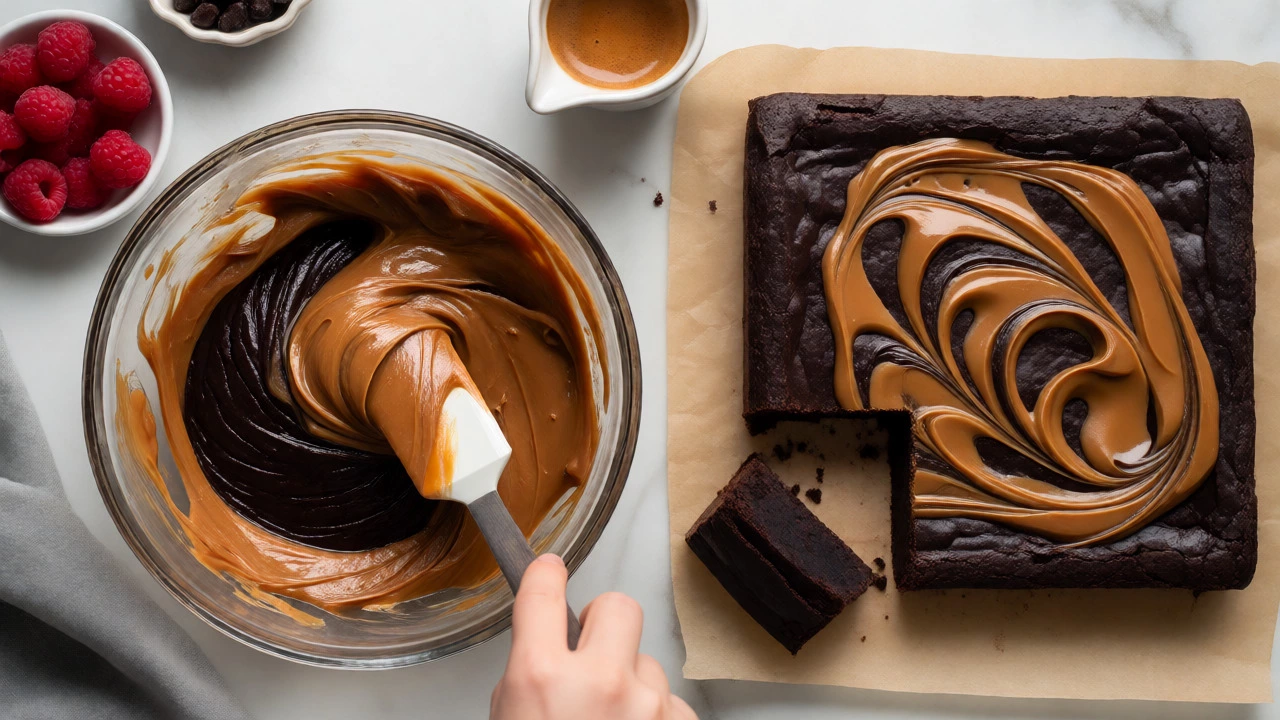
You don’t always have to choose one or the other. Some of the best desserts come from blending these concepts. A popular hybrid involves using a classic chocolate brownie base and swirling ribbons of dulce de leche through the batter before baking. This gives you the structural integrity of the chocolate dough with pockets of caramel goodness. Another variation uses white chocolate instead of dark, which complements the milky nature of the dulce de leche better than dark cocoa does.
For those watching their dietary intake, note that dulce de leche brownies are typically higher in calories due to the condensed milk base. However, they often require less added granulated sugar, which can simplify the ingredient list. If you are gluten-free, these brownies adapt well to almond flour substitutions, though the moisture content may require an extra egg to bind the mixture properly.
Frequently Asked Questions
Can I substitute caramel sauce for dulce de leche?
Not directly. Caramel sauce is thinner and contains cream or butter, which adds excess liquid. Dulce de leche is thicker and made from condensed milk. If you must use caramel, reduce the other liquids in the recipe or cook the caramel down significantly to mimic the viscosity of dulce de leche.
Why did my dulce de leche brownies turn out cakey?
This usually happens if you over-mixed the batter, incorporating too much air, or if you used too much flour relative to the wet ingredients. Dulce de leche brownies should be dense. Try reducing the flour by 10% and folding the ingredients gently by hand.
Do dulce de leche brownies need to be refrigerated?
It is recommended. Because they have a higher moisture content and lack the stabilizing effect of hardened cocoa butter, they stay softer at room temperature. Refrigeration helps them firm up for cleaner slicing, but let them sit out for 15 minutes before serving to regain some softness.
Is dulce de leche vegan?
Traditional dulce de leche is made from cow's milk, so it is not vegan. However, you can find or make vegan versions using coconut milk and sugar, cooked down similarly. These work well in brownies but may impart a slight coconut flavor.
How do I prevent dulce de leche brownies from sticking to the pan?
The high sugar content makes them sticky. Always line your baking pan with parchment paper, leaving an overhang on the sides. This allows you to lift the entire slab out once cooled, preventing the bottom from tearing.